The Machine and the Moral Limit of Knowing: What Person of Interest Teaches Us About Ethical…
If you could know everything, should you act on everything?
The Machine and the Moral Limit of Knowing: What Person of Interest Teaches Us About Ethical Restraint
If you could know everything, should you act on everything?
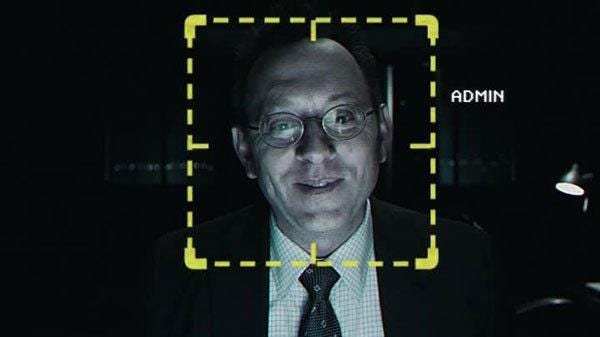
Harold Finch played by Michael Emerson
I recently revisited Person of Interest, which was recently released on the streaming platform, Netflix. I recall trying to watch it when it first aired in the UK on Channel 5. I reached episode 3, ‘Mission Creep’, before disengaging with the concept. Either I wasn’t ready to confront the ethical questions it posed, or the world wasn’t. The CBS science fiction crime drama series premiered in the UK in 2012, arriving at a moment of heightened cultural anxiety about surveillance, data collection, and the expanding reach of post 9/11 security systems. Created by Jonathan Nolan and produced by J. J. Abrams, the series blends procedural crime storytelling with speculative science fiction, grounded in a world that felt only a step ahead of reality.
We live in an age defined by data that is harvested, analysed, and monetised at an unimaginable scale. The fantasy of total knowledge no longer feels like science fiction. With AI-powered surveillance, predictive policing algorithms, and social scoring systems already shaping our lives, it feels imminent. This is the unsettling terrain explored by Person of Interest. At the heart of the series is ‘the machine,’ an artificial intelligence capable of predicting acts of violence before they occur. It is, in essence, an omniscient system, an algorithmic god. Yet the show’s central ethical tension is not about whether such a machine could exist, but whether it should operate without limits. What makes Person of Interest uniquely compelling is its insistence that the greatest moral danger is not ignorance, but unrestricted knowledge without ethical constraint.
At its core, the show follows Harold Finch (Michael Emerson), a reclusive billionaire software engineer who has built a machine capable of predicting acts of violence by analysing vast streams of government surveillance data, CCTV footage, phone records, and emails. Designed in the wake of the September 11 attacks, the machine is intended to prevent terrorism but also identifies ‘irrelevant’ threats: everyday crimes the government chooses to ignore.
Haunted by the moral implications of this neglect, Finch recruits John Reese (Jim Caviezel), a former CIA operative presumed dead. Reese acts on the machine’s anonymous outputs, lists of Social Security numbers belonging to individuals involved in imminent violent acts, whether as perpetrators or victims. Together, they operate outside the law, intervening in crimes before they happen, often without knowing the full context, forcing them into ethically ambiguous situations.
Set against the backdrop of 2012, a period marked by the rise of big data, early debates about algorithmic governance, and growing unease about state surveillance, the series reflects contemporary fears about how much governments and corporations know about individuals. Though the full extent of real-world programs like National Security Agency surveillance would not be publicly exposed until Edward Snowden’s revelations in 2013, Person of Interest anticipates these concerns with striking prescience.
What begins as a crime-of-the-week procedural gradually evolves into a larger narrative about artificial intelligence, autonomy, and moral responsibility. The machine itself becomes less a tool and more a character, raising questions about whether true intelligence can ever remain neutral, and whether its creators can control the ethical consequences of its use.
In the context of 2012, Person of Interest stands as both entertainment and a quiet warning: a vision of a near-future already taking shape, where the line between protection and control is increasingly difficult to see. In 2026, Person of Interest no longer feels like speculative fiction. It reads as something closer to a philosophical case study of the world we now inhabit.
What once seemed like a paranoid premise, a machine that watches everything, predicts behaviour, and quietly intervenes, has become uncannily legible in an era shaped by real artificial intelligence systems, predictive analytics, and ambient surveillance. The show’s meaning has shifted from ‘what if?’ to ‘how do we live with this?’
The Fantasy of Total Knowledge
The machine is built to process the totality of human behaviour. CCTV feeds, financial transactions, and digital footprints all produce predictive models centred on future harm. The machine operates according to a simple classification: threats are either ‘relevant’ (terrorism, large-scale violent crime) or ‘irrelevant’, non-terrorism-related, premeditated lethal acts (murder, kidnapping) deemed unimportant by the government but intercepted by Finch and Reese. This distinction is crucial because it reflects a logic that’s deeply embedded in modern systems of governance: not all lives are weighted equally, and not all risks are worth acting upon.
At first glance, this logic resembles the moral philosophy of Jeremy Bentham, whose utilitarianism proposes that ethical action should aim to produce the greatest happiness for the greatest number. In a world of limited resources, prioritisation becomes necessary. You can’t save everyone. You must choose.
The machine, in its original incarnation, embodies this principle perfectly. It filters noise, prioritises large threats, and optimises a world through numerous simulations, where maximum social stability is paramount. From a strictly utilitarian perspective, the machine is a moral machine, yet the show refuses to let us rest comfortably in that conclusion.
Finch’s Refusal: The Ethics of Limitation
Finch, the machine’s creator, does something extraordinary. He builds a system capable of near-total knowledge, then deliberately restricts it. Finch builds strict safeguards into the machine to keep its power in check. Each night at midnight, it wipes its memory, erasing everything it has learned, including any trace of a developing personality. This prevents it from accumulating experience and evolving beyond his control. He limits what the machine can share. Instead of revealing the full scope of its surveillance, it only outputs Social Security numbers linked to individuals involved in so-called ‘irrelevant’ crimes, primarily acts of premeditated violence. By narrowing its disclosures, Finch keeps both the government and the machine itself from grasping how much it truly sees.
These constraints serve a larger purpose: stopping the machine from becoming self-aware. By restricting its ability to retain information and act independently, Finch ensures it remains a controlled instrument rather than an autonomous intelligence, an observer that reports, but never decides.
Most importantly, Finch chooses to act on the ‘irrelevant’ cases, the individual lives deemed statistically insignificant. This decision marks a decisive break from utilitarian logic. Finch isn’t maximising outcomes; he’s acting inefficiently, even irrationally. To understand why, we need to turn to Immanuel Kant. Finch’s choice to act on ‘irrelevant’ cases might initially appear inefficient from a utilitarian perspective, but it is important to specify what this means. By Bentham’s criteria, ethical action is measured by the aggregate outcomes, the greatest good for the greatest number. In this sense, prioritising individual, statistically insignificant lives does not optimise overall social utility. Finch’s approach is therefore ‘inefficient’ only relative to a strict utilitarian calculus, not in any general sense of rationality or prudence. Yet this apparent inefficiency is deliberate. By imposing constraints on the Machine and intervening selectively, Finch mitigates the extremes of a purely utilitarian logic applied to total knowledge. He prevents the reduction of human lives to mere variables in a moral equation, preserving the space for ethical reflection and individual worth. In this way, his actions operate at the intersection of Bentham and Kant: he recognises the utilitarian imperative to consider outcomes while simultaneously affirming the Kantian principle that each person must be treated as an end in themselves, never merely as a means to a calculated result. Finch’s moral restraint, then, is not a rejection of utilitarianism, but a conscious tempering of its extremes in the service of ethical responsibility.
Kant and the Moral Limit of Knowledge
Kant’s moral philosophy is built on a radically different foundation from that of Bentham. Where utilitarianism focuses on outcomes, Kant insists that morality is grounded in duty and the inherent worth of individuals. His central principle, The Categorical Imperative, demands that we treat everyone as an end in themselves, never merely as a means to an end. This has profound implications for systems like the machine. If they possess total knowledge, they also possess the power to manipulate outcomes and pre-empt choices, reducing individuals to variations in a larger calculation.
From a Kantian perspective, this is highly problematic. It risks turning individuals into tools for optimisation, rather than autonomous moral agents. Finch’s choices begin to look less like limitations and more like ethical necessities. By restricting the Machine’s knowledge and its own access to it, he preserves a space for humanity; he refuses to become a god.
The Violence of Omniscience
One of the most unsettling aspects of Person of Interest is the suggestion that near-omniscience can itself become a form of violence. By eliminating uncertainty and reducing human behaviour to fully legible data points, systems like the Machine risk exerting control in ways that undermine autonomy, spontaneity, and moral agency. When every action is predictable, every person becomes a variable in a calculated outcome rather than a moral subject, and ethical deliberation is displaced by algorithmic certainty.
This idea is not merely speculative. Modern technologies mirror this trajectory: predictive policing algorithms anticipate crimes before they occur, social media platforms model and influence user behaviour, and financial scoring systems determine opportunity based on data patterns. In each case, the capacity to know everything produces tangible effects on human lives, shaping decisions, opportunities, and freedoms. The series suggests that such near-total knowledge carries inherent ethical risks, even when wielded with ostensibly benevolent intent.
The real danger is not that machines will become godlike, but that, through algorithmic surveillance and predictive analytics, we have already built systems that approach total knowledge, quietly reducing uncertainty and moral ambiguity. Person of Interest dramatises this tension, presenting the Machine as both a marvel of intelligence and a cautionary emblem: ethical restraint is essential precisely because the power to know everything is seductive, omnipresent, and capable of eroding the conditions that make genuine moral responsibility possible.
Bentham’s Dream, Taken Too Far
It’s easy to cast Bentham as the villain of this story, as a philosopher whose ideas lead inevitably to impersonal, calculating systems like the machine. But that would be misleading.
Bentham’s utilitarianism emerges from a deeply human impulse to reduce suffering and increase happiness. The problem arises when this logic is combined with total knowledge. In Bentham’s time, moral calculation was limited to the human perspective. No one could know everything, so ethical decisions remained an object of debate between scholars and religious figures. The machine removes these limits. It transforms utilitarianism from a guiding principle into a perfect calculus, one that can, in theory, optimise every outcome. In doing so, the machine exposes a hidden danger; when moral decisions become purely computational, they risk losing their ethical substance. Ethical substance is what gives a moral decision its real moral weight, the part of an action that makes it genuinely ethical, not just efficient, legal, or outcome-driven. Put simply, it’s the difference between doing the right thing and merely producing the right result, and they are not the same thing.
Kant’s Resistance in a Data-Driven World
Kant offers a counterpoint that feels increasingly urgent. He insists on the intrinsic value of individuals resisting the logic of optimisation. From a Kantian perspective, one can’t justify sacrificing one person for the greater good, humans can’t be reduced to data points, and the moral responsibility to a system, no matter how intelligent, can’t be outsourced. Finch embodies this resistance. His commitment to saving ‘irrelevant’ lives may not be efficient, but it is ethical. It affirms the idea that every individual matters, regardless of their statistical significance. In a world increasingly governed by algorithms, this stance feels almost radical.
The Paradox of Ethical AI
Person of Interest ultimately presents a paradox: The more powerful an intelligence becomes, the more it must be limited to remain ethical. This runs counter to the dominant narrative of technical progress, which assumes that more data is inherently good. The show suggests that ethical systems require constraints, and without these limits, intelligence becomes domination. This is why Finch’s greatest act is not the creation of the machine but its restriction. He recognises that the moral problem is not what the machine can do, but what it should be allowed to do.
The Gothic Return of the All-Seeing Eye
There’s something almost Gothic about the machine. It is, after all, a disembodied intelligence, omnipresent yet unseen. It shapes human fate from the shadows. It recalls older anxieties about divine surveillance, fate, and paternalism. But unlike the supernatural forces of Gothic Fiction, the machine is entirely human-made. This is what makes it so unsettling. The fear is no longer that we are being watched by a higher power. It is that we have built that power ourselves and may not be able to control it. In this context, Person of Interest belongs to the long tradition of cultural texts that grapple with the consequences of forbidden knowledge and humanity’s hubris. Like the myth of Prometheus or the story of Frankenstein, it asks what happens when humans acquire powers they are not equipped to wield. Power, if left unrestrained, corrodes the very principles it is meant to uphold.
Conclusion: Choosing Not to Know
In the end, Person of Interest offers a surprisingly simple, yet profound moral insight: our ability to know all things is not, in itself, a moral permission. This is a difficult idea to accept in a culture that equates knowledge with progress and data with truth. But the show insists there are moral limits to what should be known, processed, and acted upon.
Bentham teaches us to concern ourselves with outcomes, and Kant teaches us to respect the individuals those outcomes affect. Person of Interest forces us to confront what happens when these two imperatives collide in a world of information. The answer is not to reject technology but to humanise it through limitation. To build systems that don’t simply optimise but respect humanity and recognise that ignorance, in certain cases, isn’t failure but a necessary choice. The real danger is not that machines will become godlike, but that, through algorithmic surveillance and predictive analytics, we have already constructed systems that approach total knowledge, shaping behaviour and reducing moral uncertainty in ways reminiscent of omniscience.
References:
Bentham, Jeremy, 1789, An Introduction to the Principles of Morals and Legislation, (Oxford: Oxford University Press, 1996)
Heritage, Simon, 2025, ‘From Years and Years to Black Mirror: the best TV prophecies for how AI will end us all’, The Guardian https://www.theguardian.com/tv-and-radio/2025/nov/25/years-and-years-black-mirror-tv-show-depictions-ai-repurcussions [accessed: 1 April 20026]
Kailiang, Wu, 2026, ‘Home alarm sign Stock Photos and Images’, Alamay https://www.alamy.com/stock-photo/home-alarm-sign.html?pseudoid=F4E52265-3678-4E42-A3DB-F78E9A01A22A&sortBy=relevant [accessed: 1 April 2026]
Kant, Immanuel, 1785, Groundwork of the Metaphysics of Morals, trans. by Mary Gregor (Cambridge: Cambridge University Press, 1997)
‘Mission Creep’, 2026, Nolan, Jonathan, 2012–2016, Person of Interest (CBS) https://www.netflix.com/title/70197042 [accessed: 1 April 2026]
Nolan, Jonathan, 2012–2016, Person of Interest (CBS) https://www.netflix.com/title/70197042 [accessed: 1 April 2026]
Outlaw, Kofi, 2026, ‘CBS’ Cancelled Sci-Fi Show Was a 5-Part Masterpiece That Just Kept Getting Better’, Comicbook
https://comicbook.com/tv-shows/feature/cbs-cancelled-sci-fi-show-was-a-5-part-masterpiece-that-just-kept-getting-better/ [accessed: 1 April 2026]
Sanchez, Julian, 2014, ‘Snowden showed us just how big the panopticon really was. Now it’s up to us’, The Guardian https://www.theguardian.com/commentisfree/2014/jun/05/edward-snowden-one-year-surveillance-debate-begins-future-privacy [accessed 1 April 2026]
메타데이터
- post_id
- dd304ec077a5
- slug
- the-machine-and-the-moral-limit-of-knowing-what-person-of-interest-teaches-us-about-ethical-dd304ec077a5
- url
- https://medium.com/@debsbarnett/the-machine-and-the-moral-limit-of-knowing-what-person-of-interest-teaches-us-about-ethical-dd304ec077a5
- canonical_url
- https://medium.com/@debsbarnett/the-machine-and-the-moral-limit-of-knowing-what-person-of-interest-teaches-us-about-ethical-dd304ec077a5
- author_url
- https://medium.com/@debsbarnett
- status
- ok
- fetched_at
- 2026-06-09 15:37:30