Why British Culture Gets Reduced to Fish and Chips
Why reducing a country’s culture to food misses the exports that actually shaped the world.
Why British Culture Gets Reduced to Fish and Chips
Why reducing a country’s culture to food misses the exports that actually shaped the world.
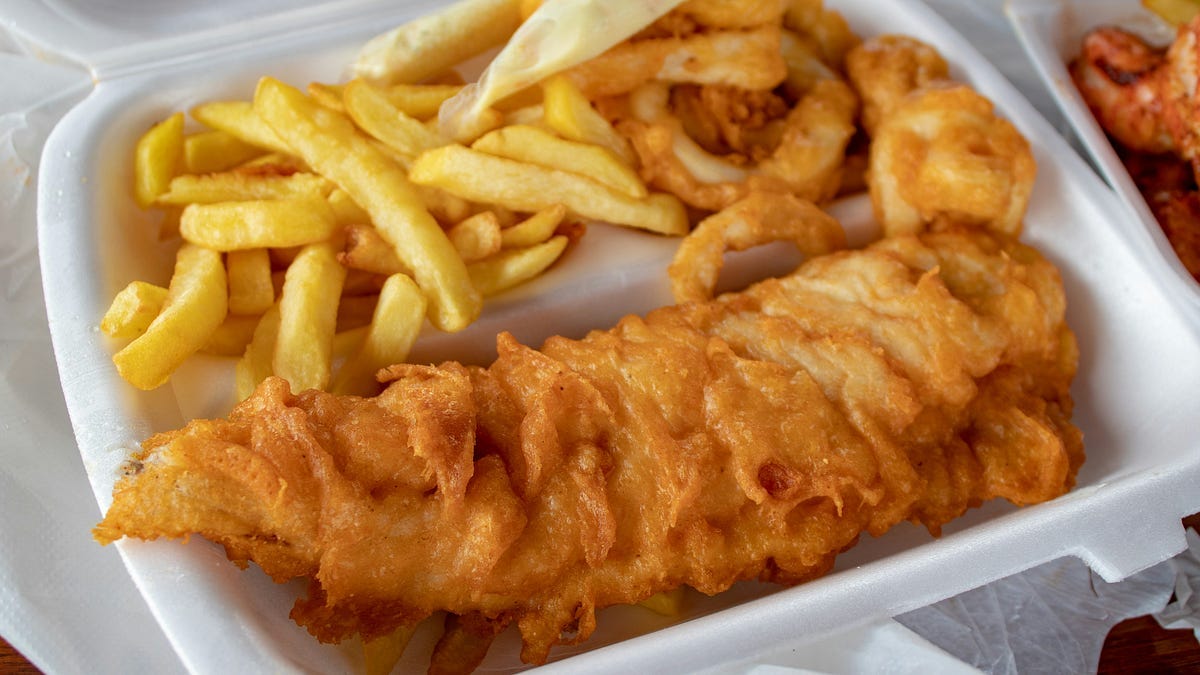
Photo by Meelan Bawjee on Unsplash
“What even is British culture? Indian food is the most popular cuisine in England!”
I constantly hear this and see people reducing culture down to food.
I am not a big fan of food. I could eat the same thing most days, to me eating is a chore, something that I find annoying and an inconvenience.
It annoys me so much when people reduce British culture to fish and chips or bangers and mash. The people doing this usually have a kind of smug superiority.
People often comment on the fact that chicken tikka masala is not even an Indian dish, it was made for English people.
But wasn’t the “Indian” person living in England who invented it British? If they immigrated to England?
Why does the person only get called British if they are doing something bad? Murderers or criminals are always referred to as British, even if they descend from a different nationality.
When an immigrant does something to be proud of, they are always referred to as being from their country of decent. Especially when it comes to food.
It is also used as a justification for mass migration, as if the more people we import the more lovely food we get. As if we can’t just open a recipe book?
Because no famous chefs are English.
The thing that annoys me the most though is the reduction of culture to just food.
They are failing to see our other cultural exports. British humour, TV shows, common law, BBC News, the Premier League, fashion, literature, the English language, clothing, music, education, technology. To name a few.
You could argue that British culture is invisible because it succeeded.
I noticed that on every international flight they do a safety announcement in English. From Bangladesh to China? English announcement. Our legal systems are everywhere. So much stuff is done the way it is because of systems we invent. Our media is exported everywhere, disproportionately for a country our size.
British culture has become so globally dominant that people mistake it for “normality” rather than recognising it as distinctly British.
Going back to what I said earlier, the reduction feels selective. British culture is often narrowed down to the few things easiest to mock, while the exports that became globally dominant are treated as neutral or universal rather than distinctly British.
I’ve seen street interviews, where they ask someone at a “far-right” protest what culture they are scared about being lost. They ask them specifically “what food?” It is performative superiority, as if they are better than the person they are talking to. As if they know something the person they are interviewing doesn’t.
The person stumbles because they are suddenly forced to reduce culture down to cuisine. Instead of thinking about humour, literature, football, television, memories, landscapes or traditions, they panic and try to name a meal.
The ironic part is, the interviewers are in Britain, speaking English, potentially following the premier league, British music and TV and might have even studied at British universities. They, like the rest of us are consuming British culture. They are even using British humour to suggest British culture doesn’t exist.
Maybe they do this because food is one of the few forms of national identity people still feel comfortable discussing openly. It is safe. You can’t be called a nationalist for your taste in food.
There clearly is tension in England surrounding national pride and flags. Visible patriotism is uncomfortable. Maybe that is why culture is reduced to food.
Yet mocking British culture often feels unusually socially acceptable, particularly among educated middle-class circles.
The strangest part is that once you leave Britain, you realise many of these assumptions barely exist abroad.
In China, I was surprised to learn there is a stereotype that British people are gay. Delving deeper into why this is the case-I have never heard this before-I learnt that there is a genre of fan fiction called Boy Love. This genre exists all over East and Southeast Asia. It commonly features fantasies about British men, so much so, that the Chinese have a specific phrase for it: Fǔ Guó, a pun blending “UK” and fu, slang from Boy Love culture.
The stories romanticise British culture, using Harry Potter or Sherlock (amongst others) for inspiration. The characters speak in a posh accent and have a dry sense of humour.
Britishness is romanticised in highly specific ways. The archetype is intellectual, emotionally restrained, aristocratic and well spoken. It draws heavily on Sherlock Holmes, Harry Potter, and Oxford and Cambridge imagery.
It made me think: Britain almost exports atmosphere as much as products. Something almost unique to us as a country.
How is this a thing if British culture is so repulsive?
This completely contradicts how we see our culture domestically. How it is portrayed in our own media.
I am not making this point to say that Asian women lust after British men. I am pointing out that there is a whole genre of literature glamourising our culture, and yet we hear nothing about it. Why?
It doesn’t fit in with the fish and chips narrative.
Perhaps the ultimate irony is that British culture became so globally successful that people no longer recognise it as British at all. They reduce it to fish and chips precisely because the deeper exports: the language, humour, aesthetics and stories, became part of global culture itself.
Maybe that is the fate of successful cultures. Once they become everywhere, people stop seeing them entirely.
Maybe that is why British culture is used to suggest there is no British culture.
Thanks for reading.
If you enjoyed this essay, you might also like **“Next year, I’ll spend my birthday abroad.”**
I publish three essays a week on current affairs, culture, politics and modern life. You can read more on **Substack**.
Originally published at https://jcalebs.substack.com.
메타데이터
- post_id
- dd5df714abdf
- slug
- why-british-culture-gets-reduced-to-fish-and-chips-dd5df714abdf
- url
- https://medium.com/@jcalebs/why-british-culture-gets-reduced-to-fish-and-chips-dd5df714abdf
- canonical_url
- https://medium.com/@jcalebs/why-british-culture-gets-reduced-to-fish-and-chips-dd5df714abdf
- author_url
- https://medium.com/@jcalebs
- status
- ok
- fetched_at
- 2026-06-09 15:37:30