Why RGB and a Racing Look Tell You Nothing About Comfort
The most visible features of a gaming chair are the least informative ones. RGB lighting, a racing-car silhouette, bolstered side wings…
Why RGB and a Racing Look Tell You Nothing About Comfort
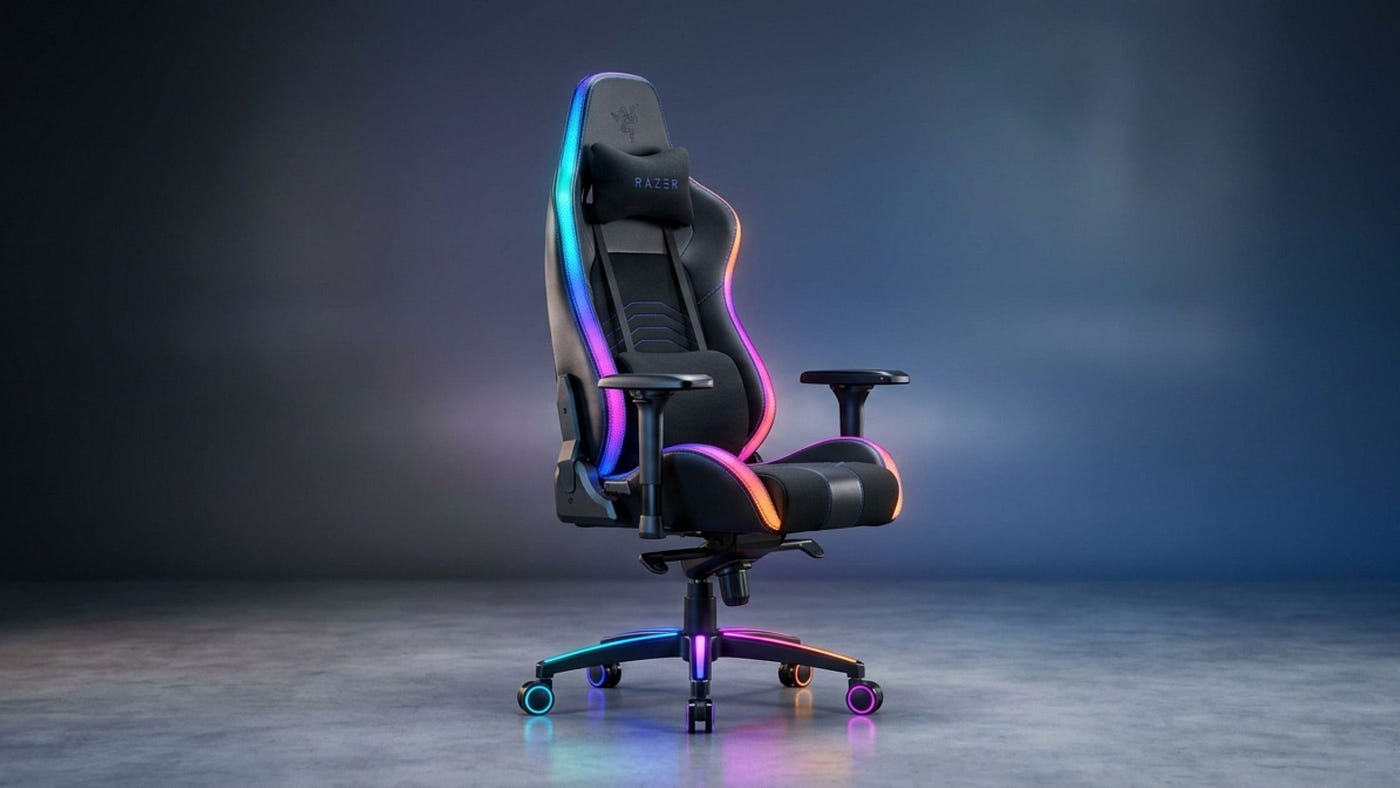
The most visible features of a gaming chair are the least informative ones. RGB lighting, a racing-car silhouette, bolstered side wings, and bold colourways dominate the photos and the product pages, and they are the features that decide whether a chair looks the part. None of them carries any information about whether the chair is comfortable, because comfort is a function of dimensions, adjustment, foam, and structure, and aesthetics touch none of those. An ergonomic gaming chair is comfortable or not for reasons that are invisible in a thumbnail, which is precisely why the visible features are such poor guides.
The disconnect is not incidental; it is structural. The features that photograph well and the features that support a body are different categories of thing. One is about appearance, optimised to look serious and exciting at a glance. The other is about mechanics, optimised to fit and support a body over hours. A chair can max out the first category and fail the second entirely, which is how a striking chair ends up punishing after two hours. Understanding why aesthetics carry no support information is what lets a buyer stop reading the look as a comfort claim.
Why Aesthetic Features Are Information-Free About Support
A feature carries support information only if it changes how the body is loaded. RGB lighting does not touch the body at all; it is illumination, mechanically irrelevant to posture, pressure, or support. A colourway is pigment. A team logo is a print. None of these alters the seat dimensions, the foam, the adjustment range, or the frame, so none of them can make the chair more or less comfortable. They are, in the strict sense, noise with respect to the question a buyer is actually asking.
The racing silhouette is the most misleading because it looks functional. The bucket shape and the bolstered wings resemble a performance car seat, and performance suggests support. But a motorsport seat is engineered to hold a driver against lateral cornering forces, restraining the body sideways during high-G manoeuvres, a problem that does not exist at a desk. Transplanted to a static chair, the wings have no force to restrain, so they either do nothing or, if they are placed where the thighs and shoulders sit, actively press inward. The look borrows the authority of engineering without the function, which is the reason buyers upgrade for the wrong reasons, as described in why most gamers upgrade too early.
Why Bolstered Wings Can Work Against You
The side bolsters deserve specific attention because they are sold as support and can be the opposite. On the seat, raised side bolsters narrow the usable sitting surface, so a wider body is pushed up onto the bolsters rather than supported flat, concentrating pressure on the outer thighs. On the backrest, shoulder wings set too far forward push the shoulders inward and can prevent the back from settling flat against the support. What looks like a body-hugging design can become a body-constraining one, depending entirely on the dimensions underneath, which the silhouette does not reveal. A well-designed gaming chair earns its shape with dimensions that fit; a poorly designed one wears the same shape as decoration.
What Actually Carries Support Information
The features that carry support information are dimensional and structural, and they are the ones the photos do not foreground. Seat width and depth determine whether the body fits the sitting surface. The adjustment range, how far the seat height, backrest recline, and armrests move, determines whether the chair can be fitted to the body rather than the body forced to the chair. Foam density determines whether the cushion still supports at hour six. The frame and cylinder rating determines whether the structure holds up. These are the variables that change how the body is loaded, and therefore the only ones that can change comfort.
The reason they go unphotographed is that they are dull and they are honest. A number for seat width commits the brand to a fit that some bodies will exceed; a colourway offends no one. Foam density is invisible and unglamorous; lighting glows in a render. Each dimensional spec is a hostage to fortune, a figure a buyer can check and a competitor can beat, while each aesthetic feature is a free claim that costs the brand nothing and excludes nobody, which is exactly why the listing leads with the latter and hides the former. The marketing leads with the aesthetic features because they sell without committing to anything, while the dimensional features inform without exciting. Judging foam by pressing it and judging the mechanism by working it, as 7 budget gaming mistakes Australian gamers should avoid describe, is how a buyer recovers the information the photos omit.
Why Adjustment Range Outranks Any Cosmetic Feature
Among the support-carrying features, adjustment range is the most decisive, because it determines whether the chair can adapt to the body at all. A chair locked into one geometry forces every body into the same posture, comfortable for the bodies it happens to fit and uncomfortable for the rest. A widely adjustable chair can be fitted to different proportions, desks, and postures. No cosmetic feature compensates for a backrest that will not recline to where a body needs it, which is also why useful additions like footrests are judged on fit and function rather than looks, the question behind ergonomic gaming chair vs racing chair. Adjustability is the feature that makes comfort possible; aesthetics are the feature that makes it photogenic.
What This Means for Reading a Listing
The practical consequence is that a listing should be read against the grain of its own emphasis. The features placed first, the lighting, the silhouette, the colours, the branding, should be weighted near zero for the comfort question, because they carry no support information. The features placed last or omitted, the seat dimensions, the adjustment range, the foam, the rating, should be sought out and weighted heavily, because they are the only ones that determine how the chair treats a body. The hierarchy of the listing is, for comfort purposes, almost exactly inverted.
This does not mean aesthetics are worthless; a chair can look good and be comfortable, and there is no reason to choose ugliness. It means the look must be treated as orthogonal to comfort, decided separately and never allowed to stand in for it. The right order is to filter on the support specs first and then choose the most appealing chair among the ones that pass, rather than filtering on appearance and hoping the support follows. A buyer comparing gaming chairs in Australia who reads the dimensional specs first and the styling last will reliably land on a more comfortable chair than one who scrolls for the most aggressive silhouette, because they are reading the features that actually carry the answer.
Why the Cosmetic Features Carry No Support Information
The features that dominate gaming-chair marketing are, almost without exception, ones that say nothing about whether the chair supports a body. RGB lighting, integrated speakers, and vibration motors add cost, weight, and points of failure while contributing nothing to posture; the colourway and the racing silhouette are styling; the esports-team logo is a sponsorship expense passed to the buyer. None of these touch the variables that decide comfort over hours, which are the adjustability of the lumbar and armrests, the dimensions of the seat, and the range of the recline. The racing-bucket shape that anchors the aesthetic actively works against neutral posture, because its moulded contours and raised bolsters impose one position rather than letting the body find its own. So the visual language that sells the chair is not merely irrelevant to ergonomics; in the case of the bucket form, it is in tension with it.
Common Mistakes
The first mistake is reading aesthetic features as comfort claims. RGB, colourways, and branding do not touch the body, so they carry no information about support. They are noise with respect to whether the chair is comfortable.
The second is trusting the racing silhouette. The bucket shape and wings are borrowed from motorsport seats built to restrain a driver against cornering forces, a problem that does not exist at a desk. The look borrows the authority of engineering without the function.
The third is assuming bolsters mean support. Raised side bolsters can narrow the usable surface and press inward on the thighs and shoulders, constraining the body rather than supporting it, depending on dimensions the silhouette does not reveal.
The fourth is overlooking the dull dimensional specs. Seat width and depth, adjustment range, foam density, and the frame rating are the only features that change how the body is loaded. They are placed last or omitted precisely because they are honest and unglamorous.
Conclusion
RGB and a racing look tell you nothing about comfort because aesthetic features carry no support information. A feature can affect comfort only if it changes how the body is loaded, and lighting, colourways, and branding do not touch the body at all. The racing silhouette is the most misleading because it looks functional, but its bucket shape and wings are borrowed from motorsport seats built to restrain a driver against cornering forces that do not exist at a desk, so the look borrows the authority of engineering without the function, and bolsters can actively constrain the body.
The features that carry support information are dimensional and structural, seat width and depth, adjustment range, foam density, and the frame rating, and they go unphotographed because they are dull and honest while aesthetics sell without committing to anything. Read a listing against the grain of its emphasis: weight the visible features near zero for comfort and seek out the buried dimensional ones, because they are the only features that determine how the chair treats a body. Looks can be decided separately, but they must never stand in for the specs that carry the answer.
Frequently Asked Questions
Does RGB lighting affect how comfortable a chair is?
No. Lighting does not touch the body in any way, so it cannot change posture, pressure, or support. It is mechanically irrelevant to comfort. RGB is decoration, worth choosing if you like the look but never a signal that the chair will be comfortable over a long session.
Why doesn’t a racing-style shape mean a chair is supportive?
Because the shape is borrowed from motorsport seats designed to restrain a driver against lateral cornering forces, a problem that does not exist at a static desk. With no cornering force to resist, the bucket shape and wings either do nothing or press inward on the body, so the silhouette carries no support information.
Are side bolsters good or bad?
It depends entirely on dimensions the silhouette does not show. Raised seat bolsters can narrow the usable surface and push a wider body onto them, concentrating pressure on the outer thighs, and backrest wings set too far forward can stop the back settling flat. What looks supportive can constrain the body instead.
What features actually tell me if a chair is comfortable?
Dimensional and structural ones: seat width and depth, adjustment range, foam density, and the frame and cylinder rating. These are the only features that change how the body is loaded, so they are the only ones that determine comfort. They are usually placed last in a listing or omitted entirely.
Why is adjustment range so important?
Because it determines whether the chair can adapt to your body rather than forcing your body into one fixed geometry. A widely adjustable chair fits different proportions, desks, and postures, while a locked one only suits the bodies it happens to match. No cosmetic feature compensates for a backrest or armrests that will not move.
Does this mean a good-looking chair is always uncomfortable?
No. A chair can look good and be comfortable; the two are simply independent. The point is that looks carry no information about comfort, so they must be decided separately and never allowed to stand in for the dimensional specs. Read the support features first, then choose the look you prefer among the chairs that pass.
Does a gaming chair’s RGB or racing look affect comfort?
No. RGB lighting, speakers, vibration, the colourway, and the racing shape are styling and add-ons; they carry no information about support and can add cost, weight, and failure points. The racing-bucket form can even work against neutral posture by imposing one position. Comfort comes from adjustability, seat dimensions, and recline range instead.
메타데이터
- post_id
- dd5fdfdf845f
- slug
- why-rgb-and-a-racing-look-tell-you-nothing-about-comfort-dd5fdfdf845f
- url
- https://medium.com/@mikapixel16/why-rgb-and-a-racing-look-tell-you-nothing-about-comfort-dd5fdfdf845f
- canonical_url
- https://medium.com/@mikapixel16/why-rgb-and-a-racing-look-tell-you-nothing-about-comfort-dd5fdfdf845f
- author_url
- https://medium.com/@mikapixel16
- status
- ok
- fetched_at
- 2026-06-23 19:38:28