A Good Pairing Works on the Plate. A Great One Works in Your Head.
What wine education gets right — and what it leaves out
A Good Pairing Works on the Plate. A Great One Works in Your Head.
What wine education gets right — and what it leaves out
This one made sense.
I came across a Wine & Spirit Education Trust pocket guide to food and wine pairing this weekend.
It’s one of the clearest tools I’ve seen — simple, logical, almost clinical.
Fat softens tannins. Acidity needs acidity. Salt enhances fruit. Umami can make wines taste bitter and hollow.
It explains, very efficiently, why some pairings work — and why others don’t.
And it’s right.
It gives you a reliable framework. A way to understand structure, balance, and interaction.
But it also made me think about something I wrote about last week — the idea that not everything deserves an upgrade. Sometimes the simplest version is enough. Sometimes it isn’t.
Pairing works the same way.
Because I’ve had perfectly “correct” pairings that left me completely indifferent. And others that, on paper, shouldn’t have worked nearly as well — but felt exactly right in the moment.
That’s when it clicked.
Pairing wine is not just about food. It’s about mood, craving, and the season you’re in — both outside and inside.
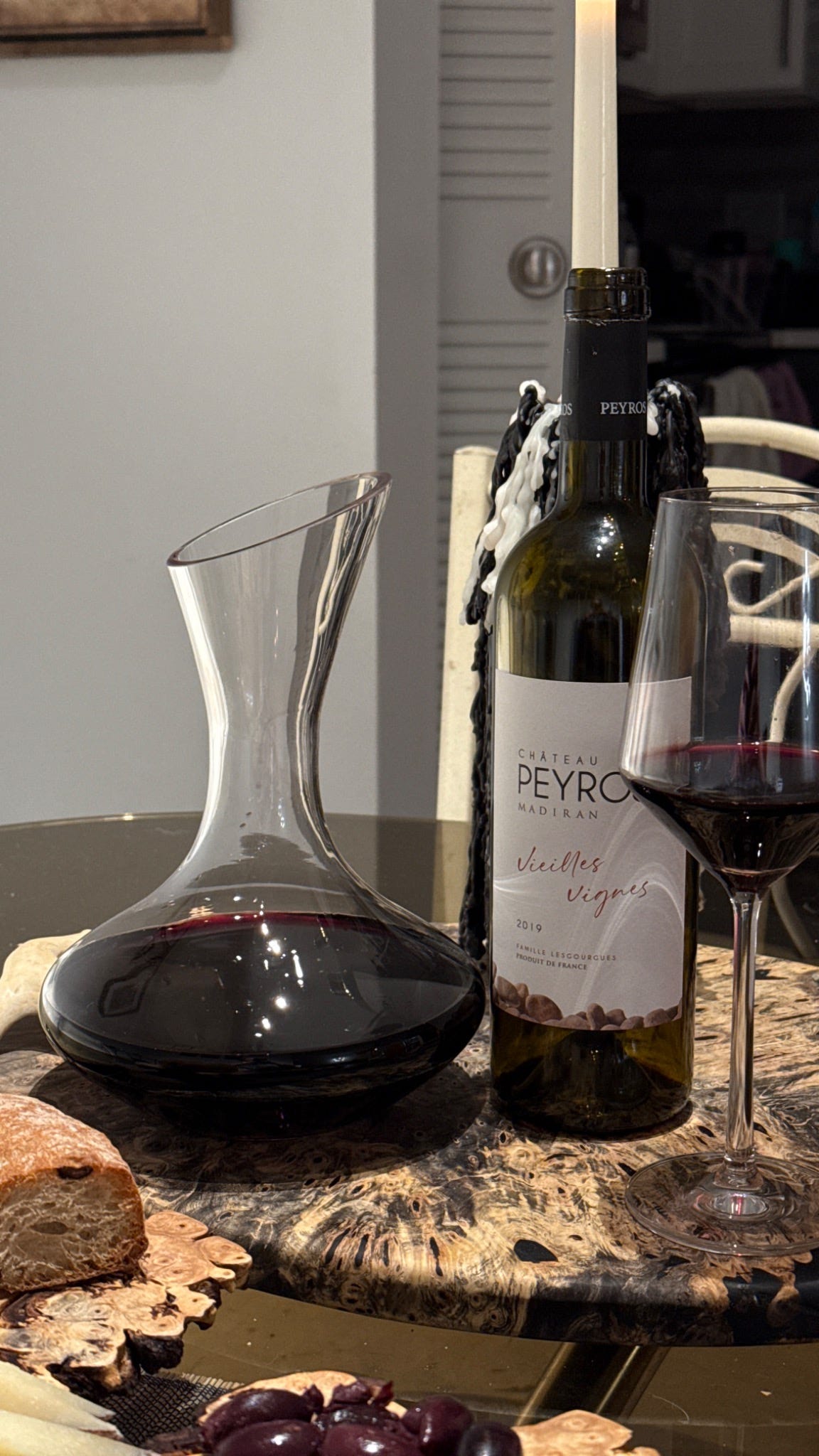
Take a recent experience. I opened a bottle of Madiran. Tannic, structured, serious — a wine built on backbone.
On paper, I should appreciate it. I like structure. I can handle tannins.
But that day, it didn’t land.
I wanted something feral. Something with presence. Something with — unapologetically — couilles.
Instead, what I got felt like a wine dressed like a curé. Disciplined. Proper. Reserved.
The wine wasn’t wrong.
I was.
Technically right. Emotionally off.
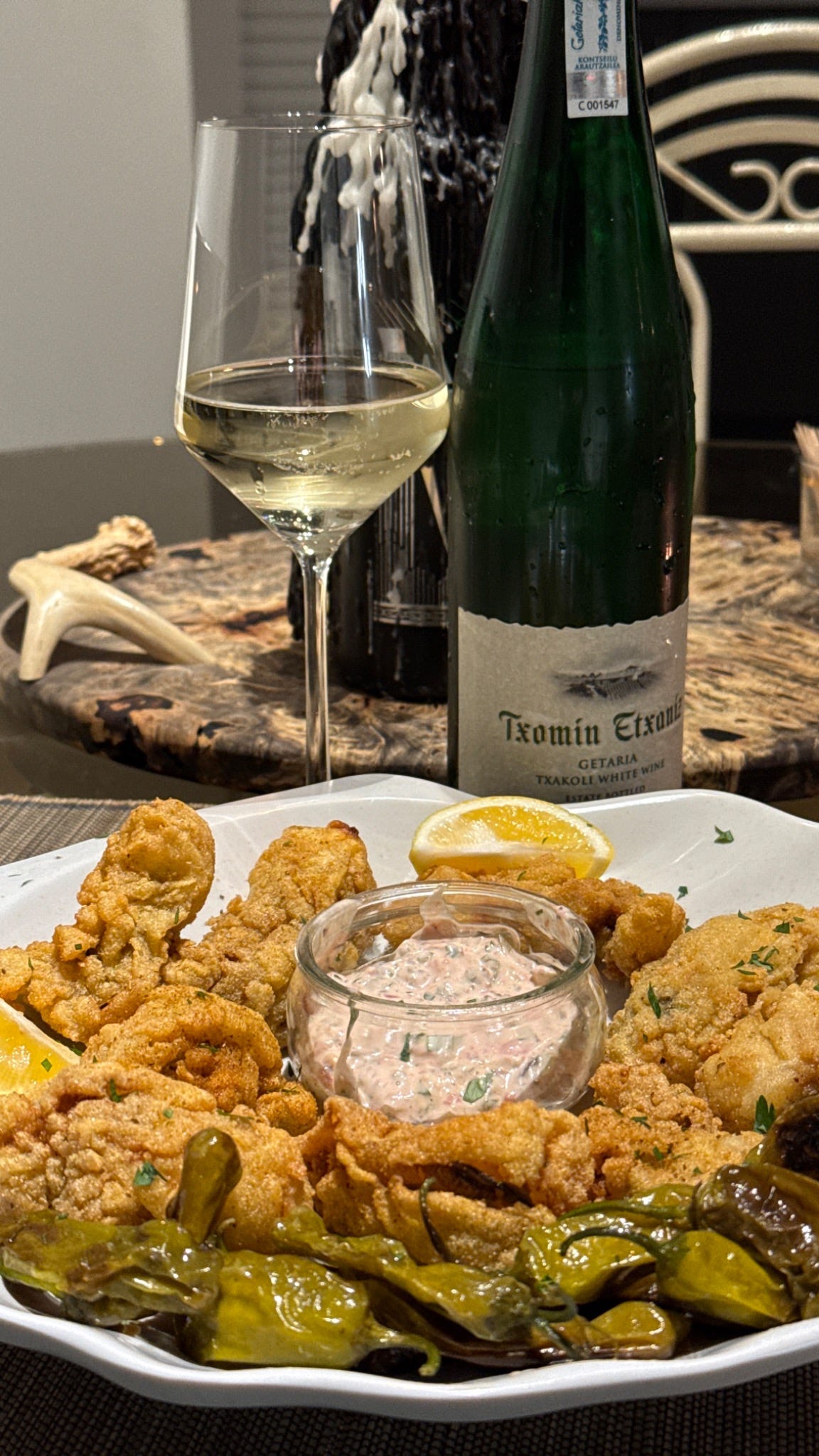
Another day: fried oysters on the table. I poured a Txakoli — high acid, light, saline. Technically, a perfect pairing.
And it worked. It cut through the fat. It refreshed the palate.
But it didn’t move me.
It didn’t bring anything beyond correctness.
It did exactly what it was supposed to do. That was the problem.
The same dish, with a simple Picpoul — half the price — gave me more pleasure. More presence. More sun. More of whatever it was I was actually craving.
And then there are the moments where everything aligns.
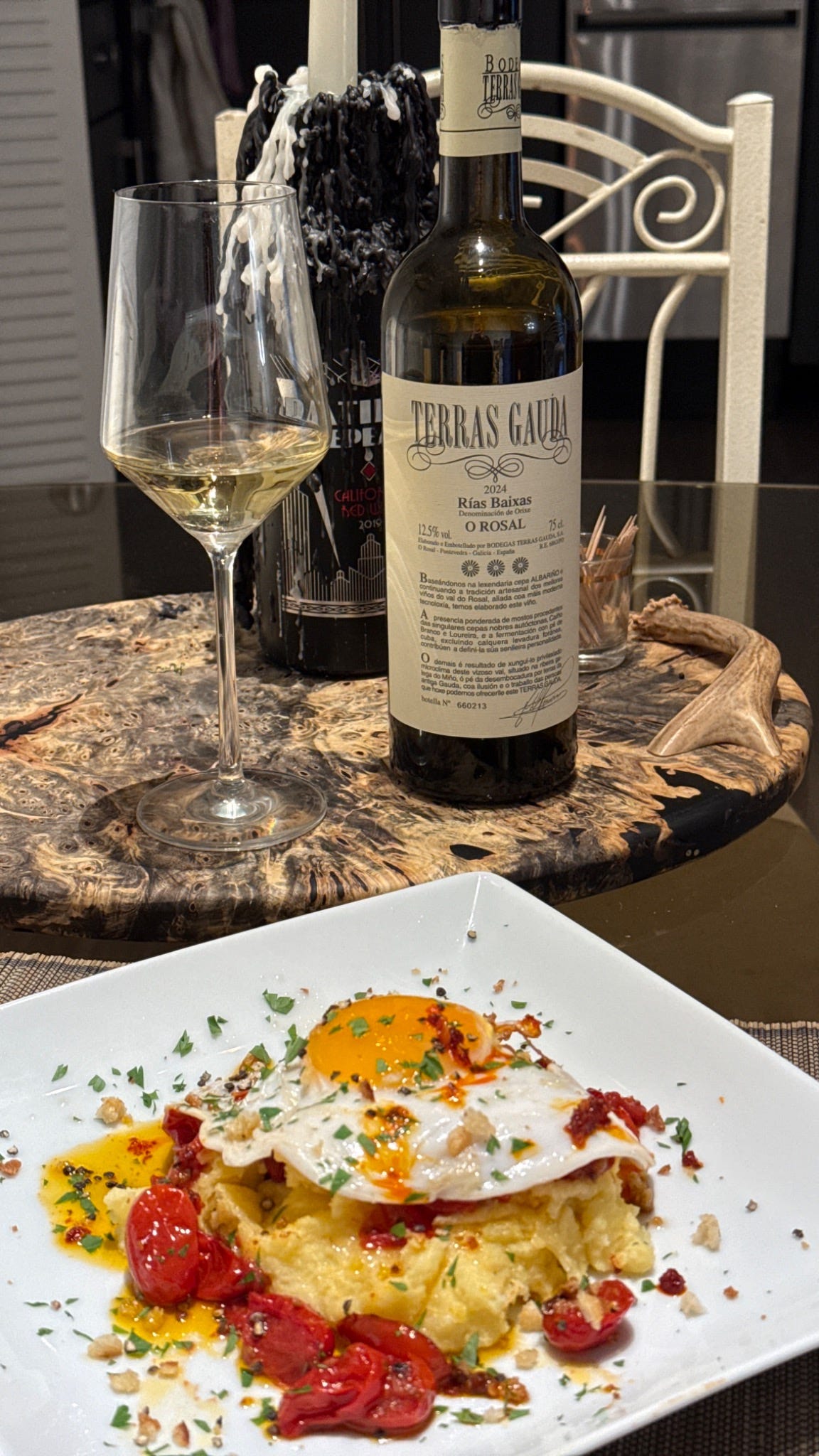
Polenta, jammy tomatoes, and a crispy duck egg — rich, soft, slightly sweet, all texture.
A classic Albariño would have been correct.
But I didn’t want correct.
I reached for something broader. An Albariño with more sun, more weight, more generosity — not just citrus and acid, but warmth, pineapple, structure.
That wine didn’t just pair. It met the dish. And more importantly — it met me where I was.
That’s the difference.
A good pairing works on the plate. A great pairing works in your head.
That’s the part no framework can fully teach.
And sometimes, what’s in your head has nothing to do with the glass. It has to do with what’s playing in the background.
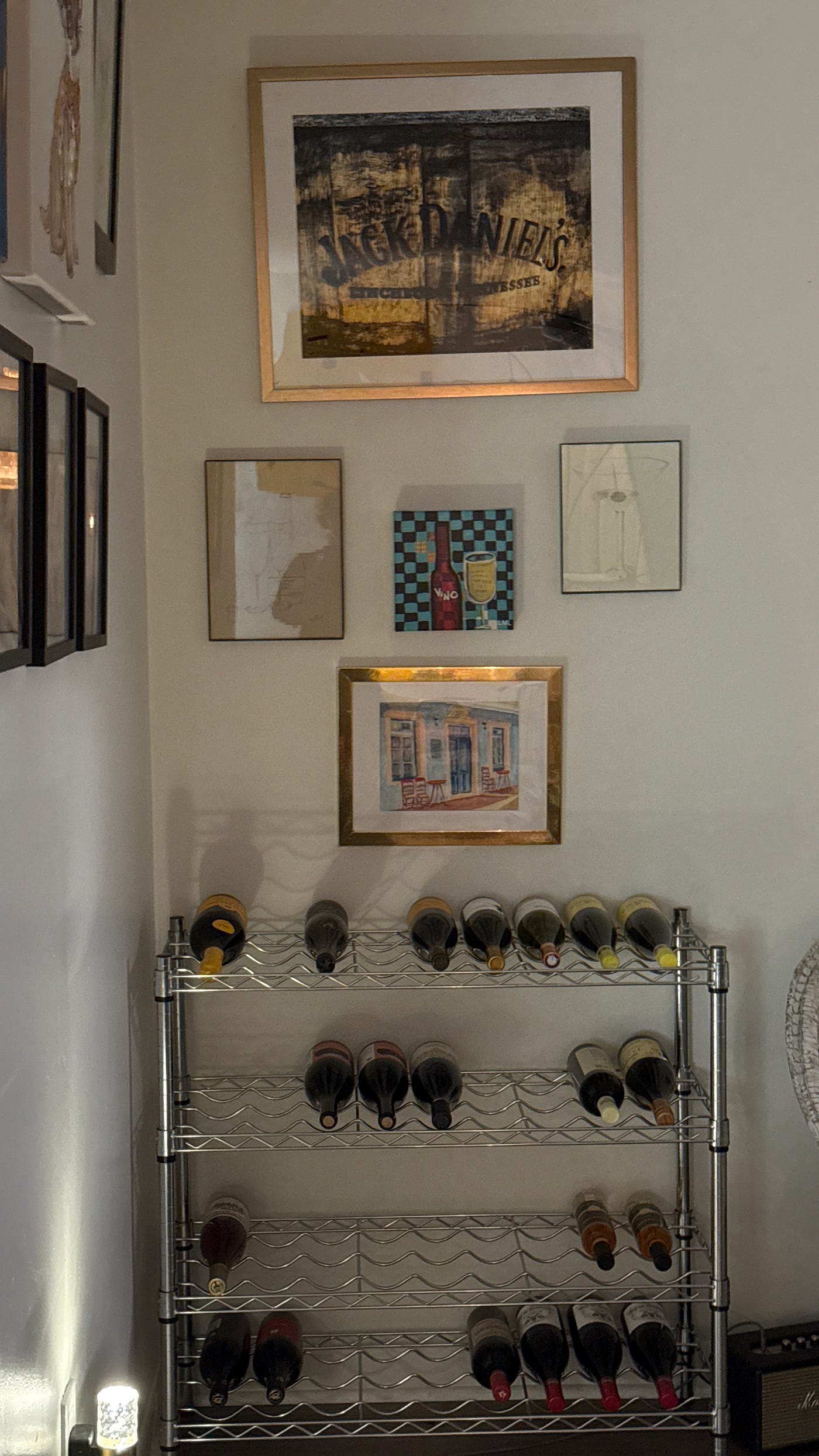
This is where the pairing happens.
There’s a concept called Crossmodal perception — the idea that what you hear can change what you taste.
High-pitched, bright music can make wine feel more acidic, more lifted. Low, deeper tones can make it seem richer, rounder, more full-bodied. Fast tempo amplifies intensity, while slower music softens perception.
The same wine can taste different depending on what you’re listening to.
That’s not poetry. That’s neuroscience.
And it tracks with how I eat.
I don’t just pair food and wine — I pair atmosphere.
Classical or jazz when I want elegance and focus. Traditional Greek music with a mezze spread. Flamenco with something Spanish. Opera with Italian. Serge Gainsbourg, Charles Aznavour, Claude Nougaro, France Gall when the meal leans French. And if it’s Belgian — there’s only one answer: Jacques Brel.
Before the first sip, the tone is already set.
So if a wine feels too sharp, too heavy, too closed — sometimes the answer isn’t in the bottle. It’s in the playlist.
Wine education teaches you how to balance elements. It doesn’t teach you how to recognize yourself in the glass.
The WSET framework teaches you how food changes wine. But it doesn’t account for how you change.
And you do.
In spring and summer, I want sunshine in my glass — garrigue, salt, energy, wines that feel alive and expansive. In winter, I lean toward austerity — structure, restraint, wines that unfold slowly and ask for patience.
The same bottle can feel completely different depending on when you drink it — and why.
Because in the end, a pairing isn’t just about food and wine. It’s about alignment — between what’s on the plate, what’s in the glass, and what’s going on inside you.
So now, before I choose a wine, I ask myself three questions:
What am I eating? What do I want to feel? What am I craving more of?
Freshness, richness, structure, intensity — if those don’t align, the pairing won’t land, no matter how “correct” it is.
I don’t look for wines that please. I look for wines that are themselves. I meet them where they are — or I don’t.
When I do —
It’s not just good.
It makes sense.
Next time you pour a glass, try this: Don’t just ask what you’re eating — ask what you want to feel. Does the wine earn its place — or is something simpler enough? I’d love to hear what changed for you — the food, the wine, the moment.
메타데이터
- post_id
- dd71f6adf6c6
- slug
- a-good-pairing-works-on-the-plate-a-great-one-works-in-your-head-dd71f6adf6c6
- url
- https://medium.com/@cathycirisan/a-good-pairing-works-on-the-plate-a-great-one-works-in-your-head-dd71f6adf6c6
- canonical_url
- https://medium.com/@cathycirisan/a-good-pairing-works-on-the-plate-a-great-one-works-in-your-head-dd71f6adf6c6
- author_url
- https://medium.com/@cathycirisan
- status
- ok
- fetched_at
- 2026-07-08 04:28:09