What Psychologists, CEOs, and Spiritual Teachers Agree On
Purpose may be the most renewable source of human energy
What Psychologists, CEOs, and Spiritual Teachers Agree On
Purpose may be the most renewable source of human energy
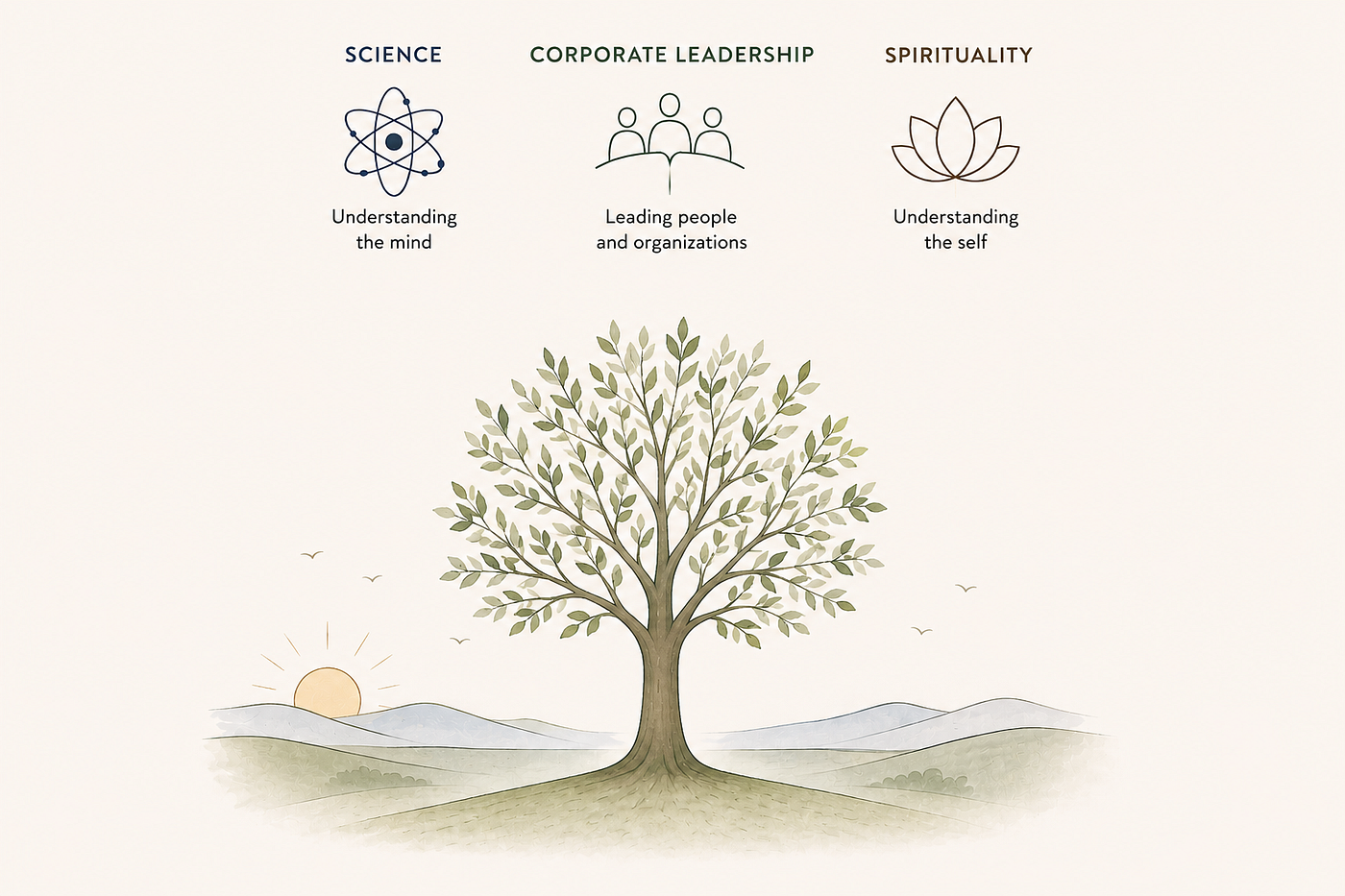
Generated by the author
Self-reflection and nervous system regulation are practices that psychologists and spiritual practitioners heavily lean on. When I started my spiritual journey, I looked for frameworks that were both consistent with ancient wisdom and grounded in scientific inquiry.
What’s Going Right: A Powerful New Method for Optimizing Your Mental Health by Dr. Paul Conti has been a wonderful find in that regard. The book presents a model of human mental health that, in many ways, aligns with ideas that have long existed in spiritual traditions.
Dr. Conti explains that we have three fundamental drives:
- Assertion drive
- Pleasure drive
- Generative drive
I found this framework both simple and profound.
Assertion Drive: The Fossil Fuel of Achievement
We come into this world with a certain amount of assertion drive. I think of it as a limited amount of fossil fuel that we are born with. Its quality and quantity vary across individuals.
Assertion drive produces results through motivation, hard work, ambition, and success, until we start running low. That is when we enter a state of burnout.
Many of us have lived on assertion drive for years. We push, achieve, and strive, often without questioning whether the engine powering us is sustainable.
Too much reliance on assertion drive leads to a heaviness and stickiness in life that stops our spirits from soaring high. We keep pushing through without fully living.
Pleasure Drive: Necessary but Insufficient
Pleasure drive, too, is productive only when in balance. Chasing pleasure without assertion drive is unsustainable, but living solely through achievement is equally exhausting.
According to Dr. Conti, too much or too little of these drives prevents us from achieving an optimal mental state.
Generative Drive: Renewable Energy
The most interesting drive, however, is the third one, generative drive.
Generative drive comes from aligning with a purpose that is larger than oneself. It may express itself through raising children, creating art, mentoring others, building organizations, or contributing to a cause.
Dr. Conti describes it as the deeply human motivation to create, contribute, nurture, and leave things better than we found them.
I think of generative drive as renewable energy for the human spirit.
Unlike assertion drive, which can eventually deplete us, generative drive replenishes itself. It gives us a sense of meaning and allows our spirits to rise. It enables us to live more lightly.
At the same time, the source of generative drive can be grossly misdirected. People can become deeply committed to ideas, causes, and identities that ultimately lead to manipulation or exploitation.
Understanding our generative drive, therefore, is not just about finding purpose. It is also about asking whether that purpose elevates both ourselves and the larger ecosystem we are a part of.
Why Organizations Talk About Purpose
One word that often comes up in executive coaching sessions, especially as people climb the corporate ladder, is purpose.
No large organization can function smoothly unless the people involved, particularly those in leadership roles, resonate with a strong sense of purpose.
Purpose is the backbone of resilience. It helps organizations withstand adversity, whether it comes from turbulent markets, technological disruption, or geopolitical uncertainty.
Purpose and generative drive are deeply interlocked because they feed and shape one another in a continuous loop. Generative drive is as important for organizations to thrive as it is for individuals.
This idea also finds a strong echo in Roopa Kudva’s Leadership Beyond the Playbook. One of the central themes of the book is that modern leadership increasingly demands qualities that go beyond technical competence and execution — self-awareness, resilience, authenticity, and a sense of purpose. The book repeatedly emphasizes that leaders are called to navigate ambiguity, build trust, and create meaning for others, not merely optimize for short-term outcomes.
Ancient Wisdom in Modern Clothing
What fascinates me most is how often ideas from seemingly distant disciplines converge.
The more I read psychology, leadership literature, and spiritual texts, the more I realize that they frequently point toward the same truths, simply using different language.
Generative drive and spirituality are deeply connected because both invite us to move beyond self-interest and contribute to something larger than ourselves.
This overlap appears in many other places as well.
For example, although Cognitive Behavioral Therapy (CBT) and spirituality come from different traditions, they share several important principles. Both encourage self-awareness and reflection. Both recognize that our interpretations and beliefs shape our experience of suffering and well-being. Both aim to reduce unnecessary suffering by cultivating healthier ways of thinking and responding to life’s challenges.
They also emphasize personal responsibility, intentional action, and practices that foster inner growth, reflection, mindfulness, gratitude, and compassion.
In the end, I believe that understanding the nature of our existence and embracing the principles of altruism are the real foundations of a life well lived. Everything else, the hacks, the shortcuts, the endless pursuit of optimization, may sparkle from a distance, but they are often fragile and fleeting. We are collectively chasing tools that promise more productivity, more success, and more pleasure, while neglecting the deeper questions of purpose and contribution. The enduring path seems to be a simpler one: to know ourselves, to nurture what is good in us, and to direct our energy toward something that benefits not only us, but the world around us. The rest may be useful, but these are the foundations upon which both happiness and meaningful success are built.
메타데이터
- post_id
- dd82ef6fe392
- slug
- what-psychologists-ceos-and-spiritual-teachers-agree-on-dd82ef6fe392
- url
- https://medium.com/age-of-awareness/what-psychologists-ceos-and-spiritual-teachers-agree-on-dd82ef6fe392
- canonical_url
- https://medium.com/age-of-awareness/what-psychologists-ceos-and-spiritual-teachers-agree-on-dd82ef6fe392
- author_url
- https://medium.com/@canvas_code
- status
- ok
- fetched_at
- 2026-07-16 08:45:14