Heavy Rain Can Hide Roof Damage
Heavy rain does not always leave behind obvious signs of roof damage. A roof can look completely intact from the ground, with no missing…
Heavy Rain Can Hide Roof Damage
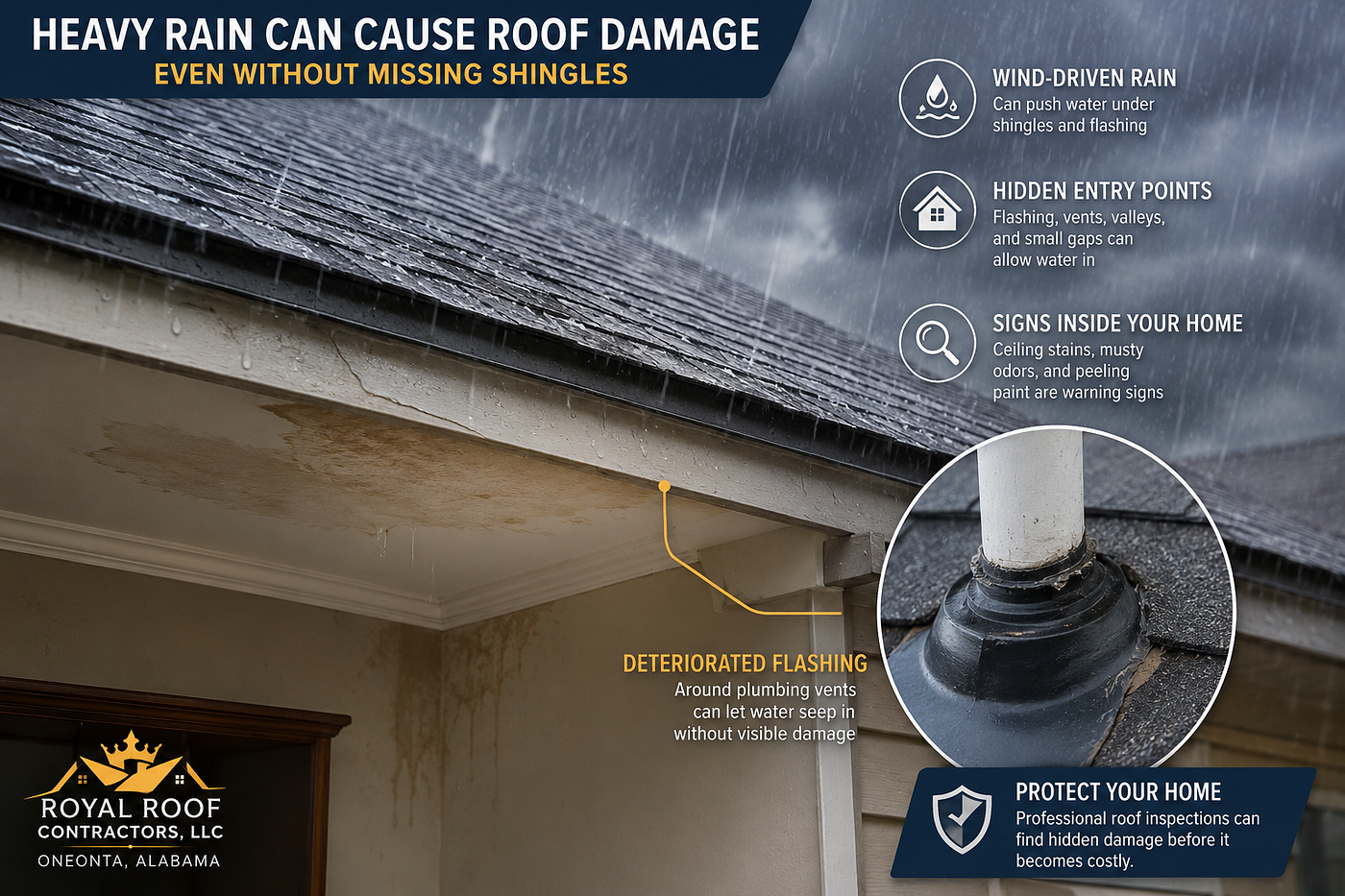
Heavy rain does not always leave behind obvious signs of roof damage. A roof can look completely intact from the ground, with no missing shingles or large visible holes, while water is still finding its way into vulnerable areas of the roofing system. Prolonged and wind-driven rain can expose weaknesses around flashing, roof valleys, skylights, plumbing vent boots, roof penetrations, nail holes, aging shingles, and drainage systems. For homeowners in Oneonta, Alabama, understanding these hidden risks can make the difference between catching a small roofing problem early and dealing with extensive water damage later.
When rain continues for hours or several days, even a small weakness can become an entry point for moisture. Deteriorated sealant around flashing, weakened roofing materials, clogged gutters, or tiny openings that are nearly impossible to see from the ground may allow water to reach the roof deck, attic insulation, walls, or ceilings. Wind-driven rain can make the situation even more complicated because strong winds can push water beneath roofing materials and around roof edges, vents, flashing, dormers, and siding transitions. In some cases, water can travel several feet from the original entry point before becoming visible inside the home. This is why a ceiling stain does not always mean the roof is leaking directly above that spot.
Homeowners should pay attention to subtle warning signs after periods of heavy rainfall. Brown, yellow, or gray stains on ceilings and walls may indicate moisture intrusion. Musty attic odors can point to wet insulation or damp wood, while peeling paint, bubbling drywall, or soft ceiling areas may appear days after the storm. Large amounts of shingle granules in gutters can also indicate that aging asphalt shingles are deteriorating. Sagging areas on a ceiling or roof deck are especially important and should not be ignored because saturated insulation, drywall, or decking can become heavy and weaken structural materials.
A small roof leak can become an expensive problem when it is left untreated. Continued moisture exposure may contribute to rotting roof decking, damaged rafters, wet insulation, mold and mildew growth, damaged drywall, peeling interior finishes, and even potential electrical hazards. Wet insulation can also lose some of its ability to regulate indoor temperatures, potentially making heating and cooling systems work harder. What begins as a minor leak around a vent or flashing component can eventually require repairs to roofing materials, decking, insulation, and interior areas of the home.
The blog post highlights an important real-world example: a homeowner noticed only a faint stain near an upstairs hallway after several days of heavy rain. The exterior shingles appeared intact, but an inspection discovered deteriorated flashing around a plumbing vent. Wind-driven rain had entered beneath the roofing material and traveled along the roof deck before reaching the ceiling. Because the issue was discovered early, the damaged flashing and surrounding materials could be addressed before more extensive damage developed.
After several days of heavy rain, homeowners do not need to climb onto the roof to investigate. In fact, getting onto a wet roof can be dangerous. Instead, inspect visible areas from safe locations. Inside the home, look for ceiling stains, wall discoloration, damp or musty odors, peeling paint, bubbling drywall, and signs of moisture around skylights. If the attic can be accessed safely, check for wet insulation, darkened wood, moisture around nails, or visible water trails. From the ground outside, look for sagging gutters, overflowing downspouts, debris in roof valleys, damaged flashing, lifted or curled shingles, water accumulation near the foundation, or pieces of roofing material on the ground.
Gutters and downspouts deserve particular attention because clogged drainage can cause rainwater to back up beneath roof edges or spill against fascia boards and siding. Keeping gutters and downspouts clear is one of the simplest preventative steps homeowners can take to reduce moisture related roofing problems.
If your home in Oneonta, Alabama has recently experienced prolonged or wind-driven rain, do not wait until water begins pouring through the ceiling before taking action. A professional roof inspection can identify vulnerabilities that are difficult or impossible to see from the ground and can help determine whether moisture is coming from roofing materials, flashing, condensation, plumbing, or another source. Finding a small weakness early can help prevent much larger problems involving roof decking, insulation, mold, drywall, and other parts of the home.
메타데이터
- post_id
- dd85fd98eed5
- slug
- heavy-rain-can-hide-roof-damage-dd85fd98eed5
- url
- https://medium.com/@royalroofcontractorsllc7/heavy-rain-can-hide-roof-damage-dd85fd98eed5
- canonical_url
- https://medium.com/@royalroofcontractorsllc7/heavy-rain-can-hide-roof-damage-dd85fd98eed5
- author_url
- https://medium.com/@royalroofcontractorsllc7
- status
- ok
- fetched_at
- 2026-08-12 23:58:50