Common Causes of Mismatches Between 1042 and 1042-S (and How to Prevent Them)
Mismatches between Form 1042 and 1042-S can result in IRS notices, penalties, and delays
Common Causes of Mismatches Between 1042 and 1042-S (and How to Prevent Them)
Mismatches between Form 1042 and 1042-S can result in IRS notices, penalties, and delays
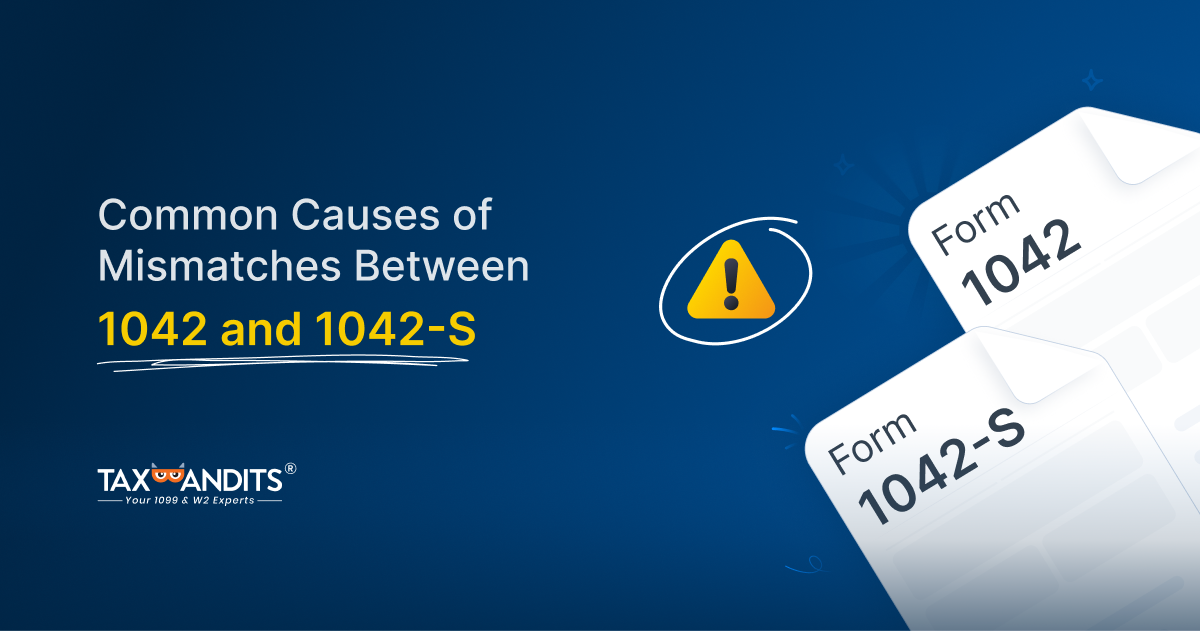
Even small inconsistencies in tax reporting can create significant challenges. When payments are made to foreign recipients, Form 1042 and Form 1042-S work together to provide a complete picture of income and withholding. Form 1042 summarizes total withholding, while Form 1042-S details each recipient’s payment.
Despite careful preparation, discrepancies between these forms occur more often than expected. Mismatches can trigger IRS notices, penalties, and delays in processing. Understanding why these errors occur and how to prevent them is essential to ensuring accurate withholding and smooth reconciliation.
Common causes of mismatches
Mismatches happen when the totals reported on Form 1042-S do not align with the summary reported on Form 1042. Errors can range from minor differences in rounding to incorrect documentation, and they may create complications during IRS reconciliation.
- Rounding and currency differences Form 1042-S requires all amounts to be reported in whole dollars. Adding multiple Form 1042-S forms may cause small discrepancies relative to the totals reported on Form 1042. Payments in foreign currency can also cause imbalances if not consistently converted to U.S. dollars.
- Reporting net income instead of gross income Some withholding agents report net payments, after deductions or expenses, on Form 1042-S. This results in totals on 1042-S being lower than the corresponding summary on Form 1042.
- Incorrect tax treaty or rate application Applying a reduced treaty rate without a valid or current Form W-8BEN or W-8BEN-E can create discrepancies. If 1042-S shows a lower withholding rate while Form 1042 assumes the default 30%, the totals will not align.
- Incorrect TIN or recipient names Omitting or providing invalid Taxpayer Identification Numbers (TINs) or incorrect recipient names prevents proper matching with IRS records, leading to reconciliation errors.
- Improper reporting of joint owners Listing multiple recipients on a single Form 1042-S (Box 13a) is incorrect. Each recipient must have a separate, allocated form to ensure accurate reporting.
- Misclassification of income or withholding Misidentifying a U.S. person as a foreign recipient, using inaccurate income codes, or applying an incorrect tax treaty rate can create mismatches between the detailed 1042-S forms and the summary on Form 1042.
- Chapter 3 vs. Chapter 4 inconsistencies Payments must be correctly classified under either Chapter 3 (general withholding) or Chapter 4 (FATCA). Misreporting the chapter or including both on a single form can lead to reconciliation issues and inaccurate tax liability calculations.
- Unknown recipient reporting Payments flagged as “unknown” due to incomplete documentation require 30 percent withholding. If the summary on Form 1042 does not reflect this withholding, a mismatch occurs.
How to prevent mismatches
Preventing discrepancies requires careful planning, validation, and reconciliation before filing. The following strategies can significantly reduce errors:
- Reconcile totals before filing Compare the total amounts on all 1042-S forms, including gross income and withholding, with the summary on Form 1042. Identifying inconsistencies early prevents errors from carrying over.
- Verify W-8 documentation Ensure all W-8 series forms (W-8BEN, W-8BEN-E, etc.) are complete, valid, and up to date. Accurate documentation ensures that correct treaty rates and withholding percentages are applied.
- Validate recipient information Confirm that TINs and recipient names match IRS records. Accurate identification prevents rejected forms and discrepancies with the summary.
- Check chapter classification Ensure each payment is correctly classified under Chapter 3 or Chapter 4. Proper classification reduces reconciliation issues and ensures tax withholding is accurately applied.
- Handle amendments carefully If discrepancies are discovered after filing, submit an amended 1042-S and update the corresponding Form 1042 summary. Ensure all changes are clearly marked and properly reconciled to maintain accuracy.
The bottom line
Mismatches between Form 1042 and 1042-S can result in IRS notices, penalties, and delays. Common causes include reporting net instead of gross income, incorrect treaty rates, missing or invalid TINs, misclassification of income, rounding differences, unknown recipients, and improperly reconciled amended forms.
By understanding these causes and implementing preventive measures such as validating documentation, reconciling totals before filing, verifying recipient information, and handling amendments correctly, organizations can significantly reduce errors. Consistent and accurate reporting not only ensures compliance but also streamlines the withholding process and avoids unnecessary complications.
메타데이터
- post_id
- dda70dc3052e
- slug
- common-causes-of-mismatches-between-1042-and-1042-s-and-how-to-prevent-them-dda70dc3052e
- url
- https://medium.com/@TaxBandits/common-causes-of-mismatches-between-1042-and-1042-s-and-how-to-prevent-them-dda70dc3052e
- canonical_url
- https://medium.com/@TaxBandits/common-causes-of-mismatches-between-1042-and-1042-s-and-how-to-prevent-them-dda70dc3052e
- author_url
- https://medium.com/@TaxBandits
- status
- ok
- fetched_at
- 2026-07-14 14:45:02