The Haas Paradox- Micro-Budget Aerodynamics and the Bearman-Ocon Era
by Khushi Aravind
The Haas Paradox- Micro-Budget Aerodynamics and the Bearman-Ocon Era
by Khushi Aravind

Haas F1 Team 2026 Livery
At 17 years old, I find myself at the nexus of two seemingly disparate yet profoundly interconnected disciplines: the meticulous architecture of financial strategy and the relentless pursuit of aerodynamic perfection that defines Formula 1. While my contemporaries navigate conventional academic trajectories, I am captivated by the synthesis of these domains-recognizing that the pinnacle of motorsport is not merely a contest of velocity, but a sophisticated exhibition of capital efficiency where incremental gains on the circuit translate into exponential returns in the financial statements. As an aspiring motorsport professional, I have chosen to deconstruct this sport through the prism of financial analytics, positing that mastery of the commercial framework is as imperative to success as understanding the complex fluid dynamics that govern these extraordinary machines.
They say Formula 1 is won in the wind tunnel, but as a student of finance, I believe it’s won in the ledger. My latest analysis dives into why Haas’s front wing strategy, paired with the massive potential of the Ocon-Bearman duo, is a masterclass in Resource Allocation.
The Front Wing Gamble: Where Physics Meets Finance
In the rarefied ecosystem of Formula 1, where behemoths like Mercedes and Red Bull command annual expenditures exceeding $450 million with personnel approaching 1,000, Haas F1 Team operates on an entirely different economic paradigm. With approximately 250 employees and a budget estimated at a mere $120 million, they represent the quintessential case study in operational efficiency within a sport where marginal gains command premium valuations.
The front wing-unquestionably the most sophisticated aerodynamic element on a contemporary F1 car-perfectly encapsulates Haas’s distinctive approach to return on investment. While premier teams might introduce three to four front wing specifications per season, Haas must ensure every development iteration yields quantifiable returns. There exists no margin for experimental failures or expensive miscalculations.
Let us dissect the financial mathematics: A conventional front wing development program commands approximately $1.5 million in computational fluid dynamics (CFD) analysis, wind tunnel validation, and manufacturing execution. For Haas, this represents over 1.25% of their entire annual budget. If this singular component can elevate their performance from P8 to P6 in the Constructors’ Championship, the financial return is substantial. The differential between these positions in F1’s prize money distribution amounts to approximately $12–15 million annually-representing a 900–1000% ROI on that single component investment.
This is where Haas’s “Just-In-Time” manufacturing philosophy becomes operationally critical. Rather than maintaining extensive inventory of multiple specifications, they employ a data-driven methodology to determine optimal configurations before committing to production. As someone fascinated by both financial modeling and motorsport engineering, I perceive this as the physical manifestation of lean manufacturing principles applied to the most technologically advanced sport on Earth.
The front wing’s role in generating downforce has evolved significantly under the current ground effect regulations. With the floor now responsible for approximately 60% of the car’s overall downforce, the front wing’s primary function has shifted from pure downforce generation to managing the wake structures that feed the floor. This technical nuance makes development exponentially more challenging-and valuable-as minor modifications can have cascading effects on overall car performance.
The Ollie Bearman Factor: High-Value Disturbance
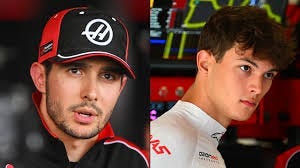
Formula 1 has always been fundamentally a business of talent acquisition and strategic development, yet few assets represent the efficiency that Ollie Bearman brings to Haas. His unexpected debut in Saudi Arabia-securing championship points in his inaugural Grand Prix with zero preparation in the car-wasn’t merely impressive from a sporting perspective; it was a masterstroke of cost-effective performance delivery.
From a financial perspective, Bearman represents what I term a “High-Value Disturbance” in the F1 driver market. On a junior driver salary estimated at €500,000 annually, his points-per-dollar ratio is potentially unmatched on the grid. Compare this to the €15–25 million commanded by top-tier drivers, and the economic advantage becomes conspicuously apparent.
What renders Bearman particularly valuable to Haas is his amalgamation of raw talent and developmental potential. At just 19 years old, he brings the adaptability of youth with the technical sophistication required to provide meaningful feedback on aerodynamic modifications. His ability to rapidly acclimate to different car characteristics-demonstrated when he transitioned between the Ferrari and Haas machinery-suggests a driver who can extract maximum performance from limited development opportunities.
The business case extends beyond the racetrack. While the paddock is captivated by Ollie’s personality and backstory, the substantive story is his efficiency-delivering world-class points-per-dollar spent. His marketability represents what in business terminology would be classified as “Fan Engagement Growth”-a metric that directly correlates with sponsor valuation. For a team operating on Haas’s budget, these ancillary revenue streams are not merely beneficial; they are fundamental to survival and growth.
Recent events have only enhanced Bearman’s value proposition. His 51g crash at the Japanese Grand Prix, while alarming from a safety perspective, demonstrated his resilience and ability to perform under extreme circumstances. More significantly, this incident-caused by speed differentials resulting from energy management strategies under the new 2026 regulations6-prompted the FIA to implement emergency regulatory changes. The fact that Bearman’s experience directly influenced the sport’s regulatory framework speaks volumes about his impact and the value of his feedback to both his team and the broader F1 ecosystem.
Esteban Ocon — The Experienced Aggregator
If Bearman represents high-growth potential, then Esteban Ocon brings the stabilizing force of proven performance. As a race winner with over 150 Grand Prix starts, Ocon provides what I would term “Technical Feedback Aggregation”-the ability to translate car behavior into actionable engineering insights.
From a portfolio management perspective, the Ocon-Bearman pairing represents a balanced investment strategy. Ocon provides the established baseline performance, while Bearman offers the growth potential. This dynamic is particularly valuable for Haas’s development philosophy, where every test session must yield maximum data acquisition.
Ocon’s experience becomes especially critical when evaluating new aerodynamic components. His ability to provide consistent, nuanced feedback allows engineers to make confident decisions about which developments to pursue-a capability that becomes exponentially more valuable when resources are constrained. For a team that cannot afford to pursue multiple development paths simultaneously, this clarity of communication is invaluable.
The business case for Ocon extends beyond his technical contributions. His proven ability to develop relationships with engineers and provide consistent feedback creates what organizational psychologists term “psychological safety” within the technical team-an environment where honest assessment of performance can occur without fear of reprisal. This cultural element, while intangible, directly impacts development efficiency and ultimately, competitive performance.
The 2026 Technical Shift: Preparing for Active Aerodynamics
Looking ahead to the 2026 regulations, which will introduce active aerodynamics and significantly revised power units, Haas faces both challenges and opportunities. The new regulations have already proven controversial, with the FIA implementing emergency adjustments after just three races1•2•3•7•9•10. These changes7,9, aim to address safety concerns and reduce the “lift-and-coast” driving style that had emerged under the initial rules.
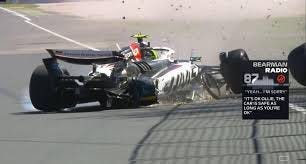
The Japanese Grand Prix saw Oliver Bearman crash at a high speed due to a speed differential that was caused by him using more electrical energy than Franco Colapinto, who opted to harvest his energy⁶. This incident highlighted the safety implications of the new energy management systems and directly influenced the regulatory adjustments that followed.
For Haas, these rapid regulatory changes present both a challenge and an opportunity. As a smaller team with limited resources, they must be exceptionally agile in responding to these changes. However, their data-driven approach and efficient development methodology may prove advantageous in this fluid regulatory environment.
The new regulations will place greater emphasis on software integration and real-time aerodynamic optimization-areas where computational efficiency may offset resource limitations. Haas’s unique technical relationship with Ferrari and Dallara becomes particularly relevant here. While some view their dependency on Ferrari for power units and certain components as a limitation, I perceive it as a strategic advantage that allows resource concentration in areas where they can differentiate-particularly in aerodynamic efficiency and driver development.
The front wing’s role in the 2026 regulations will evolve further, with active aerodynamic elements requiring sophisticated control algorithms and real-time optimization. This shift toward software-defined aerodynamics could potentially level the competitive landscape, as computational resources scale differently than physical manufacturing capabilities.
For Haas, the key will be leveraging their data-driven approach to maximize the effectiveness of these new systems. Their experience with limited development resources has compelled them to develop sophisticated simulation and analysis capabilities that could prove advantageous in the new regulatory environment.
Conclusion: The Stock to Watch in F1 Finance
Haas F1 Team represents what value investors classify as a “contrarian opportunity”-an asset trading below its intrinsic value due to market misperception. While traditional F1 powerhouses continue to spend their way to performance, Haas is building a sustainable model based on efficiency, data-driven decision making, and strategic talent development.
The combination of their aerodynamic philosophy with the Ocon-Bearman driver lineup creates what I believe is the most intriguing business case in Formula 1. They’re not merely attempting to compete with limited resources; they’re fundamentally reimagining how success can be achieved in this technologically demanding sport.
As someone who aspires to work in F1 business, I find Haas’s approach not just fascinating but inspiring. They demonstrate that with the right combination of financial discipline, technical innovation, and strategic thinking, it’s possible to challenge the established order-even in a sport as resource-intensive as Formula 1.
For those observing F1 through a business lens, Haas isn’t just an underdog story-it’s a case study in resource optimization that offers lessons far beyond the racetrack. And that makes them the stock to watch in the complex world of F1 finance.
References:
https://www.theguardian.com/sport/2026/apr/20/formula-one-new-regulations-changes-motor-sport
https://en.wikipedia.org/wiki/2026_Formula_One_World_Championship
https://www.formula1.com/en/page/2026-f1-regulations
https://www.fia.com/news/fia-statement-amendments-2026-f1-regulations
메타데이터
- post_id
- ddb3304f988c
- slug
- the-haas-paradox-micro-budget-aerodynamics-and-the-bearman-ocon-era-ddb3304f988c
- url
- https://medium.com/@stretchwithkhushi/the-haas-paradox-micro-budget-aerodynamics-and-the-bearman-ocon-era-ddb3304f988c
- canonical_url
- https://medium.com/@stretchwithkhushi/the-haas-paradox-micro-budget-aerodynamics-and-the-bearman-ocon-era-ddb3304f988c
- author_url
- https://medium.com/@stretchwithkhushi
- status
- ok
- fetched_at
- 2026-07-26 10:47:38