One Week of Cold Plunges May Switch On Your Cells’ Repair System, Study Finds
One Week of Cold Plunges May Switch On Your Cells’ Repair System, Study Finds
One Week of Cold Plunges May Switch On Your Cells’ Repair System, Study Finds
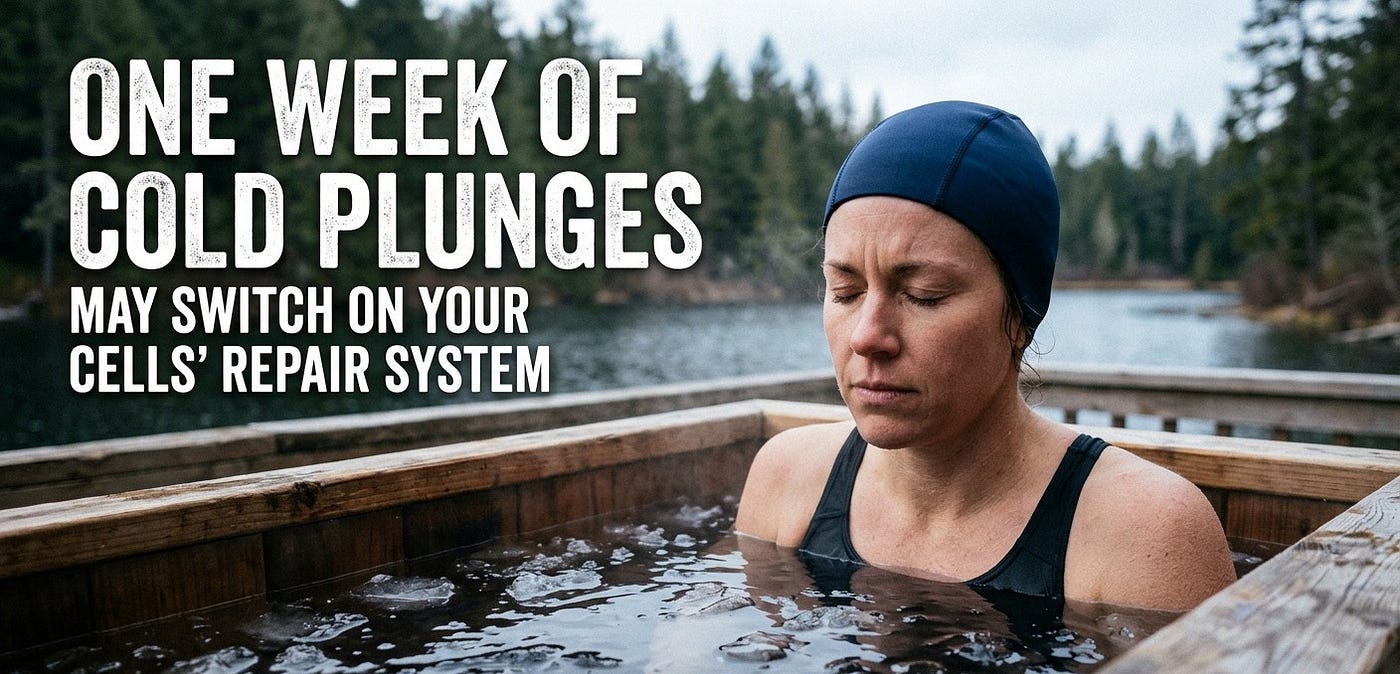
Cold Plunges
One Week of Cold Plunges May Switch On Your Cells’ Repair System, Study Finds
Plenty of people swear by cold plunges for the post-dip buzz alone. New research out of the University of Ottawa suggests something else might be happening beneath the surface — quite literally, inside individual cells.
The study, led by researchers Kelli King and Glen Kenny in the university’s School of Human Kinetics, found that just seven days of daily cold-water immersion was enough to trigger measurable changes in how cells defend and repair themselves. It’s an intriguing result, but it comes with the kind of fine print that’s easy to skip past in a flashy headline — so here’s what the study actually found, and what it doesn’t prove yet.
The Setup
Ten healthy young men sat in 14°C water (about 57°F) for one hour a day, seven days in a row. That’s a meaningful detail: 14°C is cold enough to sting, and an hour is a long time to sit in it — well beyond the quick, bracing showers most cold-plunge enthusiasts take.
Researchers drew blood before the week began and again after it ended, then looked for changes in cellular activity. What they found centered on a process called autophagy — essentially, a cell’s internal cleanup system, where damaged components get broken down and recycled rather than left to accumulate. By the end of the week, autophagy markers had increased. At the same time, signs of apoptosis (programmed cell death) had dropped, and the participants’ cells appeared better equipped to handle cold-related stress than they had at the start.
A Rocky Start, Then Adaptation
What stands out in the data isn’t just the end result — it’s the path the body took to get there.
- Early on, markers of cellular stress and damage actually went up, suggesting the first few sessions hit the body harder than it could comfortably absorb.
- By the middle of the week, that pattern reversed, with autophagy beginning to ramp up as repair processes kicked in.
- By the final session, participants’ cells showed clearly improved tolerance to the cold.
In other words, the body appeared to adapt — struggling at first, then learning to cope more efficiently as the week went on. Researchers who study aging and cardiovascular health pay close attention to autophagy because, in general, cells that maintain themselves well tend to stay healthier longer. But that’s a long way from saying cold plunges extend lifespan. This study tracked short-term blood markers over one week — it didn’t follow anyone’s long-term health, and it didn’t include any women or older adults. Ten participants is also a small enough sample that the results should be read as an early signal worth following up on, not a settled fact.
Worth Trying? Here’s What to Know First
The popularity of cold plunging isn’t new, and this study gives it a bit of biological backing. But it’s worth remembering that the protocol used here — an hour at 14°C — is far more extreme than a typical cold shower, and cold exposure isn’t something to treat casually.
A few things worth keeping in mind if you’re curious about trying it yourself:
- Talk to a doctor first if you have any heart condition, high blood pressure, or are pregnant. Cold immersion puts real stress on the cardiovascular system.
- Never go in alone, especially in open water like a lake or the sea. Sudden cold exposure can trigger an involuntary gasp reflex, which becomes dangerous fast if you’re not somewhere you can immediately get help.
- Start small. There’s no need to replicate an hour-long session right away — shorter, milder exposure is a safer way to find out how your body responds.
The Bottom Line
This study adds a real, if early, piece to a much bigger puzzle. A week of consistent cold exposure appears to nudge cells toward repairing and protecting themselves rather than breaking down. Whether that adds up to better long-term health — or simply reflects a short-term stress response — is something only larger, more diverse studies can answer.
For now, cold water isn’t a proven anti-aging hack. It looks more like a manageable stressor that, given a little time, the body can learn to handle.
메타데이터
- post_id
- ddcac8a0b2c9
- slug
- one-week-of-cold-plunges-may-switch-on-your-cells-repair-system-study-finds-ddcac8a0b2c9
- url
- https://medium.com/@csaroj057/one-week-of-cold-plunges-may-switch-on-your-cells-repair-system-study-finds-ddcac8a0b2c9
- canonical_url
- https://medium.com/@csaroj057/one-week-of-cold-plunges-may-switch-on-your-cells-repair-system-study-finds-ddcac8a0b2c9
- author_url
- https://medium.com/@csaroj057
- status
- ok
- fetched_at
- 2026-08-18 19:50:59






