Before We Destroy Genius
On memory, scientific imagination, and a house that asked to be remembered
Before We Destroy Genius
On memory, scientific imagination, and a house that asked to be remembered
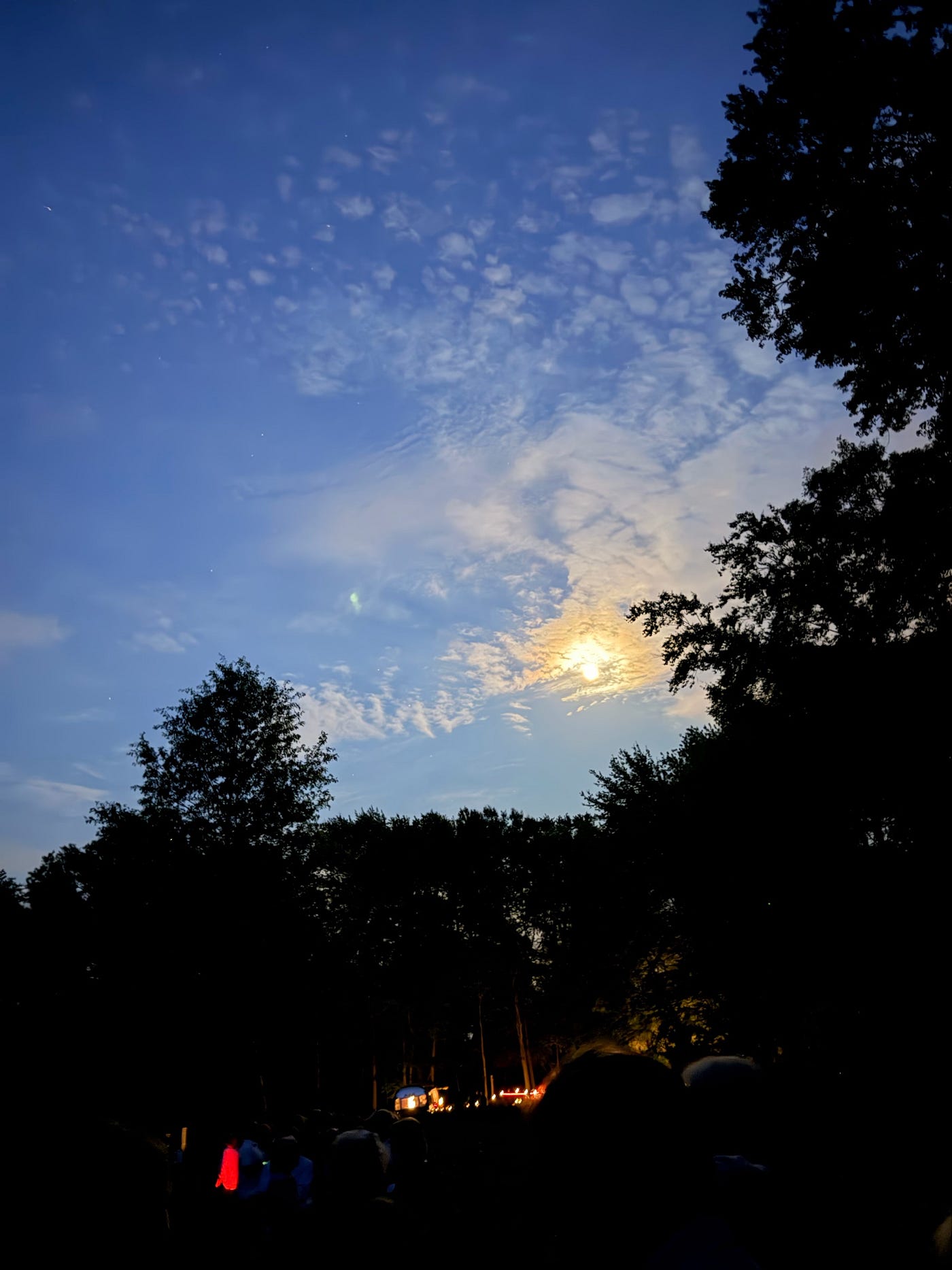
The first time my mother and I went, we couldn’t get inside. The estate sale had closed for the day. We stood outside for a moment, taking in the exterior, the quiet of the cul-de-sac, the sense of something unfinished. Then we left.
I live several towns over and don’t own a car. The odds of making it back before the house closed to the public felt slim. Life would have easily carried on.
But that evening, a friend texted me about going antiquing the next morning.
Without overthinking it, I suggested something different: what if we went back to the house instead?
He agreed.
So the next day, unexpectedly and almost improbably, I found myself returning — stepping across the threshold I hadn’t been allowed to cross the day before.
That’s when the recognition arrived.
Not dramatic. Not mystical. Physical.
A quiet, immediate knowing in my body: I’ve been here before.
Not literally — but in dreams that have visited me intermittently over the past five years. As I moved through the space, that sense only deepened. This wasn’t discovery. It was remembrance.
Later that evening, I shared the experience with a friend. In one of those earlier dreams, her mother and brother had appeared in the space with me. I had never told her this before. She went still, then told me something I could not have known: her mother — who has since passed — grew up as a child on this very cul-de-sac.
Memory folded in on itself.
This is not how we usually talk about buildings. But some places don’t enter us through logic. They arrive through pattern.
A House Built From Curiosity
The home once belonged to Raymond Damadian, the physician-scientist who invented MRI — a breakthrough that permanently transformed medicine by allowing doctors to see inside the human body without invasive surgery.
Damadian’s work emerged in the same era as Apollo 11.
That coincidence matters.
Humanity learned to look outward into space and inward into ourselves at nearly the same moment.
Apollo mapped the cosmos.
MRI mapped the body.
Standing in this house, you can feel that dual legacy.
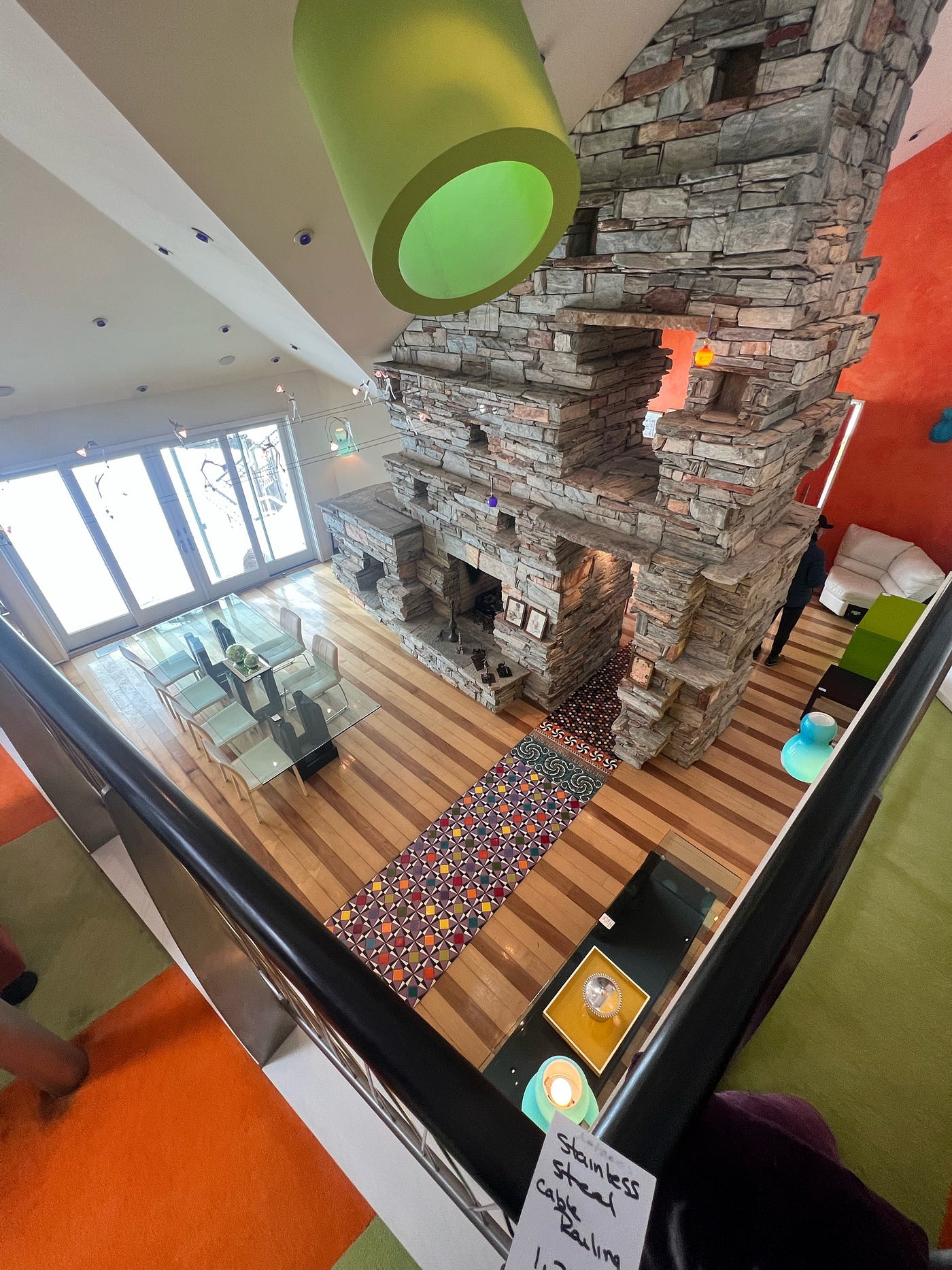
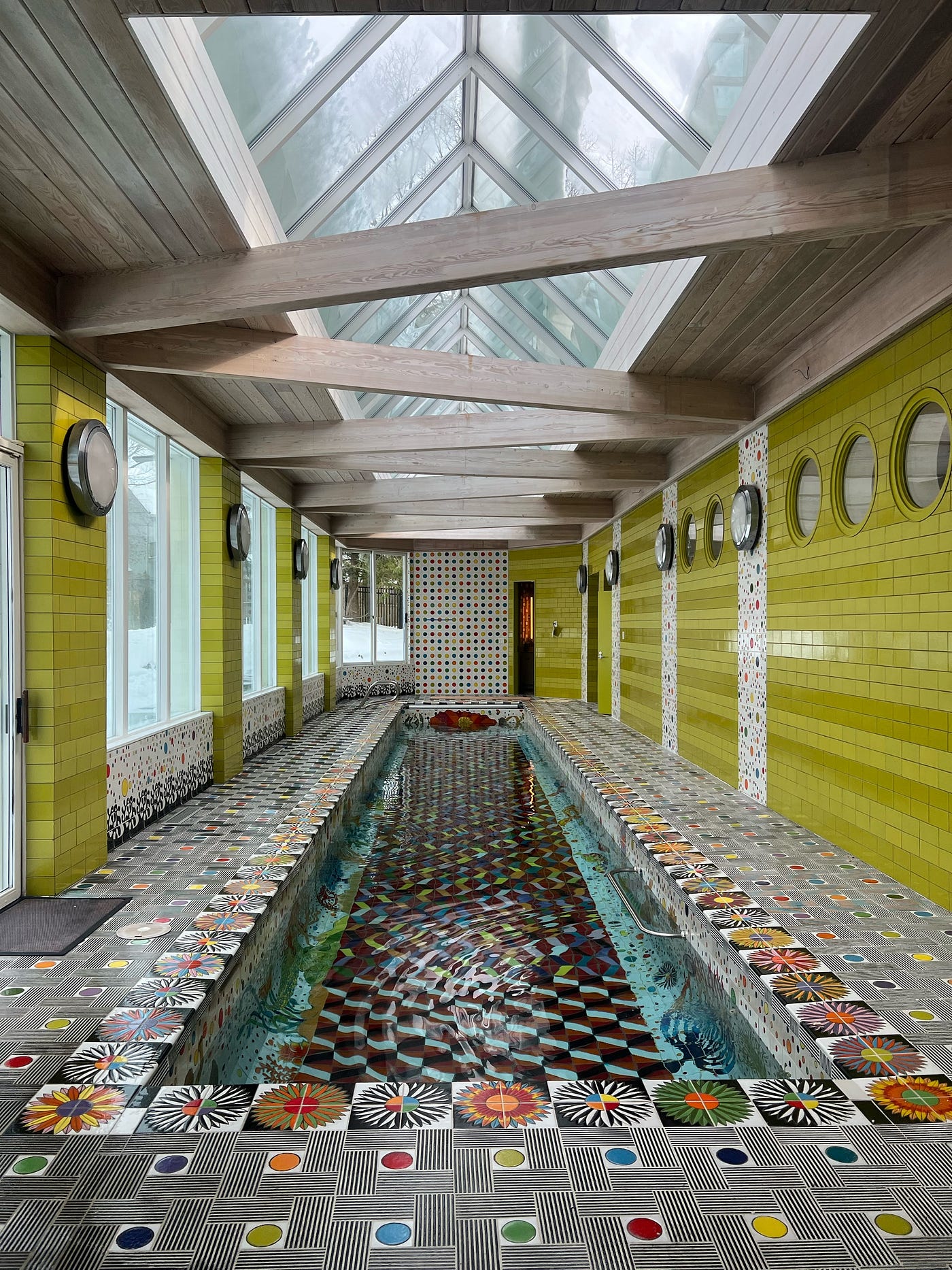
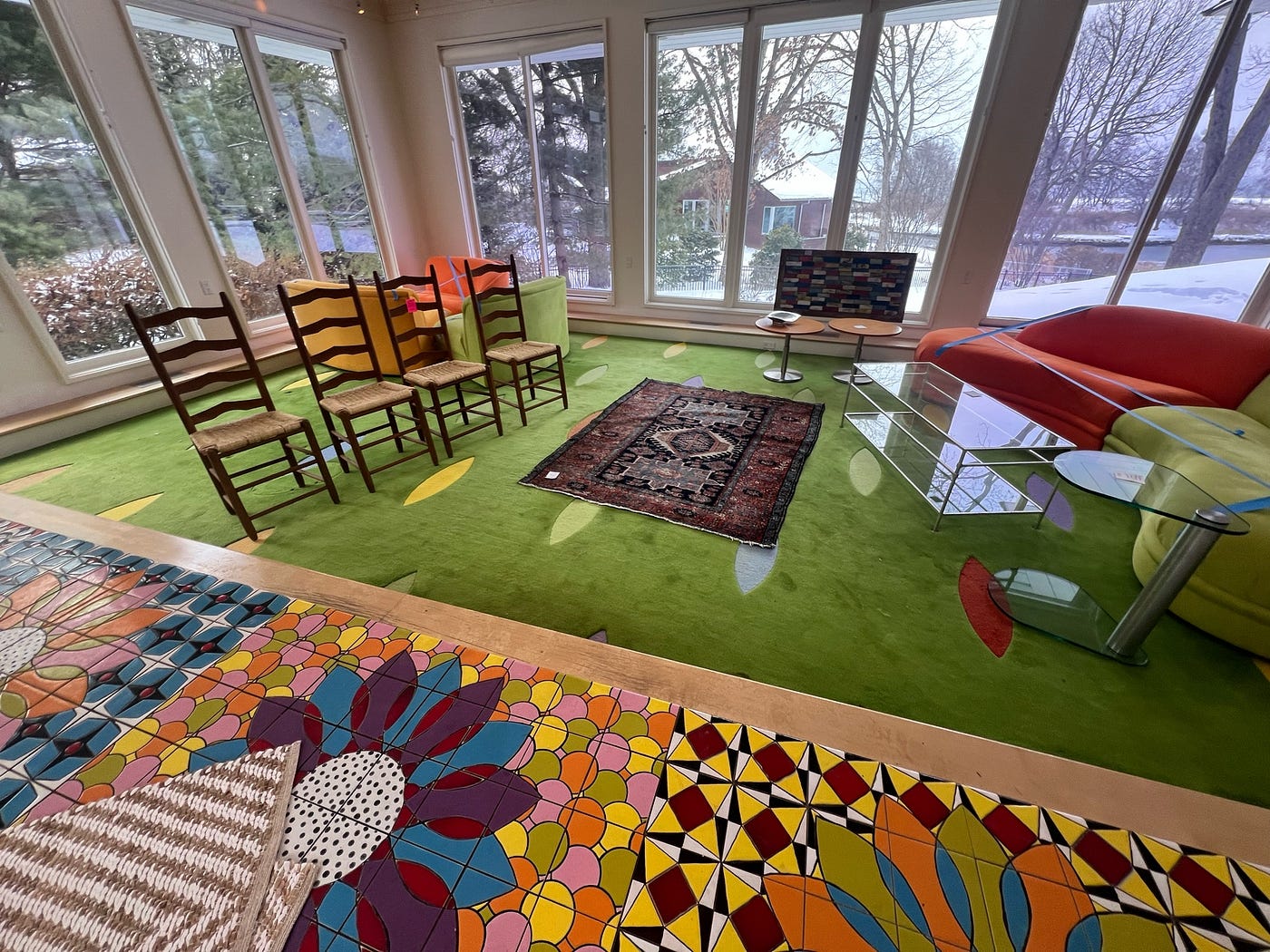
The architecture doesn’t behave like conventional real estate. It behaves like a living instrument. Curved sightlines, layered color fields, transparent surfaces, and unexpected geometries create something closer to a resonance chamber than a residence.
This was not a home designed for resale value.
It was a home shaped by a mind that thought in frequencies.
This was where Damadian lived — but more importantly, where he imagined.
The Observatory
I was drawn almost urgently to the observatory — a high, curved space that opens to water and sky. Standing there with other visitors that day, we all felt it.
This wasn’t private property in the ordinary sense.
It was a public good.
A place that invites reflection.
A place that quiets you.
A place that makes you look outward and inward at once.
Later, after yoga, I sat with a tarot meditation — a stream-of-consciousness exercise meant not for prediction, but for listening. What emerged was not fear. It was responsibility.
Trusting inner wisdom.
Returning to what calls you.
Chaos before clarity.
A message from the inner self about journeys, thresholds, and choosing what we carry forward.
Some structures hold furniture.
Some hold art.
Some hold culture.

What We Preserve Says Who We Are
Connecticut knows how to protect places that serve the public imagination. We did it with Grace Farms. We did it with the Glass House.
In both cases, we recognized that certain spaces matter beyond ownership. They carry ideas. They shape how people gather, think, and feel.
This house belongs in that lineage.
Not because it is perfect.
But because it is rare.
It is one of the few residential environments shaped by a person whose work altered the trajectory of human health. It is scientific imagination rendered livable. It is curiosity made architectural.
Today, it faces demolition.
That is not unusual in Fairfield County. Progress often arrives as replacement.
But occasionally, a place asks something different of us.
Preservation does not have to mean freezing time. It does not have to block development. It does not have to be adversarial.
There are thoughtful pathways: adaptive reuse, partial preservation, creative stewardship, interim programming, partnerships that honor both private ownership and cultural legacy.
This doesn’t have to be a fight between nostalgia and progress.
It can be an invitation to do something more interesting.
A Quiet Appeal
We live in an age of acceleration. Faster builds. Bigger footprints. Higher returns.
But genius is not manufactured at that pace.
Sometimes it leaves physical traces.
Sometimes it waits quietly to see if anyone notices.
I’m writing this not as protest, but as witness.
I’m writing because a house asked to be remembered.
And because what we choose to preserve — especially when it would be easier not to — becomes part of our moral architecture.
Before we destroy genius, we should at least ask what it’s worth.
Not just in dollars.
In memory.
In meaning.
In the example we set for those who come next.
Sometimes stewardship is the most forward-looking choice we can make.
YouTube Tour: https://youtube.com/shorts/gzXUbk9d4M8?si=8lNgXbl782A-P3hK




메타데이터
- post_id
- de4a3288ce2b
- slug
- before-we-destroy-genius-de4a3288ce2b
- url
- https://medium.com/@ammarsili/before-we-destroy-genius-de4a3288ce2b
- canonical_url
- https://medium.com/@ammarsili/before-we-destroy-genius-de4a3288ce2b
- author_url
- https://medium.com/@ammarsili
- status
- ok
- fetched_at
- 2026-07-18 02:11:01