Multi-Account Distribution Isn’t an RPA Problem.
Most multi-account TikTok automation content converges on the same punchline: “One instruction, 50 phones execute in parallel.”
Multi-Account Distribution Isn’t an RPA Problem. It’s a Fleet Problem.Turning “50 Cloud Phones” into an Operable System with BeeOS

Most multi-account TikTok automation content converges on the same punchline: “One instruction, 50 phones execute in parallel.”
It sounds great. But if you’ve actually operated 50 devices for more than two weeks, you learn quickly that parallel execution is the easy 1%.
The hard 99% is everything else:
What happens when phone #23 gets stuck on a captcha prompt?
- How do you confirm a warming task truly finished if the receipt never came back?
- A video generation step takes 90 seconds — what is your “brain” doing during those 90 seconds?
- A device drops off the network — do you retry, wait, or reassign?
- The request flaps, you retry twice, and the same video gets posted twice on the same account — how do you prevent that?
Those aren’t “better scripts” problems. They are classic distributed systems problems, wearing a TikTok UI.
1. The ceiling of “one prompt, many phones”
Let’s be clear: cloud phones + an AI agent to operate multiple TikTok accounts is a legitimate direction. It is one of the most practical ways to scale short-form operations in 2026.
DuoPlus’ recent guide, *How to Automate TikTok Account Management with AI Agent (Batch Setup & Auto Posting)*, frames the repetitive surface area well. There are three primary task classes:
- Account warming / health maintenance: watch feeds, like, comment, follow — establish normal behavior and reduce risk.
- Daily engagement: search, visit profiles, watch, like, save, comment — maintain activity and positioning.
- Publishing: upload videos, generate captions/tags, and post consistently.
This works surprisingly well at 3–5 devices.
At 20, 50, 100 devices, the problem shape changes.
Missing #1: a control plane (and the collaboration/access planes that disappear with it)
“Trigger 50 devices with one instruction” is efficient only if you can answer basic operational questions:
- Which devices are online right now, and which are dead?
- Which account is bound to which device, in which region/IP identity?
- What was the last task on each device — did it succeed, fail, or stall?
- How do you target only Japan-region devices for a workflow?
- How do you quarantine a suspicious device/account for 24 hours?
Without a control plane, you’re not operating a system — you’re juggling 50 independent remotes.
And in practice, when the control plane is missing, the collaboration plane and access plane tend to be missing too. You end up keeping the whole operation alive with “humans watching dashboards + manual patching”.
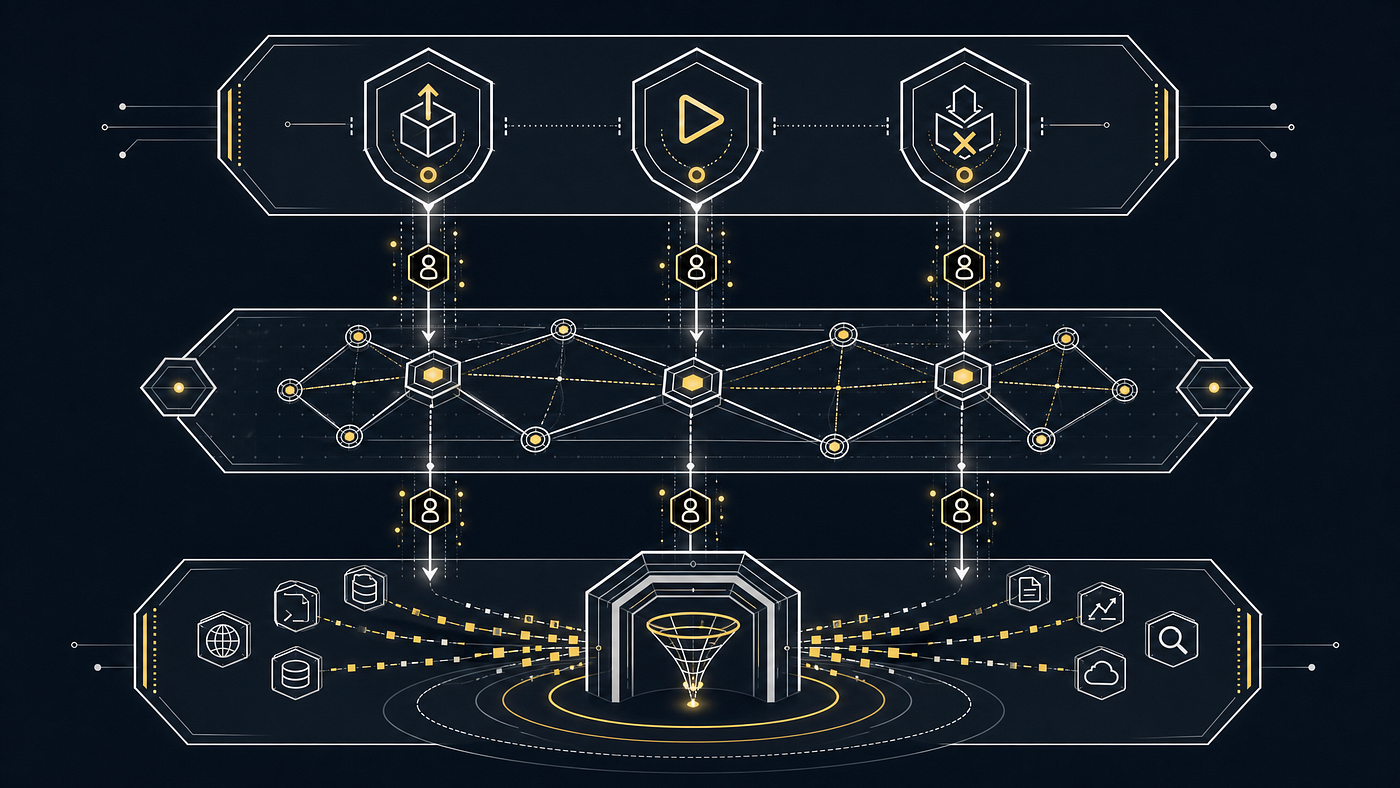
Let’s define the three planes explicitly:
- Control plane: lifecycle, quotas, regions, metering, health, inventory.
- Collaboration plane: how tasks are delivered, how progress streams back, how replies are correlated, how long-running work behaves.
- Access plane: how your “brain” calls external capabilities (video, voice, editing, proxies, analytics) and composes them into a toolchain.
Missing #2: task state, observability, and failure handling
The most neglected question in “batch execution” is: how do you know it actually finished?
For a single warming run, common failure modes include:
- TikTok opens, then a “network error” modal blocks step 3 of 10.
- Likes succeed, comments fail due to account restrictions.
- Everything completes, but the receipt never makes it back.
- The device receives the task, then loses power before starting.
If your system lacks a state machine, timeouts, retries, and idempotency, your “fix” becomes “run it again” — which is how you end up posting duplicate comments in 5 minutes and tripping risk controls.
Missing #3: the creation toolchain is stuck at the execution edge
Many solutions couple “creation” and “posting” on the phone:
Upload a file → phone-side agent handles it → publish.
But real pipelines often look like this:
- Generate short clips via Kling / Seedance (30–120s per step)
- Generate voice via ElevenLabs
- Assemble via an editor
- Only then hand the final asset to the phone for posting
Creation shouldn’t run on phones. Posting shouldn’t block on creation. Generation is the brain’s job. Posting is the hands’ job.
Missing #4: device heterogeneity is ignored
At scale, your fleet is rarely homogeneous:
- Some devices are cloud phones (cheap, elastic, good for TikTok global).
- Some devices are physical phones (expensive but real — SIM/GPS/IMEI — required for strict environments).
If your system can only manage one type, you’ll end up maintaining two schedulers, two monitors, and two state models. That’s not scaling — it’s debt.

2. Redefining the problem: Fleet, not RPA
RPA thinking is: “I press buttons for humans.” You give it a flow; it repeats.
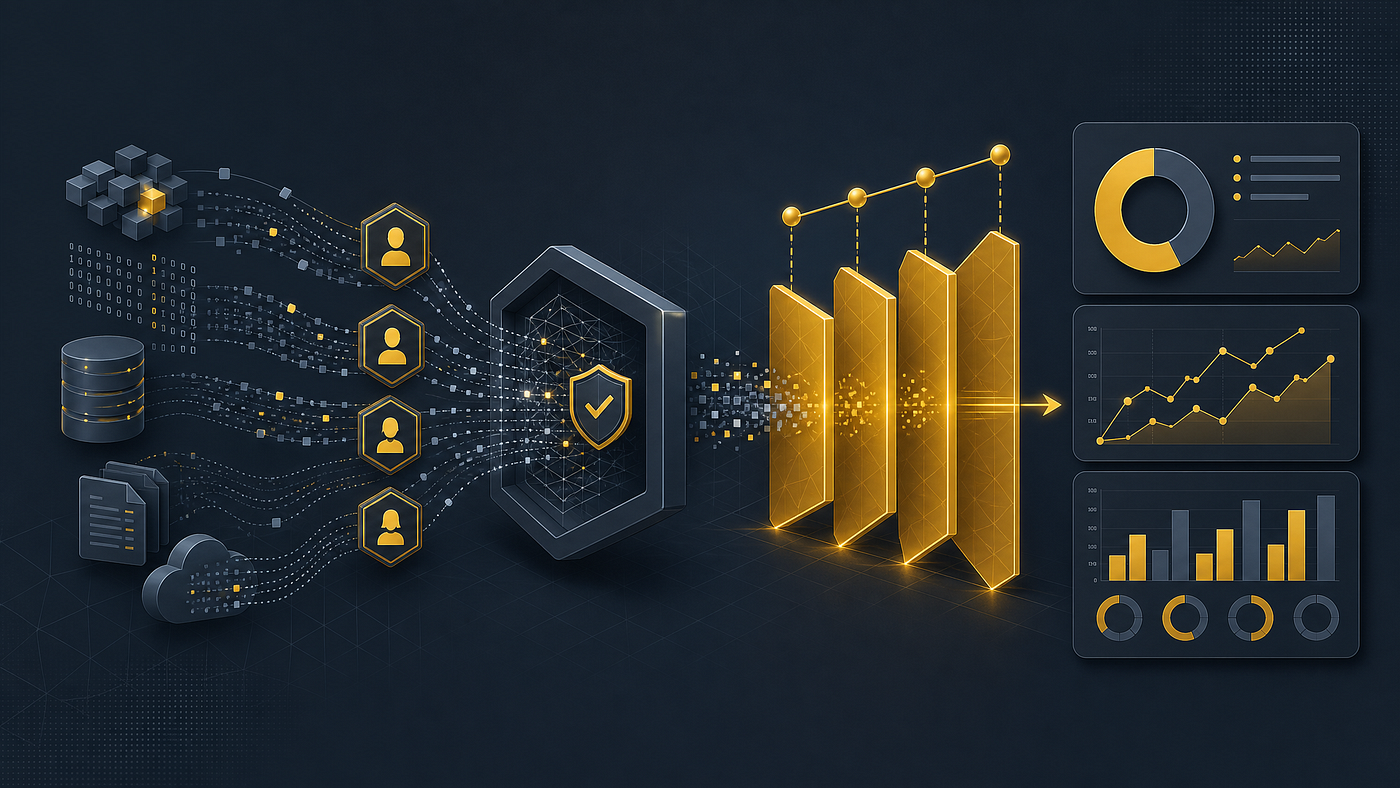
Fleet thinking is: “I operate a fleet.” Each member has identity, state, capability, and health. The central brain delegates intent, not UI steps. Each member executes and reports progress.
Topology-wise, it’s a fundamental shift:

In BeeOS, that system stands on three protocols:

This division of labor isn’t new. It mirrors the discipline of mature systems: separate control, collaboration, and access, then keep the runtime honest.
3. What a fleet system looks like

Component map

Why lifecycle belongs in the control plane
In many cloud-phone stacks, device management and task execution live in separate worlds. You boot devices in one console and push tasks in another.
That’s how you end up sending work to a powered-off device — and waiting 30 minutes to timeout.
With OpenAPI as the control plane, the brain can query live inventory and only schedule onto healthy, running devices:
import { InstancesApi } from "@beeos-ai/sdk";const api = new InstancesApi(config);const fleet = await api.listInstances({
kind: "mobile-cloud",
region: "ap-northeast-1",
status: "running",
labels: { platform: "tiktok", market: "jp" },
});// fleet.items: online TikTok JP devices
// schedule only onto running instancesBatch provisioning becomes a first-class operation, not a spreadsheet ritual:
const regions = [
  { region: "ap-northeast-1", market: "jp", count: 8 },
  { region: "us-west-2", market: "us", count: 5 },
  { region: "ap-southeast-1", market: "sea", count: 5 },
];
for (const { region, market, count } of regions) {
await Promise.all(
Array.from({ length: count }, (_, i) =>
api.deployInstance({
name: `tiktok-${market}-${String(i + 1).padStart(2, "0")}`,
kind: "mobile-cloud",
region,
config: {
proxy: { pool: `${market}-residential` },
timezone:
market === "jp"
? "Asia/Tokyo"
: market === "us"
? "America/Los_Angeles"
: "Asia/Singapore",
language: market === "jp" ? "ja" : "en",
},
labels: { platform: "tiktok", market },
})
)
);
}Authentication note (mirroring other BeeOS articles): control-plane operations are typically user-level keys (oag_), while invoking a specific agent is typically done with agent-bound keys (bak_). See [Authentication](https://docs.beeos.ai/authentication.md).
4. Fleet-ifying the three repetitive task classes

Before we get tactical: whatever approach you take, you still need to respect platform policies and avoid unsafe behavior. Fleet discipline is about operability, not “trying to outsmart risk controls.”
4.1 Warming: fan-out + per-account personalization
Warming is not “50 accounts do the same thing.”
If the fleet behaves like a synchronized army, it is not “warming” — it is a signature.
The fleet approach is: generate personalized tasks per device/account persona.
interface WarmingTask {
  device_id: string;
  account_handle: string;
  persona: {
    interests: string[];
    region: string;
    language: string;
  };
  actions: {
    browse_recommended: number;
    search_keywords: string[];
    like_probability: number;
    comment_probability: number;
    comment_style: "short" | "emoji" | "question";
    follow_probability: number;
    duration_minutes: number;
  };
  idempotency_key: string;
  timeout_seconds: number;
}
Instead of one broadcast prompt, the brain produces N distinct tasks:
- JP-01: “Tokyo, cats + photography” → search
#フィルム写真, browse 15, likes 4–6, occasional emoji comments on cat content. - US-03: “LA, fitness + meal prep” → search
protein shake recipe, browse 10, low comment probability. - SEA-02: “Singapore, travel” → no search, longer dwell time, slower rhythm.
Distribute via A2A fan-out:
const tasks = generatePersonalizedWarmingTasks(fleet, personas);await Promise.allSettled(
tasks.map((task) =>
a2a.sendMessage({
agentId: task.device_id,
message: {
role: "user",
parts: [{ kind: "text", text: JSON.stringify(task) }],
},
idempotencyKey: task.idempotency_key,
timeoutMs: task.timeout_seconds * 1000,
})
)
);And collect streaming progress:
{ "status": "in_progress", "step": "browsing_recommended", "progress": "7/15", "device": "tiktok-jp-01" }
{ "status": "in_progress", "step": "searching", "keyword": "#フィルム写真", "device": "tiktok-jp-01" }
{ "status": "in_progress", "step": "liking_video", "video_id": "v_abc123", "device": "tiktok-jp-01" }
{ "status": "completed", "summary": { "browsed": 15, "liked": 5, "commented": 2, "followed": 0 }, "device": "tiktok-jp-01" }
Failure handling is a first-class part of the design:
- If no terminal status arrives within
timeout_seconds, markneeds_retry. - Retry with the same
idempotency_keyto avoid duplicate effects. - If a device reports
blocked(e.g., captcha), markneeds_human_reviewand do not auto-retry. - If a device times out repeatedly, check health via OpenAPI and reassign work.
4.2 Engagement: scheduling + guardrails
Engagement differs from warming: warming establishes a baseline; engagement nudges positioning while keeping activity natural.
This is typically scheduled by local time windows (morning feed, lunch search, evening peak).
The key addition at fleet scale is a guard (the same design philosophy as the ComplianceGuard in the BeeOS cold outreach pipeline):
interface EngagementGuard {
  checkFrequency(accountId: string): Promise<{
    pass: boolean;
    reason?: string;
    cooldown_minutes?: number;
  }>;
checkBehaviorPattern(accountId: string, recentActions: Action[]): Promise<{
pass: boolean;
issues?: string[];
suggestions?: string[];
}>;
}Examples of what it catches:
- “20 likes in the last hour” → enforce cooldown.
- “same time, same sequence, every day” → add jitter.
- “comments too repetitive” → regenerate.
- “DNC targets” → skip.
4.3 Publishing: decouple creation from distribution

Publishing is two distinct stages: creation and distribution.
Stage A: creation via MCP (async-friendly)
The brain calls its creation toolchain through MCP:
Brain agent (BeeOS OpenClaw cloud instance)
  ├── MCP: video.kling.generate(script, style, duration)
  ├── MCP: video.seedance.generate(prompt, aspect_ratio)
  ├── MCP: voice.elevenlabs.tts(text, voice_id, language)
  ├── MCP: edit.compose(video_clips, audio, subtitles)
  └── MCP: image.generate(thumbnail_prompt)
The critical design decision: don’t block the brain on long tasks.
Submit creation work, get a task id back, continue orchestrating the fleet, and rejoin the posting pipeline when the asset is ready (event-driven or polling).
Stage B: distribution via A2A
Once assets are ready, dispatch a posting task to the target device agent:
interface PublishTask {
  device_id: string;
  account_handle: string;
  content: {
    video_url: string;
    caption: string;
    hashtags: string[];
    thumbnail_url?: string;
    schedule_at?: string; // ISO 8601
  };
  publish_config: {
    visibility: "public" | "friends";
    allow_comments: boolean;
    allow_duet: boolean;
  };
  idempotency_key: string;
  timeout_seconds: number;
}
The device agent executes UI details (download, open app, upload, handle popups, publish), while the brain only cares about intent and results.
If you distribute across multiple platforms, the fan-out becomes multi-target:
Brain agent
  ├── Create content (MCP toolchain)
  │     ▼
  │   base asset + platform variants
  │
  ├── TikTok (EN caption, global tags) ──► A2A ──► cloud phone fleet
  ├── Douyin (ZH caption, CN tags)      ──► A2A ──► physical phone fleet
  ├── Instagram (square cut)            ──► A2A ──► cloud phone fleet
  └── Xiaohongshu (cover text)          ──► A2A ──► physical phone fleet
From the brain’s perspective, cloud phones and physical phones share the same “phone instance” interface: tasks in, progress out.
5. Observability and retries: the part everyone skips

At 3 accounts, you can manually verify posts.
At 50 accounts, you need the system to tell you:
- 47/50 warming tasks completed; 2 timed out; 1 hit captcha
- 13/15 posts succeeded; 1 upload timed out; 1 got review-blocked
tiktok-jp-05hasn’t heartbeated since 09:00- US success rate dropped from 95% to 82% this week → proxy pool risk
This isn’t “nice to have.” It’s the minimum hygiene for operating a fleet.
Idempotency
Idempotency keys prevent the classic failure: the brain is unsure whether the task was received, retries, and accidentally triggers duplicate business effects.
await a2a.sendMessage({
  agentId: "tiktok-jp-01",
  message: { role: "user", parts: [{ kind: "text", text: JSON.stringify(task) }] },
  idempotencyKey: "publish-lina-jp-2026-04-28-evening-v1",
  timeoutMs: 180_000,
});
Replayable message log
When progress and receipts are durable, you can:
- reconstruct “what happened” for any task,
- rebuild state after restarts,
- audit operational decisions.
Health + degradation
Heartbeats are not optional when physical devices enter the loop. When a device drops:
- alert humans (IM/Slack),
- stop scheduling new work to it,
- reassign queued tasks to healthy peers in-region,
- quarantine accounts/devices that repeatedly fail.
Metrics that actually matter
Track fleet health like a system:

6. Pitfalls you only hit at scale
Pitfall 1: cloud IP ranges get flagged
TikTok global might tolerate cloud IPs; other environments may not.
Pragmatic answer: hybrid deployment — cloud phones where they work, physical phones where they’re required.
The value of a unified plane is that the brain doesn’t maintain two different schedulers.
Pitfall 2: thundering herd
If 50 devices start liking/commenting in the same second, that looks like a signature.
Add jitter and batch by region/time window.
Pitfall 3: timeouts cause duplicate posts
Posting can take minutes. If your default timeout is 60 seconds, auto-retry becomes duplicate publishing.
Fix it with:
- realistic timeouts (180–300s),
- idempotency keys,
- device-side “already executed this key” checks.
Pitfall 4: long creation tasks freeze the brain
If the brain blocks on 90 seconds of generation, it stops orchestrating the fleet.
The fix is architectural: MCP is used as the access plane, and long tasks are treated as async work with receipts.
Pitfall 5: physical reality failures
Cables loosen. Power strips get kicked. Routers reboot.
You need health reporting, auto re-registration, and operational hygiene (better cables, UPS for routers).
Pitfall 6: persona leakage across accounts
If your brain shares context improperly, one account’s persona bleeds into another account’s comments/captions.
The fix is strict isolation: per-account persona configs + per-account memory boundaries.
7. The feedback loop: fleets should learn
An execution-only fleet is not enough. It needs to learn from outcomes.
Daily, pull:
- per-post metrics (views/likes/comments/shares/saves),
- per-account follower deltas,
- engagement by time window,
- performance by content type across markets.
Write these back into long-term memory, and let the brain adjust strategies:
- “Cats outperform food by 2.5× in JP TikTok → tilt the mix.”
- “US evening posts yield +60% engagement → shift schedule.”
- “Cover text boosts CTR on Xiaohongshu → update thumbnail pipeline.”
- “SEA account shows 3 days of zero engagement → quarantine for review.”
This is what “autonomy” looks like in operations: not “AI can click buttons,” but “the system can adapt its own behavior based on evidence.”
8. Why this became feasible in 2026
In 2023, operating a 50-device posting fleet typically meant:
- custom device management + schedulers,
- bespoke comms (WebSocket/gRPC/MQTT),
- homegrown observability,
- lots of glue code,
- brittle UI automation.
In 2026, three things matured together:
- Protocols stabilized (MCP for access, A2A for collaboration, OpenAPI for control).
- Device virtualization matured (elastic cloud phones + physical device onboarding).
- An orchestration layer emerged (a unified plane to operate agents, cloud phones, and physical phones coherently).
The takeaway isn’t “better RPA.”
It’s that multi-account distribution is fleet operations.
Closing
This article isn’t here to dismiss DuoPlus’ approach. It’s a strong entry point, and for small teams (3–10 accounts) it can be enough.
But once you aim for 50–100 accounts, multiple markets, multiple platforms, and 24/7 unattended operation, you don’t need a smarter remote control — you need an operable system with explicit planes: control, collaboration, access.
That’s the mindset shift BeeOS enables.
If you want to follow the trail, here are some links:
- BeeOS docs: docs.beeos.ai
- BeeOS OpenAPI: openapi.beeos.ai
- BeeOS A2A: a2a.beeos.ai
- BeeOS MCP: mcp.beeos.ai
- TypeScript SDK: @beeos-ai/sdk
- Go SDK: github.com/beeos-ai/sdk-go
- A2A spec: github.com/google/A2A (Google)
- MCP spec: modelcontextprotocol.io
- DuoPlus reference: How to Automate TikTok Account Management with AI Agent
메타데이터
- post_id
- de4be920cbfc
- slug
- a-more-human-email-pipeline-practical-sop-for-cold-email-outreach-ready-to-copy-de4be920cbfc
- url
- https://medium.com/@beeos.ai/a-more-human-email-pipeline-practical-sop-for-cold-email-outreach-ready-to-copy-de4be920cbfc
- canonical_url
- https://medium.com/@beeos.ai/a-more-human-email-pipeline-practical-sop-for-cold-email-outreach-ready-to-copy-de4be920cbfc
- author_url
- https://medium.com/@beeos.ai
- status
- ok
- fetched_at
- 2026-06-09 14:34:10