🤖 The Document AI Revolution: A Technical Deep Dive into DeepSeek-OCR, IBM Docling, and the…
The paradigm of document processing is undergoing a rapid architectural shift, moving away from traditional Optical Character Recognition…
🤖 The Document AI Revolution: A Technical Deep Dive into DeepSeek-OCR, IBM Docling, and the Economics Challenging AWS Textract

[embed]
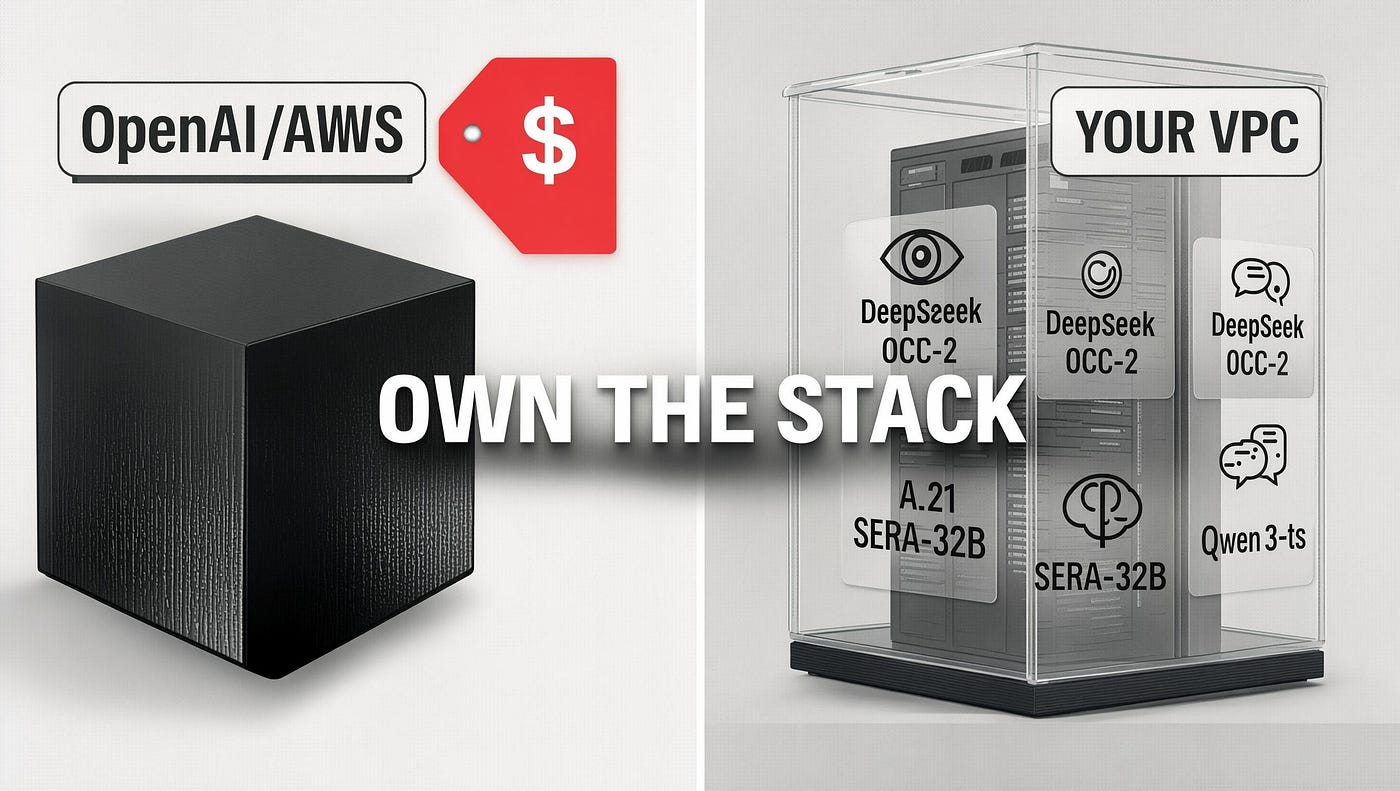
The paradigm of document processing is undergoing a rapid architectural shift, moving away from traditional Optical Character Recognition (OCR) pipelines towards highly optimized Vision-Language Models (VLMs). This transition promises exponential efficiency gains, particularly for enterprises seeking to ground their generative AI models on proprietary information. This confrontation pits the established cloud-based, pay-per-page model, typified by AWS Textract, against emerging open-source solutions like DeepSeek-OCR and IBM’s Granite Docling, which prioritize massive throughput and Total Cost of Ownership (TCO) reductions.
1. ⚡ DeepSeek-OCR: The Vision Token Paradigm
DeepSeek-OCR, a recent open-source VLM that garnered 4,000 stars on GitHub within its first 24 hours (published October 2025), is built on a novel approach called Contexts Optical Compression. This method challenges the fundamental premise that LLMs must process document information sequentially using traditional text tokens.
The Technical Breakthrough: Vision Tokens
DeepSeek-OCR converts document images into “vision tokens.” According to the technical paper, this process achieves near-lossless decoding with impressive efficiency:
- Recognition Precision: Maintains an impressive $97\%$ precision.
- Compression Efficiency: Requires up to $10 \times$ fewer vision tokens compared to standard text tokens for the same information content.
- High Compression Test: Even when pushed to a higher compression ratio of $20 \times$, the OCR accuracy reportedly remains usable at around $60\%$.
This efficiency translates directly into raw speed, enabling DeepSeek-OCR to process an astonishing $200,000+ \text{ pages per day}$ on a single A100 40GB GPU. This contrasts sharply with generalized LLMs, which might process only several thousand pages daily using twenty or more GPUs.
The DeepSeek Architecture
The sophisticated architecture driving this efficiency includes:
- DeepEncoder: Designed for high-resolution inputs and low vision token count.
- Perception: A SAM-base model (80M parameters).
- Knowledge: A CLIP-large model (300M parameters).
- Compression: A $16 \times$ Token Compressor.
- DeepSeek-3B-MoE Decoder: This Mixture-of-Experts architecture activates only 6 out of 64 experts plus 2 shared experts, resulting in an inference cost equivalent to a model under $600\text{M}$ activated parameters while delivering the power of a 3 billion parameter model.
On the OmniDocBench benchmark, DeepSeek-OCR outperforms GOT-OCR 2.0 (which typically consumes 256 tokens/page) using only 100 vision tokens, and surpasses MinerU 2.0 (which averages over 6,000 tokens per page) using fewer than 800 vision tokens.
2. 🧩 IBM Docling: Structured Conversion at Scale
Complementing DeepSeek-OCR’s raw extraction throughput is IBM’s open-source Docling toolkit, which focuses on end-to-end document conversion and structuring.
Focus on LLM Preparation
Docling’s goal is to convert unstructured documents (PDFs, manuals, slide decks) into easily digestible JSON and Markdown formats for LLMs and RAG systems.
- The core mechanism bypasses traditional OCR where possible, favoring specialized computer vision models trained to recognize and categorize visual elements.
- This results in a reported speed-up of $30 \times$ in time-to-solution compared to relying solely on OCR.
Key Components
The system relies on robust, specialized models:
- Object Detection Model: Trained on nearly $81,000$ manually labeled pages (patents, manuals, 10-K filings), achieving performance within 5 percentage points of human ability in classifying page elements.
- TableFormer: A critical component for handling tabular data that transforms image-based tables into machine-readable row/column structures, outperforming leading table-recognition tools in internal tests.
- Granite Docling VLM: The specialized VLM at the heart of the toolkit, integrating vision and language into a single compact model with approximately $258\text{M}$ parameters.
Docling has already processed $2.1 \text{ million}$ PDFs from the Common Crawl dataset for AI training, and IBM plans to use it to process $1.8 \text{ billion}$ PDFs for its forthcoming Granite multimodal model. Setup requires just five lines of code using its Python API, and it integrates natively with popular LLM frameworks like LlamaIndex and LangChain.
3. 💰 The Economics: Transactional Cost vs. TCO
These open-source, efficiency-focused solutions directly challenge proprietary services like AWS Textract, whose cost model relies heavily on transactional pricing.
The AWS Pay-Per-Page Model
AWS Textract operates on a pay-per-page model across its different APIs. The cost accumulates linearly based on page count:
- Basic Detect Document Text API: In the US West (Oregon) region, pricing starts at $0.0015 per page. Processing $100,000$ pages at this tier would cost $150$ (calculated as $\$0.0015 \times 100,000$).
- Scaled Volume: Processing $2 \text{ million}$ pages incurs a total charge of $2,100$, calculated as $1,500$ for the first million ($\$0.0015 \times 1,000,000$) and $600$ for the second million ($\$0.0006 \times 1,000,000$).
- Complex Extraction (Analyze Document API): Extracting data from $5,000$ tax forms costs $325$, derived from $75$ for tables ($\$0.015 \times 5,000$) plus $250$ for forms ($\$0.05 \times 5,000$).
- Enterprise Cost: A large-scale scenario involving $2 \text{ million}$ pages processed for tables, forms, and queries would result in a total charge of $125,000$ in the US West (Oregon) region, based on blended rates for the first and second million pages.
This model, while accurate (AWS Textract achieved an almost perfect $99.3\%$ text accuracy in one benchmark), leads to cost accumulation tied linearly to page count — a significant pain point, with some users reporting receiving $30,000$ bills for just two months of use in a QA environment.
The Open-Source TCO Alternative
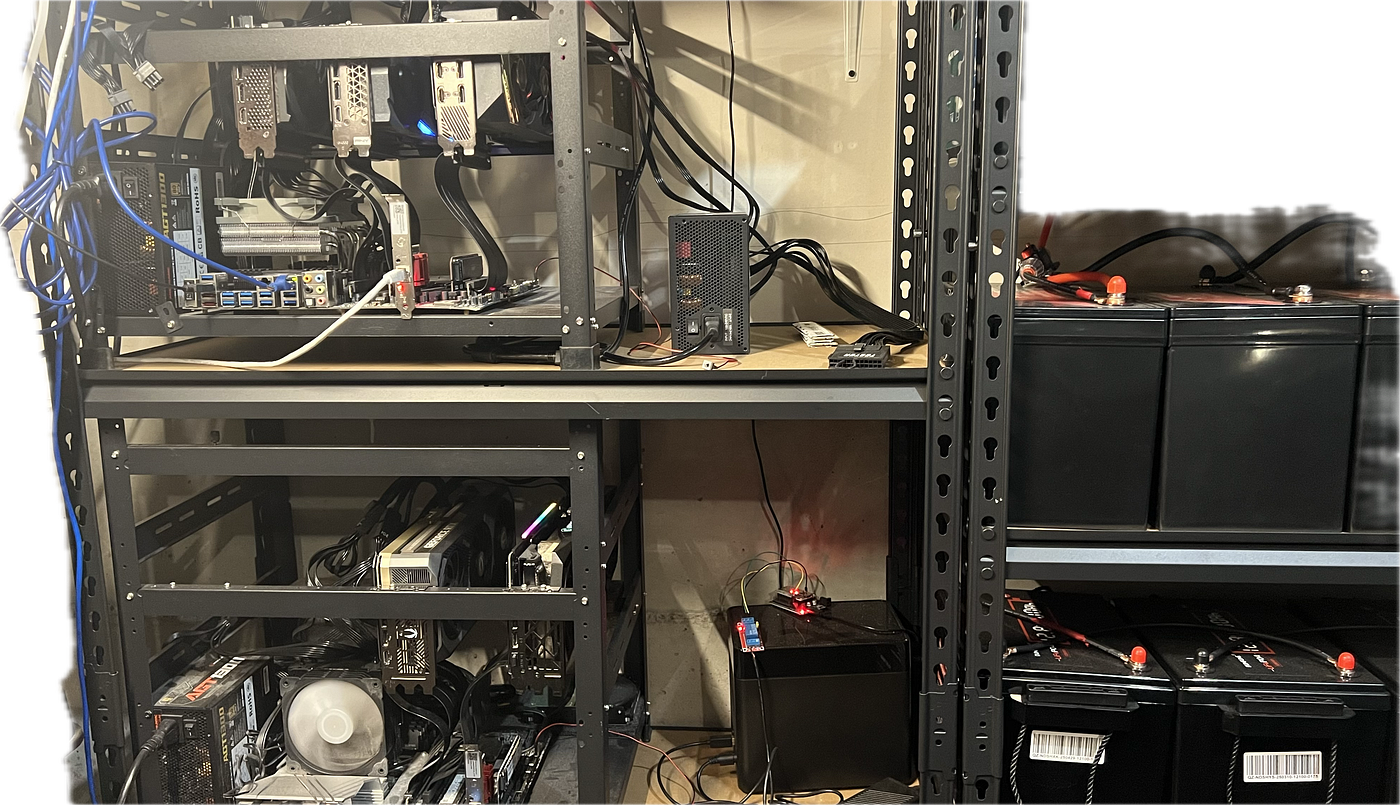
In comparison, DeepSeek-OCR employs a token-centric API model which may range from $0.02$ to $0.04$ per token, potentially offering greater economy for documents with low text density. Ultimately, the move toward infrastructure-driven TCO inherent in open-source solutions replaces unpredictable per-page fees with predictable infrastructure investment.
🔮 The Future: Efficiency and Synergy
The most impactful vision for the future of Document AI lies in the potential synergy between these specialized open-source tools.
Kaoutar El Maghraoui, a Principal Research Scientist at IBM, notes that DeepSeek-OCR and Docling are highly complementary:
- DeepSeek-OCR could serve as the initial high-speed, high-accuracy text extraction front-end due to its unprecedented throughput.
- Docling could handle the subsequent step of converting those outputs and enriching them with structured JSON/Markdown necessary for high-value enterprise workflows.
The clash between fixed transactional costs and scalable open-source infrastructure is akin to the early days of cloud computing, where monolithic server purchases (the equivalent of per-page fees) gave way to scalable, self-managed infrastructure (the equivalent of TCO optimization offered by DeepSeek-OCR running on owned or rented GPUs). The future of document extraction appears to lie not just in accuracy, but in the economic efficiency delivered by specialized VLM architectures and token compression techniques.
메타데이터
- post_id
- de5ce1776ca7
- slug
- the-document-ai-revolution-a-technical-deep-dive-into-deepseek-ocr-ibm-docling-and-the-de5ce1776ca7
- url
- https://blog.gopenai.com/the-document-ai-revolution-a-technical-deep-dive-into-deepseek-ocr-ibm-docling-and-the-de5ce1776ca7
- canonical_url
- https://blog.gopenai.com/the-document-ai-revolution-a-technical-deep-dive-into-deepseek-ocr-ibm-docling-and-the-de5ce1776ca7
- author_url
- https://medium.com/@ap3617180
- status
- ok
- fetched_at
- 2026-06-09 14:34:10