Why Do Police Cars Have Different Colored Lights?
The colors aren’t random
Why Do Police Cars Have Different Colored Lights?
The colors aren’t random
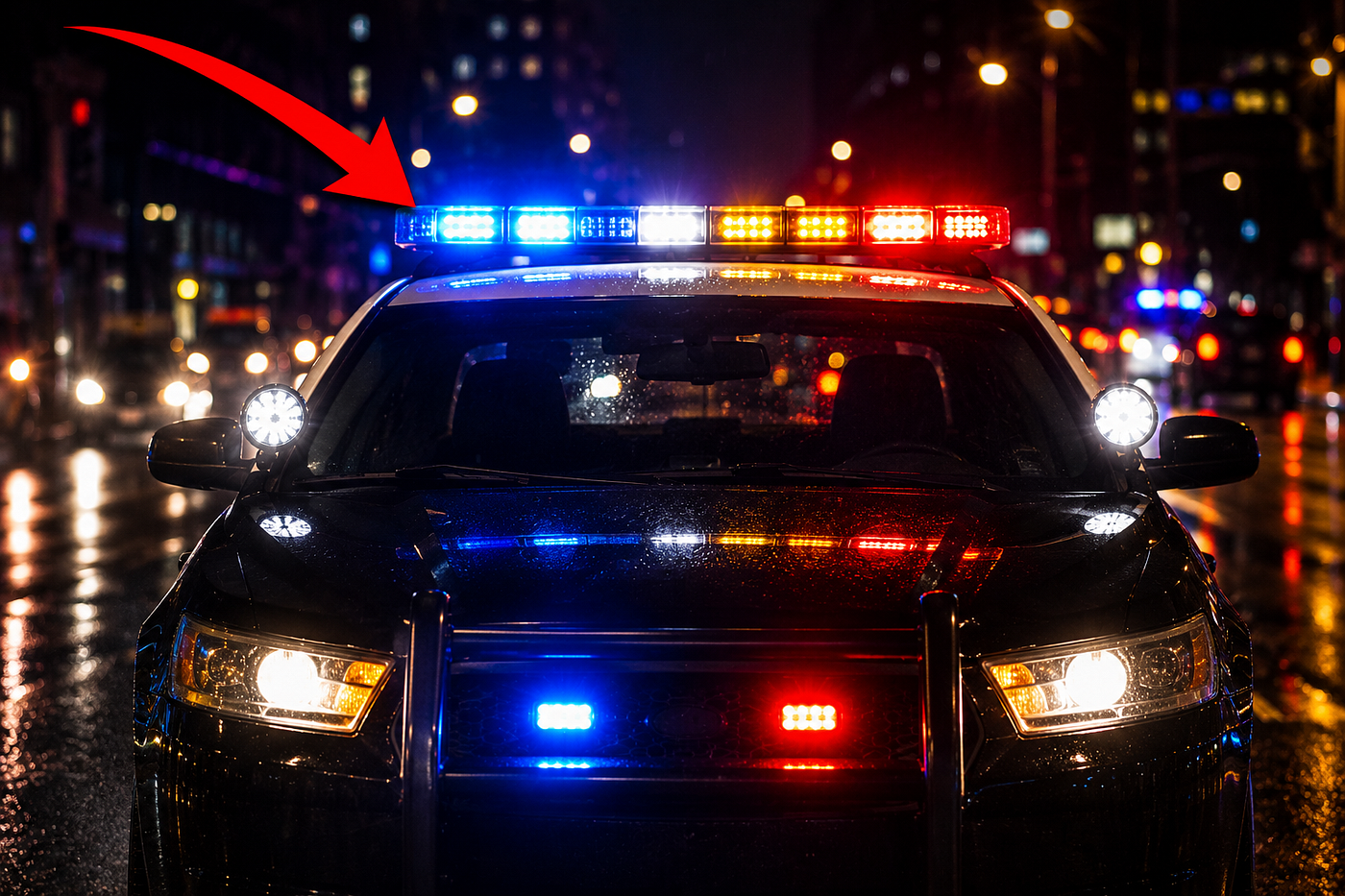
Police Car. Image credit: AI-generated using ChatGPT (OpenAI)
You’re driving at night, and in the rearview mirror, you see a flash of blue light in the road.
After another second, red follows!
Your heartbeat slows down.
Almost instantly, you know exactly what it means: a police car is behind you.
But what is the reason behind the flashing lights on police vehicles all the time? And, more importantly, why are the lights of different colors? Why not pick one color that is visible?
Surprisingly, there’s a lot of science in those flashing lights. Part of the reason their colors were selected wasn’t for their dramatic effect in film; it was because they save lives.
It’s a tale that goes back before modern patrol cars.
When this law was enacted, officers did not have flashing lights. They used whistles, hand signals, or simple lanterns to guide traffic and warn the public. In the early 1900s, as cars got faster and towns became more populated, police began to seek a means to alert drivers from a long distance.
The first emergency lights were rotating lights, typically equipped with a single red lens. The color red had already been established as the universal “stop” and “danger” color at the time. Red was a color that had been used on signs for traffic, railroad crossings, and warnings; drivers had learned to pay attention when the lights turned red.
It was effective for a while.
As more and more emergency vehicles came on the streets, a problem arose.
It was not always possible for drivers to see who was coming toward them.
Was it a police car, or something else?
An ambulance?
A fire engine?
Or simply another warning light!
They started trying out new colours, and one was particularly helpful — blue.
Unlike red, blue light has somewhat unique properties. The human eye is very sensitive to blue wavelengths, and this is why flashing blue lights are so bright when viewed in low-light environments. They contrast well with the warm street lights, headlights, and city buildings, allowing drivers to see them from a greater distance.
Red, however, continues to be very effective as a warning of danger and caution. It also has a reasonably high penetrability of fog, dust, and rain, which is helpful in sub-optimal weather conditions.
Together, the two colors complement each other.
Blue is a colour that catches the eye.
Red is used to highlight the danger.
In some cases, it can be even more difficult not to notice them if they are alternated. Humans are attracted to motion and quick changes in light. Two different colors flashing are much more noticeable than a steady light (at equal intensity of illumination).
For this reason, emergency light bars pulse, rotate, or strobe.
The constantly changing pattern makes them almost impossible to overlook.
Interestingly, not all countries have the same colours.
In several European countries, blue is the official colour of the police and emergency services. Red and blue are sometimes used by police departments, and may be used differently by fire trucks and ambulances, depending on local regulations, in the United States and Canada. In certain countries, amber lights are used for warning vehicles of dangers (e.g., vehicles being towed, road maintenance, snow plow, slow-moving construction vehicles) as well as emergency vehicles.
These differences aren’t random.
Countries create standards that allow drivers to quickly determine what type of vehicle they’re dealing with and act accordingly.
Today’s police light bars are much more sophisticated than in the past. Most are now made from very bright LEDs that consume less energy, last a lot longer, and are brighter than previous incandescent bulbs. They also have the ability to flash in preprogrammed sequences that are optimized for maximum visibility during the day and night.
Some even alter the flashing pattern from one position to another based on whether the vehicle is parked at an accident scene, flashing for directions, or actually responding to an emergency.
Scientists have been working for years to determine which color and flash patterns will capture attention with minimal confusion. The idea isn’t just to increase the brightness of the lights — it’s to ensure that they are instantly visible and allow drivers enough time to brake in time.
Those lights are obviously not only used for emergencies.
They also help safeguard the officers.
Police callouts at a crash scene or in a vehicle on a very busy road will be preceded by flashing lights to warn other traffic to slow down and move over. If it were not so obvious, roadside work would be much more hazardous.
Therefore, why do police cars have different colored lights?
Since one size does not fit all.
Red is a warning color.
Blue is an attention grabber, particularly in the dark.
They form one of the world’s most famous safety signals: one that can pierce through darkness, bad weather, and heavy traffic.
메타데이터
- post_id
- de78f8c755ae
- slug
- why-do-police-cars-have-different-colored-lights-de78f8c755ae
- url
- https://medium.com/@corneliousnyabuto/why-do-police-cars-have-different-colored-lights-de78f8c755ae
- canonical_url
- https://medium.com/@corneliousnyabuto/why-do-police-cars-have-different-colored-lights-de78f8c755ae
- author_url
- https://medium.com/@corneliousnyabuto
- status
- ok
- fetched_at
- 2026-07-13 06:23:13