Amazina Mbuyaga “Dancing Through the Wind”/Joseph Tebandeke’s Defiant Grace
By Amahle Radebe
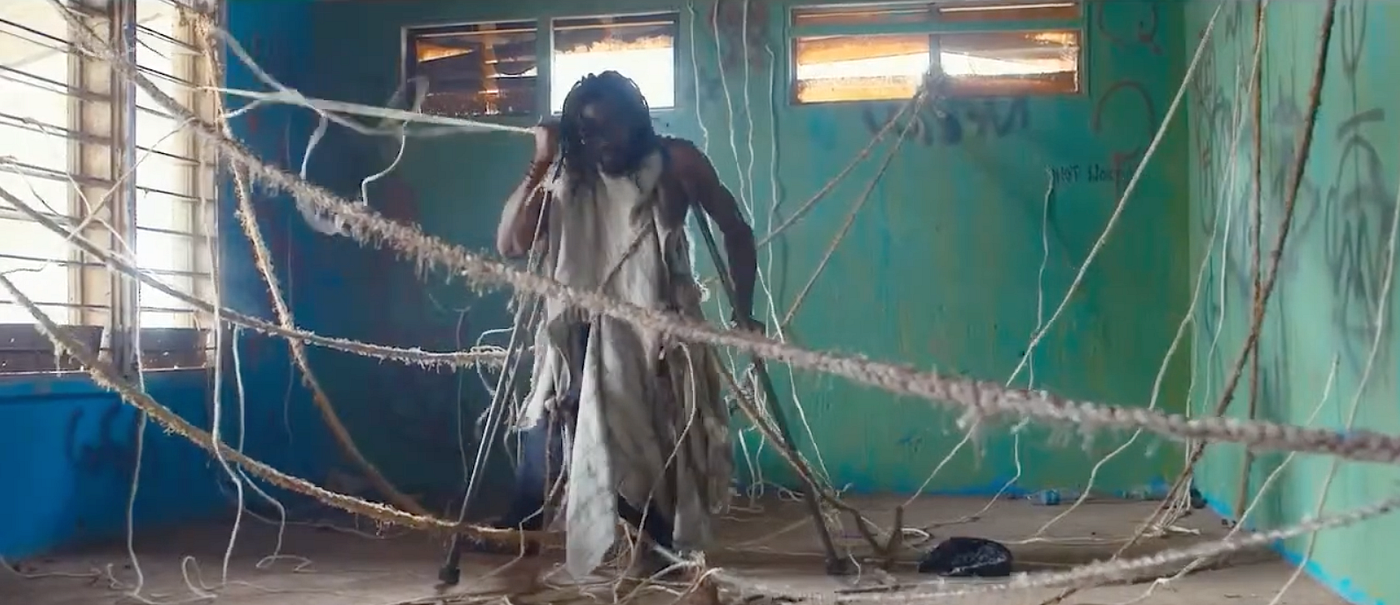
“…the choreography enacts the tearing away of internalised oppression”, screen shot taken from the film.
Amazina Mbuyaga “Dancing Through the Wind”/Joseph Tebandeke’s Defiant Grace
By Amahle Radebe
The world premiere of Amazina Mbuyaga (Dancing Through the Wind) by Ugandan dancer and choreographer Joseph Tebandeke marked a significant moment in JOMBA!’s continued championing of screen dance. The film, released on 3 September 2025 via the festival’s YouTube channel, is both a poignant personal testimony and a provocation to rethink the politics of the dancing body.
Speaking ahead of the screening in conversation with JOMBA! curator Dr. Lliane Loots, Tebandeke reflected on the realities of being a disabled dancer in Kampala — where artistic resources are scarce, government subsidies are absent, and isolation often defines the lives of artists with disabilities. “I had to understand my body and its capabilities,” he explained, reframing his practice from limitation to possibility. His declaration in the film that “my body has no problem” becomes central to the ethos of Amazina Mbuyaga. It rejects the pathologising gaze so often cast upon disabled bodies, instead affirming embodiment as whole, capable and generative.
Directed by Kizza Teflon Moses and produced by Art Transparent Foundation in collaboration with Aliyahmilly Productions, the film is a richly layered work supported by Nafasi Art Space and European partners. Tebandeke’s choreography deliberately resists the conventions of formal technique. Rather than aspiring to inherited notions of virtuosity, his movement is anchored in lived experience and personal memory — gesture as autobiography. But to describe this simply as “form versus expression” is to miss the complexity of his practice. Tebandeke does not discard form; he remakes it. Each movement, pared down or expansive, is a negotiation between history and present, between the body he inhabits and the body the world expects. In this sense, Amazina Mbuyaga unsettles old hierarchies: form and expression are not opposites but interwoven threads, reconfigured to reveal another grammar of dance.
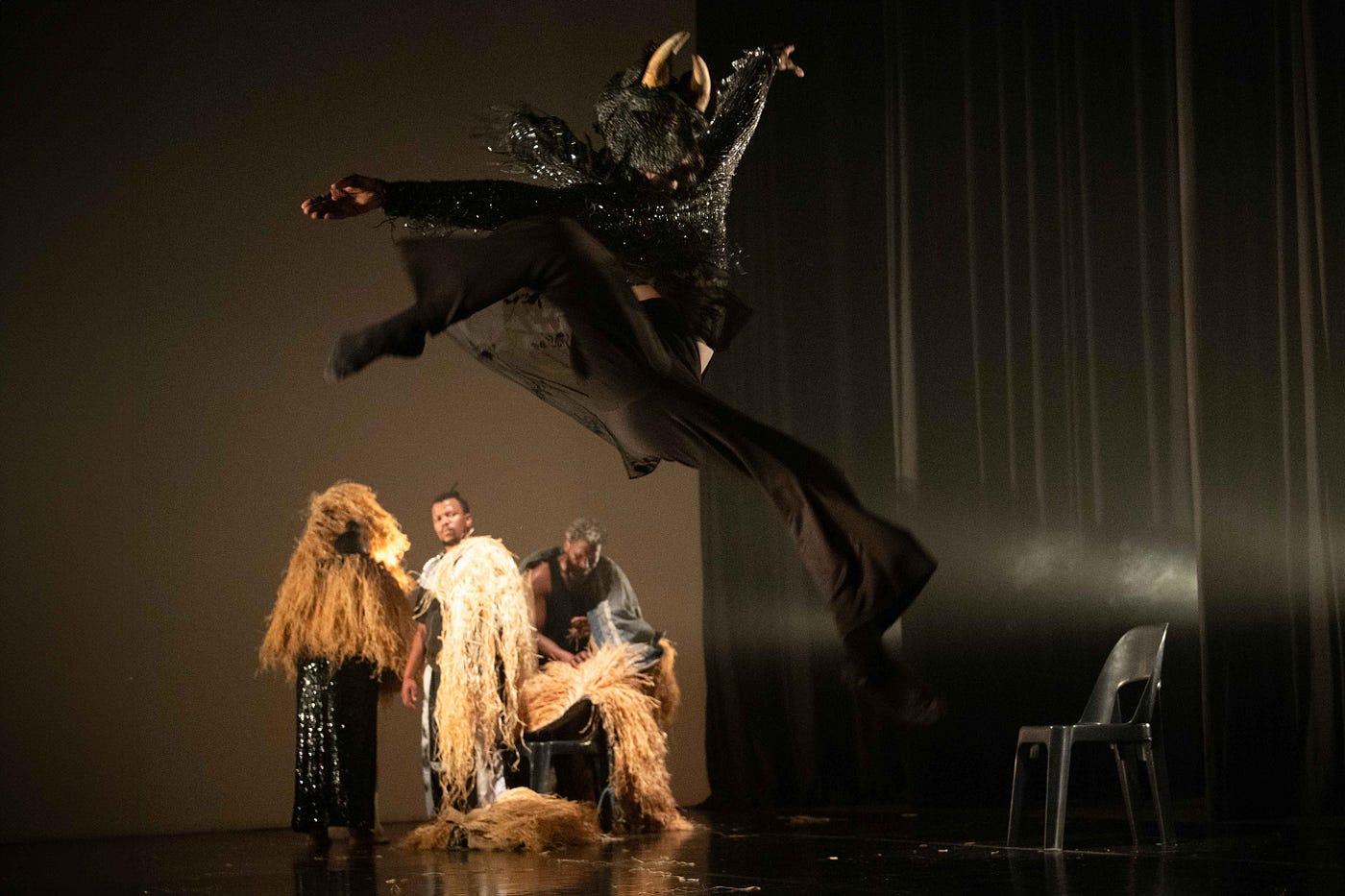
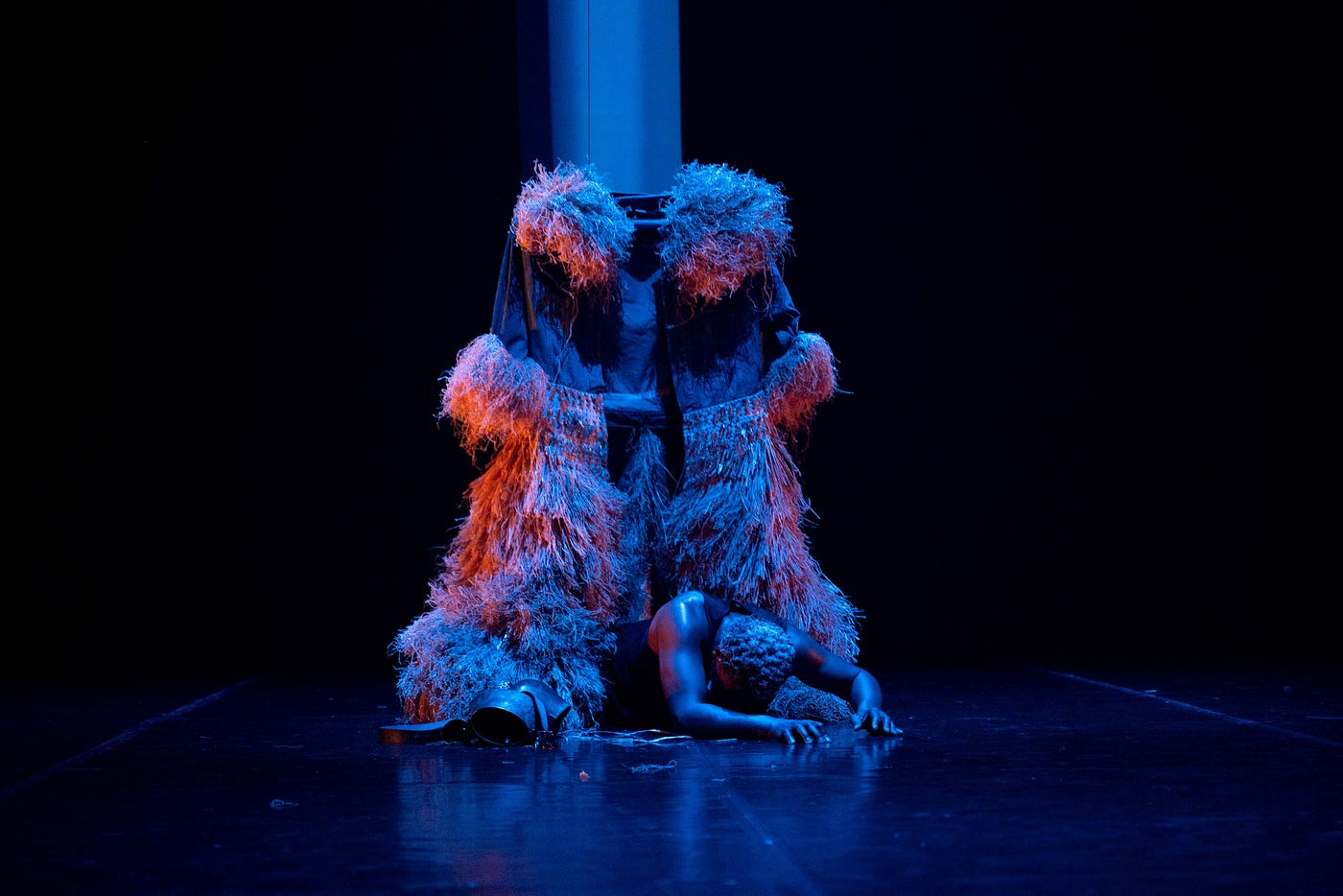
The costumes he wears — at times rough hessian, at others supple and textured like soft leather — echo this philosophy. They are not decorative but elemental, their surfaces carrying the same friction and resilience that pulse through his movement.
The imagery throughout is strikingly symbolic. Early in the film, Tebandeke dances in a forest, clothed in this textured attire, confessing: “If you ask me if there is a moment I feel trapped, to be honest I feel trapped every day.” This unflinching honesty destabilises easy assumptions about mobility and freedom, leading to his piercing question: “Why do I have to prove my existence and worth just to access the same opportunities?”
Later, ropes tethered to walls bear the words “self-doubt” and “not worthy.” As he pulls them, the choreography enacts the tearing away of internalised oppression. In moments where Tebandeke strangles or silences himself, suffocation is conveyed, and an intimacy of gesture that places the viewer inside the claustrophobia of exclusion.
Equally powerful is Tebandeke’s use of his crutch. Refusing its reduction to a medical/physical aid or a signifier of deficit, he claims it as a partner in motion. It becomes a tool of leverage, of reach, balance and disruption — a collaborator in crafting a vocabulary otherwise inaccessible. In a world where “disability” is forged negatively, the crutch is here transfigured into an instrument of artistry, carrying possibility in its frame.
Cinematographer Mathias Bukenya captures Tebandeke’s journey across diverse landscapes — forest, derelict buildings, water — mapping a passage from confinement to renewal. The film’s design team, including sound artist Josh Magwa and Larimar Sound Alchemy on the score, infuse the work with atmospheric texture, enhancing its sense of resilience and rebirth.
“Dance is beyond movement; it is our birthright, something we inherit from our ancestors,” Tebandeke insists. His work challenges audiences to recognise difference not as deficit but as artistry. Amazina Mbuyaga is both testimony and defiance: a reminder that dance is not bound by perfection, but by presence — that to move is to resist erasure.
The film is available to view online until the end of JOMBA!’s Durban leg (7 September 2025): https://www.youtube.com/live/MhPM6nOwQjg?si=c5ckOYRhvIT_5y8w
메타데이터
- post_id
- de7cb5ccf400
- slug
- amazina-mbuyaga-dancing-through-the-wind-joseph-tebandekes-defiant-grace-de7cb5ccf400
- url
- https://medium.com/@jombafestival/amazina-mbuyaga-dancing-through-the-wind-joseph-tebandekes-defiant-grace-de7cb5ccf400
- canonical_url
- https://medium.com/@jombafestival/amazina-mbuyaga-dancing-through-the-wind-joseph-tebandekes-defiant-grace-de7cb5ccf400
- author_url
- https://medium.com/@jombafestival
- status
- ok
- fetched_at
- 2026-06-24 16:30:55