🧠 Integrating AI into Enterprise Data Warehouses: A Smarter Path to Operational Intelligence —…
✳️ Introduction:
🧠 Integrating AI into Enterprise Data Warehouses: A Smarter Path to Operational Intelligence — Nitin Goswami
✳️ Introduction:
In today’s data-driven world, businesses are no longer asking if they should adopt AI — but how fast they can do it. Yet, one of the most overlooked opportunities lies in a system many enterprises already have: their Data Warehouse.
In my recently published research paper titled “Integrating AI into Enterprise Data Warehouses for Enhanced Operational Intelligence and Decision-Making” (read it here), I explore how AI can unlock the full potential of enterprise data systems — turning them from passive storage into active intelligence engines.
Let’s dive into the key ideas and takeaways from the paper — and what they mean for enterprises today.
🔄 Why Data Warehouses Need AI
Traditional Data Warehouses (DWHs) are great at storing and reporting structured data. But they fall short in real-time analysis, predictive modeling, and adaptive decision-making — all critical for modern operations.
Here’s what AI brings to the table: ✦ Real-time anomaly detection ✦ Forecasting future trends ✦ Intelligent automation of workflows ✦ Personalized insights at scale
By integrating AI capabilities directly into the data architecture, organizations can move from descriptive analytics to diagnostic, predictive, and prescriptive intelligence.
🧩 How AI Integrates with Modern Data Warehouses
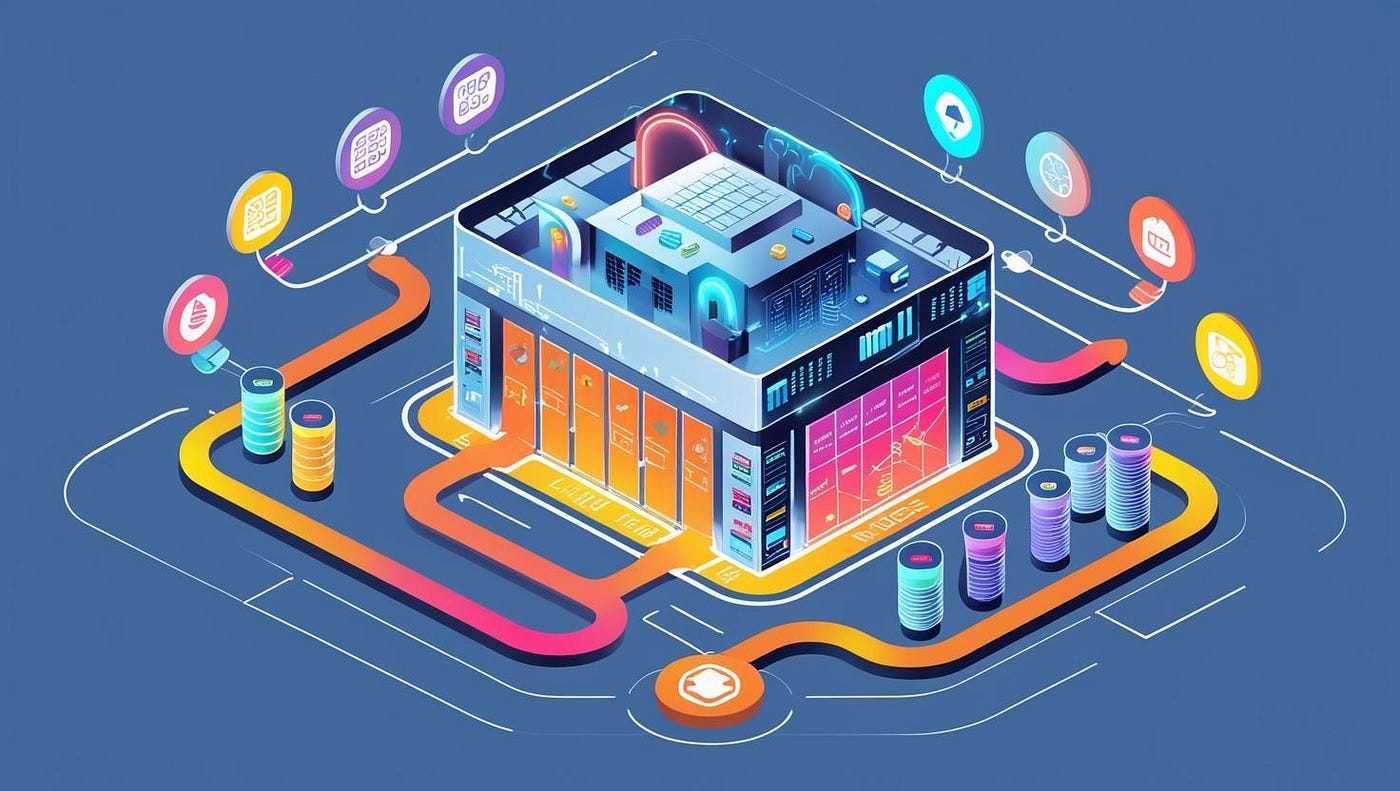
In the paper, I outline a framework where AI modules are embedded within the ETL/ELT and analytical layers of the data pipeline. Here’s how it works in practice:
- Data Ingestion + Preprocessing Raw enterprise data is cleaned, transformed, and made AI-ready — often in real time using tools like Apache Spark or Azure Data Factory.
- Model Training & Deployment Machine Learning models are trained on historical data stored in the DWH (e.g., Snowflake, Redshift). These models can then predict churn, optimize inventory, detect fraud, and more.
- Model Inference via SQL or APIs Integrated AI models are called directly via stored procedures, user-defined functions, or microservices. Business teams can access insights using familiar BI tools.
- Feedback Loops & Continuous Learning As models consume fresh data, they learn and evolve — enabling adaptive decision-making that grows smarter over time.
⚙️ Real-World Applications of AI-Powered Data Warehousing
This integration unlocks game-changing potential across industries:
✦ Retail: AI models predict demand surges and optimize stock levels by analyzing purchasing behavior. ✦ Finance: Real-time fraud detection and credit scoring models improve risk management. ✦ Healthcare: Predictive models detect patient readmission risks from clinical and operational data. ✦ Manufacturing: Predictive maintenance powered by IoT + AI minimizes downtime and reduces costs.
🔒 Key Considerations for Implementation
For successful integration, businesses must address:
- Data quality and labeling
- Scalable and modular ML pipelines
- Security and compliance (especially in regulated sectors)
- User trust and model explainability
- Cross-functional collaboration between data engineers, ML teams, and business units
📘 What This Means for Enterprise Leaders
AI is no longer an add-on — it must be embedded into the digital core. The traditional data warehouse is being redefined from a passive repository into a dynamic decision engine.
If you’re in a leadership or data strategy role, the message is clear: Don’t just store your data — activate it.
My research paper offers a roadmap for this transformation, tailored to enterprise realities.
✍️ About the Author
Nitin Goswami is a results-driven leader in Data Engineering, AI, and Machine Learning, with over a decade of experience architecting scalable enterprise data solutions and delivering impactful AI-driven platforms. He specializes in building intelligent data ecosystems using Snowflake, Azure, Microsoft Fabric, and modern cloud-native tools.
Nitin is the creator and host of the YouTube channel **@decodewithnitinofficial, where he simplifies complex topics in Artificial Intelligence, Web3, and Modern Data Platforms** for engineers, architects, and tech leaders worldwide.
He also maintains an active presence on GitHub, sharing open-source tools, frameworks, and practical resources to empower the global data and AI community.
🔗 GitHub: https://github.com/decodewithnitin 🔗 LinkedIn: https://www.linkedin.com/in/nitingoswami1989 📩 Email: decodewithnitin@gmail.com
메타데이터
- post_id
- de89b6aef6d5
- slug
- integrating-ai-into-enterprise-data-warehouses-a-smarter-path-to-operational-intelligence-de89b6aef6d5
- url
- https://medium.com/@decodewithnitin/integrating-ai-into-enterprise-data-warehouses-a-smarter-path-to-operational-intelligence-de89b6aef6d5
- canonical_url
- https://medium.com/@decodewithnitin/integrating-ai-into-enterprise-data-warehouses-a-smarter-path-to-operational-intelligence-de89b6aef6d5
- author_url
- https://medium.com/@decodewithnitin
- status
- ok
- fetched_at
- 2026-07-08 00:36:00



