Is Aging Giving Us Back Our Lives?
Growing older is the first time life finally becomes your own
Is Aging Giving Us Back Our Lives?
Growing older is the first time life finally becomes your own

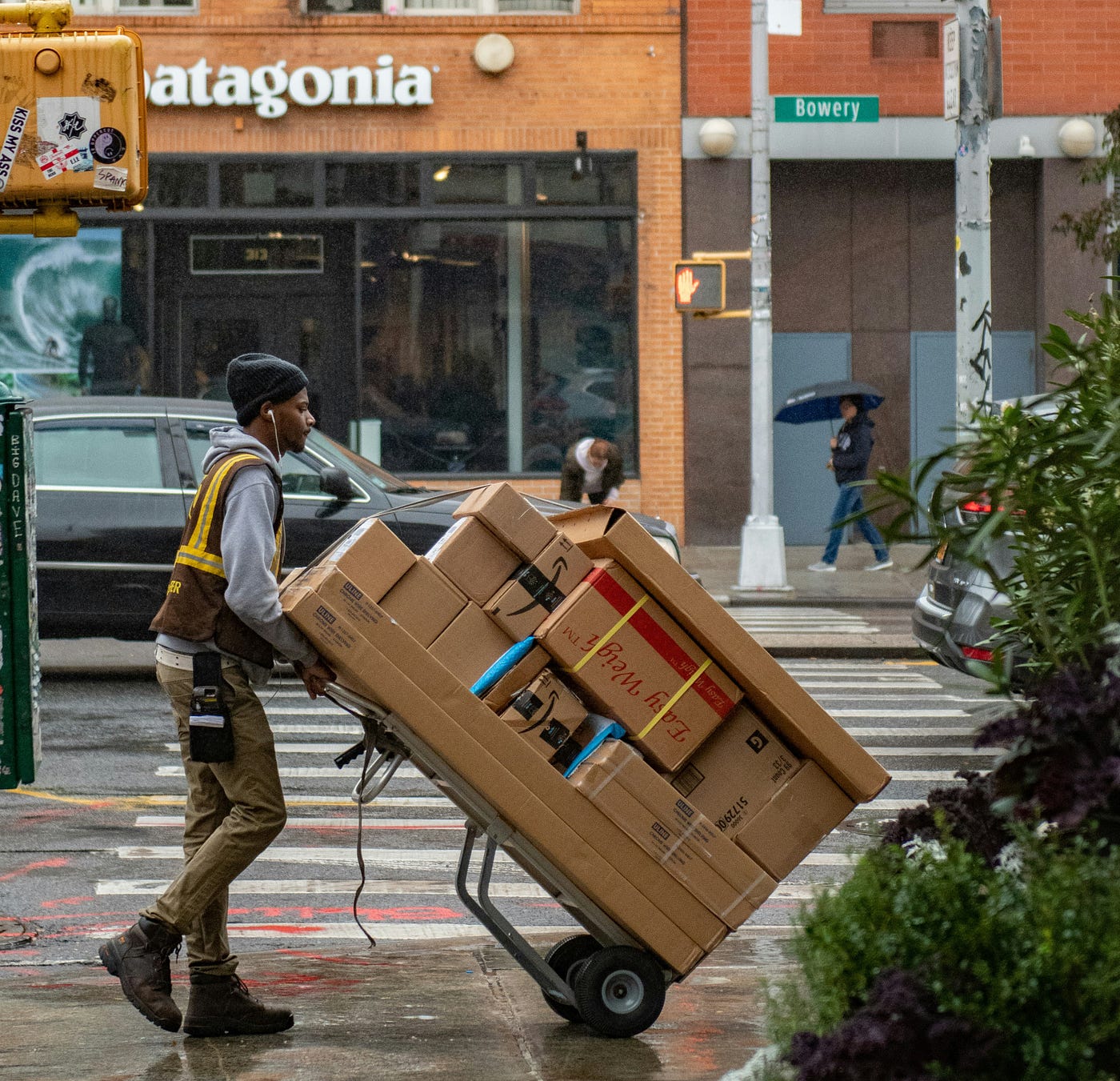
Photo by Element5 Digital on Unsplash
For most of my adult life, the calendar belonged to someone else.
There were jobs to get to, meetings to attend, bills to pay, errands to run, lawns to mow, emails to answer, and deadlines that somehow multiplied every year. Life wasn’t necessarily bad. It was simply full. Every day seemed to come with a list of obligations that had been written before I even woke up.
For decades, I accepted that as normal because everyone around me was living the same way. We measured success by how busy we were, how much we accomplished, and how little free time remained. The moments that truly belonged to us often felt borrowed rather than owned.
Then something unexpected happened as I got older.
The calendar began opening up.
Not all at once, and certainly not without effort, but enough that I started noticing something I hadn’t experienced in years. I could take a long walk without feeling guilty. I could spend an afternoon reading a book simply because I wanted to. I could cook dinner without constantly watching the clock. Even sitting quietly with a cup of coffee became something to enjoy instead of something squeezed between appointments.
It made me wonder whether we’ve misunderstood aging.
Our culture talks about getting older almost entirely in terms of loss. We lose speed. We lose hair. We lose energy. We lose opportunities. Every birthday after a certain point seems to be framed as another reminder that the best years are behind us.
My experience has been more complicated than that.
Growing older hasn’t simply taken things away. In many ways, it has given something back that I didn’t realize had been disappearing for decades. It has returned ownership of my own time.
Perhaps aging isn’t only the story of decline.
Perhaps it’s also the story of recovering a life that slowly became buried beneath responsibility.
What the research says improves with age
The idea sounds almost backward because so much of our culture celebrates youth. Yet psychologists who study aging have been reporting something surprising for years. While physical abilities naturally change over time, emotional well being often remains stable and, in many cases, improves.
Older adults frequently report greater emotional stability than younger adults. They tend to recover from disappointment more quickly, react less impulsively, and place greater value on relationships than competition. Many also describe feeling more comfortable with themselves, less interested in impressing other people, and more willing to accept imperfections in both themselves and those around them.
None of this suggests that aging eliminates hardship.
Older adults still experience grief, illness, financial concerns, and uncertainty. Bodies change whether we welcome those changes or not. Friends become fewer. Loss becomes more familiar. Anyone who pretends otherwise isn’t describing real life.
Even so, researchers continue finding something that seems almost contradictory. Many people become better at navigating emotional life precisely because they have lived through so much of it. Experience teaches lessons that confidence alone never could. After enough disappointments, successes, failures, and unexpected turns, it becomes easier to recognize which problems deserve immediate attention and which ones simply require patience.
There is also what researchers sometimes call a survival effect. People who reach older adulthood are, by definition, the ones who have successfully navigated decades of life’s challenges. That doesn’t make them perfect or immune to future struggles, but it does mean they have accumulated resilience that younger people are still building.
Wisdom rarely arrives all at once.
More often, it grows slowly through thousands of ordinary experiences that eventually change the way we see the world.
The freedom many people discover later
One of the greatest surprises of retirement has been discovering how much attention my previous life demanded.
Teaching required constant preparation. Meetings filled the calendar. Even evenings and weekends often belonged to work in one form or another. There was always another paper to grade, another lesson to prepare, another email waiting for an answer. None of those responsibilities seemed unreasonable on their own. Together, they occupied an astonishing amount of mental space.
When that stage of life ended, something unexpected appeared.
Time.
Not vacation time.
Life.
I found myself walking farther than I ever had because no meeting was waiting for me afterward. I started cooking meals because I enjoyed the process instead of rushing through it to get to the next obligation. Reading stopped feeling like another task on a self improvement list and became something I looked forward to each morning.
Moving to Japan only magnified that feeling.
Some of my favorite moments here have been completely ordinary. Wandering through neighborhood streets without a destination. Sitting in a small café watching people come and go. Browsing bookstores even when I have no intention of buying anything. Those moments would have felt almost irresponsible twenty years ago because there was always something more productive demanding my attention.
Now they feel like life.
I’ve spoken with retirees who describe similar experiences. One former teacher finally started writing the stories she had imagined for years. Another friend discovered a love of woodworking after spending four decades in an office. A grandmother told me her greatest luxury wasn’t travel. It was having enough unhurried afternoons to enjoy conversations with her grandchildren without constantly checking the time.
What many of us recover isn’t simply free time.
We recover ownership of our attention.
For years, institutions rented that attention from us. Employers needed it. Schools needed it. Schedules needed it. Family responsibilities needed it. Many of those demands were worthwhile, yet they left surprisingly little space for discovering who we were outside the roles we performed.
That may be one of aging’s greatest gifts.
It reminds us that we are more than our obligations.
Why this stage can feel emotionally richer
One of the biggest surprises of getting older has nothing to do with retirement accounts or travel. It has to do with emotional energy.
When I was younger, I spent an incredible amount of time worrying about things that never happened. I worried about what people thought of me. I worried about whether I was succeeding fast enough. I worried about making mistakes that, looking back now, barely mattered. At the time, those concerns felt enormous because I hadn’t yet accumulated enough experience to know that most problems eventually become stories instead of disasters.
Age has a way of changing that perspective.
Research suggests that many older adults become better at regulating their emotions and directing their attention toward relationships and experiences that genuinely matter. Instead of trying to please everyone, they become more selective about where they invest their time. They stop confusing being busy with being fulfilled and begin recognizing that every commitment carries an opportunity cost.
I’ve noticed that shift in my own life.
I don’t feel the same need to prove myself that I once did. There was a time when another accomplishment always seemed necessary before I could feel satisfied. Another promotion. Another goal. Another milestone. The finish line kept moving because I kept moving it.
These days, success looks different.
A long conversation with Allison over coffee feels more valuable than another item on a résumé. An afternoon exploring a neighborhood in Osaka creates a stronger memory than rushing through three tourist attractions simply to say I’d been there. The friendships I value most aren’t the ones that make me look successful. They’re the ones that make me feel understood.
I’ve also become more comfortable saying no.
That single word creates space for the people and experiences that deserve a yes. It leaves room for deeper conversations instead of endless obligations. It allows relationships to become more authentic because they no longer depend on impressing anyone.
None of this means every day is peaceful or every problem disappears.
Life remains unpredictable. Bodies age. Friends get sick. Loved ones are lost. There are still disappointments, frustrations, and moments when the future feels uncertain. Growing older doesn’t remove life’s difficulties.
It changes our relationship with them.
Calm isn’t the absence of problems. It is the confidence that not every problem deserves control over our attention.
How to reclaim the life aging offers
Growing older doesn’t automatically make life better.
I’ve met retirees who remained just as busy, stressed, and overscheduled as they were during their working years. They simply replaced one set of obligations with another. The calendar stayed full, but very little of it reflected what they genuinely wanted to do.
Freedom has to be protected.
That means protecting time from unnecessary busyness. It means moving your body because you want to remain healthy enough to enjoy the years ahead instead of merely counting them. It means choosing relationships that leave you feeling encouraged rather than drained. It means continuing to learn, create, travel, volunteer, or build something that gives your days meaning.
Perhaps most importantly, it means taking your own happiness as seriously as you once took your responsibilities.
That idea can feel surprisingly uncomfortable after decades of putting everyone else first. Many of us become so accustomed to solving other people’s problems that we forget we are allowed to build a life we enjoy living. We carry old habits into retirement without asking whether they still belong there.
I don’t think the goal of aging is to become young again.
Youth had wonderful moments, but it also came with insecurities, pressures, and expectations I have no interest in reliving. Every stage of life offers something unique, and one of the gifts of later adulthood is the opportunity to become more fully yourself without constantly measuring your progress against someone else’s expectations.
When I look around at the happiest retirees I’ve met, they share very little in common financially or professionally. Some travel the world while others rarely leave their hometowns. Some have large families while others live quietly with a spouse or close friends. What they do share is a growing sense that their lives finally belong to them.
That may be the greatest surprise of aging.
For years we assume growing older means life slowly slipping away. Then, if we’re fortunate, we discover something unexpected. The noise begins to fade, the urgency begins to soften, and the person buried beneath decades of responsibility finally has room to breathe again.
Perhaps aging isn’t taking life from us after all.
Perhaps it is giving it back.
If you’ve made it this far, you’re probably my kind of reader. You should follow.


메타데이터
- post_id
- deb462849796
- slug
- is-aging-giving-us-back-our-lives-deb462849796
- url
- https://medium.com/the-second-half/is-aging-giving-us-back-our-lives-deb462849796
- canonical_url
- https://medium.com/the-second-half/is-aging-giving-us-back-our-lives-deb462849796
- author_url
- https://medium.com/@bwrosta73
- status
- ok
- fetched_at
- 2026-07-09 08:02:55