The Day the Customer Stopped Feeling Important
The Day the Customer Stopped Feeling Important
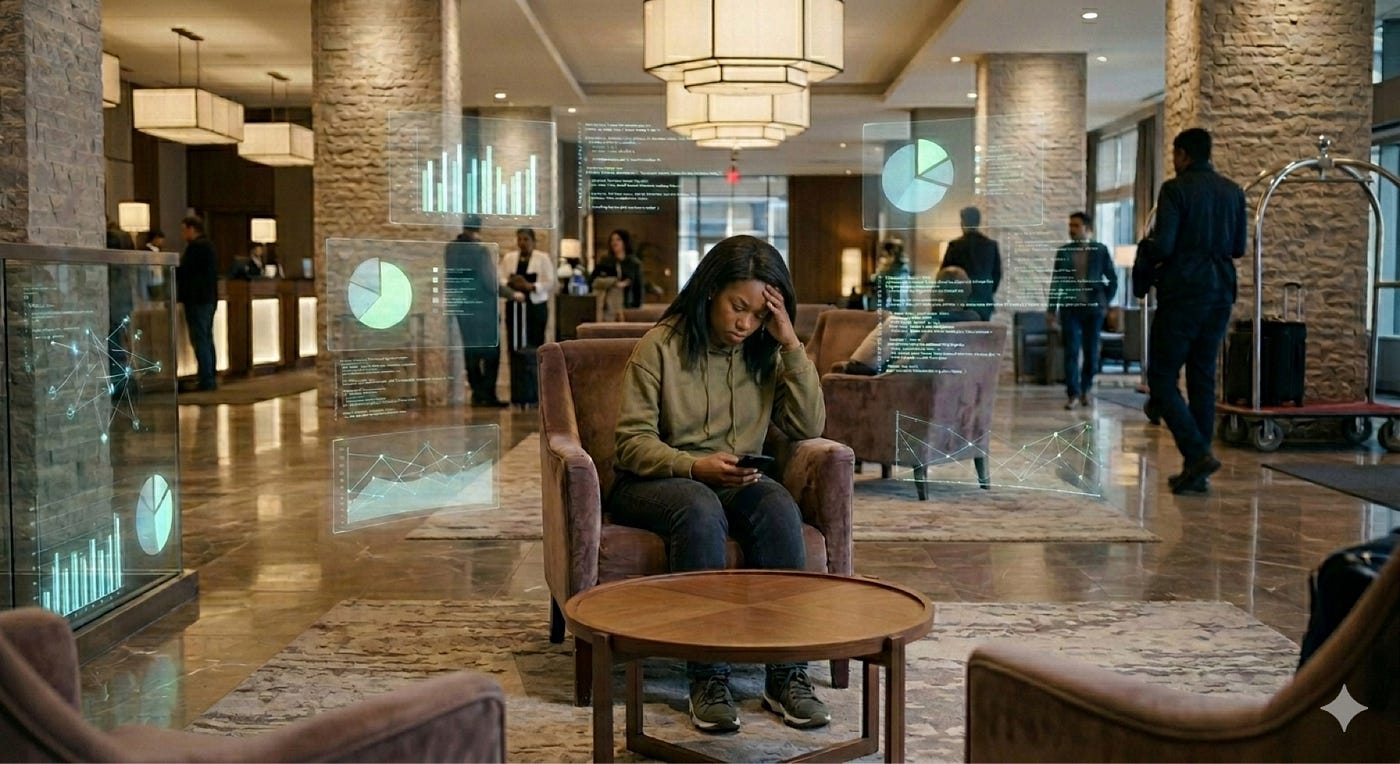
The service culture in Sri Lanka seems to be taking a steady nose dive.
That may sound harsh.
Yet speak to enough people and a familiar pattern emerges. Frustration. Disappointment. Resignation.
What makes this all the more confusing is that customer experience has never been more fashionable.
Organizations invest in training. They build service frameworks. They establish customer experience teams. They apply for awards. They proudly showcase trophies celebrating service excellence.
And yet customers continue to leave interactions feeling unheard, unimportant and exhausted.
Something isn’t connecting.
Every business school, training programme and leadership workshop teaches the same lesson. Customers are at the heart of every service-led organization. Their experience should be the ultimate measure of success.
At least in theory.
In practice, many organizations seem to have drifted away from that principle.
Hospitality is the easiest place to start.
For decades, Sri Lanka built a reputation on warmth, attentiveness and genuine care. Visitors often left speaking less about the hotel room and more about the people. The smile at reception. The waiter who remembered their name. The staff member who went out of their way to solve a problem.
Today, conversations around service in hospitality increasingly begin with a familiar explanation.
The good people have left.
The industry has undoubtedly been impacted by migration. Many experienced professionals have sought opportunities overseas while others have moved into entirely different sectors.
The challenge is that customers don’t experience the explanation.
They experience the outcome.
An indifferent check-in. A request that goes unanswered. A complaint that disappears into the system. The gap between what was promised and what was delivered.
A shortage of talent can explain a decline in service quality.
It cannot become a permanent excuse for it.
Let’s talk about communications.
Few industries sit closer to the centre of modern life.
Our work depends on it. Our banking depends on it. Our relationships depend on it. Increasingly, our entertainment, education and even healthcare experiences depend on it too.
Yet ask a room full of Sri Lankans about their service provider and watch the reactions.
Coverage suddenly disappears in places where it never used to. Data speeds collapse at the worst possible moment. A simple query turns into a maze of automated menus, chatbot loops and waiting music before a human being finally appears.
Technology breaks. Networks fail.
Most people understand that.
What they struggle to understand is why getting help often feels harder than paying the bill.
The new convenience economy isn’t immune either.
A car appears with a few taps.
Food arrives with a few taps.
Packages arrive with a few taps.
At least that is the promise.
Reality can be a little different.
The ride-share arrives and the first thing that greets you is the lingering smell of cigarette smoke mixed with something that reminds you suspiciously of old socks and toe jam. Food turns up looking like it has survived a wrestling match. Packages arrive crushed, leaking or missing items altogether. Refunds and complaints occasionally require more effort than placing the order itself.
The transaction was easy.
The experience wasn’t.
Customers rarely expect perfection.
They expect ownership.
When something goes wrong, they want to know that somebody cares enough to make it right.
That expectation becomes even more important in sectors such as banking and healthcare. One looks after our money. The other looks after our wellbeing. Both have the power to improve our lives dramatically. Both can create enormous anxiety when communication breaks down, responses are delayed or customers are made to feel like they are simply another number waiting in a queue.
And that is where many organizations have lost their way.
Service is no longer judged against direct competitors.
It is judged against every experience a customer has anywhere.
The bank is compared to the ride-share app.
The hospital is compared to the hotel.
The communications provider is compared to the online retailer.
Customers don’t separate experiences into industries.
They simply remember how they felt.
What makes this even more interesting is how many organizations continue chasing recognition for service excellence while struggling to deliver the basics consistently.
Awards have their place.
Recognition can be important.
The problem begins when the award becomes the destination.
The trophy cabinet gets fuller.
Customers get tired.
Some organizations have become so focused on measuring service that they have forgotten how to deliver it. Metrics matter. Service levels matter. Processes matter.
None of them matter more than the customer feeling valued.
A complaint resolved according to process is not necessarily a complaint resolved.
A call answered within a target response time is not necessarily a positive experience.
A survey score does not automatically translate into loyalty.
Customers see service through a much simpler lens.
Did somebody listen?
Did somebody care?
Did somebody take ownership?
The organizations that consistently earn loyalty understand that service is not a department and it is certainly not a yearly award submission.
It is culture.
It starts with leadership.
The questions leaders ask often determine the experience customers receive.
Are we making it easier for customers?
Are we solving problems or managing processes?
Are we empowering our people to help or teaching them to follow scripts?
Most importantly, do we genuinely care about how customers feel after they have experienced our product or service?
That last question is the one that matters.
Technology will continue to evolve. Artificial intelligence will become more capable. Automation will become smarter. Self-service will become more common.
None of those things remove the need for care.
In fact, they make it even more important.
People spend money where they feel valued.
And they leave when they don’t.
Not immediately.
Sometimes it takes months.
Sometimes years.
Customers are remarkably patient.
Until they aren’t.
The day a credible alternative appears, years of accumulated frustration suddenly become reasons to leave.
That is why service cannot be reduced to a scorecard, a process flow or a trophy sitting in a glass cabinet.
It is a choice.
One made every day by every person in an organization.
The question is whether anyone is still making it.
메타데이터
- post_id
- ded753374ef2
- slug
- the-day-the-customer-stopped-feeling-important-ded753374ef2
- url
- https://medium.com/@sanjinim/the-day-the-customer-stopped-feeling-important-ded753374ef2
- canonical_url
- https://medium.com/@sanjinim/the-day-the-customer-stopped-feeling-important-ded753374ef2
- author_url
- https://medium.com/@sanjinim
- status
- ok
- fetched_at
- 2026-06-27 23:56:40