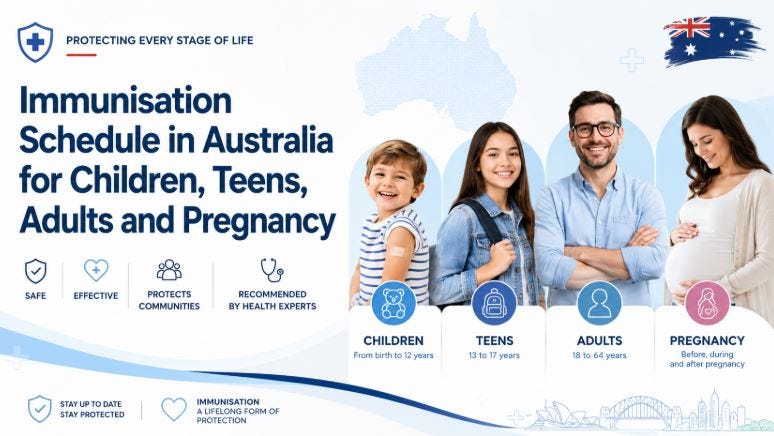
Immunisation Schedule in Australia for Children, Teens, Adults and Pregnancy
Australia’s immunisation schedule is not only for babies and young children. The National Immunisation Program (NIP) recommends vaccines at…
Immunisation Schedule in Australia for Children, Teens, Adults and Pregnancy
Australia’s immunisation schedule is not only for babies and young children. The National Immunisation Program (NIP) recommends vaccines at different stages of life, from birth through adulthood.
These vaccines are timed to give protection when people are most at risk, and vaccines listed on the NIP Schedule are free for eligible people, although a consultation or service fee may still apply depending on the provider.
The exact vaccines you need can depend on your age, pregnancy status, Aboriginal and Torres Strait Islander eligibility, medical conditions, travel plans, work risks, and whether you missed vaccines earlier in life. A GP, nurse, pharmacist immuniser, Aboriginal Medical Service, or other vaccination provider can help check what is due.
Immunisation Schedule by Life Stage
According to the National Immunisation Program’s vaccination schedule, these are the vaccines an Australian resident must get throughout their life.
Life stage: Common vaccines or checks
- Birth to 4 years: Routine childhood vaccines including hepatitis B, diphtheria, tetanus, whooping cough, polio, Hib, rotavirus, pneumococcal, MMR, chickenpox and annual flu from 6 months
- School age / teens: Adolescent vaccines such as dTpa, HPV and meningococcal ACWY
- Pregnancy: Influenza, whooping cough and RSV vaccines under the NIP
- Adults: Flu, booster vaccines, catch-up vaccines where relevant, and vaccines based on work, travel or health risk
- Older adults: Influenza, shingles, pneumococcal and RSV vaccines depending on age and eligibility
- Medical risk groups: Extra vaccines may be needed for people with certain health conditions
Vaccines for Babies and Young Children
For children aged 0 to 4 years, Australia’s childhood immunisation schedule includes a series of vaccines to protect against serious diseases. Children can receive these vaccines free if they are on a Medicare Card or eligible for one.
Age: Vaccines / diseases covered
- Birth: Hepatitis B, usually offered in hospital
- 6 weeks / 2 months: Diphtheria, tetanus, whooping cough, hepatitis B, polio, Hib, rotavirus, pneumococcal
- 4 months: Diphtheria, tetanus, whooping cough, hepatitis B, polio, Hib, rotavirus, pneumococcal
- 6 months: Diphtheria, tetanus, whooping cough, hepatitis B, polio, Hib
- 6 months to under 5 years: Influenza every year
- 12 months: Meningococcal ACWY, measles, mumps, rubella, pneumococcal
- 18 months: Hib, measles, mumps, rubella, chickenpox, diphtheria, tetanus, whooping cough
- 4 years: Diphtheria, tetanus, whooping cough, polio
The national schedule includes extra recommendations for some Aboriginal and Torres Strait Islander children, including meningococcal B, pneumococcal and hepatitis A vaccines at certain ages and locations.
School Vaccinations for Adolescents
In NSW, the school vaccination program offers vaccines recommended for adolescents, including dTpa, HPV and meningococcal ACWY. Parent or guardian consent is required before a student can be vaccinated at school.
Students in Intensive English Centres, including new migrants and refugees, may be offered catch-up vaccines depending on age and previous vaccination history. These may include dTpa, hepatitis B, HPV, MMR, polio, varicella and meningococcal ACWY.
In 2026, NSW secondary students are offered:
School year: Vaccine
- Year 7: Diphtheria, tetanus and whooping cough booster, also called dTpa
- Year 7: Human papillomavirus, also called HPV
- Year 10: Meningococcal ACWY
Vaccines Before and During Pregnancy
If you are planning pregnancy, it is worth checking whether your routine vaccines are up to date before you become pregnant. Your health professional may also recommend blood tests to check immunity to diseases such as rubella, chickenpox and hepatitis B.
During pregnancy, the NIP provides free influenza, whooping cough and RSV vaccines. The maternal RSV vaccine is recommended from 28 to 36 weeks of pregnancy to help protect babies from serious RSV illness from birth.
Vaccines for Adults and Seniors
Adults need vaccines to maintain protection, reduce the risk of serious illness, or catch up on missed vaccinations. The adult NIP schedule includes free vaccines for eligible groups, and some vaccines work best when given at a specific age.
Common adult vaccine considerations include:
- Influenza: Free under the NIP for pregnant women, adults 65 years and over, Aboriginal and Torres Strait Islander adults, and people with specific medical conditions. The flu vaccine changes each year, so annual vaccination is recommended for eligible groups.
- Shingles: A 2-dose shingles vaccine is free for people aged 65 and over, Aboriginal and Torres Strait Islander people aged 50 and over, and people aged 18 and over with certain medical conditions or treatments that increase risk.
- Pneumococcal: Free under the NIP for adults aged 70 and over and Aboriginal and Torres Strait Islander adults aged 50 and over.
- RSV: From 15 May 2026, RSV vaccines are funded through the NIP for Aboriginal and Torres Strait Islander people aged 60 and over and adults aged 75 and over.
- Tetanus and whooping cough boosters: Adults may need boosters in certain situations, such as older age, close contact with infants, or wound management.
COVID-19 vaccine recommendations can change based on age, risk and public health advice, so it is best to check current guidance or speak with your healthcare provider.
What If You Missed Vaccines?
Missing a vaccine does not mean you have to start from the beginning without guidance. Eligible people can receive free catch-up vaccines under the NIP up to age 20, except the HPV vaccine, which is available free up to and including age 25. Refugees and humanitarian entrants of any age are eligible for free catch-up vaccines.
For adults, missed childhood vaccines are not generally covered by the NIP, except for eligible catch-up groups. Refugees and humanitarian entrants of any age can receive NIP vaccines for free if they missed them in childhood and the vaccines are still clinically recommended.
What to Expect After Vaccination
Mild side effects can happen after vaccination. These may include:
- Sore or red arm
- Headache
- Tiredness
- Mild fever
- Muscle aches
- Small lump at the injection site
NSW Health notes that students may experience temporary side effects such as headache, tiredness, a sore arm or a small lump after school vaccination.
You can usually manage mild discomfort with fluids, rest, and a cold cloth on the injection site. If there is an unexpected reaction that worries you, contact a doctor or seek medical care.
Where Can You Get Vaccinated?
Vaccines may be available through:
- GP clinics and medical centres
- pharmacies
- school vaccination programs
- Aboriginal Medical Services
- community health or local council clinics in some areas
If you are in the Hunter Region, Smith Street Medical provides immunisation services through its Charlestown and Kotara clinics, including childhood immunisations, adult boosters, flu and COVID-19 vaccinations, travel vaccines, pregnancy immunisation and catch-up support.
Final Thoughts
The Australian immunisation schedule is designed to protect people at different stages of life, not only during childhood.
Babies, school students, pregnant women, adults, seniors, people with medical conditions and people who missed earlier vaccines may all have different vaccine needs.
You do not need to memorise every vaccine. Instead, you can just check your age, health status, pregnancy status, risk factors and vaccination history with a GP, nurse or pharmacist, then follow the schedule that applies to you.
메타데이터
- post_id
- dee3f7077252
- slug
- immunisation-schedule-in-australia-for-children-teens-adults-and-pregnancy-dee3f7077252
- url
- https://medium.com/@outreach.smithstmedical/immunisation-schedule-in-australia-for-children-teens-adults-and-pregnancy-dee3f7077252
- canonical_url
- https://medium.com/@outreach.smithstmedical/immunisation-schedule-in-australia-for-children-teens-adults-and-pregnancy-dee3f7077252
- author_url
- https://medium.com/@outreach.smithstmedical
- status
- ok
- fetched_at
- 2026-06-09 15:37:30




