Structure Before Energy: Rethinking the Foundations of Physics — Part 2 of 2
In the first part, a conceptual shift was proposed: although energy occupies a central position in modern physics, it may not constitute…
Structure Before Energy: Rethinking the Foundations of Physics — Part 2 of 2
In the first part, a conceptual shift was proposed: although energy occupies a central position in modern physics, it may not constitute the most primitive ontological layer of reality. Rather, energy appears as a conserved quantity associated with symmetries, and those symmetries themselves presuppose an underlying relational organization.
The question that follows is decisive: does this structural hypothesis remain merely philosophical, or can it illuminate concrete physical domains without sacrificing coherence or predictive strength?
It is important to clarify the scope of the proposal. The aim is not to challenge the validity of energetic descriptions. Energy remains indispensable in operational physics. The question concerns hierarchy, not utility. Are energetic formulations primary, or do they already rely on a more fundamental structural substrate?
To explore this, one must look where energy appears indispensable.
Structural Stability in Materials: Organization Before Quantification
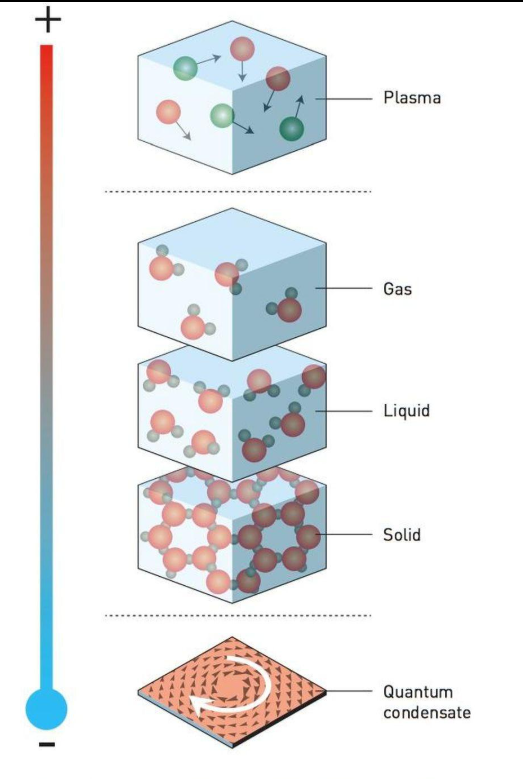
Consider silicate glass. Its behavior is routinely described using energetic concepts: free energy, activation barriers, fracture toughness, and thermodynamic metastability. Yet none of these quantities is defined independently of a specific structural configuration — a three-dimensional network of SiO₄ tetrahedra whose connectivity is modulated by alkali cations.
The apparent stability of glass does not reflect the absence of available energy. It reflects an organization whose collective rearrangement is constrained. What we call “energy barriers” are, more precisely, measures of structural resistance to reconfiguration. They quantify the difficulty of reorganizing a relational network.
In subcritical crack growth, the same pattern emerges. Local stress concentration modifies the relational state of bonds at the crack tip. In humid environments, this altered structural condition facilitates bond rupture. The energetic description captures thresholds and rates, but the dynamics originate in a reorganization of constraints within the network.
Fracture is therefore not fundamentally a “release of energy” in isolation; it is a transition between regimes of structural coherence. Energy describes the transition, but does not precede the organization that makes it possible.
Across these examples, energy functions as a measure of relative configurational stability. It never exists independently of the structured system to which it refers.
Geometry and Energy in Relativity: A Relational Unity
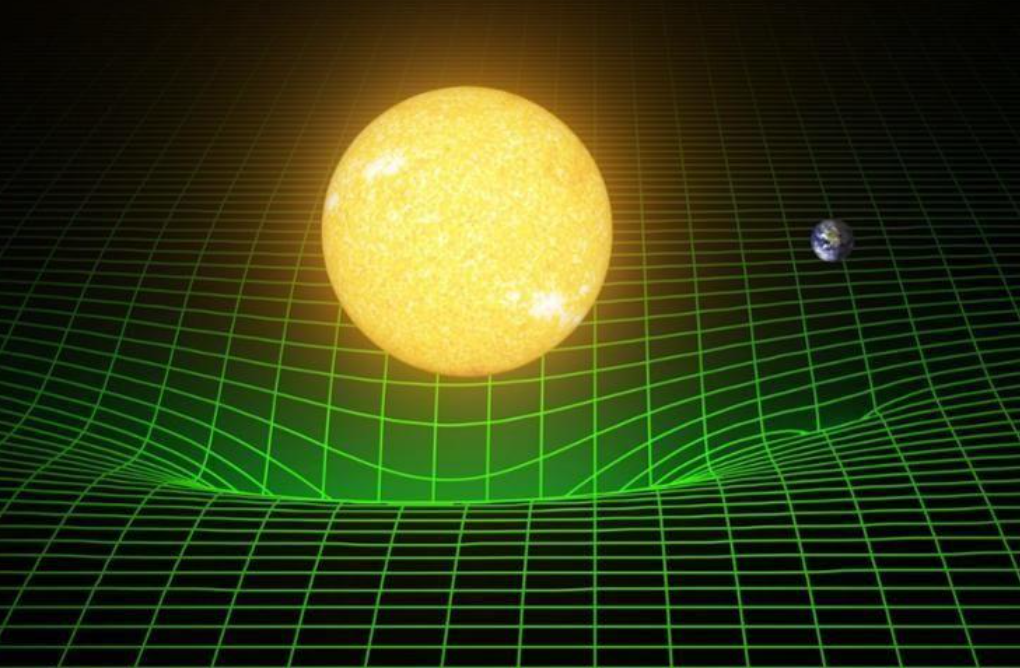
A similar displacement appears in general relativity. The curvature of spacetime is linked to the energy–momentum tensor, which might suggest that energy plays a foundational causal role. Yet the tensor is not a manipulable substance; it encodes distributions of matter and interaction within a geometric framework.
Popular interpretations often imagine that one could “inject energy” to bend spacetime at will. However, within the formal structure of the theory, energy has meaning only in relation to the metric and the causal constraints of the system. Geometry and energy are not separable agents; they form a unified relational structure.
Even in a theory where energy appears explicitly in the field equations, it cannot be conceptually isolated from the structure that defines it.
At this point, it may be tempting to associate such a conceptual displacement with more speculative developments in future physics — frameworks in which relational primacy might be formally embedded at the most fundamental level. Yet such an extension would require a methodological transformation that our present theoretical language has not yet stabilized. For this reason, the present analysis remains deliberately grounded in established theories. The objective is not to anticipate a new physics prematurely, but to clarify the implicit hierarchy within the one we already possess.
Relational Continuity Across Scales
The convergence of these domains — condensed matter and relativistic geometry — suggests a subtle continuity. In each case, energy retains full descriptive and predictive power, yet appears dependent upon a prior organization of relations.
Whenever invariances stabilize within a structured regime, conserved quantities emerge. Energy corresponds to such stabilized invariances. It is not negated; it is situated.
Transitions across scales reinforce this view. A local reconfiguration of structural coherence may be described as an energetic variation. A large-scale reorganization of a system may appear as a redistribution of energy. In both cases, the energetic account remains valid — but it operates at an effective level of description.
Beneath it lies the evolving relational network that renders such descriptions meaningful.

Emergence and Coherence
If this perspective is generalized, a consistent pattern becomes visible:
A relational organization defines constraints. Stable configurations generate invariances. Invariances give rise to conserved quantities.
Energy belongs to this final level.
It remains empirically indispensable. Yet its intelligibility presupposes the structural regime from which it emerges.
The initial question — whether energy is fundamental — therefore transforms rather than resolves. It becomes an invitation to examine, domain by domain, whether energetic descriptions conceal a more primitive relational order.
Nothing in this proposal alters established equations. Nothing undermines conservation laws. The shift concerns conceptual architecture. Energy retains its empirical authority, yet its position within that architecture may be reconsidered.
What appears increasingly primary is not exchange, but organization. Not quantity first, but coherence first.
The perspective remains open. Its purpose is not to overturn physics, but to clarify its implicit foundations.
메타데이터
- post_id
- df0af8b2e590
- slug
- structure-before-energy-rethinking-the-foundations-of-physics-part-2-of-2-df0af8b2e590
- url
- https://medium.com/@gouvielos/structure-before-energy-rethinking-the-foundations-of-physics-part-2-of-2-df0af8b2e590
- canonical_url
- https://medium.com/@gouvielos/structure-before-energy-rethinking-the-foundations-of-physics-part-2-of-2-df0af8b2e590
- author_url
- https://medium.com/@gouvielos
- status
- ok
- fetched_at
- 2026-07-22 21:40:45