The Night I Realized I’d Been Exhausted for So Long I’d Forgotten What Rested Felt Like
It took one good night’s sleep to understand what I’d been missing for two years.
The Night I Realized I’d Been Exhausted for So Long I’d Forgotten What Rested Felt Like
It took one good night’s sleep to understand what I’d been missing for two years.

I woke up on a Tuesday in November and lay there for a moment before getting up.
This sounds unremarkable. It was not unremarkable.
For two years, my first conscious experience every morning had been the same: a calculation. How many hours did I get. How I felt relative to how many hours I got. Whether today was going to be a functional day or a survival day. Whether the coffee was going to be enough.
That Tuesday morning there was no calculation. I just woke up. And lay there. And felt fine.
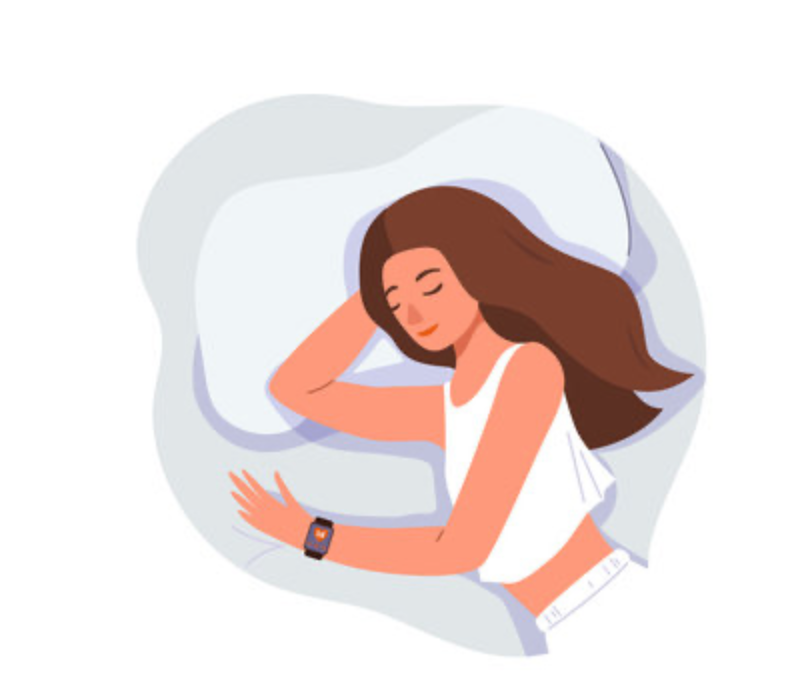
I didn’t know what to do with it. I actually sat on the edge of my bed for a moment trying to identify what felt different, and it took me a few seconds to realize: I wasn’t tired. After two years of waking up tired every single day, I had forgotten that this was an option.
That morning was the end of the worst two years of my adult life — and I had spent most of those two years not even understanding what I was losing.
What two years of bad sleep actually takes from you
People describe insomnia as a sleep problem. It isn’t only a sleep problem.
It is a slow, quiet erosion of everything that runs on sleep, which turns out to be almost everything.
My work suffered first. Not dramatically — I didn’t lose my job, I didn’t have a breakdown. Just a creeping degradation in the quality of what I produced. Decisions that should have taken seconds took minutes. I’d read the same email three times and still not retain it. I’d sit in a meeting and come out unable to remember what had been said.
Then my relationships. I became someone who canceled things. I stopped making plans that required energy in the evenings, which is when most social life happens. When I was with people I cared about, I was present in body only — half my attention was already thinking about bedtime, about whether tonight would be better, about what I should or shouldn’t do in the next few hours to improve my chances.
Then something harder to name. A flattening. The things that used to feel engaging started feeling like tasks. I stopped being curious about things. I stopped finding things funny. I went through days rather than living in them.
I know now that all of this was sleep deprivation. At the time I thought I was just becoming a less interesting person.
What I had tried
I want to be specific about this because I think specificity is useful.
Melatonin — three brands, various doses. Worked for about four days each time. Then stopped.
Ambien — worked, then created dependency. When I tried to stop, the insomnia was worse than before I started.
A sleep tracking watch — made me more anxious about my sleep data, which made my sleep worse.
Cutting alcohol — helped slightly. Not enough.
Meditation — inconsistently helpful. On good nights it helped me relax. On bad nights I failed at meditation too, which added a new layer of inadequacy.
Various supplements — magnesium, valerian, ashwagandha, L-theanine. Minor effects that faded.
A new pillow. A weighted blanket. A sunrise alarm clock.
I spent more than a year accumulating things that didn’t fix the problem, because I was thinking about the problem wrong.
The thing I had been getting wrong
The shift happened when I stopped asking “what can I take or use to sleep” and started asking “what is my body responding to.”
These are different questions. The first assumes sleep is broken. The second assumes sleep is working perfectly — responding exactly as designed to the signals it’s receiving — and asks what those signals are.
When I looked at my actual signals, the picture was almost embarrassing.
I was sleeping at different times every night. My body clock had no consistent pattern to follow. I had given myself the equivalent of permanent jet lag.
I was working on my laptop until 11:50pm and expecting to be asleep by midnight. I was asking my nervous system to go from full alert to complete rest in ten minutes. This is not possible.
I was drinking coffee at 4pm. Caffeine has an eight to ten hour half-life. Half of my afternoon coffee was still active at midnight. I was chemically wired every time I tried to sleep.
My bedroom was 73 degrees. Your body needs to drop in temperature to enter deep sleep. My room was actively preventing this.
I had been solving for the wrong thing. I was trying to force sleep while simultaneously sending my body every possible signal to stay awake.
What four weeks looked like
Week one: I changed nothing except my wake time.
7am every day. No exceptions. Not weekends. Not after bad nights. Not when I was traveling. I set the alarm. I got up.
The first three days were brutal — I was exhausted by 8pm on day two, which had not happened to me in two years. By day six I was yawning at 10:30pm without trying. My body was learning when nighttime was.
Week two: I stopped everything two hours before bed.
Laptop closed at 9pm. Phone in another room. Lights dimmed. I read books that had been on my shelf for two years. I had baths. I felt like a Victorian and slept better than I had in months.
What I noticed by day ten: I was no longer dreading bedtime. Bedtime had spent two years being the place where I went to fail at sleeping. It started to feel different.
Week three: I fixed the environment.
66 degrees instead of 73. Blackout curtains. Phone removed from the bedroom permanently.
The first night at 66 degrees I slept six hours without waking. I lay in the morning just noticing the absence of exhaustion, trying to remember the last time that had happened.
Week four: small adjustments.
Last caffeine at 2pm. Exercise moved to afternoon instead of evening. Dinner earlier.
These felt minor. Their cumulative effect on sleep quality was not minor.
What I know now that I didn’t then
Sleep is not something that happens to you. It is something your body does when the conditions are right.
I had been trying to make sleep happen through will and supplements and gadgets. Sleep doesn’t respond to will. It responds to conditions.
When the conditions were wrong — inconsistent schedule, too much light, caffeine still active, room too warm, nervous system never given a chance to wind down — sleep didn’t come. Not because I was broken. Because the conditions weren’t right.
When I fixed the conditions, sleep came back. Not immediately. Over four weeks. But reliably, and then permanently.
That Tuesday morning in November was the first morning of the rest of my life functioning normally. It has been eleven months since then. I sleep seven to eight hours most nights. I don’t track it anymore.
The thing that still gets me is how long I went without knowing what rested felt like. Two years. I had recalibrated to exhaustion as the baseline and forgotten there was something else.
There is something else.
I documented the complete system — the daily checklists, the week by week protocol, troubleshooting for specific problems like waking at 3am, waking up exhausted despite sleeping, and dependency on sleeping pills — in a [30-day guide here.][But the thing to do tonight is simpler than any of that.
Pick your wake time. Set the alarm before you sleep. Get up at that time tomorrow regardless of how the night went.
That is the first condition. The one that starts everything.
→ [The 30-Day Sleep Optimization System]
Two years of exhaustion. Four weeks to fix it. Eleven months of sleeping normally. The conditions were always fixable.
메타데이터
- post_id
- df1ce389bbd7
- slug
- the-night-i-realized-id-been-exhausted-for-so-long-i-d-forgotten-what-rested-felt-like-df1ce389bbd7
- url
- https://medium.com/no-time/the-night-i-realized-id-been-exhausted-for-so-long-i-d-forgotten-what-rested-felt-like-df1ce389bbd7
- canonical_url
- https://medium.com/no-time/the-night-i-realized-id-been-exhausted-for-so-long-i-d-forgotten-what-rested-felt-like-df1ce389bbd7
- author_url
- https://medium.com/@karrrrr
- status
- ok
- fetched_at
- 2026-06-14 11:28:49