Blueprint for Speed: Navigating the iGaming Architecture Shift in 2026
The architectural requirements for a top-tier iGaming platform have shifted fundamentally in 2026. For years, operators could rely on…
Blueprint for Speed: Navigating the iGaming Architecture Shift in 2026
The architectural requirements for a top-tier iGaming platform have shifted fundamentally in 2026. For years, operators could rely on monolithic, all-in-one software suites to manage their sportsbooks, casinos, and player data. But as player expectations skyrocket and global regulatory landscapes fracture, these rigid systems have become liabilities. Today, enterprise success is no longer defined by how many games you host, but by how fast and fluidly your system operates under pressure. For B2B decision-makers, navigating the move toward modular, API-first delivery is the single most critical factor in securing a long-term competitive advantage.
The API-First Evolution
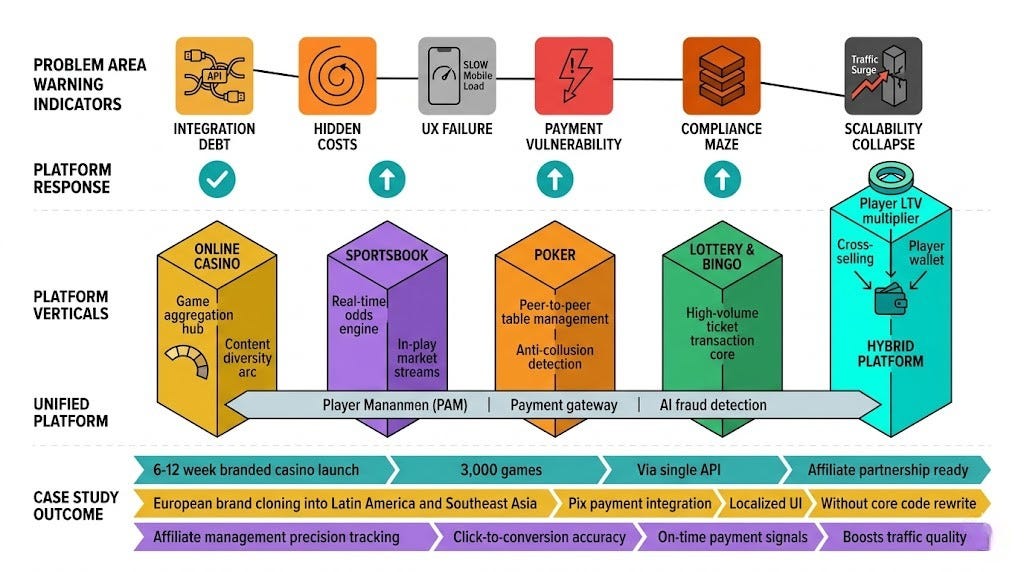
The defining trend of 2026 is the decoupling of the traditional tech stack. Monolithic architecture forces operators into vendor lock-in, where updating a single payment gateway or changing a live-data feed requires rewriting core software code. This structural rigidity stifles innovation and delays time-to-market.
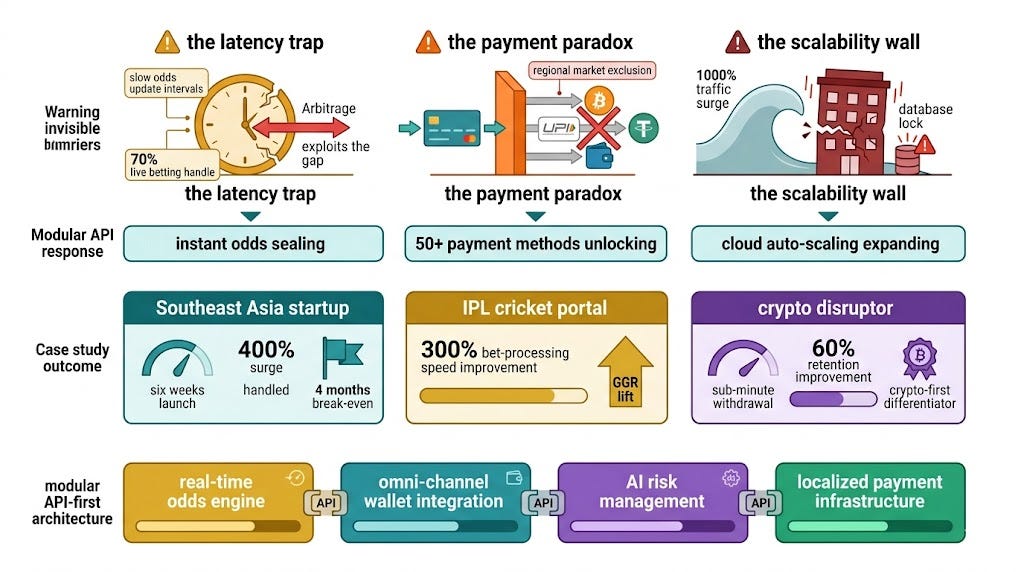
An API-first framework solves this by treating every feature — from the risk engine to customer loyalty tools — as an independent microservice. Operators can easily swap out components or plug in premium regional features without destabilizing the broader ecosystem. This architectural flexibility drastically reduces deployment overhead, crushing standard integration timelines from a grueling six-month engineering process down to under a month.
Achieving Zero-Latency Under Heavy Load
In a high-stakes environment where sportsbooks process thousands of micro-bets every second, latency equals lost revenue. During peak global events like the World Cup, traffic surges can cause standard relational databases to lock up, resulting in catastrophic system downtime.
To achieve true zero-latency performance, modern platforms leverage distributed edge computing and highly scalable event-driven architectures. By processing transactions closer to the end user and utilizing ultra-low-latency data streams like gRPC and WebSockets, top-tier platforms maintain a benchmark response time of under 50 milliseconds. This ensures that live odds remain perfectly synchronized with the action on the pitch, protecting the house from courtsiding and providing users with a frictionless betting experience.
Seamless Multi-Jurisdictional Compliance
Beyond performance, modular architecture is an operator’s strongest shield against compliance fatigue. Navigating the evolving regulatory frameworks of over 50 global jurisdictions is an operational nightmare when using rigid, legacy code.
With an API-driven architecture, regional compliance requirements — such as data sovereignty laws, strict geolocation tracking, and automated tax vault reporting — are treated as plug-and-play modules. If a jurisdiction modifies its responsible gambling parameters, engineers can update that isolated module instantly without taking the core betting engine offline.
Strategic Takeaway: True platform scalability isn’t just about handling volume; it’s about handling rapid operational and regulatory change without breaking.
Conclusion
The iGaming industry has graduated past the point where content alone can differentiate a brand. In 2026, operational agility dictates market dominance. Transitioning to a modular, API-first infrastructure allows B2B operators to launch faster, scale instantly during massive global events, and maintain effortless compliance across borders. For forward-thinking decision-makers, upgrading the underlying architecture is no longer just a technical recommendation — it is an absolute business imperative.

메타데이터
- post_id
- df210f4ab161
- slug
- blueprint-for-speed-navigating-the-igaming-architecture-shift-in-2026-df210f4ab161
- url
- https://medium.com/@microbeekorea/blueprint-for-speed-navigating-the-igaming-architecture-shift-in-2026-df210f4ab161
- canonical_url
- https://medium.com/@microbeekorea/blueprint-for-speed-navigating-the-igaming-architecture-shift-in-2026-df210f4ab161
- author_url
- https://medium.com/@microbeekorea
- status
- ok
- fetched_at
- 2026-06-09 15:37:30