*The Twilight Zone: Every night trillions of tiny creatures come up from the ocean depths*
The Twilight Zone: Every night trillions of tiny creatures come up from the ocean depths
If you were on a boat, in the middle of the ocean, at midnight ,you’d see mostly black water and stars. But 300 meters under you, the biggest migration on Earth is happening, like, right now.
Not wildebeest on some savanna, not birds crossing whole continents. It’s trillions of small animals coming out of the dark, like a silent tidal push.
Scientists call it the Diel Vertical Migration. Everybody else, calls it the greatest commute ever, on the planet.
And it goes on every single night.
Where this happens: the ocean’s twilight zone
The ocean is layered, kinda like a cake, yep.
The top 200 meters is the “sunlight zone.” This is where photosynthesis kicks in, where most fish we know hang out, and where light still makes it through.
Under that, roughly 200 meters to 1,000 meters, is the
twilight zone, also called the mesopelagic region.
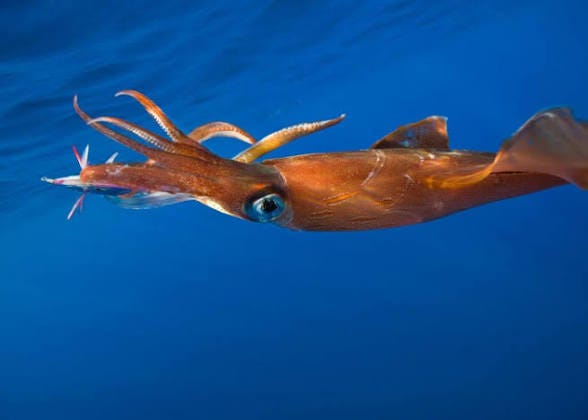
Light barely arrives. It’s this constant blue gray dimness. Pressure is about 20 times what we deal with on land. Temperatures drop down toward 4°C. Food is scarce, like really scarce.
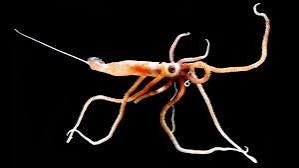
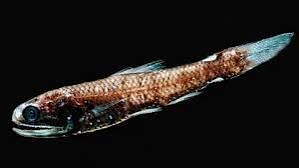
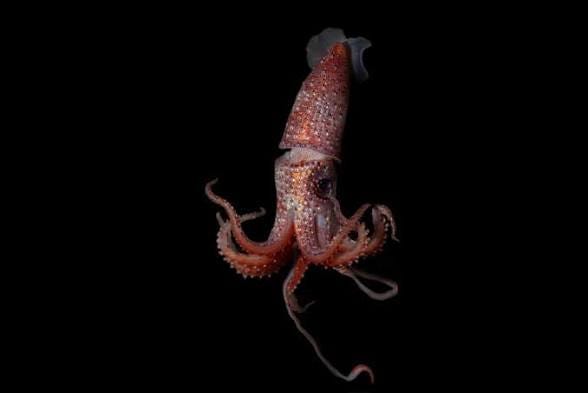
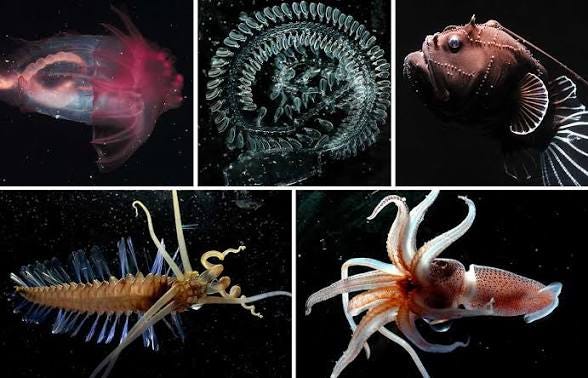
So yeah, it sounds like nobody could live there. Yet it’s packed with life. Lanternfish, with glowing bellies. Transparent shrimp. Jellyfish with red stomachs so they don’t basically advertise themselves. Squid that pull off vanish tricks, and seem invisible.

And each day, most of them slide down there because it’s the only place that feels even slightly safer from the hunters.
The great commute: why they rise every night
Once the sun goes down, and the surface turns dark, some signal travels through the water.
“It's safe.”
So they rise.
Trillions of creatures, mostly smaller than your finger, move upward. Some go about 400 meters. Some go close to 1,000. It’s kind of like you climbing Mount Everest every night just to grab dinner or whatever.
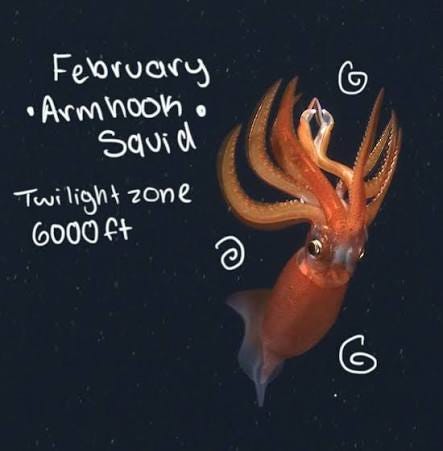
They spend the night in the sunlit zone, grazing on phytoplankton and zooplankton. It’s like an all-you-can-eat buffet, except it’s only operating near the top of the water.
They can’t stick around. The second the first dawn light touches the water, predators can see them again. So they rush back down, quick, into that cold dark twilight zone, to hide for the day.
It plays out in the entire ocean, every 24 hours. No alarm clocks. No bosses. Just light and dark, moving through the water.
How much life are we talking about?
The numbers are honestly too big to keep in your head without it getting weird.
Back in the 1940s, sonar operators were the first to spot it. Their gear kept picking up this “false seafloor” that would rise at night and sink in the daytime. It wasn’t rock. It was living animals.
Today, estimates say the twilight zone holds somewhere between 10 billion and 100 billion tons of fish and invertebrates. The nightly shift moves more biomass than all humans, cattle , and wild animals on land… together.
If you lined up the migrating creatures into one long chain, it would wrap around Earth.

Why this matters to you
This nighttime commute isn’t only something pretty to film for a nature channel. It helps keep the planet running.
1. It feeds everything Whales, tuna, sharks, penguins, and seabirds all time their hunts around this migration. Commercial fisheries depend on it too. Without the twilight zone, there would be way fewer fish near the surface.
2. It fights climate change Here’s the odd part. Those tiny critters eat carbon rich plankton up top ,then swim down and “park” that carbon in the deep as waste. Basically they stash it down there.
Scientists call it the "biological carbon pump." The twilight zone is estimated to move about 1-3 billion tons of carbon into the deep ocean every year. That carbon can stay there for centuries. Without the migration, more CO2 would linger up in the atmosphere.
Small ocean creatures, big climate impact.

3. It may hold the next medical and tech breakthroughs Twilight zone animals have evolved antifreeze proteins, bioluminescence, extreme pressure endurance, and camouflage strategies we still don’t fully understand. Researchers want to learn from them, for new medicines, tougher materials, and energy solutions we haven’t even imagined yet.
A world we barely know
We have better maps of Mars than we do of the twilight zone.
Less than 5% has ever been explored in any real way by people. Submersibles can only go down there for a few hours. Nets damage the delicate animals, and bright cameras spook them with light.
Most of what we “know” comes from remote sensors, sonar, and nets dragged at night.
And yeah, that’s a problem, because we’re starting to mess with it.
Deep sea fishing is pushing deeper. Companies talk about mining the seafloor for metals. Plastic pollution has shown up in lanternfish stomachs. Climate change is warming these layers, and also pulling out oxygen, which makes survival harder.
If we interrupt the migration, we don’t just lose weird fish. We weaken ocean food webs and mess with one of Earth’s natural carbon sinks.
The poetry of it
Think about it.
While we sleep, the ocean runs its living schedule. A hidden community wakes up, travels upward, eats, and heads back before sunrise. It’s been doing this for millions of years, long before humans ever showed up.
The twilight zone is dark, but it’s not dead. It’s the ocean’s engine room. Quiet, pressurized, and absolutely necessary.
Every breath you take is tied to oxygen made by plankton. And every chunk of carbon the ocean stores gets a bit of help from a 2-inch lanternfish doing its nightly commute.
We stare up at the stars and act like space is the final frontier. But every night, right here on Earth, trillions of creatures rise from a place that feels like an alien planet ,one we’ve barely bothered to visit.
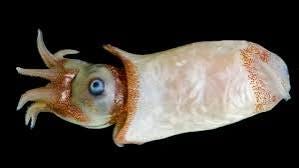
The twilight zone isn’t empty. It’s full, and it’s moving.
Want me to rewrite it again with photos and simple diagrams of the creatures that pull off this migration?
메타데이터
- post_id
- df26b17202f3
- slug
- the-twilight-zone-every-night-trillions-of-tiny-creatures-come-up-from-the-ocean-depths-df26b17202f3
- url
- https://medium.com/@victoriasterling_73989/the-twilight-zone-every-night-trillions-of-tiny-creatures-come-up-from-the-ocean-depths-df26b17202f3
- canonical_url
- https://medium.com/@victoriasterling_73989/the-twilight-zone-every-night-trillions-of-tiny-creatures-come-up-from-the-ocean-depths-df26b17202f3
- author_url
- https://medium.com/@victoriasterling_73989
- status
- ok
- fetched_at
- 2026-07-13 14:44:14