Perimenopause Was Supposed to Make Me Emotional, but It Just Makes Me Feel Slightly Off
On the quiet emotional shifts that are harder to name, and easier to miss.
Perimenopause Was Supposed to Make Me Emotional, but It Just Makes Me Feel Slightly Off
On the quiet emotional shifts that are harder to name, and easier to miss.
Photo by khalvat neshin on Unsplash
When people talk about perimenopause and emotions, they tend to describe something dramatic: sudden crying, rage out of nowhere, mood swings so sharp they feel like whiplash. And for some women, that’s exactly what it is.
For me, it’s been quieter than that.
More like a slight shift in the temperature of things. A vague restlessness I can’t quite name. Moments of feeling more worn down than the situation seems to warrant, or more reactive than I want to be, in ways I can always explain away: stress, a bad night’s sleep, a difficult week. Nothing that shouts this is perimenopause. Everything that whispers something feels a little off.
For a long time, I filed it under other circumstances. And I think a lot of women do.
Why the Quiet Version Is Still Real
During perimenopause and menopause, when estrogen levels fluctuate, the neurotransmitters that keep us emotionally steady — serotonin, dopamine, GABA — shift alongside them.
Cortisol rises more easily. Sleep becomes less restorative. The nervous system’s capacity to buffer stress gets thinner.
None of this requires dramatic symptoms to be real. The quieter version — the low-level irritability, the vague sadness without an obvious cause, the feeling of being slightly disconnected from ourselves — is just as physiological as the more visible kind. It’s just harder to recognize, and even harder to attribute.
What has helped me most hasn’t been a particular technique or a strategy. It’s been the same thing that has helped me with every other symptom I’ve noticed over the past few years: learning what’s happening and actually understanding it.
There’s something that shifts when we stop looking for external explanations for internal weather. When we understand that the mild friction we’re feeling isn’t a character flaw, or a stress response, or proof that something in our life needs fixing, the experience doesn’t disappear, but it changes shape. It becomes something we can place. Something that makes sense.
For me, that has been more useful than most of the practical advice I’ve come across.
The Thing About Not Going Through It Alone
There’s something else that matters, and it’s simpler than any technique.
Having someone who understands — or who tries to — makes a real difference. Not someone who fixes it. Not someone who has answers.
Just someone who knows what’s happening and doesn’t require us to perform being fine when we’re not quite there. Someone who can sit with the quiet version of this, without needing it to be more dramatic or more resolved than it is.
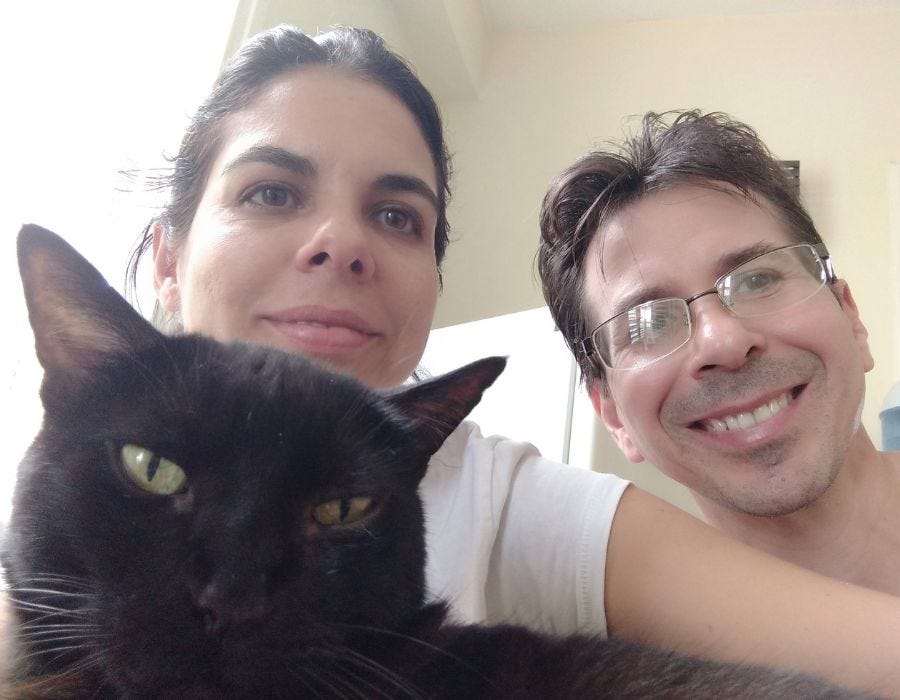
For me, that’s been my husband. But it can be a close friend, a therapist, a community of women in the same season of life. The form matters less than the presence.
Emotional loneliness — the particular kind that comes from feeling that what we’re experiencing isn’t legible to the people around us — amplifies everything.
Connection softens it. Not because it resolves the hormonal shift, but because the nervous system responds to safety. And being genuinely known by someone is one of the most reliable forms of safety there is.
Photo by Liz Fitch on Unsplash
What Actually Helps
Beyond understanding and connection, the strategies that have made the most difference for me are the ones that support the whole system.
They tend to be the same ones that help with the other cognitive and emotional symptoms that come with this stage: the anxiety, the irritability, the brain fog I’ve written about before. There’s a pattern here that’s worth paying attention to.
Sleep is foundational. Not just the quantity, but the consistency. A rhythm that gives the brain time to consolidate and restore. When my sleep is poor, everything else is harder. When it’s good, my emotional baseline is noticeably steadier.
Movement matters here as well. Not as discipline or obligation, but as genuine regulation. Walking, strength training, and stretching… All of it helps bring me back into my body and out of my head. Something about being physically present in myself quiets the noise that builds up when I’m too much in my thoughts.
And the time I spend with the people I love isn’t incidental. Research supports what I already sensed: physical contact and companionship reduce cortisol and increase oxytocin. In practical terms, this means that presence — real, unhurried presence — is itself a form of care.
None of this is a cure. But together, it adds up to something sustainable. The consistent, unglamorous, daily kind of care that this stage of life seems to ask for.
The Part I Keep Coming Back To
Perimenopause and menopause don’t happen in a vacuum. They happen in the middle of real life, with real responsibilities, real relationships, and real pressures that don’t pause because our hormones are shifting.
What I keep finding is that the most useful thing isn’t managing the emotions more efficiently, or fixing them faster, or making them smaller. It’s understanding where they’re coming from and resisting the habit of explaining them away. Letting them be what they are — a signal from a system in transition — without making them mean more than they do.
That doesn’t eliminate the difficult days. But it makes them easier to carry.
*Zaylen Claveria is an editor and content creator who is learning to add years without growing old. She is the founder of MenoPawse, a project celebrating the bond between women in peri- and menopause and their pets as a source of joy and renewal. Find MenoPawse on Pinterest and grab her free guide, 5 Practical Keys to Enhance Your Wellbeing During Menopause.*
메타데이터
- post_id
- df4a67b3766d
- slug
- perimenopause-was-supposed-to-make-me-emotional-but-it-just-makes-me-feel-slightly-off-df4a67b3766d
- url
- https://medium.com/middle-pause/perimenopause-was-supposed-to-make-me-emotional-but-it-just-makes-me-feel-slightly-off-df4a67b3766d
- canonical_url
- https://medium.com/middle-pause/perimenopause-was-supposed-to-make-me-emotional-but-it-just-makes-me-feel-slightly-off-df4a67b3766d
- author_url
- https://medium.com/@zaylen.claveria
- status
- ok
- fetched_at
- 2026-07-09 03:40:04