Old Ways for New Days
Rethinking Fire Management Practices Across Australia
Old Ways for New Days
Rethinking Fire Management Practices Across Australia
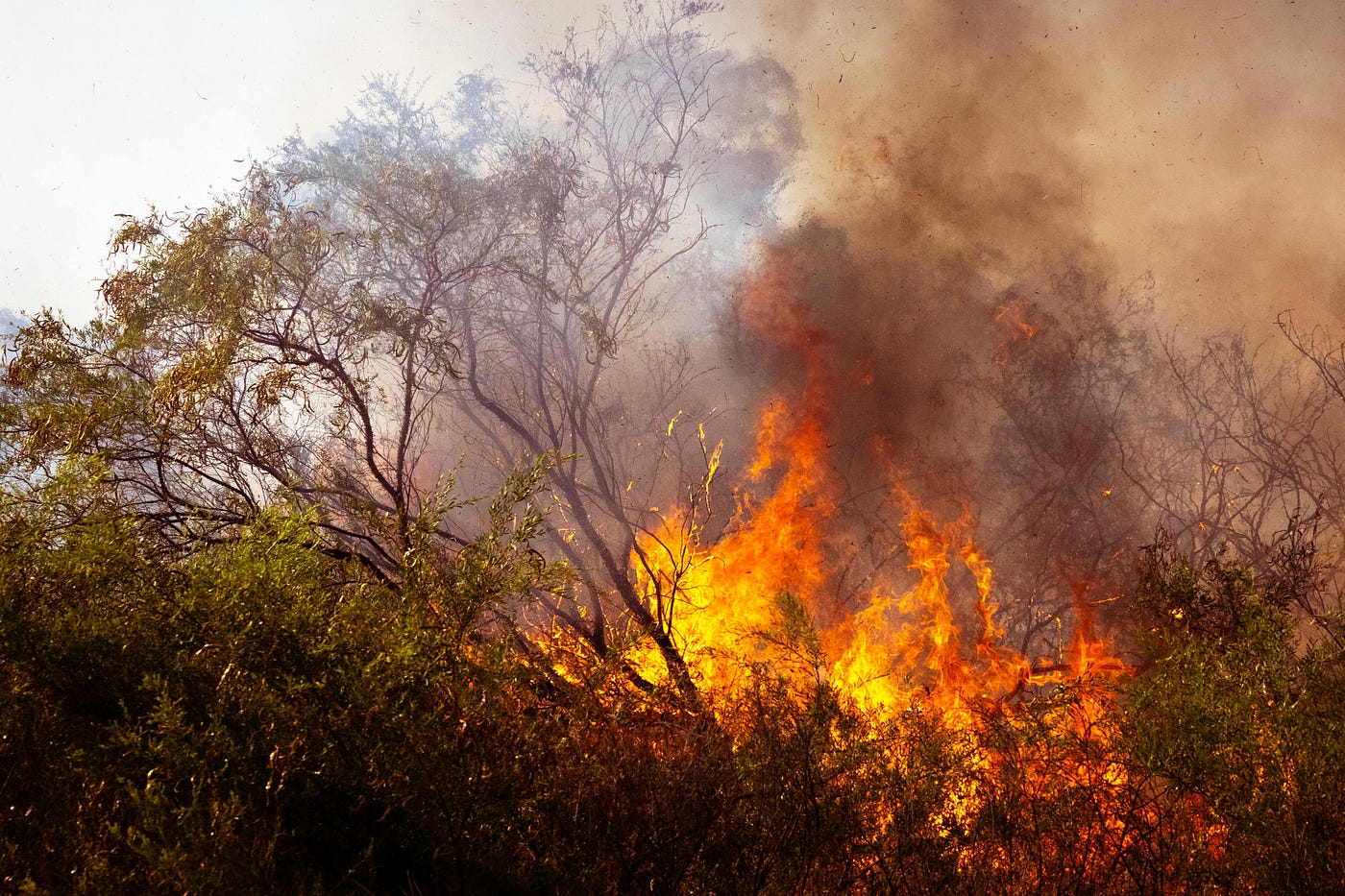
Image by Eclipse Chasers from Pexels
As I sit in Sweden writing this, my home country, Australia, is burning again. An ominous start to the fire season as homes and lives are already being claimed. Now to tell a story of my experience with fires in recent years… I could feel the heat from inside the bus. The flames being so close brought flashbacks to the devastating Black Summer bushfires of 2019–2020 that destroyed homes, took the lives of humans and wildlife and claimed over 20 million hectares of land across Australia.
Fast forward to current day, reminders of the fires can still be found. On the side of the road or in bushlands, you could see the ashy or burnt remains of trees, the country was slowly but surely regrowing, a testament to the resilience of nature. I was sitting on a tour bus on the road to the beautiful Litchfield National Park in the Northern Territory in June of 2024. I had been living in Darwin nearly 2 months already and was learning pretty quickly that this place was unlike anywhere I had ever been before. It is truly the wild west of Australia. The harsh landscapes and intense weather mean you have to be tough to live up north, that goes for both humans and animals, this is one of the most fire prone regions in the world, accounting for 70% of the area affected by fire each year in Australia.
We were all quite curious about the fires. They weren’t anything like we had seen during a burn off — a term often used when talking about fire hazard reduction. It sparked a conversation among passengers on the bus about how we had never seen this in other states or territories in Australia, the fire being so casually close to the busy road was unheard of down South. The fires we saw out the bus window were part of the successful fire management that is happening in the Northern parts of the country. This approach to fire management follows more closely with the cultural burning practices that have been carried out across Australia for many generations before us. Indigenous community-based ranger groups are leading this program, working closely with landowners and park managers to ensure the success of the program. The black summer fires were challenging in the North after years of low rainfall, despite these conditions, years of extensive management meant that Northern Australia didn’t see the scale of destruction experienced in the South.
Something about this topic had me hooked. I spent hours reading articles and listening to podcasts, not just on cultural burning, but on Indigenous knowledge systems more broadly. I spoke with farmers who were utilising these practices on their land. A step in the right direction to a more collaborative future in Australia. In May this year, I had the opportunity to participate in a cultural burning workshop and deepen my knowledge of the topic through hands on experience. It was run by Den Barber of Yarrabin Fire, a group established in 2020 following the Black Summer Fires that aims to revive traditional Aboriginal Cultural Practices of burning Country.
We first learned about what cultural burning truly entails, the slow, cool burns based on traditional ecological knowledge This knowledge, passed down through generations, integrates local seasons, flora, fauna, and spiritual ties to Country, preserving ecological functions vital for the land. In Australia, many native Australian plants require smoke from the fires to break seed dormancy and germinate, showcasing how truly connected our ecosystem is. Indigenous fire management is intrinsically flexible and attuned to the local environment. In contrast, modern fire management, is much less flexible and responsive, and often involves fires that are ignited from the air which results in bigger and more intense fires. The fundamental conflict lies in how we frame the problem. Government-led agencies often adopt a risk-mitigation frame, while Indigenous fire practitioners frame it as an ecological necessity.
Walking into the scrub with a lighter was a strange feeling. Was I really about to set it on fire? Especially after the Black Summer fires, there was a lot of fear created in the media at the time, fires were only framed in a negative light, something to be worried about. Of course, this is understandable due to the devastation and destruction that the fires caused. But perhaps this rhetoric that was spread on the media is not allowing for cultural burning practices to gain the recognition that they deserve for their positive impact on fire management. One by one we walked into the section of bush and set fire, setting different parts alight and forming a smaller mosaic within it.
To my surprise, instead of panic or worry about the fire, I felt an overwhelming sense of calm. Watching the flames work their way through the grasses and shrubs as if it knew exactly what it was supposed to do. It didn’t get out of control or run for the hills, just slowly singed the fuel in its path. While watching it unfold, something interesting happened. Insects started to crawl out, seeking safety elsewhere. And due to the pattern of the fires, this was something they could do. Unlike prescribed burns by government lead groups, where they wouldn’t have had as much of a chance to escape. Once we had worked our way through the different patches and the fires had mostly put themselves out, we went back to our starting point. Our group leaders encouraged us to dig our hands just below the surface of where the fire had travelled shortly beforehand. To my absolute surprise, the layers below were cool to touch.
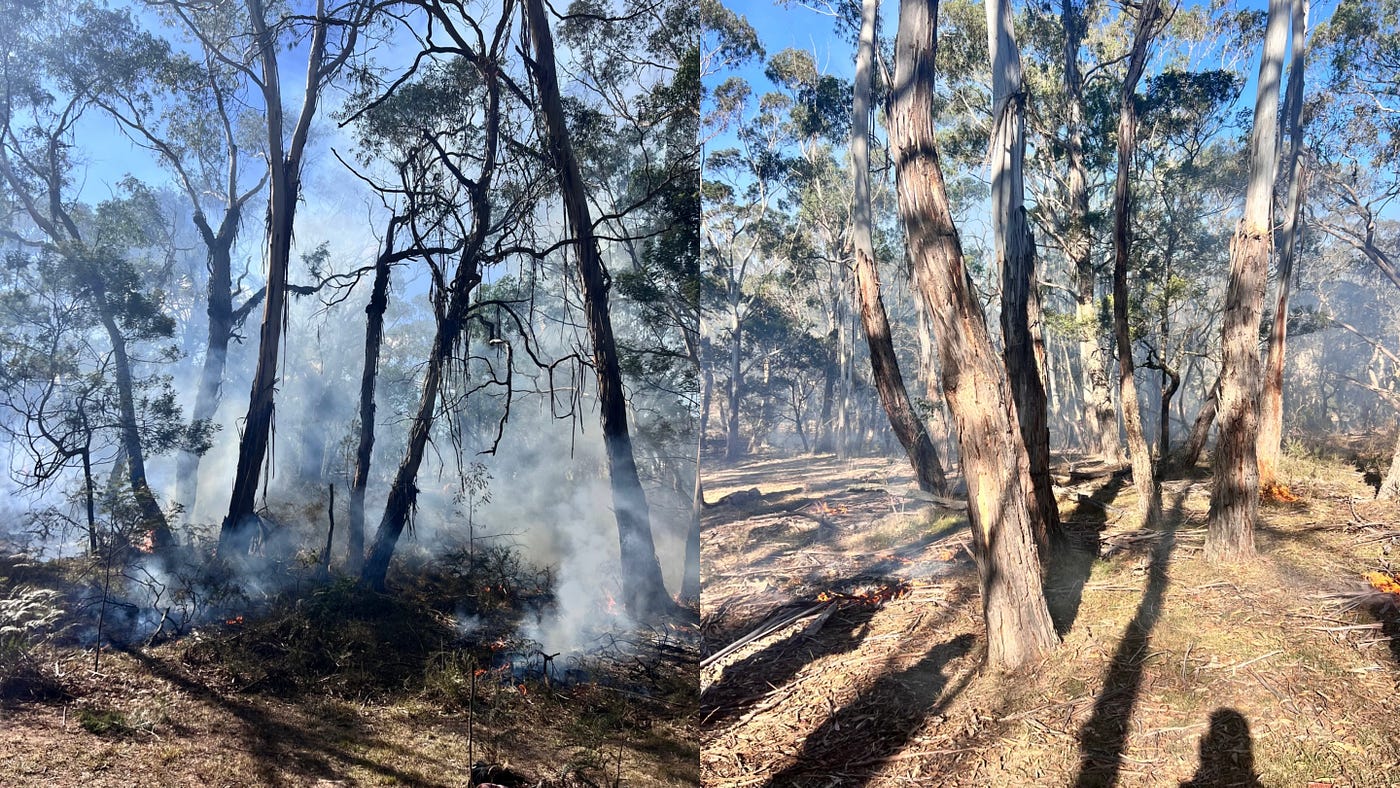
Own images from Cultural Burning Workshop, 2025.
On my drive home from the workshop, I really reflected on why cultural burning was not used more widely. It did make sense to me that government-led agencies strive for efficiency, but with successful case studies such as those in the Northern Territory, it seemed very strange to me that Indigenous fire practitioners are not consulted with more closely when it comes to fire management across the country. But the answer to why these knowledge systems became marginalized forces us to face a deeply uncomfortable truth of environmental racism and justice.
There is a clear lack of indigenous knowledge representation in this space. Stemming from a historical failure of dialogue — a refusal to allow for true participatory communication where Indigenous voices hold equal power in land management decisions. We need to move beyond simply ‘consulting’ Traditional Owners as an afterthought; we must actively empower Indigenous practitioners with control over their own land. Until we do, this damaging systemic exclusion, and the resulting fire risk, will persist.
In a country where the fire danger rating starts at moderate, and in a world that is experiencing more frequent and more severe weather events every year due to climate change, the hope is that those with the power to make changes, look to integrate traditional ecological knowledge and Indigenous practices into modern fire management strategies to achieve more ecologically sound, flexible, and safer land stewardship outcomes. This essential collaboration will ensure the longevity of my beautiful country and those who inhabit it.

Australian Fire Danger Ratings Scale
메타데이터
- post_id
- df5f53fb1896
- slug
- old-ways-for-new-days-df5f53fb1896
- url
- https://medium.com/the-green-alert/old-ways-for-new-days-df5f53fb1896
- canonical_url
- https://medium.com/the-green-alert/old-ways-for-new-days-df5f53fb1896
- author_url
- https://medium.com/@mimisage
- status
- ok
- fetched_at
- 2026-08-15 13:02:24




