Who and What Do We Forget When We Remember Stonewall?
Remembering the unsung, forgotten and whitewashed heroes of queer liberation
Who and What Do We Forget When We Remember Stonewall?
Remembering the unsung, forgotten and whitewashed heroes of queer liberation
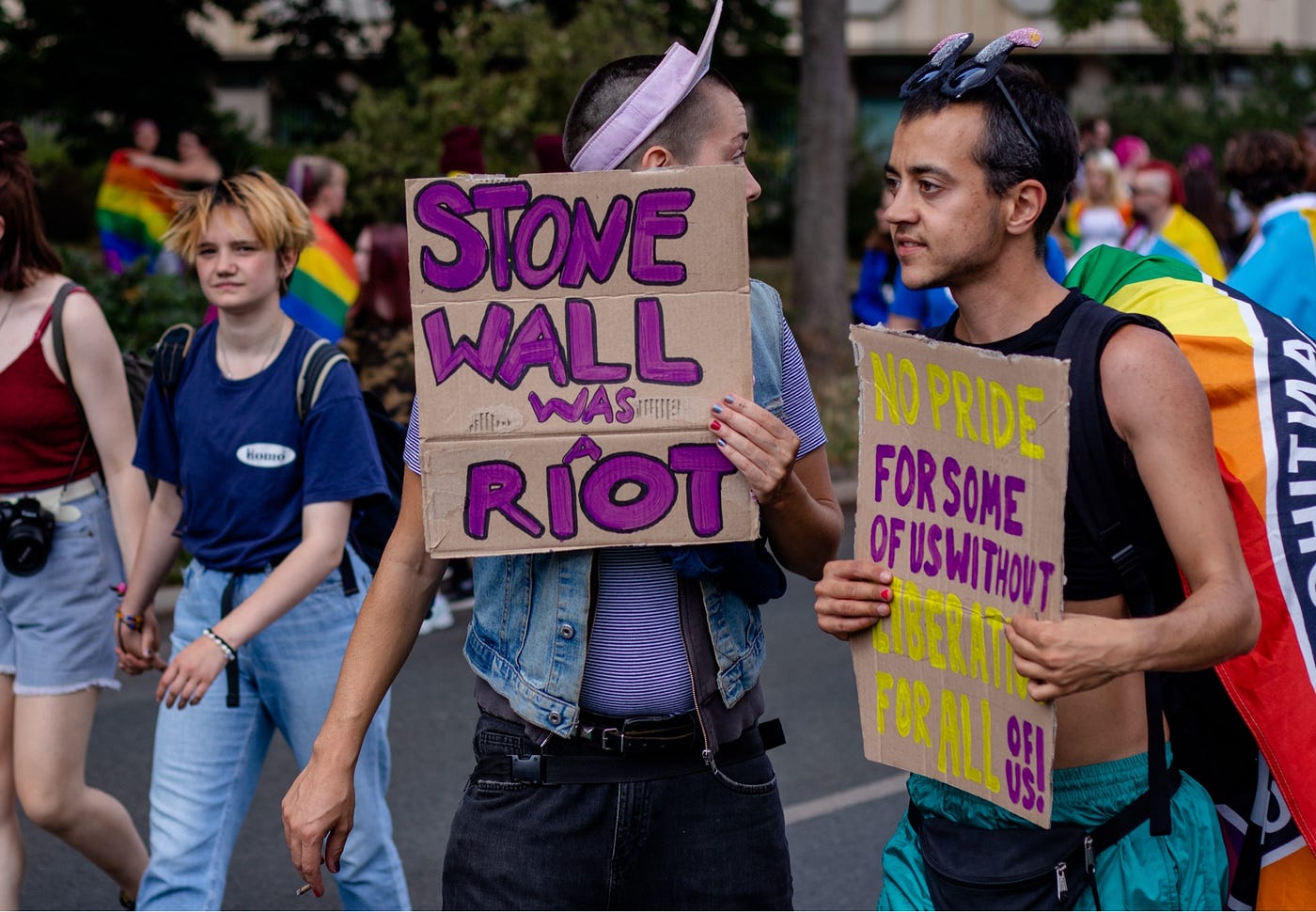
Photo by Tobias Möritz, CC BY-SA 2.0
Not a member yet? Read this story here
Note: this story was originally published several years ago, but wasn’t available online after I deleted my Substack and Medium archives. This republished version has been reworked and expanded with new material and images.
This year, Pride once again feels like it needs to be a protest – just like the Stonewall riots it commemorates. Our rights are being rolled back and our community is increasingly under attack.
However, while we remember the riots, the story we have written about Stonewall is predominantly one of queer white men, often from the middle or upper class, cisgender or gender-conforming (some of whom openly throw the rest of us under the bus).
We forget that the movement for queer liberation was both influenced by and grew from the radicalism of Black power, feminism, and opposition to Vietnam. Queer liberation intersected with other popular movements of the time, reflecting the intersectional identities of those involved; it was never a monolith, never just about queer identity.
Many of the people who were important for their involvement in the riots and the queer activism which followed have nonetheless been forgotten or otherwise had their history whitewashed so as to be more acceptable for mainstream LGBTQ+ activism. Who are these forgotten heroes of Stonewall, and what do their stories tell us about queer liberation, both then and now?
Afeni Shakur & the ‘House of D’ Inmates
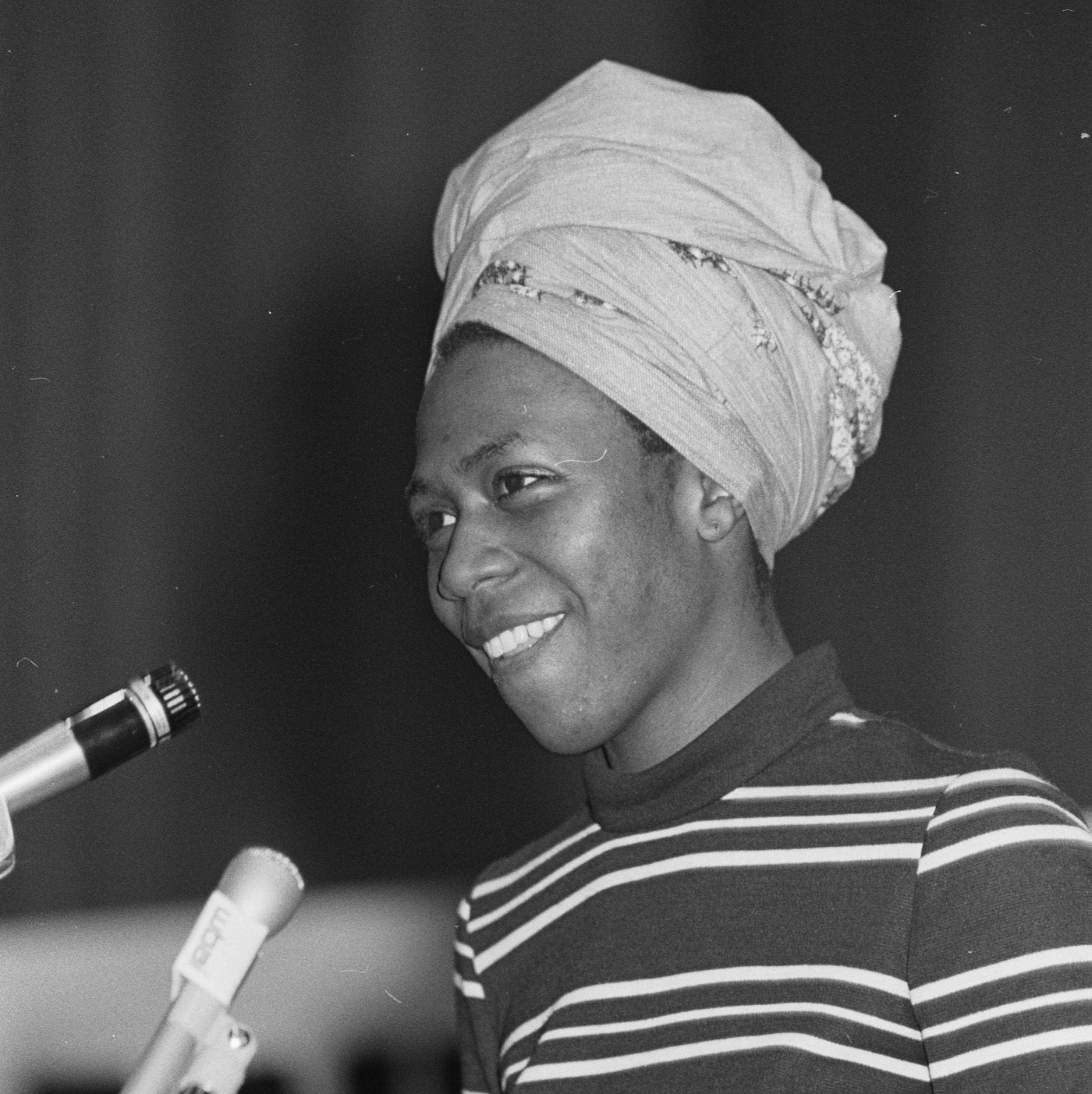
Photo by Bill Andrews for the Daily World, Public domain, via Wikimedia Commons
The relationship between the Black liberation movement and the gay rights movement is perhaps one of the most overlooked aspects of the history of queer activism.
Both movements shared much in common – those involved were often from the same marginalised communities, shared the same bars and hangouts, and often lived at the margins of society. Most importantly, they were both communities who were victim to frequent police harassment and brutality.
Afeni Shakur (mother of Tupac) was an active member of the Black Panther Party and a bisexual woman, and her relationship to the Stonewall riots encapsulates this intersection at the heart of Black, women’s and gay liberation.
On the night of the riots, Afeni was imprisoned just a few hundred feet away in the Women’s House of Detention. She had been arrested as one of the ‘Panther 21’ and imprisoned alongside the many queer women who had been arrested for being gay or gender-nonconforming.
Upon hearing of the riots, the prisoners shouted “*Gay Power!*” from their cells, burning any possessions they had and throwing them out the prison window to show solidarity with the Stonewall rioters. It was this event which sparked Shakur’s recognition of the common cause of women’s, Black and queer liberation.
Shakur was not alone. That same year the Black Panthers leader, Huey P. Newton, delivered a speech citing the need to build partnerships with the gay and women’s liberation movements, stating they were both revolutionary causes with shared goals to that of the Panthers.
Calls for solidarity between the gay liberation and Black power movements were echoed by the queer community following Stonewall.
Refusal on the part of the ‘homophile’ Mattachine Society (an organisation central to the queer rights movement prior to Stonewall) to hold a protest outside the ‘House of D’ in solidarity with Black and queer women prisoners led to a breakaway group forming the Gay Liberation Front (GLF)
Borne of a desire to work and show solidarity with the Black liberation movement, groups like the GLF would go on to work with groups like the Black Panthers, adopting their tactics for dealing with police violence and pursuing political action.
Yet, despite this intertwined history, the relationship between the gay, women’s and black liberation movements is often forgotten. And, while white queers went on to gain rights and their place in society, our Black siblings are still the victim of police harassment and violence today.
Jay Toole & the ‘Street Kids’ of Greenwich Village
One of the few pictures taken during the Stonewall riots, and the only one known to have been taken on the first night of rioting, shows homeless queer ‘street kids’, who slept and hung out in nearby Christopher Park, butting up against the cops.
While Jay Toole wasn’t one of the first at the riots, she later took part along with the other homeless young queer folks from Washington Square Park. Overall, the homeless queer youth of Greenwich village were some of the most involved in the six days of rioting following the raid on the Stonewall Inn.
After being kicked out of an abusive home for being a butch lesbian – a story common among homeless queer youth both then and now – Toole sought refuge in Washington Square Park, a safe space for young homeless queer folks.
The ‘street kids’ were heavily involved in petty crime and sex work, as a matter of survival, and were thus some of the most marginalised groups and the most frequently harassed, beaten and arrested by the police.
It’s no wonder they played such a key role in the Stonewall riots – they had the least to lose and the most to gain from challenging the police brutality faced by the queer community.
Sadly, though, as Jay Toole recalls, the gay liberation movement might have benefitted some but, despite their role in Stonewall, it didn’t much help marginalised queers like her. In Toole’s own words:
“The queer movement, going forward from that night, left a lot of communities behind. It left people of color, it left trans people, it left the homeless… And were they left behind on purpose? When we were all out there together, all fighting for one thing… so many of us were left behind”.
For Toole, Stonewall and the progress of the gay liberation movement didn’t end her homelessness, or her poverty. She spent decades on the streets after Stonewall and was again facing homelessness when interviewed in 2019, at the age of 71.
Jay’s story is a microcosm of the way the mainstream queer rights movement has often left behind the most marginalised members of our community.
Trans Women of Colour & Sex Workers
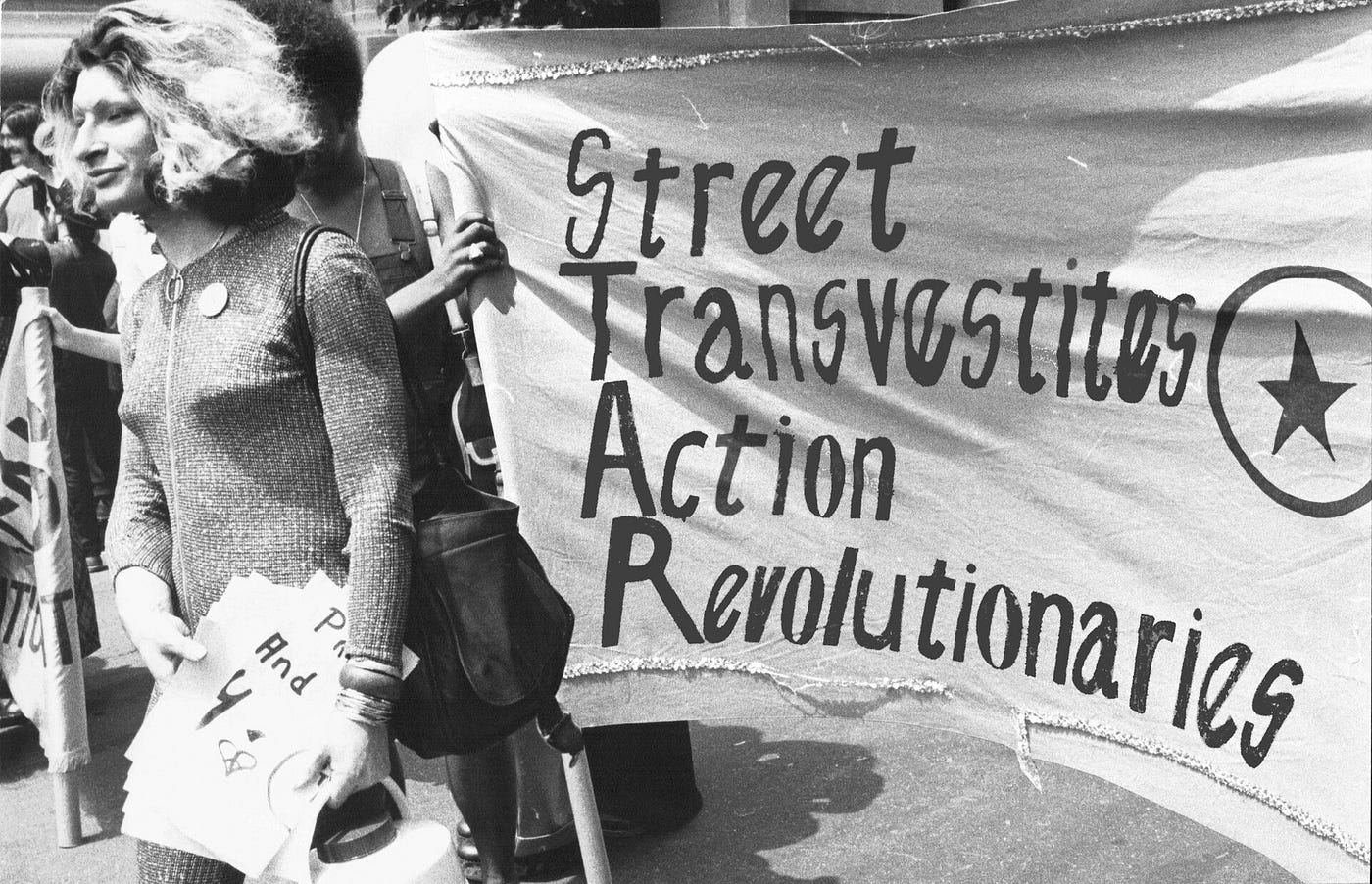
Sylvia Rivera at a STAR event — photo by Roseleechs, CC BY-SA 4.0
While some of those at the centre of the Stonewall riots are forgotten, others are remembered, but their lives and legacy are whitewashed for a modern audience – women like Marsha P. Johnson, Sylvia Rivera and Miss Major Griffin-Gracy.
We remember these women for their involvement in Stonewall and the activist movement that followed, but sanitise their stories to erase the facts of their reliance on sex work and petty crime. We also forget (or choose to ignore) the fact that they weren’t just vilified by the police.
Even at the time of Stonewall, and in the years that immediately followed, some in the queer liberation movement excluded trans women and gender non-conforming members of the community, as well as those perceived as criminal or immoral because of their involvement in sex work and petty crime, despite this being necessary for their survival.
Only a few years after Stonewall, Sylvia Rivera was booed while attempting to speak up for trans rights and the rights of other marginalised groups, including those in the Women’s House of Detention, at a 1973 Pride rally, after interrupting speaker Jean O’Leary who later referred to her and other ‘queens’ as ‘misogynists’ (something O’Leary later said she regretted).
Rivera’s critique of the movement as being concerned only with the rights of gay and lesbian, middle class, and white queer people (and the response to that critique) still rings true today.
Regardless of rumours about who did or didn’t throw the ‘first brick’ at Stonewall, or who was or wasn’t there on the first night of the riots, these three women all went on to found organisations and do work which was central to improving LGBTQIA+ rights.
Both Rivera and Marsha P. Johnson founded STAR (Street Transvestites Action Revolutionaries), a radical action group instrumental in fighting for the Sexual Orientation Non Discrimination Act.
Rivera also helped found the Gay Liberation Front, another radical group that worked with other marginalised groups both inside and outside of the queer community. Many GLF members went on to form groups like ACT UP, which were key in fighting the AIDS crisis and homophobia.
After spending decades advocating for incarcerated transgender women of colour, Miss Major Griffin-Gracy is now the Executive Director of the Transgender, Gender Variant and Intersex Justice Project (TGIJP). She also founded the House of GG, a centre for transgender community organising and advocacy.
We remember these women as heroes of Stonewall, but we forget their struggle against exclusion from the queer community at the time – as trans women, as women of colour, and as ‘hustlers’ looked down upon and excluded by many in the queer community. These issues sadly persist today.
Stormé DeLarverié: The Sheriff of Greenwich Village
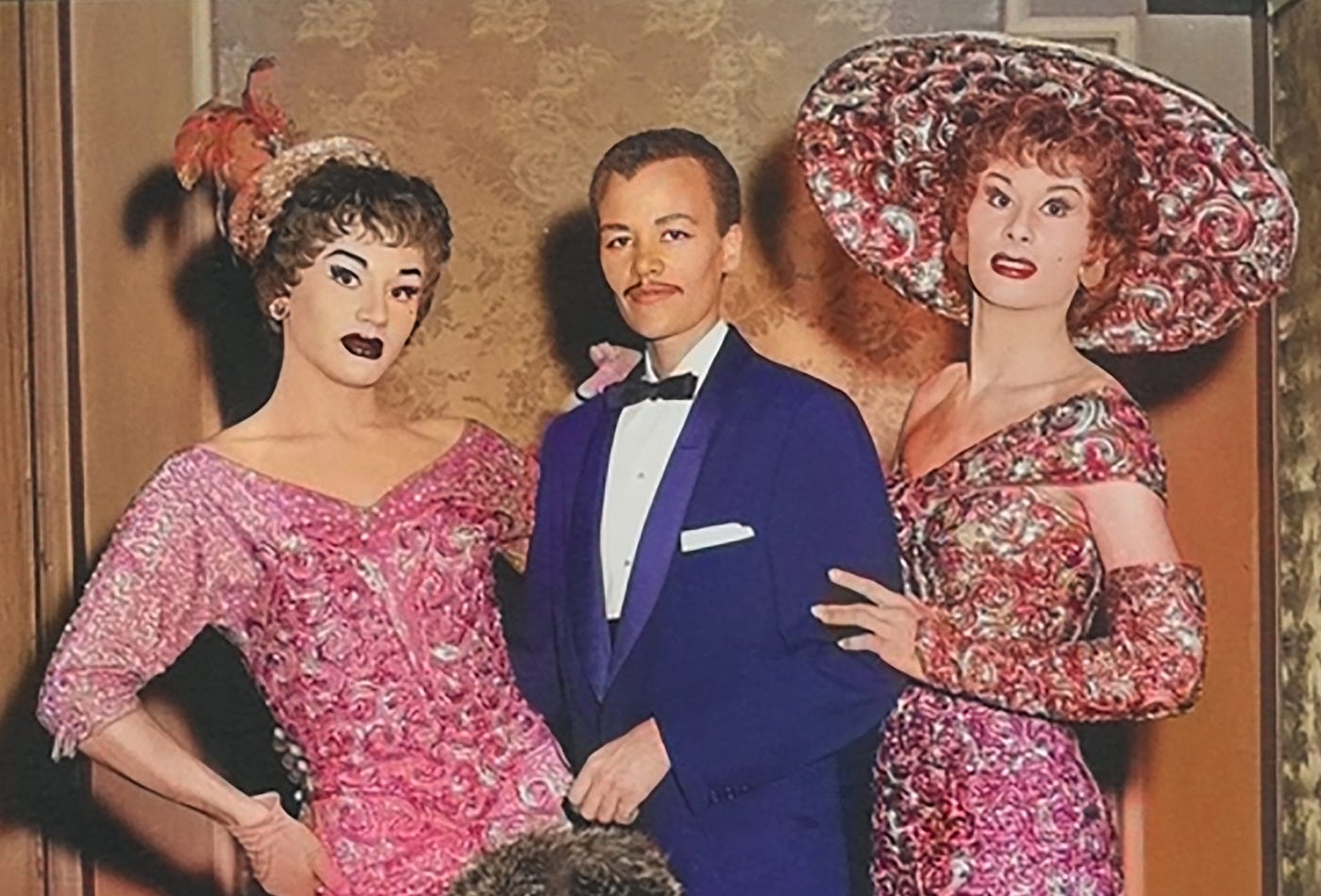
Stormé DeLarverié (center), Schomburg Digital Collections, New York Public Library, 1958, via Wikimedia Commons. Colourised by Eli Erlick, CC BY 4.0
Stormé DeLarverié was a biracial butch lesbian, and the only drag king in America’s first racially integrated drag revue. She epitomises the vulnerability of queers at the intersection of various forms of oppression, while simultaneously being an inspiring example of fierce queer resistance in defence of the marginalised.
Bullied by both the white kids and the Black kids growing up due to her racial identity, as an androgynous gender-nonconforming adult she was often harassed and imprisoned by police due to laws requiring at least two pieces of ‘gender appropriate clothing’.
She was a pioneer of unisex and butch styles, and unafraid to be herself in the face of police brutality, racism, homophobia and sexism.
Stormé was present on the first night of the riots, and according to Stormé and several others, she was the woman being arrested by police who threw the ‘first punch’, before shouting at the onlooking crowd “*why don’t you guys do something?*”, to which the crowd apparently erupted.
Whether this was the specific incident that sparked the riots, or one of many among the chaotic scenes outside the Stonewall Inn that night is debated, but there is little doubt that DeLarverié played a key role.
After Stonewall, Stormé continued to be involved in the queer rights movement, organising and performing at events for the LGBTQIA+ community and for women’s rights causes.
Perhaps the most inspiring part of Stormé’s story is her role as a volunteer street patrol worker. Previously having worked as a bouncer (and potentially as a bodyguard for the Mafia) she later roamed the streets of the Village, armed, checking in on lesbian bars and clubs and dealing with any problems. This has earned her several titles, including the ‘Sheriff of Greenwich Village’.
DeLarverié is an inspiring example of someone who, despite facing bullying and harassment in one form or another throughout her life, went on to fight for the rights of everyone in the Village – quite literally – and dedicated most of her life to defending the queer community.
Her story highlights how our fight for survival as queer individuals is linked to our survival as a community, and of the mutual responsibility we have to try and lift up others.
As Stormé DeLarverié succinctly put it in a 2001 interview:
“I‘m a human being that survived. I’ve helped other people survive”.
Fighting for everyone
These are some of the forgotten heroes of Stonewall – there are likely many others whose names we will never even know.
Perhaps we forget these figures because the other aspects of their lives and struggles remind us of the queer liberation movement’s failure to achieve progress for all queers, and because many of those issues such as exclusion and privilege are still sadly a feature of our community today.
Perhaps, too, we choose to forget or ignore the more radical (or violent) aspects of their activism because the Pride movement itself has become so un-radical, and their stories don’t fit with that modern, clean, corporate image.
We should remember these heroes and their stories not just for the role they played in Stonewall, but because they are an example of those we left at the margins as well as a reminder of what we can achieve in the face of oppression and brutality.
More than half a century after Stonewall we once again find ourselves fighting for our rights – let’s make sure we fight for everyone this time.
메타데이터
- post_id
- df690dc71cbc
- slug
- who-and-what-do-we-forget-when-we-remember-stonewall-df690dc71cbc
- url
- https://medium.com/@kayluna/who-and-what-do-we-forget-when-we-remember-stonewall-df690dc71cbc
- canonical_url
- https://medium.com/@kayluna/who-and-what-do-we-forget-when-we-remember-stonewall-df690dc71cbc
- author_url
- https://medium.com/@kayluna
- status
- ok
- fetched_at
- 2026-06-14 13:58:26