GTA 6 Priced Its Game Right and the Market Punished It Anyway
I wrote recently about how going public severed the link between making a good game and making money. Here’s the sequel, and it wrote…
GTA 6 Priced Its Game Right and the Market Punished It Anyway
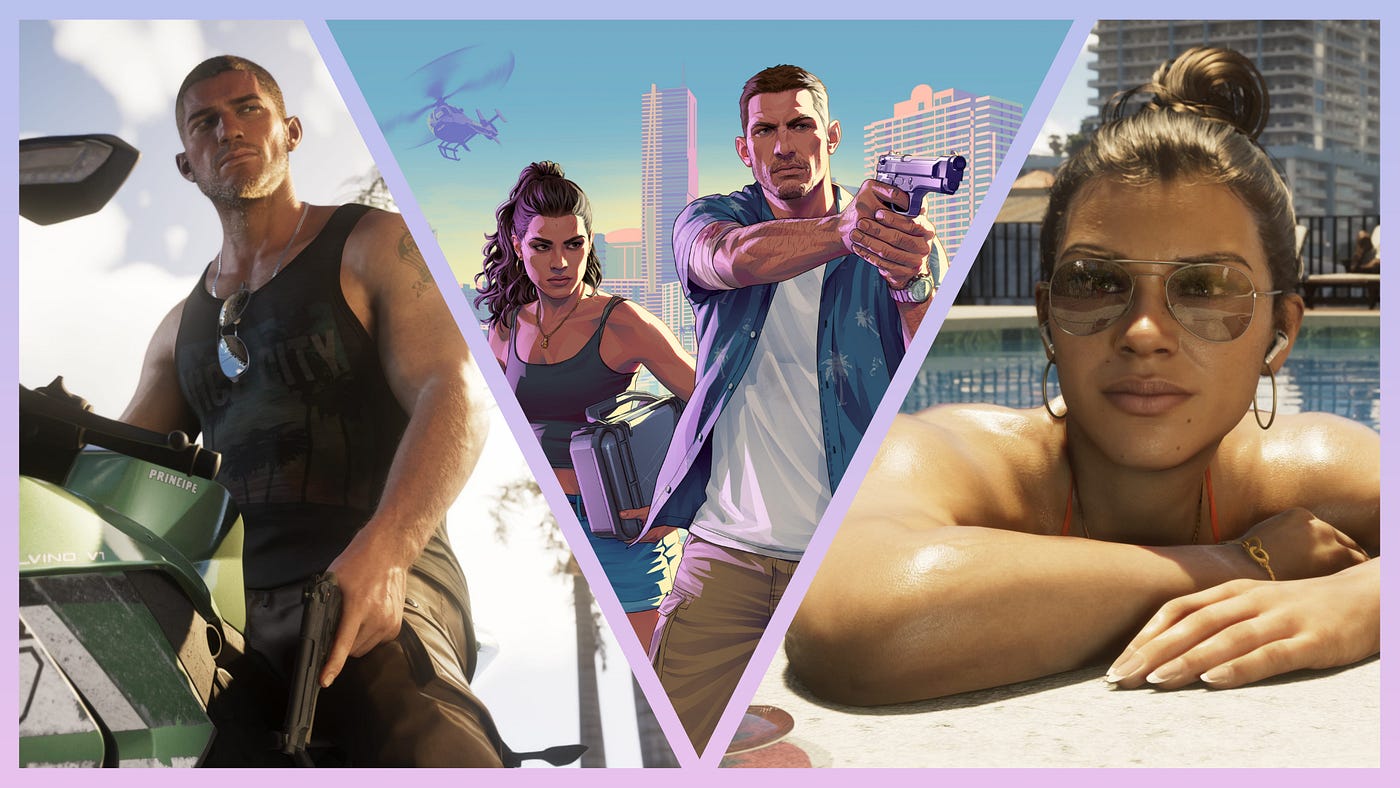
I wrote recently about how going public severed the link between making a good game and making money. Here’s the sequel, and it wrote itself in real time.
Rockstar announced the price of GTA 6. The stock went down. Sit with how strange that is for a second, because it tells you everything about who these games are actually being made for now.
What Actually Happened
On June 25, 2026, Rockstar opened pre-orders for GTA 6. Standard edition at $79.99, an Ultimate edition at $99.99, launching November 19. For a player, $80 is already a lot of money for a game. It’s at the absolute ceiling of what the market currently bears.
Take-Two’s stock, Rockstar’s parent, fell around 3% on the news.
And the reported reason from a chunk of shareholders wasn’t that $80 was too high. It was that it was too low. Some investors had convinced themselves GTA 6, the most anticipated game in history, would be the title that finally broke the ceiling and normalized $90 or $100 games for everyone. When Rockstar “only” charged $80, they saw hundreds of millions in revenue walked away from. The math is simple and cold. If the game sells 40 million copies, every extra $10 on the price is roughly another $400 million. To a shareholder, that’s not a rounding error. That’s a number they feel entitled to.
So the game that priced itself exactly where players could tolerate it got treated as a disappointment by the people who own the company.
The Tell Is the Timing
Here’s the part I can’t get past.
There isn’t a clean one-to-one line where “low price” directly caused “stock drop.” Analysts will tell you, correctly, that this was partly a sell-the-news reaction. The stock had run up 13% the week before on hype, and traders cashed out the moment the news landed, which is a thing that happens to any stock after a big anticipated event. Plenty of analysts actually raised their targets. So I’m not going to pretend the price reveal single-handedly tanked the company.
But strip that out and look at what’s left, because it’s still damning. The moment the product’s actual price became real, the immediate consensus among a loud slice of investors was disappointment. Not “great, they nailed the price.” Disappointment that the number wasn’t bigger.
Think about what that means. The reveal of the price is the first hard, concrete fact about the product’s relationship to its buyers. And the market’s instinct, at that exact moment, was to read a sensible price as a lack of nerve. As money left on the table. The first honest signal of “here is what we’re asking players to pay” was met not with confidence in the product, but with a complaint that they weren’t squeezing harder.
That’s the whole disease in one moment. The player and the shareholder want opposite things, and they want them at the exact same time.
The Trap Rockstar Was Actually In
Now here’s what makes this a genuine no-win scenario, and why I have a weird amount of sympathy for Rockstar specifically.
Rockstar knows something the quarterly-focused shareholder either forgets or doesn’t care about: price is not a lever you can just crank. Price the game too high and you shrink the buying pool. Shrink the pool and you miss your sales targets. Miss your targets and the stock falls anyway, except now you’ve also soured the launch and dented the goodwill of the exact audience whose long-term spending, on the inevitable online mode, is where the real decade of money lives.
A slightly lower base price that maximizes the number of people who buy in can easily out-earn a higher price that scares off a slice of buyers. Rockstar almost certainly understands this better than any investor reading a spreadsheet. The $80 that relieved players is probably the number that makes Take-Two the most money in the end.
But it doesn’t matter, because the two failure modes are symmetric. Price too high, miss targets, stock falls. Price it right for players, disappoint the greed, stock falls anyway. There is no number Rockstar could have printed that afternoon that satisfies both the person holding the controller and the person holding the shares. Those are two different people with two different definitions of winning, and the public company is legally married to the second one.
The Proof Nobody Wants to Sit With
And here’s the detail that should end the entire argument.
The pre-orders were a record. Reported figures put it north of 39 million units and more than $3 billion in revenue before the game even launched. The most successful pre-launch in the medium’s history, by a wide margin.
The stock still dropped.
Read those two facts back to back until they bother you as much as they bother me. The product broke every record available to it, delivered the single biggest commercial signal a game has ever produced, and the market’s response was a shrug and a dip. If a $3 billion head start isn’t enough to make shareholders happy on the day, then the game was never the thing being judged. The game is doing its job perfectly. It’s the relationship with investors that can’t be satisfied, because that relationship isn’t about whether the game is good or even whether it sells. It’s about whether it extracted the theoretical maximum, and the theoretical maximum is a number that does not exist and can never be hit.
This Is What I Meant
In the last piece I said the game had stopped being the product, and confidence had become the product. GTA 6 is that idea with a stock ticker attached.
Rockstar made, by every available measure, the right call for the people who will actually play the thing. And the machine it’s bolted to read that correct call as a failure of ambition, because the machine isn’t optimizing for a great game or even a wildly profitable one. It’s optimizing for a number that always could have been higher.
That’s the trap. Not that these companies are evil. That they’ve built a scoreboard where doing right by the player and doing right by the shareholder point in opposite directions, and only one of those two is holding a controller.
The other one is holding the company. Guess which one wins.
메타데이터
- post_id
- df7faa74c4ed
- slug
- gta-6-priced-its-game-right-and-the-market-punished-it-anyway-df7faa74c4ed
- url
- https://medium.com/@jared.pooler/gta-6-priced-its-game-right-and-the-market-punished-it-anyway-df7faa74c4ed
- canonical_url
- https://medium.com/@jared.pooler/gta-6-priced-its-game-right-and-the-market-punished-it-anyway-df7faa74c4ed
- author_url
- https://medium.com/@jared.pooler
- status
- ok
- fetched_at
- 2026-07-15 03:56:29




