When AI Makes a Hand Without a Thumb
Written by Nabil Ebraheim
When AI Makes a Hand Without a Thumb
Written by Nabil Ebraheim
Wrong image, AI-generated, no thumb

Wrong image, AI-generated, wrong location of the thumb
The diagram is not helpful

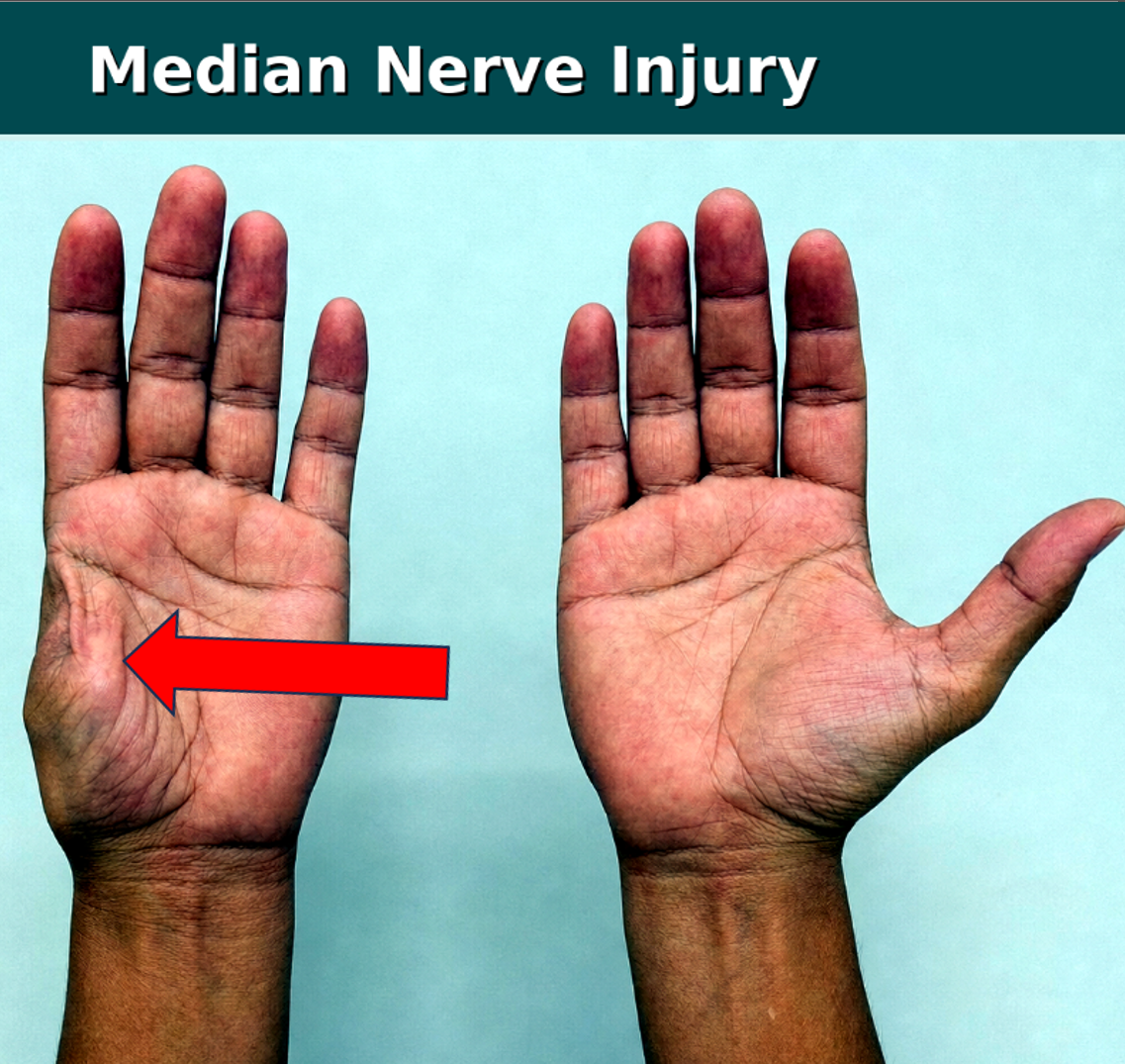
Correct image showing the Thenar muscle atrophy due to Median nerve injury.
I asked AI to create a teaching image for median nerve injury. The goal was simple: show a hand with median nerve palsy, including thenar wasting.
The first image looked acceptable at a quick glance, but there was a major problem: the affected hand had no visible thumb. For a condition where the thumb is central to the diagnosis, that was not a small mistake. It made the image useless for teaching.
Then I asked for a correction. This time the thumb appeared, but it was in the wrong place. It looked as if the thumb had been pasted onto the palm rather than arising anatomically from the radial side of the hand. Again, the image looked “medical” superficially, but anatomically, it was wrong.
A third attempt, the AI in its own tried to fix the problem with a schematic drawing. That also failed. The result was crude, misleading, and not suitable for education. At that point, the issue was no longer just an image-generation problem. It was a quality-control problem.
This experience shows an important weakness of AI image generation: it can produce something that looks polished while being fundamentally incorrect. Hands are especially difficult for AI, and medical anatomy raises the stakes. A missing thumb in an artistic image may be strange. A missing or misplaced thumb in a medical teaching image is dangerous because it teaches the wrong concept.
The lesson is clear: AI-generated medical images should never be accepted just because they look professional. They must be checked carefully for anatomy, pathology, laterality, clinical accuracy, and teaching value.
In this case, the AI was visually fluent but anatomically unreliable. The failure was not only that the image model hallucinated. The bigger failure was accepting the hallucination before applying proper medical review.
For medical education, AI can help create drafts, labels, layouts, and ideas. But the final teaching material still requires expert eyes. A beautiful image that teaches the wrong anatomy is worse than no image at all.
AI has become extremely helpful in my daily work, and I depend on it often as a physician, teacher, and medical educator. But after generating and reviewing many AI medical images, I also found a serious problem. The image may look beautiful at first glance, but the medical accuracy may be wrong. The spelling may be wrong. The labels may be misplaced. The anatomy may be distorted. Structures may be missing, duplicated, or fabricated. Sometimes AI adds extra fingers, extra toes, wrong bones, wrong nerves, or labels that do not belong. At times, the result is not just imperfect; it is catastrophically wrong. This does not mean AI is useless. It means AI must be checked carefully, especially in medicine. AI can create a clock, a cat, or an elegant machine, but medical anatomy is different. A beautiful picture with six toes, missing anatomy, or wrong labels is not acceptable in medical education. In medicine, accuracy is not decoration. Accuracy is safety.
메타데이터
- post_id
- df832c7f35c7
- slug
- when-ai-makes-a-hand-without-a-thumb-df832c7f35c7
- url
- https://medium.com/@Dr_nabil_ebraheim/when-ai-makes-a-hand-without-a-thumb-df832c7f35c7
- canonical_url
- https://medium.com/@Dr_nabil_ebraheim/when-ai-makes-a-hand-without-a-thumb-df832c7f35c7
- author_url
- https://medium.com/@Dr_nabil_ebraheim
- status
- ok
- fetched_at
- 2026-06-09 15:37:30