Let’s Make Centralized Monitoring Practical: Monitoring a Study Together
This post should be viewed only as my personal opinion.
Let’s Make Centralized Monitoring Practical: Monitoring a Study Together
This post should be viewed only as my personal opinion.
We’ve just completed a high-level overview of the clinical trial as a process. Now it’s time to take a meaningful step forward and make things practical.
Let’s monitor a study together.
What Is This About?
For this exercise, I created a simplified clinical trial protocol (with the help of AI). You can find the protocol synopsis here: generated with [AI asisstance] Protocol.
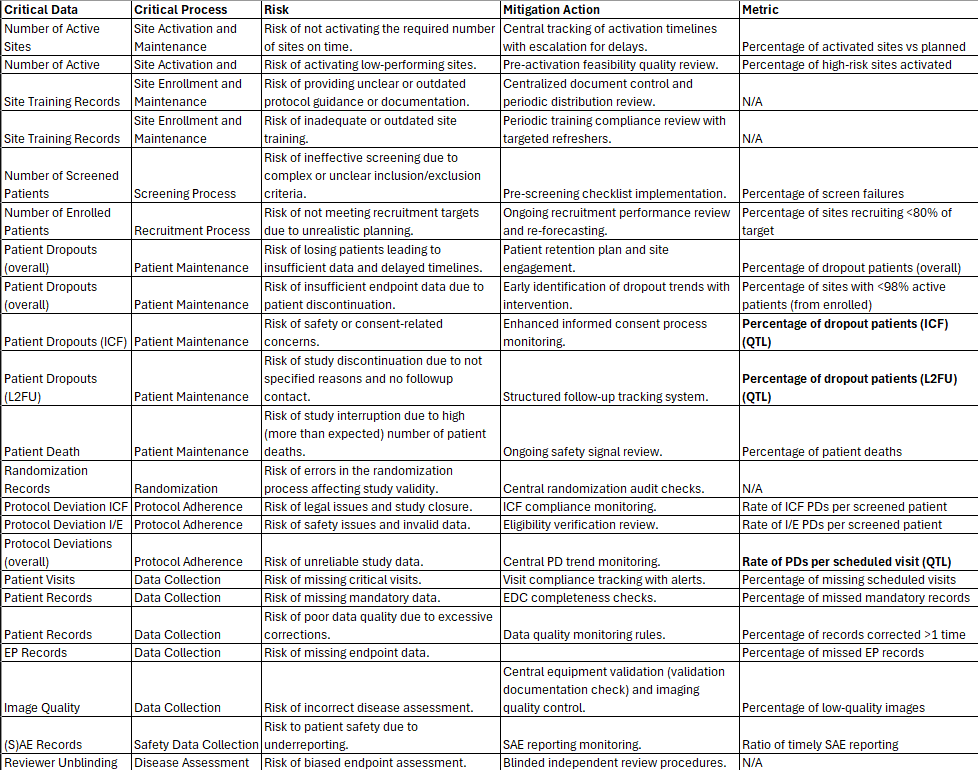
Based on this protocol, I developed a risk assessment aligned with GCP expectations, starting from:
- Critical to Quality Factors (Critical Data and Critical Processes)
- Identified risks
- Mitigation actions (how we reduce risks)
- Metrics (KRIs and QTLs) to control those risks
Important Context (Before We Go Further)
A few important points:
- The protocol is simplified and created specifically for a Centralized Monitoring exercise
- The risk assessment is intentionally limited
- I deliberately excluded:
- supply chain aspects
- investigational product management
- on-site monitoring activities
This is not because they are not important, quite the opposite. But including everything would make this exercise unnecessarily complex.
Also, I’m not a physician (oncologists) and I have never designed a clinical protocol independently. This protocol should be treated as a supporting, educational example, not a clinically validated document.
Why The Risk Assessment Matters for Central Monitors
In real life, Central Monitors are usually not the ones who design the risk assessment.
However, this does not reduce our responsibility.
We must clearly understand:
- What risks exist
- What is considered critical
- Which metrics (KRIs/QTLs) reflect those risks
- What exactly we are monitoring and why
Because without this understanding, monitoring becomes:
checking numbers without understanding signals
And that is exactly what RBQM is trying to avoid.
What You Will See Below
I’ve prepared a simplified risk assessment, which you can find below in this post.
It includes:
- Critical Data
- Critical Processes
- Key risks
- Mitigation actions
- Metrics (KRIs/QTL)
This is not exhaustive but it is sufficient to build a realistic monitoring scenario.
What Happens Next?
This is where things get interesting.
In the next post, we will:
- Review each metric (KRI and QTL)
- Define thresholds (in real life, this would be done together with/by a Risk Manager)
- Define metrics priority (what escalation is more important and when?)
Then (upcoming weeks):
- I will generate synthetic datasets
- Calculate metric values
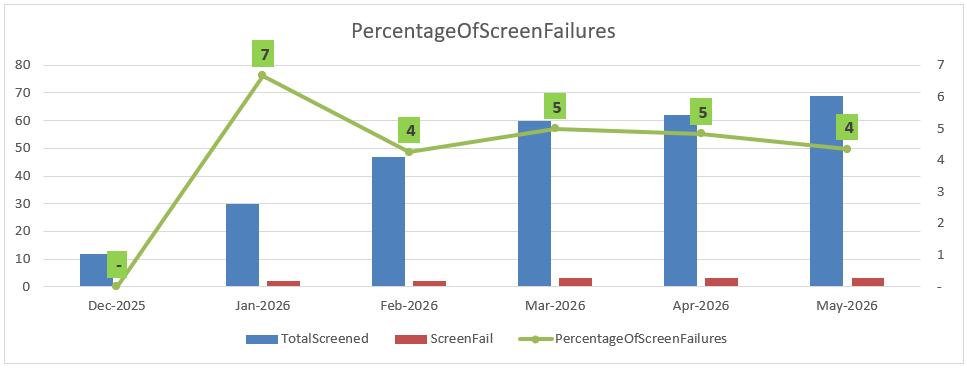
- And simulate real monitoring scenarios
We will see:
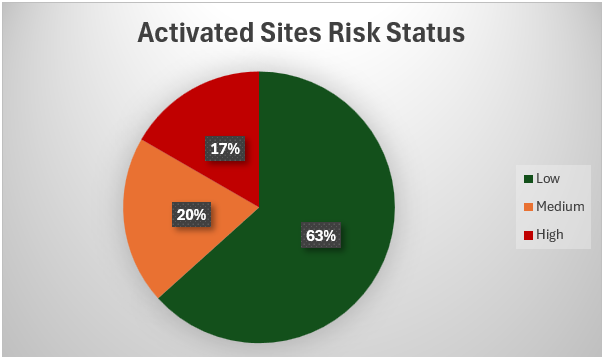
- “Good” and “bad” sites
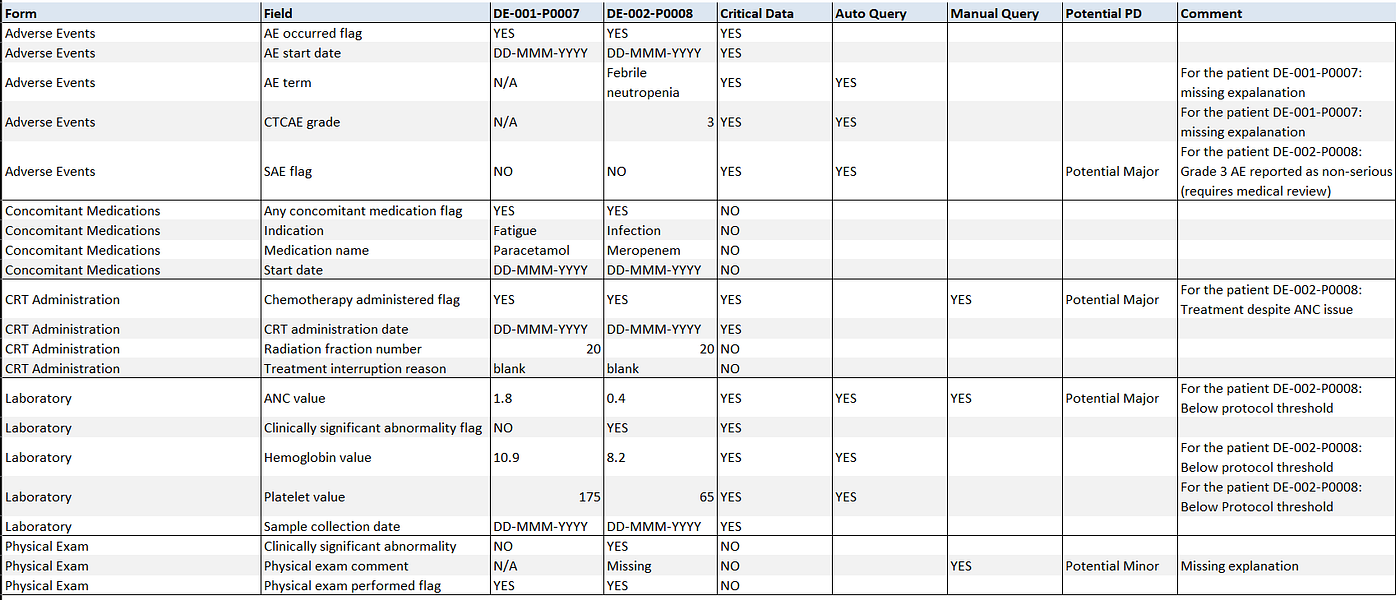
- Typical issues and unexpected signals
- How problems appear in metrics
- And most importantly: how a Central Monitor should respond
All scenarios will be artificial (AI-supported), but designed to reflect real-world patterns.
Final Thought for Today
This is not about building a perfect protocol or a perfect risk assessment.
This is about learning how to: move from protocol → to risks → to metrics → to real monitoring decisions
For today, let’s focus on:
- the protocol
- and the (simplified) risk assessment (how the protocol can be transformed to the assessment)
메타데이터
- post_id
- df92b3ecfa2a
- slug
- lets-make-centralized-monitoring-practical-monitoring-a-study-together-df92b3ecfa2a
- url
- https://medium.com/@anastasiashapovalova/lets-make-centralized-monitoring-practical-monitoring-a-study-together-df92b3ecfa2a
- canonical_url
- https://medium.com/@anastasiashapovalova/lets-make-centralized-monitoring-practical-monitoring-a-study-together-df92b3ecfa2a
- author_url
- https://medium.com/@anastasiashapovalova
- status
- ok
- fetched_at
- 2026-06-21 07:44:09