Intelligent Care Pathway Analytics for Modern Healthcare Systems
Abstract
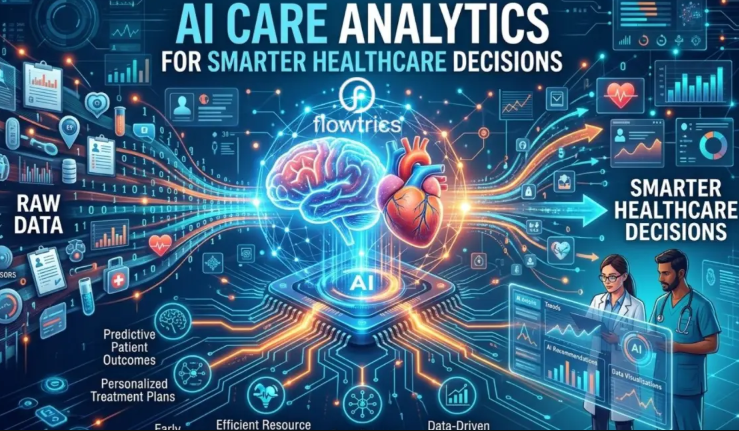
Intelligent Care Pathway Analytics for Modern Healthcare Systems
Abstract
Modern healthcare systems generate vast amounts of clinical, administrative, and operational data throughout a patient’s treatment journey. However, transforming these heterogeneous data sources into meaningful clinical insights remains a significant challenge. Intelligent Care Pathway Analytics (ICPA) integrates artificial intelligence (AI), machine learning (ML), predictive analytics, and healthcare data engineering to monitor, analyse, and optimise patient care pathways. By leveraging electronic health records (EHRs), laboratory reports, imaging systems, wearable devices, and clinical decision support systems, intelligent analytics enable healthcare providers to identify inefficiencies, predict adverse events, personalise treatment plans, and improve healthcare outcomes. This research presents an overview of Intelligent Care Pathway Analytics, highlighting its architecture, analytical methodologies, applications, benefits, challenges, and future research directions in modern healthcare systems.
Keywords
Intelligent Healthcare, Care Pathway Analytics, Artificial Intelligence, Machine Learning, Electronic Health Records, Clinical Decision Support, Predictive Analytics, Healthcare Data Engineering.
1. Introduction
Healthcare delivery has evolved from isolated clinical interactions to integrated patient-centred care pathways that encompass diagnosis, treatment, rehabilitation, and long-term monitoring. Every patient follows a unique healthcare journey involving multiple healthcare professionals, medical devices, diagnostic systems, and care facilities. Managing these complex pathways manually often leads to delays, unnecessary interventions, inconsistent treatment, and increased operational costs.
Intelligent Care Pathway Analytics addresses these challenges by applying advanced data analytics across the complete continuum of patient care. Instead of analysing isolated medical events, the framework examines the entire treatment lifecycle to identify clinical patterns, optimise workflows, and recommend evidence-based interventions. AI-powered healthcare analytics support clinicians by providing timely recommendations while reducing administrative burden and improving patient satisfaction.
The increasing adoption of cloud computing, interoperable healthcare platforms, Fast Healthcare Interoperability Resources (FHIR), and Internet of Medical Things (IoMT) devices has further accelerated the implementation of intelligent care pathway management systems.

2. Intelligent Care Pathway Analytics Framework
The proposed framework consists of five major layers:
Data Acquisition Layer
Healthcare data are collected from multiple sources including:
- Electronic Health Records (EHRs)
- Laboratory Information Systems
- Radiology Information Systems
- Pharmacy databases
- Wearable healthcare sensors
- Remote patient monitoring devices
- Insurance and billing systems
Data Integration Layer
Collected data are standardised using healthcare interoperability standards such as HL7 and FHIR. Data cleaning, deduplication, normalisation, and semantic mapping ensure high-quality integrated patient records.
Analytics Layer
This layer employs:
- Predictive analytics
- Machine learning algorithms
- Deep learning models
- Natural Language Processing (NLP)
- Process mining
- Time-series analysis
- Risk stratification models
These techniques discover hidden relationships within patient journeys and identify potential clinical risks.
Clinical Intelligence Layer
AI-generated insights are transformed into actionable recommendations, including:
- Treatment optimisation
- Readmission risk prediction
- Disease progression forecasting
- Medication adherence monitoring
- Clinical workflow recommendations
Decision Support Layer
The final layer provides dashboards, alerts, visualisations, and personalised care recommendations to physicians, nurses, administrators, and healthcare managers.
EQ.1. Clinical Decision Confidence:

3. Applications in Modern Healthcare
Chronic Disease Management
Patients suffering from diabetes, hypertension, cardiovascular diseases, and chronic kidney disease require continuous monitoring. Intelligent analytics identify deteriorating health conditions early and recommend timely interventions.
Emergency Care Optimisation
Care pathway analytics help emergency departments prioritise patients based on clinical severity while reducing waiting times and improving resource allocation.
Oncology Care
Cancer treatment involves multiple stages including diagnosis, chemotherapy, radiation therapy, surgery, and follow-up care. AI analyses treatment pathways to recommend personalised therapy schedules and predict treatment outcomes.
Surgical Pathway Management
Hospitals use predictive analytics to optimise pre-operative preparation, operation scheduling, post-operative recovery, and discharge planning.
Remote Healthcare
Wearable sensors continuously transmit physiological data, enabling intelligent systems to monitor patients outside hospitals and detect abnormalities before they become critical.
4. Benefits of Intelligent Care Pathway Analytics
The implementation of intelligent analytics offers numerous advantages:
- Improved patient outcomes through personalised treatment recommendations.
- Early detection of complications and disease progression.
- Reduced hospital readmission rates.
- Enhanced clinical decision-making using evidence-based insights.
- Better utilisation of healthcare resources.
- Reduced operational costs through workflow optimisation.
- Increased patient engagement using continuous health monitoring.
- Improved interoperability across healthcare institutions.
- Faster clinical documentation using AI-assisted automation.
- Support for population health management initiatives.
These benefits collectively improve both healthcare quality and organisational efficiency.

5. Challenges
Despite significant progress, several challenges remain.
Data Quality
Incomplete, inconsistent, and missing clinical records reduce analytical accuracy.
Interoperability
Healthcare systems often operate on heterogeneous platforms that limit seamless data exchange.
Privacy and Security
Patient data require strong encryption, authentication, and regulatory compliance to protect sensitive medical information.
Explainable Artificial Intelligence
Clinical professionals require transparent AI recommendations that clearly explain prediction outcomes before adopting automated decision support.
Ethical Considerations
Algorithmic bias, fairness, accountability, and informed consent remain important considerations in AI-driven healthcare systems.
Workforce Adoption
Successful implementation depends on clinician trust, digital literacy, and organisational readiness for AI-assisted workflows.
EQ.2. Predictive Model Loss Function:

6. Future Research Directions
Future Intelligent Care Pathway Analytics systems will increasingly integrate generative AI, federated learning, digital twins, and autonomous healthcare agents.
Large Language Models (LLMs) will assist clinicians by summarising patient histories, generating clinical documentation, and recommending treatment pathways using contextual medical knowledge.
Federated learning will enable collaborative model training across multiple hospitals while preserving patient privacy.
Digital twin technology will create virtual patient representations for personalised treatment simulation and proactive healthcare planning.
Agentic AI systems will autonomously coordinate appointments, monitor treatment adherence, schedule diagnostic procedures, and continuously optimise patient care pathways with minimal human intervention.
Furthermore, integrating genomics, precision medicine, multi-modal medical imaging, and real-time physiological monitoring will facilitate highly personalised and predictive healthcare services.

7. Conclusion
Intelligent Care Pathway Analytics represents a transformative approach to modern healthcare by shifting clinical management from reactive treatment to proactive, data-driven decision-making. Through the integration of AI, machine learning, predictive analytics, and interoperable healthcare data platforms, organisations can gain comprehensive visibility into patient journeys and optimise clinical workflows. The ability to predict adverse events, personalise care, streamline hospital operations, and support evidence-based decisions enhances both patient outcomes and healthcare efficiency. Although challenges related to interoperability, privacy, explainability, and ethical AI remain, continued advancements in intelligent analytics, cloud-based healthcare infrastructure, and autonomous AI systems will significantly improve the future of patient-centred healthcare. Intelligent Care Pathway Analytics is poised to become a foundational component of next-generation healthcare ecosystems, enabling resilient, efficient, and high-quality care delivery across diverse clinical settings.
메타데이터
- post_id
- dfb58bd794f6
- slug
- intelligent-care-pathway-analytics-for-modern-healthcare-systems-dfb58bd794f6
- url
- https://medium.com/@sasikkolla/intelligent-care-pathway-analytics-for-modern-healthcare-systems-dfb58bd794f6
- canonical_url
- https://medium.com/@sasikkolla/intelligent-care-pathway-analytics-for-modern-healthcare-systems-dfb58bd794f6
- author_url
- https://medium.com/@sasikkolla
- status
- ok
- fetched_at
- 2026-07-27 12:13:18