AI Video vs Traditional Video Production: What Brands Should Know
Originally published on Hasib Nur Creative: https://hasibnurcreative.com/ai-video-production-services-vs-traditional-video-production/
AI Video vs Traditional Video Production: What Brands Should Know

AI video production and traditional video production both play important roles in modern brand content creation.
Originally published on Hasib Nur Creative: https://hasibnurcreative.com/ai-video-production-services-vs-traditional-video-production/
Video content has become one of the most powerful tools for brand communication. From social media reels and product videos to TVCs, OVCs, campaign films, and digital ads, brands now need video content across multiple platforms.
At the same time, AI video production is changing how creative teams plan, visualize, and produce content.
This creates an important question for brands:
Should brands use AI video production services, traditional video production, or a combination of both?
The answer depends on the project goal, timeline, budget, content type, creative requirement, and final output quality.
AI video production can help brands move faster, explore ideas quickly, and create flexible digital content. Traditional video production is still essential for real people, real locations, high-end product shoots, brand films, TVCs, interviews, and large campaign production.
The strongest approach is not AI versus traditional production. It is knowing when to use AI, when to use traditional production, and how to combine both with professional post-production, motion graphics, editing, color correction, and creative direction.
What Is AI Video Production?
AI video production is the process of using artificial intelligence tools to support video creation, visual generation, scene development, motion, editing, and creative workflows.
It can include AI-generated video scenes, AI image-to-video workflows, AI-assisted concept development, storyboarding, campaign visualization, product environments, social media reels, and short-form content. The main value is speed and flexibility, especially when brands need to explore creative directions quickly before moving into full execution.
But AI video production is not only about generating a video from a prompt.
A professional AI video workflow still needs creative planning, visual direction, editing, motion graphics, sound, color correction, brand alignment, and post-production.
AI can generate possibilities. A creative professional turns those possibilities into usable brand content.
Here is an AI-generated video example from my YouTube portfolio, showing how AI video production can support faster product storytelling and social media content development.
[embed]This type of AI-assisted workflow can speed up campaign visualization, but the final output still needs editing, motion graphics, brand alignment, sound, color correction, and post-production.
What Is Traditional Video Production?
Traditional video production is the process of creating video content through real-world planning, filming, direction, production crew, equipment, lighting, location, talent, and post-production.
It usually includes creative concept development, scriptwriting, shot planning, location planning, casting, product preparation, camera setup, lighting, shooting, editing, color grading, sound design, motion graphics, and final delivery.
Traditional video production is still essential for TVCs, OVCs, brand films, interviews, product shoots, corporate videos, testimonial videos, event videos, campaign films, and high-end social media videos.
Traditional production gives brands real camera footage, real performances, real locations, and strong production value. It remains one of the most trusted ways to create premium brand content.
Here is a traditional video production example from my portfolio, showing how real production, shooting supervision, editing, color grading, motion graphics, sound design, and post-production work together for brand communication.
[embed]Traditional production remains important when brands need real people, real products, real locations, stronger emotional connection, and controlled production value.
The Main Difference Between AI Video and Traditional Video Production
The main difference is how the content is created.
AI video production starts from digital generation, prompts, references, images, and AI-assisted tools.
Traditional video production starts from real-world filming, production planning, camera work, lighting, and physical execution.

AI video production helps brands move faster with creative exploration, while traditional video production delivers realism, control, and strong production value.
AI video production is faster for visual exploration and digital-first content.
Traditional video production is stronger for realism, brand credibility, human emotion, product accuracy, and premium campaign production.
Both approaches have value. The right choice depends on what the brand needs.
When AI Video Production Works Best
AI video production works best when brands need speed, flexibility, and creative exploration.
It is useful for fast social media content, campaign teasers, product mood videos, digital ads, creative experiments, seasonal content, and short-form storytelling.
Before investing in a full shoot, brands can also use AI to create early visual references, mood directions, product scenes, and campaign-style previews. This helps teams and clients review ideas before moving into full production.
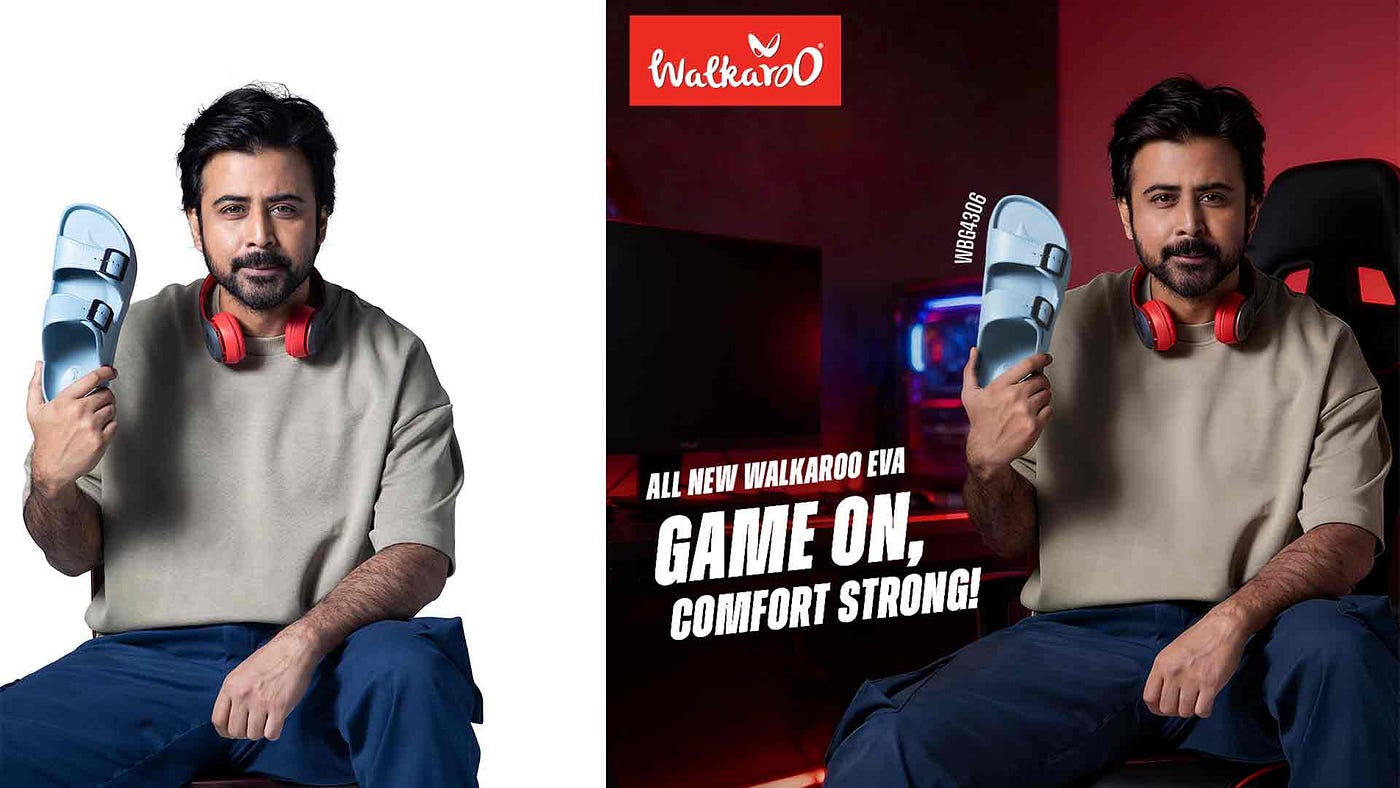
AI video production can also support product storytelling. For example, a footwear brand can explore urban, sports, lifestyle, futuristic, or cinematic product visuals before deciding the final creative direction.
Modern campaigns also need multiple formats. A single idea may need a 9:16 reel, 1:1 video, 4:5 social post, 16:9 YouTube video, Pinterest video pin, LinkedIn post, and Facebook content. AI can help brands create and visualize these format variations faster.
When Traditional Video Production Works Best
Traditional video production works best when brands need realism, control, performance, product accuracy, and strong production value.
For high-quality brand films, TVCs, and OVCs, traditional production is still very important. These projects often require real actors, real products, real sets, camera direction, lighting, and production control.
AI can create visuals, but real human performance is still powerful. For emotional storytelling, testimonials, interviews, lifestyle scenes, and brand films, real people often create stronger audience connection.
Traditional production is also important when product accuracy matters. Product shape, logo, texture, color, material, size, and usage must be correct. Traditional production gives brands more control when accuracy is essential.
AI Video Is Not a Replacement for Post-Production
One common misunderstanding is that AI-generated video is ready to publish.
In most cases, it is not.
AI-generated video still needs professional post-production to become polished and brand-ready. It may need editing, shot selection, scene arrangement, motion graphics, typography, logo placement, color correction, sound design, music timing, visual cleanup, brand consistency, and final export formatting.
Tools like Adobe After Effects, Adobe Premiere Pro, Adobe Photoshop, Adobe Illustrator, and DaVinci Resolve are still essential in a professional workflow.
AI can help create the base visual, but post-production shapes the final content.
Why Creative Direction Still Matters
AI tools can generate visuals quickly, but they do not fully understand brand strategy.
A brand video still needs a clear message, audience understanding, platform purpose, visual hierarchy, product accuracy, storytelling flow, brand tone, campaign relevance, good pacing, and professional finishing.
Without creative direction, AI-generated content can look visually interesting but strategically weak.
This is why human creative judgment is still important.
The best results come when AI tools are guided by a creative professional who understands design, motion, video, post-production, and brand communication.
How Brands Can Combine AI and Traditional Video Production
The smartest approach is to combine both workflows.
AI can support the early creative stage, while traditional production and post-production can deliver the final quality.
[embed]
AI can help visualize concepts before a shoot. Traditional production can capture real footage. AI can support background ideas or mood references. Adobe tools can refine design, motion, and layout. DaVinci Resolve can improve color and final finishing. Post-production can turn everything into a polished final output.
This hybrid workflow can help brands work faster without losing quality.
Which One Should Brands Choose?
Brands should not think in terms of AI video versus traditional video.
They should think in terms of content purpose.
If the goal is fast social media content, campaign exploration, product mood visuals, or digital-first creative testing, AI video production can be very useful.
If the goal is a premium brand film, TVC, interview, real product shoot, or ambassador campaign, traditional video production is usually the better choice.
In many cases, the best solution is a hybrid approach.
Use AI for speed and creative exploration. Use traditional production for realism and control. Use post-production to make the final output polished and brand-ready.
Final Thoughts
AI video production is creating new possibilities for brands, agencies, startups, and entrepreneurs.
It helps speed up creative workflows, support faster social media content, and explore more visual ideas in less time.
But traditional video production is still important.
Real footage, real people, real products, and strong production planning still matter for many types of brand communication.
The future is not AI replacing traditional production.
The future is AI-assisted creativity supported by professional production, post-production, motion graphics, editing, color correction, and human creative judgment.
Read the full article on Hasib Nur Creative: https://hasibnurcreative.com/ai-video-vs-traditional-video-production/
Explore my AI Video Production & 3D Reels services: https://hasibnurcreative.com/3d-ai-reels/
Explore my Video Production & Post Production services: https://hasibnurcreative.com/video-production-post-production/
View selected creative work: https://hasibnurcreative.com/my-portfolios/
메타데이터
- post_id
- dfb73a6d20a8
- slug
- ai-video-vs-traditional-video-production-what-brands-should-know-dfb73a6d20a8
- url
- https://medium.com/@hasib.nobin/ai-video-vs-traditional-video-production-what-brands-should-know-dfb73a6d20a8
- canonical_url
- https://medium.com/@hasib.nobin/ai-video-vs-traditional-video-production-what-brands-should-know-dfb73a6d20a8
- author_url
- https://medium.com/@hasib.nobin
- status
- ok
- fetched_at
- 2026-07-13 14:49:31