Why I Wrote the First ComfyUI Handbook for AI Workflow Design
When colour TVs arrived in the late 70s, I remember pushing the saturation as high as it could go — until it hurt the eyes. My mother…
Why I Wrote the First ComfyUI Handbook for AI Workflow Design
When colour TVs arrived in the late 70s, I remember pushing the saturation as high as it could go — until it hurt the eyes. My mother thought I was mad. Years later, while working as a designer for the BBC, I rediscovered something fundamental: colour only works when it’s composed with restraint. A combination of cyan and yellow will often communicate better than a chaotic mix of cyan, yellow, and magenta. That early obsession with control and composition has followed me across decades of creative work — and today, it’s part of what led me to ComfyUI.
Like many designers of my generation, I’ve worked with the full spectrum of creative software: CorelDRAW, FreeHand, Photoshop, Illustrator, QuarkXPress, InDesign. Every time a new tool arrived, we’d rush to experiment with its tricks. In the 90s, the Photoshop Clone Tool blew our minds. Later, Illustrator’s filters became the signature of a whole generation of designers. And now, generative AI is bringing that same excitement — and the same chaos — back into the creative world.
We’re in an era of overproduction. Cyberpunk skylines. Neon animals. Cats cooking ramen in space. It’s all fun, but let’s be honest: you won’t build a career on AI slop. In 2025, clients still want images grounded in reality — a nurse in a hospital corridor, someone drinking coffee at home, a believable person in a social moment. And yet the tools we’re using to generate these images are often shaped by people who don’t come from design. Much of this space has been defined by developers — brilliant, but often visually illiterate. Their defaults become the standard, whether or not they make sense to people working with composition, rhythm, emotion, or clarity.
That’s why I believe ComfyUI matters so much. And it’s why I believe it needed a printed book.
ComfyUI is the most powerful creative tool I’ve used since Adobe’s early dominance. Yes, it looks intimidating. Yes, it’s modular, complex, and node-based. But it offers something no other interface does: full authorship. You don’t just prompt and hope — you build systems, design logic, and control your visual output at a granular level. People often compare it to LEGO, and that’s a fair analogy. It’s modular, timeless, and incredibly flexible. If you can cross the small barrier of its appearance, you’ll find yourself inside a platform that can be adapted to almost any workflow — from concept art to product shots to full generative pipelines.
But one of the biggest challenges with ComfyUI isn’t its complexity — it’s how we explain it. The documentation is scattered. Forum threads are long. And most guides are either too technical or too fragmented. I didn’t set out to write a book just for the sake of it. I wrote it because I believed I was uniquely positioned to do it well.
I’m not a developer. I’m a designer and art director. I’ve worked across disciplines and continents — from London to Shanghai — and I speak English, Spanish, and Chinese. That linguistic range helped me study the existing ComfyUI materials from China, where some of the most advanced work is happening. But more importantly, it helped me write the book from a non-native, non-technical perspective. In my experience, people who’ve struggled to understand something often explain it better. They don’t take anything for granted.
There were e-books out there, yes — but they don’t handle layout well. ComfyUI workflows are horizontally structured, and when shrunk to fit an e-reader, they become unreadable. As someone with a background in editorial and magazine design, I knew that we needed a printed book, where node graphs could be redesigned and typeset for clarity. I spent weeks adjusting node positions, simplifying labels, and preparing diagrams that remain readable at small sizes without sacrificing accuracy.
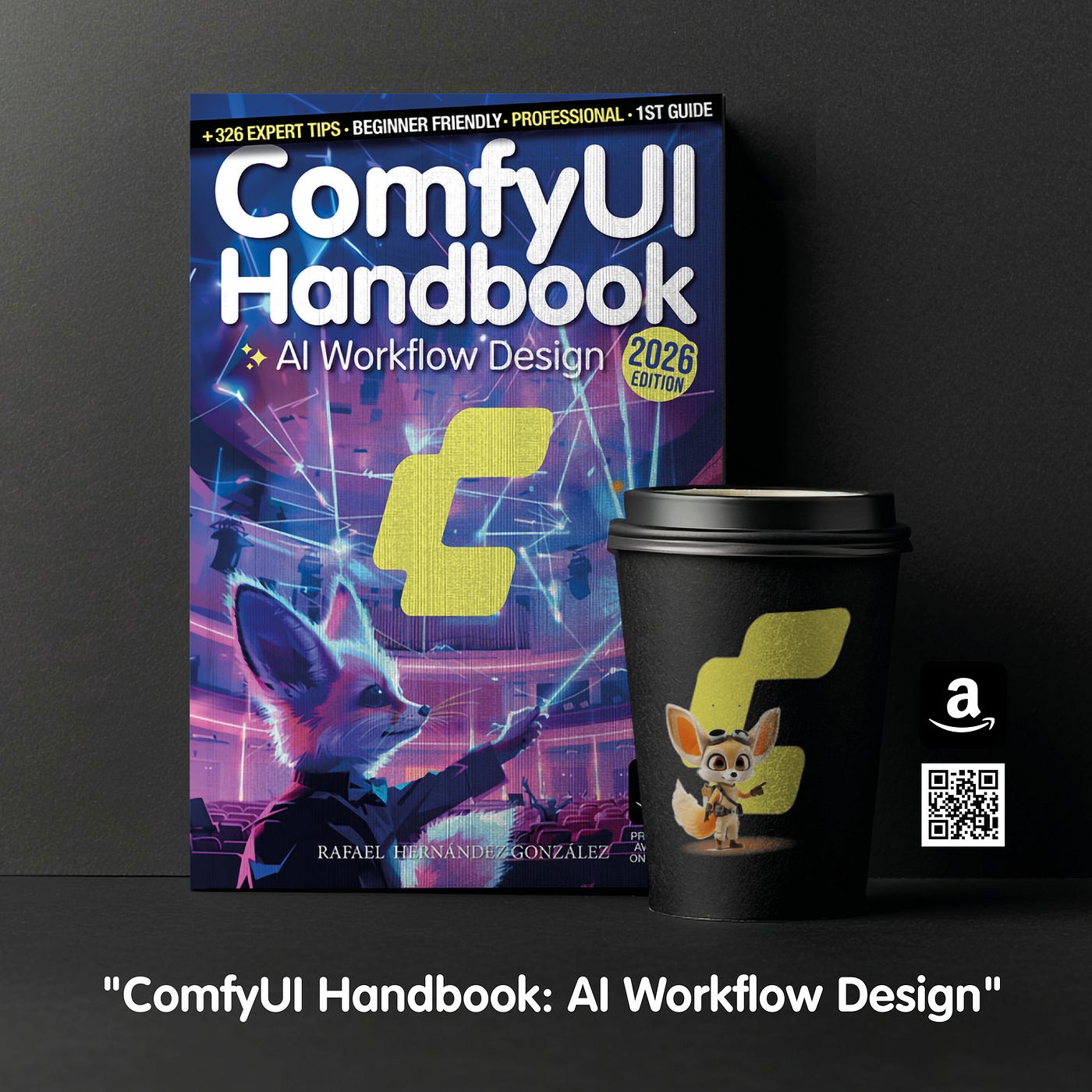
I wrote the ComfyUI Handbook while I was still learning ComfyUI myself. That was deliberate. I wanted to feel what the reader feels: the confusion, the excitement, the frustration, and the breakthroughs. And because I work fast, I was able to pull together a complete, structured, professionally designed guide while the platform was still evolving — before the next wave of extensions and changes made the existing knowledge obsolete.
Of course, this book won’t be perfect. It will age. There will be errors. This is open source, after all — where things don’t always behave the way you expect. But this is the first time anyone has taken the full ComfyUI ecosystem and structured it into a single, navigable, visual reference.
If you’re serious about AI image generation, and you want to move beyond the novelty phase, this book is for you. It’s not just a guide. It’s a map.
You can order your copy today via Amazon. It’s over 300 pages, includes 326 expert tips, full-page annotated workflows, and was designed from the ground up to be both beautiful and functional.
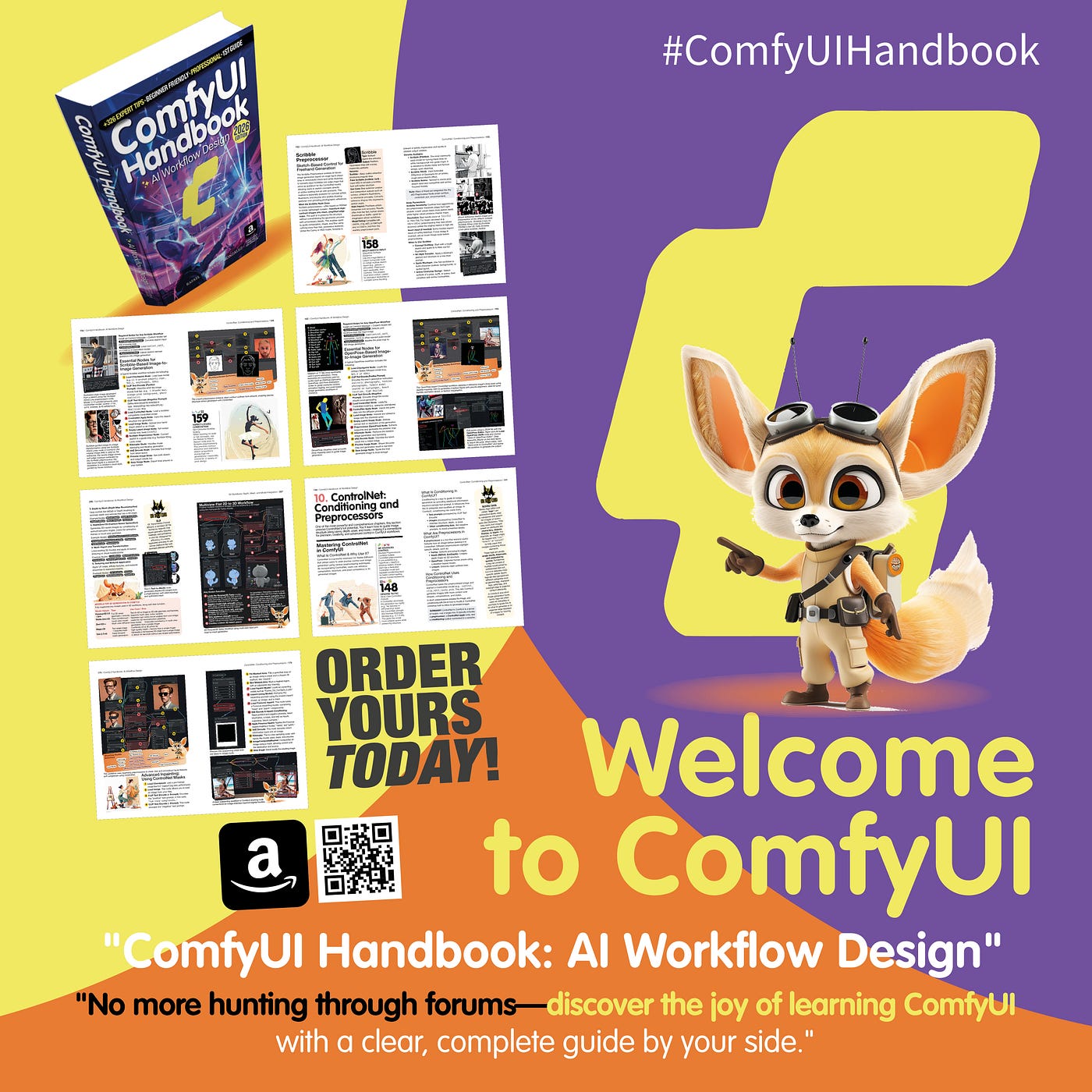
Example workflow layout from the ComfyUI Handbook: AI Workflow Design — redesigned for optimal readability at small sizes and print quality.
**Buy the ComfyUI Handbook on Amazon**
Thanks for reading, Rafael Hernández González Author · Art Director
메타데이터
- post_id
- dfb8a7b9fbae
- slug
- why-i-wrote-the-first-comfyui-handbook-for-ai-workflow-design-dfb8a7b9fbae
- url
- https://medium.com/@rafaelhernandezlondon/why-i-wrote-the-first-comfyui-handbook-for-ai-workflow-design-dfb8a7b9fbae
- canonical_url
- https://medium.com/@rafaelhernandezlondon/why-i-wrote-the-first-comfyui-handbook-for-ai-workflow-design-dfb8a7b9fbae
- author_url
- https://medium.com/@rafaelhernandezlondon
- status
- ok
- fetched_at
- 2026-06-23 19:38:28





