Building AI Agents Without Breaking Security Rules
How low-code platforms solve the enterprise security problem with autonomous AI
Agentic AI (Quick Byte)
Building AI Agents Without Breaking Security Rules
How low-code platforms solve the enterprise security problem with autonomous AI
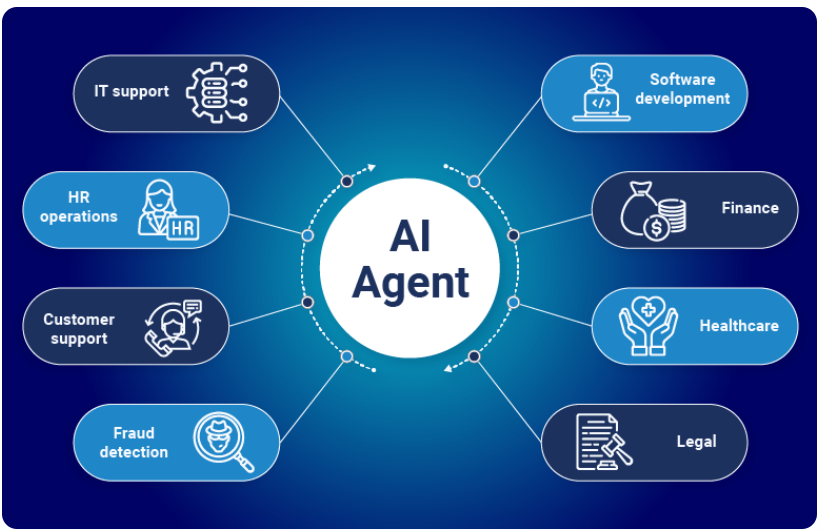
AI Agents in various domains, Image Source
Non-Medium members can access the full article by clicking here.
TL;DR: Low-code platforms like Microsoft Copilot Studio and Dify solve the AI agent security problem by embedding compliance from day one, letting companies scale to hundreds of agents without expanding security teams.
What if I told you that 73% of enterprises want AI agents, but only 23% have deployed them? The gap isn’t technology: it’s trust.
The problem is simple. AI agents can do things automatically. They access data, make decisions, and change systems without asking permission first. That scares security teams.
Traditional coding makes this worse. Developers build AI agents in isolation. Without the right safeguards, AI agents may drift from their intended purpose or make choices that clash with business rules, regulations, or ethical standards.
We must prioritise security; it cannot be an afterthought.
Low-code platforms fix this mess.
Take **Microsoft Copilot Studio or [Dify](https://dify.ai/)**. You build agents using drag-and-drop tools. But here’s what matters: security rules are already there. You can’t accidentally create an agent that breaks company policies.
The platform knows your data rules. It knows who can access what. Your agent inherits these rules automatically. These low-code platforms help enterprises in scaling autonomous AI while ensuring security compliance.
There are open-source options, too. **Botpress works the same way. So does [Langflow](https://www.google.com/aclk?sa=L&ai=DChsSEwiO0LOUoPOPAxVHpFAGHf0-CBUYACICCAEQABoCZGc&co=1&ase=2&gclid=Cj0KCQjwrc7GBhCfARIsAHGcW5VT-Vq0q-WzZyWHt3zqM9SUXI-YeJKNjQafpDVzQGgo0L9Cxe_fXr8aAtE-EALw_wcB&cce=2&category=acrcp_v1_32&sig=AOD64_0SPYTml_pFxADIFLkJPihJbyAqug&q&nis=4&adurl&ved=2ahUKEwiuoa6UoPOPAxUzU0EAHVRkLtsQ0Qx6BAgWEAE)**. You design agent behaviour visually. The compliance stuff happens behind the scenes.
This solves the real problem. IT teams can sleep better knowing agents follow the same security rules as everything else. And developers can build faster. They don’t spend weeks figuring out how to make their agent secure.
Key Takeaways:
- Security-first platforms solve the AI agent trust problem
- Visual development speeds deployment from weeks to days
- Companies can scale to hundreds of agents without hiring more security staff
- These platforms are not magic. You still need clear policies. You still need people who understand both AI and security.
- AI literacy is important
If you enjoyed this article, please Subscribe 🔔, Clap 👏, Comment 😊 and Connect with me
메타데이터
- post_id
- dfc7bcbcf0de
- slug
- building-ai-agents-without-breaking-security-rules-dfc7bcbcf0de
- url
- https://medium.com/ai-snapshots/building-ai-agents-without-breaking-security-rules-dfc7bcbcf0de
- canonical_url
- https://medium.com/ai-snapshots/building-ai-agents-without-breaking-security-rules-dfc7bcbcf0de
- author_url
- https://medium.com/@pankajbisht_25521
- status
- ok
- fetched_at
- 2026-06-11 11:25:07