The Equine Silence and the Rigveda Horses, the Indus-Sarasvati Civilization, and the Aryan Debate
Archaeological Findings • Textual and Philological Analysis • Iconographic and Artistic Evidence • Cultural and Symbolic Interpretations •…
The Equine Silence and the Rigveda Horses, the Indus-Sarasvati Civilization, and the Aryan Debate
Archaeological Findings • Textual and Philological Analysis • Iconographic and Artistic Evidence • Cultural and Symbolic Interpretations • Comparative Indo-Iranian and Central Asian Contexts • A Complete Refutation of the Aryan Migration Theory and the Question of the Horse

1. Background
Horses, and all equids and most “beasts of burden,” had five stages of use by man:
1 — For meat, milk, and hide. 2 — With vehicles for transport. 3 — With vehicles for racing. 4 — With vehicles for war. 5 — For mounted riding.
The first stage, for horses, was restricted to the Steppes, and the last stage came into being only around 1000 BCE. The stages relevant to the subject of the history of Indo-European origins are the three middle stages.
Eurasia is divided into a north and a south by huge mountain ranges stretching from east to west. The northern equid zone, from Ukraine in the west to Mongolia in the east and Central Asia in the south, is the home of both Equus ferus (the horse) as well as onager species. But the southern equid zone, which covers two distinct civilizational areas — West Asia and India — only has species of onagers/wild asses.
Basically, many of the same features apply to both areas, but this fact is not recognized, since the vital difference between the two areas is that West Asia has detailed written records and pictorial/material representations of its equid history at all stages, while India does not. This facilitates extraneous interpretations, assumptions, and misrepresentations on every point in respect of India.
The detailed recorded evidence from West Asia shows that they had wheeled vehicles from 3500–3350 BCE (Sumerians). These were originally pulled by oxen, later also by onagers/wild asses. Horses came on the scene after 2000 BCE. India, as the evidence shows, independently had wheeled vehicles from 3500 BCE, likewise initially pulled by oxen.
The big difference is: —
West Asia was separated by Anatolia and the Caucasian areas from the northern equid zone. India, or the Vedic-Harappan area of NW India relevant to our study, apart from having onagers on both sides, in Kutch and present-day northern Pakistan to Ladakh, was directly connected with the northern equid zone in Central Asia, and formed a cultural continuum with that area. Apart from the weird idea that horses and Indo-Europeans are somehow identical entities, many other ideas, totally contradictory to the data and evidence, dominate the “Aryan horse and chariot” narrative, but they all revolve around the following main ideas: —
IE speakers first introduced the aśva = horse into non-IE India from the Steppes through Central Asia around or after 2000 BCE ? , and these are common throughout the Rigvedic period, and central to the Rigvedic identity ? We will now examine what the actual data and evidence says about these different assumptions —
2. Archaeological Evidence of Horse and Equid Bones
The main signature argument is that horse bones are not found in India before post-Harappan times, and they are found first in the northwest only after “Aryans” entered India after 2000 BCE. This is the most fake and fraudulent argument of them all, and yet it is the main and most popular one discussed threadbare by all the participants in the AIT–OIT debate. It is a “heads-I-win-tails-you-lose” argument by the AIT side which involves the highest amount of one-sidedness and special pleading of any argument in the debate. Even at best, what it says is: “lack of horse bones in the Harappan period proves there were no horses in India, but lack of horse bones in the post-Harappan periods makes no difference: even if horse bones are not found it means nothing since we know from written records that there were horses in India.”
In Rana Ghundai Baluchistan, excavated by EJ Ross, equine teeth were reported from a pre-Harappan level (Archaelogists Guha & Chatterjee in 1946)


Edwin Bryant also points out: —
The report claiming the earliest date for the domesticated horse in India, ca. 4500 B.C.E., comes from a find from Bagor, Rajasthan, at the base of the Aravalli Hills (Ghosh 1989a, 4). In Rana Ghundai, Baluchistan, excavated by E. J. Ross, equine teeth were reported from a pre-Harappan level (Guha and Chatterjee 1946, 315–316). …equine bones have been reported from Mahagara, near Allahabad, where six sample absolute carbon 14 tests have given dates ranging from 2265 B.C.E. to 1480 B.C.E. (Sharma et al. 1980, 220–221). Even more significantly, horse bones from the Neolithic site Hallur in Karnataka (1500–1300 B.C.E.) have also been identified by the archaeozoologist K. R. Alur (1971, 123).
In the Indus Valley and its environs, Sewell and Guha, as early as 1931, had reported the existence of the true horse, Equus caballus Linn from Mohenjo-Daro itself, and Bholanath (1963) reported the same from Harappa, Ropar, and Lothal. Even Mortimer Wheeler identified a horse figurine and accepted that ‘it is likely enough that camel, horse and ass were in fact all a familiar feature of the Indus caravan’ (92).” (BRYANT 2001:169–170).
Bryant continues: —
Mackay, in 1938, identified a clay model of the animal at Mohenjo-Daro. Piggott (1952, 126, 130) reports a horse figurine from Periano Ghundai in the Indus Valley, dated somewhere between Early Dynastic and Akkadian times. Bones from Harappa, previously thought to have belonged to the domestic ass, have been reportedly critically re-examined and attributed to a small horse (Sharma 1992–93, 31). Additional evidence of the horse in the form of bones, teeth, and figurines has been reported in other Indus sites such as Kalibangan (Sharma 1992–93, 31); Lothal (Rao 1979), Surkotada (Sharma 1974), and Malvan (Sharma 1992–93, 32). Other later sites include the Swat Valley (Stacul 1969); Gumla (Sankalia 1974, 330); Pirak (Jarrige 1985); Kuntasi (Sharma 1995, 24); and Rangpur (Rao 1979, 219).” (BRYANT 2001:169–170).
Also, horse bones (Dhawalikar), and a terracotta figurine of a horse, have been found at Kayatha in Madhya Pradesh in all the Chalcolithic levels, dated 2450–2000 BCE. Also, there is a distinct horse figure in a “chess set” found at Lothal.
So are all these archaeologists and scholars liars and frauds ? The “no horse bones” insisters get away with simply stonewalling the evidence and continuing to parrot their claim.
But one prominent case forced their attention: bones from Surkotada in Kutch. “J. P Joshi, and A. K. Sharma…subsequently reported the identification of horse bones from all levels of this site (circa 2100–1700 B.C.E.). In addition to bones from Equus asinus and Equus hemionus khur, Sharma reported the existence of incisor and molar teeth, various phalanges, and other bones from Equus caballus Linn (Sharma 1974, 76).”
The wild horses till a thousand or so years ago were not much bigger than onagers or donkeys: they were just “a bit over four feet,” although in practice these horses “proved vastly superior to onagers as pullers of chariots” (The First Horsemen, Time-Life Books, 1974, p.48). The horse was just more efficient and powerful than the onager or donkey, and therefore replaced them. Its present size and powerful capabilities are due to sustained breeding and training. Even more pertinent: it is time for us to stop this compulsive-loser attitude of permanently being on the defensive and allowing the AIT warriors to permanently avoid discussing the actual pro-OIT data and evidence, and only concentrate on discussing fake AIT non-evidence.
Mortimer Wheeler, a prominent proponent of the Aryan Invasion Theory, admitted long ago that “it is likely enough that camel, horse and ass were in fact a familiar feature of the Indus caravan.” Archaeologist B. B. Lal refers to horse teeth and bones reported from Kalibangan, Ropar, Malvan and Lothal. Another senior archaeologist, S. P. Gupta, added further details of those finds. In the case of Lothal, archaeozoologist Bhola Nath confirmed the identification of a horse tooth and made similar observations regarding bones from Mohenjo-daro and Harappa.

A. Ghosh, An Encyclopaedia of Indian Archaeology (New Delhi: Munshiram Manoharlal, 1989), vol.1, p.4
Mortimer Wheeler also talks about the same horse model in (Refer pg 92 of The Indus Civilization)
Mortimer Wheeler in his work The Indus Civilization pg 82
Horse bones from Surkotada (in Katchchh, Gujrat, India) (https://archive.org/details/in.gov.ignca.57533)
Horse bones from Surkotada (in Katchchh, Gujrat, India) (https://archive.org/details/in.gov.ignca.57533)


https://archive.org/details/in.gov.ignca.57533/page/n107/mode/2up?view=theater

https://archive.org/details/in.gov.ignca.57533/page/n107/mode/2up?view=theater


A. K. Sharma’s well-known identification of horse remains at Surkotada (in Kachchh) was endorsed by the Hungarian archaeozoologist Sándor Bökönyi, a respected international authority. In 1991, carefully distinguishing them from the local wild ass (khur), he confirmed several remains as belonging to “true horses,” and specifically domesticated horses. In his 1993 report to the Archaeological Survey of India, Bökönyi left no doubt on the matter.

Sándor Bökönyi, 13 December 1993, in his report to the Director General of the Archaeological Survey of India, quoted by B. B. Lal in The Earliest Civilization of South Asia,op. cit., p. 162
In line with the findings at Surkotada and Lothal, P. K. Thomas, P. P. Joglekar and colleagues from Deccan College reported horse bones from Shikarpur “in the Mature Harappan period” and from Kuntasi (at the Kutch–Saurashtra boundary). To the Neolithic sites mentioned by A. Ghosh, we must add Koldihwa (Belan valley, Allahabad district), where G. R. Sharma et al. identified horse fossils. Similarly, archaeologist M. K. Dhavalikar explored the Chambal valley (Madhya Pradesh), with layers dated between 2450–2000 BCE, and made noteworthy observations on horse presence

M. K. Dhavalikar, Indian Protohistory (New Delhi: Books & Books, 1997), p. 115
Richard Meadow and Ajita Patel challenged Bökönyi’s report, but he maintained his position (until his passing). Their conclusion that the matter was one of “emphasis and opinion” was weak, and tellingly, they never disputed Indian experts such as A. K. Sharma, P. K. Thomas or . P. Joglekar — only Bökönyi, once he endorsed Harappan horse evidence. Ironically, their inconclusive paper has since been cited by Marxist historians as the “final word” against horses in the Indus-Sarasvati civilization. Even more ironic, when invasionists discuss horse introduction into Europe, they cite Bökönyi’s expertise without question. The old objection that supposed horse remains were merely those of wild asses (onager, khur, or donkey) is unconvincing, as experts simultaneously reported both horse and wild ass remains at the same sites, clearly distinguishing them. Another objection — that the horse remains are of later periods — is countered by excavation evidence. At Surkotada, Jagat Pati Joshi’s report stated: “from all the three periods quite a good number of bones of horse (Equus caballus Linn) … have been recovered.” Importantly, Surkotada’s first period coincides with the Mature Harappan phase, ruling out the idea that horses were introduced by Aryans around 1500 BCE. Additionally, at Mahagara (near Allahabad), horse bones were identified by G. R. Sharma et al., with six radiocarbon dates ranging from 2265 BCE to 1480 BCE. The case of Hallur (excavated in the 1960s) is even more striking, with clear evidence of horses in pre-Iron Age levels. When K. R. Alur, both an archaeozoologist and veterinarian, published his report on animal remains from Hallur, he faced anxious queries and even protests — critics insisted there must have been an error regarding horse bones. A fresh excavation undertaken some twenty years later brought to light more horse bones, creating further consternation. Alur stood by his original findings, stating that his critics’ opinions “cannot either deny or alter the find of a scientific fact that the horse was present at Hallur before the (presumed) period of so-called Aryan invasion myth.” The claim that horse finds are undated is therefore misleading.
Finally, archaeologist S. P. Gupta offered a sensible reply to another objection: that horse remains rarely account for more than 2% of the total faunal remains at sites. He pointed out that the same is true of camel and elephant — animals unquestionably present at Harappan sites. The low proportion is simply because such animals were not consumed as regularly as cattle, sheep, goats, or fish, whose bones dominate Indus-Sarasvati settlements. Overall, the case for the horse’s presence in the Indus-Sarasvati civilization is overwhelming and will likely be further strengthened as more of the thousands of unexplored sites are excavated. As archaeologist A. K. Sharma concluded in a survey of “horse evidence” and his own experiences : —

S. P. Gupta, The Indus-Sarasvati Civilization — Origins, Problems and Issues, op. cit., p. 162
(Pirak Excavations, 1968–1974)
The site of Pirak (12 hectares), located 20 km east of Mehrgarh in the Kachi-Bolan region of Balochistan, was excavated between 1968 and 1974. The occupation layers are dated between 1700 BCE and 700 BCE, with the earliest levels around 1700 BCE. Pirak yielded handmade painted pottery and, significantly, the first occurrence of figurines of horses, horse riders, camels, and donkeys. In the older layers, wheel-made pottery and iron objects also began to appear.

https://shs.hal.science/halshs-02986798v1/document
Horses are included among animal remains reported from the period I of the site of Mundigak in Kandahar, Afghanistan, The site later had links with Harappan culture (Source:- The development of a ‘Helmand Civilisation’ south of the Hindu Kush~ Jim G. Shaffer and Cameron Petrie)

The Archaeology of Afghanistan from Earliest Times to the Timurid Period
They date period I of Mundigak to 4000–3500 ВСЕ. Mundigak is an archaeological site in Kandahar province in Afghanistan. During the Bronze Age, it was a center of the Helmand culture. With an area of 21 hectares (52 acres), this was the second largest centre of the Helmand Culture, the first being Shahr-i-Sokhta which was as large as 150 acres (60 hectares), by 2400 BCE. Pottery and other artifacts (later 3rd millennium BCE) indicates interaction with Turkmenistan, Baluchistan, and the Early Harappan Indus region.

The Archaeology of Afghanistan from Earliest Times to the Timurid Period
Presence of horses in Afghanistan is noted as early as Upper Paleolithic and into the Neolithic period. (Source:- The Development of the Oxus Civilisation North of the Hindu Kush by Henri-Paul Francfort, Bertille Lyonnet, Cameron A. Petrie and Jim G. Shaffer)

The Archaeology of Afghanistan from Earliest Times to the Timurid Period

Archaeology of Afghanistan: From Earliest Times to the Timurid Period
The Horse argument given by AMT scholars is so fraudulent that even hardcore AlTist Michael Witzel stated that Horses would’ve been present in India in the Harappan times since they used to trade with the ancient Arabs (Arabian horses also had 34 ribs). Horse bones were also found in the Chalcolithic Kayatha culture of Madhya Pradesha (2500 ВСЕ). Surktoda horse being an Onager is still disputed as many scholars also stated that it was a horse. Horse bones were also found in South India from a site in Mysore, dated by radiocarbon to c.1300 B.C. and of equine teeth at a neighbouring site dated by radiocarbon to c.1600 B.C.” (G. W. Dimbleby’s 2017 book) Interestingly, There’s even a Dravidian word for Horse from Proto-Dravidian kut-ir-ay (from Proto-Dravidian kut-i (“to jump”)). Compare Sanskrit घोटक (ghotaka), a Dravidian borrowing.
Horse Remains from Raipura, Uttar Pradesh,(3270±130 cal BCE and 2210±140 cal BCE )
At the Raipura site near Varanasi, the number of horse specimens is three times greater than that of dog or cat specimens found in the earliest layers. Radiocarbon dates from Period I range between 3270 ± 130 cal BCE and 2210 ± 140 cal BCE. Based on cultural remains, relative stratigraphy, and regional comparisons, this period can be assigned to c. 3200–2200 BCE (Tripathi 2014). Importantly, this shows that horses were present in India Gangetic valley well before any so called proposed Steppe entry.

https://www.heritageuniversityofkerala.com/JournalPDF/Volume4/7.pdf

https://www.heritageuniversityofkerala.com/JournalPDF/Volume4/7.pdf

https://www.heritageuniversityofkerala.com/JournalPDF/Volume4/7.pdf

https://www.heritageuniversityofkerala.com/JournalPDF/Volume4/7.pdf

https://www.heritageuniversityofkerala.com/JournalPDF/Volume4/7.pdf
Horses are attested in the Quetta Valley as early as 4500 BCE —

India : an archaeological history : palaeolithic beginnings to early historic foundations by Chakrabarti, Dilip K, https://archive.org/details/indiaarchaeologi0000chak_w5s9#:~:text=texts-,India%20%3A%20an%20archaeological%20history%20%3A%20palaeolithic%20beginnings%20to%20early%20historic%20foundations,by%20Chakrabarti%2C%20Dilip%20K,-Publication%20date


Horse Burials 2600 BCE India
In the UP Himalayas near Almorah, megalithic burials (dolmenoids, cairns, menhirs and cist-burials) have been noticed and the upper filling of a cist exposed by a road cutting at Gagrigol yielded a date with calibrated range of 2666–2562 BC. The cist-burials of this area show ‘horse burials’ and red, grey and black pots with pedestalled bowls and spouted pots as common types.

https://erenow.org/common/india-an-archaeological-history/34.php

Evidence of Domestic horse at very early time around Belan River —

History of Agriculture in India, Up to C. 1200 A.D By Vinod Chandra Srivastava (Pg 40)
3. Domesticated Horses from IVC


“True horse” Equus caballus bones from Harappan sites (Sajjan Kumar, 2012)


Horse remains in India have been reported from multiple sites across different cultural phases, demonstrating their presence well before the supposed so called Migration/Invasion mythic time peroid 1500 BCE . At Koldihwa in the Belan valley of Allahabad district, G. R. Sharma and colleagues identified horse fossils, while M. K. Dhavalikar explored the Chambal valley in Madhya Pradesh, uncovering layers dated between 2450 and 2000 BCE. True horse remains (Equus caballus) have also been found in the Neolithic levels of Kodekal (Gulbarga, Karnataka) and Hallur (Raichur, Karnataka), as well as in late Harappan contexts at Mohenjo-daro, Ropar, Harappa, Lothal, and the proto-Harappan site of Malvan in Gujarat. Beyond the Indus-Sarasvati region, the earliest horse bone discovery comes from Bagor in Rajasthan, at the base of the Aravalli hills, dated to around 4500 BCE. Further significant evidence comes from Kayatha near Ujjain, a site closely linked with the Bhimbetka rock art, where horse bones and a terracotta model of a mare were unearthed, with layers carbon-dated between 2450–1700 BCE. Mahagara, near Allahabad and far from the Harappan zone, yielded additional horse bones, with six reliable radiocarbon dates ranging from 2265 to 1480 BCE. Together with the discoveries at Hallur, these findings provide a broad and well-dated distribution of the true horse in India from the Neolithic through the Harappan period.

Dr. Shiv Shastri, 2018
Horse bones have also been reported from Marwan in Gujarat at a Proto-Harappan site. In sum, remains of the true horse have been found across western, central, and east-central India dating between 4500–2000 BCE, and in peninsular India from around 1500 BCE. These discoveries decisively refute the notion that horses were first introduced into India from the northwest around 1500 BCE. They also underscore that historical linguistics alone cannot substitute for concrete archaeological evidence.

Map By thehistoropill based on Archeological sources
4. Is aśva = Equus ferus, the Horse?
- Even as per accepted wisdom, the earliest domesticated horse is found not in Ukraine but at Botai (A Non-indo European culture) in Kazakhstan, almost equidistant from Afghanistan and Ukraine.
- As per newer findings, the first domesticated horse could have been even closer: in Uzbekistan, north of Afghanistan, as early as 6000 BCE (Lasota-Moskalewska 2009: A Problem of the Earliest Horse Domestication. Data from the Neolithic Camp Ayakagytma ‘The Site’, Uzbekistan, Central Asia, Archaeologia Baltica, Vol. 11, Klaipeda University, Lithuania, pp.14–21).
- Horses, whether fully domesticated or semi-domesticated, were abundantly present in human settlements to the immediate north of Afghanistan as far back as 6000 BCE, and therefore well known to the PIEs and to the Vedic people by 3500 BCE at the very least.
Rigvedic aśva
- The Rigvedic aśva referred both to the onager/wild ass and to the superior northern horse familiar to the Druhyus, who had spread into Central Asia in pre-Rigvedic times.
- As in Mesopotamia, the onager was likely harnessed to carts/chariots (mainly for transport and racing). But Rigvedic data also shows knowledge of the northern horse as a rare, prized, superior import through the northwest.
- In the New Rigveda, the northern horse became increasingly used with chariots (especially spoked-wheel ones), though still mainly for racing.
Evidence for the Late and Northwestern Horse in Rigvedic Culture
- The only two deified/glorified horses in the Rigveda, both racehorses, are linked to the Tṛkṣis of the northernmost Swat region: Dadhikrās (identified with Trasadasyu) and Tārkṣya (by name).
- The horse is associated with the northwestern Soma areas; Bhṛgu ṛṣi Dadhyañc, who introduced the secrets of Soma to Indra, is said to have the head of a horse (I.116.12; 117.22; 119.9).
- Horses are rare and prized in the Old Rigveda: so rare that Sudās is presented with horse-heads as tribute by other tribes (VII.18.19).
- Personal names with aśva appear only in the New Rigveda (along with names with ratha).
Horse-Sacrifice in the Rigveda and remains from IVC

https://www.harappa.com/sites/default/files/styles/gallery_wide_slide/public/slides/animal-bones.jpg
Two distinct aspects of the later aśvamedha appear separately in the Rigveda: —
- Old Rigveda (III.53): the release of a horse into the open and the right to battle anyone who tries to capture it. This shows the animal’s rarity and value but does not yet include ritual killing.
- New Rigveda: all other aspects of the ritual sacrifice appear only here, possibly reflecting greater availability of horses from the northwest. Hymns I.162–163 describe the ritual, X.157.1–3 were verses recited at the sacrifice, and the word aśvamedha itself (though only as a personal name) appears in V.27.5; VIII.68.15–16.

Is the Vedic horse the true horse ?
Invasionists usually begin with an assumption: they take it for granted that the Vedic horse is the true horse, Equus caballus L. Although this may appear self-evident, it is not. The Rigveda (1.162.18) and a passage in the Shatapatha Brahmana (13.5) both describe the horse as having 34 ribs. However, the true Central Asian steppe horse generally has two pairs of 18 ribs, i.e., 36 and not 34. This discrepancy suggests that the horse referred to in the Rigveda may not have been the standard Central Asian type but a different variety. Scholars have pointed out possibilities such as the smaller, stockier Siwalik or Przewalski horses, which often (though not always) had 34 ribs, or even Arabian horses. Paul Manansala emphasized this distinction, concluding that “the horse of India, including that of the asvamedha sacrifice in what is regarded as the oldest part of the Rigveda, is a distinct variety native to southeastern Asia.” The issue is far from settled, but it raises important questions that cannot simply be dismissed.
Paul Manansala’s book pg 447

https://www.wisdomlib.org/hinduism/book/rig-veda-english-translation/d/doc830724.html
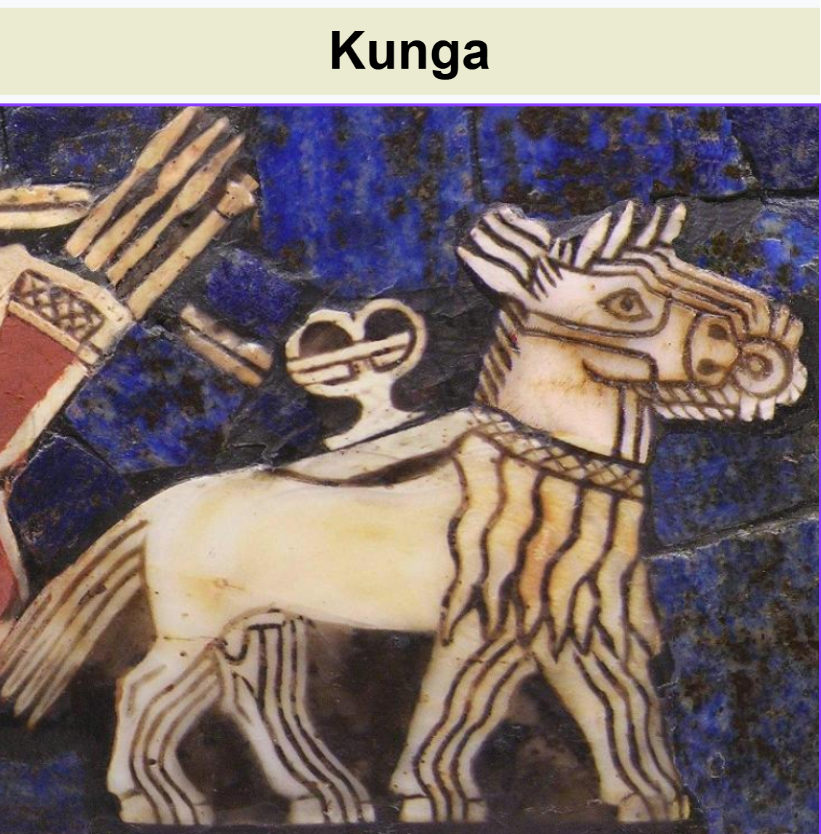
It is likely that the Rigvedic horses in India were smaller in build, similar in size to a donkey or an onager, the latter being native to regions such as Kutch near the sea. Such equids align more closely with indigenous species than with the tall steppe horses often invoked in support of the Aryan Migration Theory. The Vedas describe the first horses as coming from areas near the southern sea, not through the narrow and treacherous Himalayan passes supposedly used by Aryan migrants. The imagery of chariot-riding invaders descending through such mountain routes is implausible. Linguistics adds further context: the Sanskrit word asva, usually translated as “horse,” literally means “fast moving” or “dynamic force of life.” Early usages of asva likely referred to donkeys, with the meaning later extended to horses. This suggests that Vedic references to horses were originally rooted in local equid traditions rather than imported steppe stock. Archaeozoological evidence from the broader Bronze Age also supports this perspective. In Mesopotamia, the prestigious kunga was first bred around 2600 BCE and used in warfare, diplomacy, and elite display. Recent paleogenomic studies of skeletons from Tell Umm el-Marra (Syria) revealed that kungas were deliberately created F1 hybrids between female domestic donkeys (Equus asinus) and male Syrian wild asses (Equus hemionus hemippus). Both belong to the asine branch of Equus rather than the caballine (true horse) branch. Veterinary records confirm that donkeys and Asiatic wild asses possess 17 rib pairs (34 ribs), unlike the 18 pairs (36 ribs) typical of horses. Being first-generation hybrids of two asine species, kungas would have shared this 34-rib condition. Thus, the world’s earliest known hybrid equid was not a caballine horse at all, but an asine-bodied animal bred for speed, power, and symbolism. This fact provides an important parallel for India, where the Vedic horse, described as having 34 ribs, may well have belonged to a smaller indigenous variety rather than an imported steppe breed. By contrast, the horses associated with the Yamnaya (c. 3300–2600 BCE) and Sintashta (c. 2200–1900 BCE) cultures of the Eurasian steppe were true caballine horses (Equus ferus caballus), ancestors of modern domestic breeds. Anatomical studies confirm that caballine horses invariably possess 18 thoracic vertebrae and 18 rib pairs (36 ribs), with only rare exceptions such as Arabian horses ( which again is Non-steppe in origin), which sometimes have 34. Archaeological reports from Yamnaya kurgans and Sintashta burials consistently describe small but anatomically normal caballine horses, all displaying the standard 36 ribs. Genetic studies reinforce this, placing them firmly within the caballine lineage of domestic horses. This creates a direct contradiction for the Aryan Migration Theory. If steppe horses — those supposedly brought into India by Aryan invaders — were true caballine horses with 36 ribs, then how do we explain the Rigvedic and Shatapatha Brahmana accounts of horses with 34 ribs? The evidence points not to an imported steppe horse, but to a distinct, perhaps smaller and indigenous equid, more akin to the onager, donkey, or even hybrid types like the Mesopotamian kunga. Far from proving an intrusion of steppe culture, the rib-count discrepancy and supporting archaeological parallels reinforce the case for an independent and indigenous equid tradition in the Indian subcontinent.
The Language of the Harappans: From Akkadian to Sanskrit By Malati J. Shendge (Pg 287)


The_genetic_identity_of_the_earliest_human-made_hy.pdf

Downloads/The_genetic_identity_of_the_earliest_human-made_hy.pdf
Kungas, hybrids of the wild ass and the hemippus they were not True horses and possessed 34 ribs — just like the Rigvedic horses — and stood in clear contrast to the steppe horses, which had 36 ribs.
The Indus valley CIvilization Page no. 171


https://archive.org/details/the-world-of-the-oxus-civilization-bertille-lyonnet-nadezhda-a.-dubova

https://archive.org/details/the-world-of-the-oxus-civilization-bertille-lyonnet-nadezhda-a.-dubova


The Indian wild ass/Onager (Equus hemionus khur), locally known as khur or ghudkhur, It is the sole surviving representative of the Equus hemionus lineage in South Asia is a completely native species of northwestern India, primarily inhabiting the Little Rann of Kutch in Gujarat. It is a subspecies of the Asiatic wild ass that diverged during the Pleistocene, evolving naturally in the arid deserts of the Indian subcontinent. Adapted to harsh desert conditions, it has a sandy to reddish-grey coat with a dark dorsal stripe, remarkable endurance, and speed. Historically widespread across northwestern India and parts of Pakistan.

https://cza.nic.in/uploads/documents/studbooks/hindi/Indian%20Wild%20Ass.pdf

https://cza.nic.in/uploads/documents/studbooks/hindi/Indian%20Wild%20Ass.pdf


(Onager and Wild asses are the same thing for the context)


Indian subjects bringing an Indian Onager wild ass as a gift to the Persian king. Persepolis 5th Century BCE


An Indus seal stamp (a) and its impression (b), with the wild ass as its heraldic motif, excavated at Kanmer, Kutch, Gujarat, in 2009 (photos by (a)Indus Project of RIHN, (b)Jeewan Singh Kharakwal)
Indian Onager wild Ass

Naturalistic variants of the Indus script sign 46 (in the sign list of Parpola 1994: 70–78) (from CISI 1–3/1)

An equid specialist, to Richard Meadow. His comment on IVC seals was (18 March 2009): “I would agree with the assessment, that the body and neck usually seem to be striped, which is not hemione-like… the hemione or wild half-ass is known from the archaeological record from at least Baluchistan through Gujarat.”

Modern impression of the seal Krs-1 from Khirsara, Kutch (after CISI 1: 357) check the 2nd symbol from right


Asiatic_wild_asses_with_Asko_Parpola
5. Depictions of the horse
The Harappans clearly centered many of their religious symbols around animals, representing them on seals and tablets, in terracotta figurines, and as motifs on pottery. While it is true that the horse does not generally appear on Harappan seals (unless one accepts the conjecture of S. R. Rao and a few other scholars that the so-called unicorn, depicted on thousands of seals, actually bears a horse’s head), it has been too hastily claimed that the animal is never depicted at all. In fact, a horse figurine was discovered at Mohenjo-daro, which prompted the following remark from E. J. H. Mackay, one of the site’s early excavators: —

E. J. H. Mackay, Further Excavations at Mohenjo-daro (Delhi: Government of India, 1938), vol. I, p. 289.
Horse figurine from Mohenjo-daro
Wheeler himself accepted the discovery as genuine. Another figurine was reported by Stuart Piggot from Periano Ghundai, and several more were unearthed at Lothal, some of them with a fairly clear representation of the horse. The animal also appears on pottery, for example at pre-Harappan levels of Kunal in Haryana, among other animals, according to excavator R. S. Bisht. Another figurine was found at Balu, seemingly equipped with a saddle. Dhavalikar also mentioned “a terracotta figurine of a mare” from the Chambal valley. Finally, horses are depicted in rock art, notably at Bhimbetka and Morhana Pahar in the Narmada valley.
Horse figurine from Lothal
Horse figurine from Lothal (Colorized)
A horse-like figurine from Lothal (circled, as part of a set of “chessmen”)

Indus Valley Terracotta Sculpture, 3500 BCE — 2500 BCE

Depiction of Horse on a Nal style Early Harappan pottery, Baluchistan (3100 BCE)
Horse figurine from Lothal
No Hump, No Horns, long neck Clearly a Non-Bovine most Possibly a Equine (Daimabad Chariot) 2500 BCE


IVC Seal from Daimabad, Maharastra Harappan Peroid

Daimabad Harappan culture extended into the Deccan Plateau in India.
6. Physical Remains and Depictions of the Horse Outside India —
To better understand the Indian context, it is useful to look at parallels from other regions. In contemporary Bactria, for example, the horse is well documented through artistic depictions in grave goods, yet no physical horse bones have been recovered. As U.S. Indologist Edwin Bryant observes, “this underscores the point that the absence of horse bones in excavations does not necessarily imply the absence of horses” and vice versa. A similar case can be seen in the Americas, where the introduction and spread of the horse is well documented historically. Elizabeth Wing notes that once horses arrived in the New World, they thrived alongside cattle in the open grazing lands, free from competitors and predators. Yet, despite this flourishing, horse remains are rarely encountered in archaeological sites. This, she explains, may be due to disposal patterns: as beasts of burden not commonly consumed, their remains were less likely to end up in butchering or food-related refuse deposits. This pattern closely parallels the Indus-Sarasvati civilization, where depictions exist but bones are rare, and supports S. P. Gupta’s observation that horses, like camels and elephants, were not regular sources of food. The rarity of remains, therefore, should not be overemphasized. Invasionist arguments that equate sparse horse bones with the absence of the animal place far too much weight on an unreliable indicator.
7. Swat Post-Harappan Horse Burials Myth vs Reality
Key Evidence from Katelai Cemetery: —
- Two horse skeletons were found at Katelai, but
- They were not buried in individual graves.
- There were no associated grave goods (no harness, cart parts, or ritual objects).
- They were found in upper layers of the cemetery, with no clear connection to human burials.
“In the Katelai graveyard also two horse skeletons were found. They were not buried in graves and there were no other objects with them, nor were there otherwise in the grave yards objects relating to the use of the horse, such as parts of harness or of carts.” — Augusto Azzaroli
“The two ‘horse burials’ were actually plain horse skeletons, with no associated grave goods; they were found in upper layers of the Katelai cemetery and had no apparent connection with its human graves.” — Michel Danino
Dating of Katelai Finds: —
- The upper layers are datable to first half of the 1st millennium BCE — at least five centuries after the supposed Aryan arrival.
- Narasimhan et al. (2019) confirm:
- Most Swat burials date 1000–800 BCE, except one (Grave 145), which is not much earlier.
- The 8 Late Bronze–Iron Age sites (Katelai, Loebanr, Barikot, Butkara, Arkotkila, Aligrama, Udegram, Godgara) are dated to ~1000 BCE.
- Historical sites range later, from 350 BCE (Saidu Sharif) to 500 CE (Singoor).
Horse Size Considerations: —
- The Katelai horses stood only 13 hands (132–135 cm) at the withers.
- By modern standards, this makes them ponies, not true horses.
However, Azzaroli (1985) classifies them as medium-sized horses according to ancient standards (comparable to Celtic horses of Iron Age Europe).
Carly Ameen et al. (2021) confirm that even medieval European horses were smaller on average. Conclusion: caution is required — size alone should not be generalized.
Horse Trappings Evidence: —
Mallory refers to horse trappings, but actual finds are very limited
- Only a single iron horse bit from Timurgarha, dated to the 8th–7th century BCE. This is too late to be connected with early Vedic/Aryan migration narratives.
- Assessment: — Two plain skeletons, not buried in graves, without ritual goods, dated centuries later, and a single iron bit from another site — Cannot be considered a “characteristic feature” of the Gandhara Grave Culture. Claims of ritual horse burials in Swat are unsupported by archaeological evidence. Additional Note (Bagor, Rajasthan):- Bagor, a Neolithic site, has provided evidence of horse remains dated to ca. 4500 BCE (TF-786, Agarwal 1971). Edwin Bryant (2001:170) notes this as “the earliest reported date for the domesticated horse in India.”
8. EQUUS SIVALENSIS & EQUUS CABALLUS
The domesticated horse, Equus ferus caballus, widely known as the “true horse” or caballus horse, owes a significant portion of its ancestry to the extinct Indian species Equus sivalensis and possibly Equus namadicus, both native to the northern Indian subcontinent. Fossil remains of E. sivalensis date from the beginning of the Pleistocene (~2.58 million years ago) to the Middle Pleistocene (~600,000 years ago), with later forms like E. namadicus surviving until 14,000–29,000 years ago. Morphological studies of these species indicate that they contributed crucial genetic and anatomical traits to modern caballus horses, including broad foreheads, long tapering deflected faces, high withers, long necks, and high-set tails — features retained in modern Indian breeds like Marwari, Spiti, Bhutia, and Manipuri, as well as in European Thoroughbreds, Barbs, and Arabians. Contrary to the Aryan Migration or Kurgan Hypothesis, which claims the horse was domesticated in the Eurasian steppe from the Przewalskii wild horse, DNA studies (Achilli et al., 2011; Weinstock et al., 2005) confirm that Przewalskii horses are genetically distant from modern caballus horses, possessing 66 chromosomes as opposed to the 64 of true horses. Przewalskii horses survived the Last Glacial Maximum in Central Asia but contributed little, if anything, to domesticated horse lineages. In contrast, horses in southern refugia — India and the Iberian Peninsula — survived the glacial peak (20,000–16,000 BP), forming the gene pool from which domesticated horses subsequently arose. DNA analysis of Indian breeds confirms their autochthony, showing a geographical structuring of breeds and long-term evolution in situ, well before any supposed Aryan arrival. Studies of the Spiti horse in Himachal Pradesh indicate domestication of true horses in India predates the proposed Aryan migration. Similarly, European horse lineages, including Iberian breeds like Pottoka, were domesticated locally, independent of steppe arrivals, further challenging the link between Aryans and horse domestication.

https://en.wikipedia.org/wiki/Equus_namadicus

https://en.wikipedia.org/wiki/Equus_namadicus

https://ar.wikipedia.org/wiki/%D8%AE%D9%8A%D9%84_%D8%B3%D9%8A%D9%88%D8%A7%D9%84%D9%8A%D9%83

https://ar.wikipedia.org/wiki/%D8%AE%D9%8A%D9%84_%D9%86%D8%B1%D9%85%D8%A7%D8%AF%D8%A9

https://he.wikipedia.org/wiki/%D7%A1%D7%95%D7%A1_%D7%A0%D7%9E%D7%93%D7%99%D7%A7%D7%95%D7%A1

https://it.wikipedia.org/wiki/Equus_namadicus

https://en.wikipedia.org/wiki/Equus_sivalensis#/media/File:Equus_sivalensis.JPG
Historical and paleontological evidence reinforces the Indian origin of the domesticated horse. Prior to the Aryan-invasion-driven theories of the 20th century, equine specialists consistently recognized Equus sivalensis and its descendant Equus namadicus as ancestral to modern caballus horses. Early 20th-century scholars — including John Arthur Thompson (1922), Henry Fairfield Osborn (1921), Lydekker (1891), and Ewart (1909, 1911) — noted the morphological continuity between Siwalik horses and modern breeds, emphasizing features such as long, slender limbs, broad foreheads, deflected faces, and specific dental structures. Fossils and skeletal studies demonstrated that European and Asian horses, including Arabians, Thoroughbreds, Barbs, and ponies, inherited traits from E. sivalensis and its relative E. stenonis, distinct from the Central Asian Przewalskii. Reports as late as the 1960s (Pacific Science Association, 1967) confirmed vestiges of preorbital depressions and large premolars characteristic of E. sivalensis in horses of Southeast Asia, including the Sulu, Borneo, and Sumatra breeds, reflecting Neolithic dispersal from India (8000–4000 BCE). Even the so-called “blood-horses” of Arabia and North Africa are argued to descend from the Indian sivalensis lineage, a claim supported by specialists such as Lydekker, Lankester, and Manansala. Additionally, archaeological evidence, including horse burials from Swat, India (~1200 BCE), identified as “eastern” breeds, corroborates the presence of Indian horses in Bronze Age contexts, distinct from Central and Eastern European Bronze/Iron Age horses. Chariot styles further confirm this Indian origin, with Swat petroglyph chariots closely resembling those in Central Asia but differing from West Asian types, indicating Indian horses and chariots migrated westward rather than being imported. Collectively, these morphological, archaeological, and genetic findings systematically refute the Aryan-horse correlation posited by the Kurgan/steppe hypothesis.
Genetic studies of modern and fossil horses further undermine the AMT/AIT claims. DNA analyses (Vila et al., 2002; Jansen et al., 2002; Kavar, 2005; Lindgren et al., 2004) demonstrate that domestication occurred in multiple regions across Eurasia, with male lineages originating from a southern progenitor, likely in India or the Iberian Peninsula, rather than the Central Asian steppe. All modern caballus horses descend from a single Pleistocene gene pool that survived the Last Glacial Maximum in southern refugia, including India, while northern Eurasian populations perished due to extreme cold and aridity. Notably, the Indian wild ass (Equus hemionus ghur of the Rann of Kutch) is genetically closer to domestic horses than the Przewalskii, emphasizing India’s role as a refugium and source of domestication. Linguistic evidence complements this: the Proto-Indo-European root for horse, ekuo-s, derived from akwā- (“water”), aligns with Rigvedic hymns (1.163) describing horses emerging from the sea, interpreted as a post-glacial migration from submerging coastal regions like the Gulf of Cambay. Slavic languages, in contrast, lack cognates of this PIE root, suggesting that horses had not yet been domesticated in the Ukrainian steppe when these languages formed, further decoupling horse domestication from the steppe. These lines of evidence collectively indicate that domesticated horses were present in India long before any proposed Aryan migration, with Indian sivalensis contributing substantially to both local and global horse lineages.
Historical and paleontological scholarship reinforces the preeminence of Indian horses in the ancestry of modern domesticated breeds. Scholars from the late 19th and early 20th centuries — including Ewart, Lydekker, Forsyth Major, Crooke, and John Arthur Thompson — consistently documented the Indian Equus sivalensis as the oldest true horse, noting its highly specialized teeth, long tapering face, interorbital prominence, high-set tail, and long slender limbs. These features are preserved in modern Indian breeds (Marwari, Manipuri, Spiti, Bhutia) and in European Thoroughbreds, Arabians, and Barbs. Neolithic sites in the Philippines and Southeast Asia demonstrate the spread of E. sivalensis lineages by 8000–4000 BCE, showing that domestication occurred in India long before the hypothesized Aryan arrival. The genetic, fossil, and morphological evidence collectively disproves the notion that horses were introduced into India by Aryans or that the Eurasian steppe was the cradle of domestication. Indian horses not only survived the climatic catastrophes of the Last Glacial Maximum, but they also contributed to global horse lineages, challenging Eurocentric and steppe-focused narratives. Archaeological, linguistic, and Rigvedic evidence — including horse burials, petroglyphs, chariot styles, and hymns referencing horses emerging from the sea — further support the conclusion that India was both a center of horse domestication and the source of many modern caballus lineages. Consequently, the Aryan Migration Theory (AMT) and Aryan Invasion Theory (AIT), which rely on steppe-based horse domestication as a cornerstone, are conclusively undermined by multidisciplinary evidence highlighting India’s central role in equine evolution and domestication.


http://vakindia.org/Facts-Myths/fam-6.pdf
For a broader perspective, one may consult Julio’s research on the history of horse domestication in Turkmenistan and other regions of Asia, which provides valuable details on the early presence and management of horses in Central Asia.
9. Introduction of the horse = Aryan invasion ?
A common but flawed argument is that since the true horse was introduced into India at some point — likely from Central Asia — it must have been brought by invading Aryans (?). This is a classic non sequitur. Archaeological evidence shows that horses were present in India from Mature Harappan times. But even if, for the sake of argument, we accept the invasionist claim that the horse arrived only in Late Harappan times, this still does not prove that it came with an invasion or mass migration.
As Edwin Bryant points out, in the absence of irrefutable linguistic evidence, the introduction of the horse into the subcontinent cannot automatically be equated with the arrival of new peoples — no more than the introduction of camels, sorghum, rice, lapis lazuli, or other material goods implies migrations. Horses, like many cultural and technological elements, could have entered India through trade, especially given the Harappans’ extensive commercial links with Mesopotamia, northern Afghanistan, and possibly Turkmenistan.
This perspective is also supported by leading archaeologists such as Jean-François Jarrige and Jonathan M. Kenoyer. Kenoyer, for instance, emphasizes that the adoption of the horse and camel reflected choices made by indigenous Late Harappan inhabitants, not the imposition of foreign migrants. The presence of horses, therefore, is best understood as evidence of cultural exchange and adaptation, not of invasion.
In short, regardless of the exact date of the horse’s introduction, there is no valid ground to assume it was through a any Foreign incursion. The archaeological and cultural evidence instead dismantles the Aryan Migration/Invasion Theory, showing that Indus-Saraswati civilization evolved through interaction and continuity, not disruption by AMT/AIT.
10. The Unicorn

Kenoyer2013

Kenoyer2013
Unicorns in Ancient India and Vedic Ritual by Gautama V. Vajracharya
In the 4th century BCE, the legend of the unicorn spread in the West through Ctesias of Cnidus, who gave its first description in his Indika. Ctesias claimed the animal came from India and looked like a white-bodied asses or horse, with a red head, blue eyes, and a tricolored horn white at the base, black in the middle, and cream at the tip. He emphasized the horn’s magical properties as the reason for its capture. Though he never visited India, Ctesias’ account likely came from Persian officials at the Achaemenid court of Artaxerxes II Mnemon. His description, widely repeated by travelers and Persian sources, influenced Byzantine church art, where unicorns are depicted as isolated, apotropaic figures, unrelated to the “seduced unicorn” motif. Persia served as a cultural gateway through which Indian iconographic elements entered Greece and Europe. Persian authors often described the medicinal and purifying powers of rhinoceros horn, which was highly valued in trade. To resolve contradictions in Ctesias’ account, Shephard proposed he combined features of the rhinoceros and ass. The horn’s tricolors may have derived from Indian fabrics or ritual cups made from rhinoceros horn, which Greeks believed were painted in three colors for magical purposes. Later classical authors frequently claimed to have seen such a horse-like unicorn in India.
“In India there are wild asses as large as horses, or even larger. Their body is white, their head dark red, their eyes bluish, and they have a horn in their forehead about a cubit in length” Ctesias, the author of Indica, lived in the 5th century BCE. He was a Greek physician and historian who served at the Persian court. (English translation by J.H. Freese, 1920)
The Indus Valley “unicorn” motif persisted into the winged bull figures at Persepolis in the 6th century BCE and was known in Greece. In Indika, Ctesias described these creatures as: — “wild asses, fleet of foot, having a horn a cubit and a half (700 mm, 28 inches) in length, and colored white, red and black.” He attributed this knowledge to Persian court informants. Similarly, Antigonus of Carystus referred to the “one-horned Indian ass,” further confirming the zoological and geographic origin. Pliny the Elder, in Natural History, wrote: — “a very fierce animal called the monoceros which has the head of the stag, the feet of the elephant, and the tail of the boar, while the rest of the body is like that of the horse; it … has a single black horn … two cubits (900 mm, 35 inches) in length.” Pliny also noted Indian oxen and the oryx as one-horned beasts. Aelian, quoting Ctesias in De Natura Animalium, added that India produced a one-horned horse (iii.-41; iv.-52).

Gundestrup cauldron A decorated silver vessel, thought to date from between 200 BC and 300 AD showing horse with a horn, looks similar to IVC unicorn depiction
(Unicorn Iconography explicitly used to depict horses with a single horn in later period of history)
11. Rigvedic References to Horned Imagery
The horn seems to be an attachment tied with a belt in certain versions and is a diadem. The “one horned one” possibly refers to the Maruts, the storm gods and is a prayer for rain: —

The Lost River: On the trail of Saraswati Michel Danino
गवा॑मिव श्रियसे शृङ्गंमुत्त॒मं सूर्यो न चक्षू रज॑सो वि॒सर्जने । अत्यया॑ इव सुभ्वश्चार॑वः स्थन मर्या इव श्रियसें चेतथा नरः ॥ ~RigVeda 5.59.3~
“You bear, for your decoration, an excellent (diadem) like the horn of cattle; as the sun, the eye (of day, dispenses light), so (are you diligent) in the distribution of the rains; graceful are you, and rapid as horses, and like (pious) mortals, you, leaders (of rites), consider (holy ceremonies) for their glory.”
Other possibilities: — Agni 6.16.38 “bull with sharpened horn”
Indra RV 7.19.1 “sharp horned bull”
Varuņa RV 10.86.15 “sharp-horned bull”
Brahmanaspatih RV 10.155.2 “sharp-horned”

https://www.siva.sh/rig-veda/mandal-5/59/3
The ‘cult object’ before the Harappan unicorn and the object placed before the horse in the punch-marked coins indicate the composite nature of unicorn which includes the horse Taken from Aravindan Neelakandan’s article, Even researchers connects the cult object with soma ritual Link for Aravindan Neelakandan’s article - https://swarajyamag.com/culture/the-missing-horses-of-harappan-seals-are-not-really-missing
12. Greco-Roman Testimonies on Indian Equines: Wild Asses, Oxen, was Anceint India Horse Rich ?
The testimony of ancient Greco-Roman writers such as Ctesias of Cnidus, Herodotus, Strabo, Arrian, and Claudius Aelianus provides invaluable insight into how animals were used in India thousands of years ago, long before modern colonial-era theories were imposed on the Rigveda. These sources are especially important because they are independent, contemporary observations — they predate modern debates and cannot be accused of being influenced by the Aryan Invasion Theory (AIT). Significantly, some of these sources are even pre-Mauryan, making them especially crucial for understanding the cultural reality of early India before the rise of imperial states. Strikingly, these classical authors never describe India as a “land of horses” in the way AIT proponents imagine. Instead, they consistently highlight wild asses, oxen, camels, and occasionally horses as central to Indian transport, warfare, and racing. Herodotus, for instance, speaks of Indians using wild asses as swift as horses, even drawing chariots, while also noting the rarity of horses compared to other oversized Indian animals. Similarly, Arrian in his Indika describes Indians riding camels, asses, and horses, while Strabo explicitly records that oxen, not horses, were commonly yoked to chariots. Claudius Aelianus goes even further, describing the elaborate ox-races of India, where oxen could match the speed of horses, were used in chariots, and inspired nobles and kings to wager heavily on their contests. This collective evidence shows that in the Greco-Roman perception, wild asses and oxen played a far more prominent role than horses in Indian life. The emphasis on these animals is critical, because it undermines the AIT claim that Vedic India was “horse-dominated” due to steppe migrations. If horses had truly flooded into India around 1500 BCE and transformed its culture, we would expect ancient Greek and Roman writers to have noted India as a horse-rich land; instead, they observed a culture that made symbolic, limited, and regional use of horses, while relying heavily on other animals. Thus, these ancient accounts corroborate the archaeological and textual evidence that the horse in India was never as central as colonial scholars insisted, and that much of its significance in the Rigveda was symbolic rather than literal.
Quotations —

Ctesias of Cnidus (5th century BCE, pre-Mauryan)

Ctesias of Cnidus (5th century BCE, pre-Mauryan)

Ctesias of Cnidus (5th century BCE, pre-Mauryan)

Herodotus (c. 484–425 BCE, pre-Mauryan)

Claudius Aelianus (c. 175–235 CE)

Herodotus (c. 484–425 BCE, pre-Mauryan)

Arrian (c. 86–160 CE)

Claudius Aelianus (c. 175–235 CE)

13. The practice of attaching gilded or gold-painted horns हिरय्ल्यङ्ग्रङ्ग (hiraṇya-liṅga-śṛṅga) to horses was also observed among the Scythians in later history and in Other Parts of the world —


https://www.lgakz.org/Texts/LiveTexts/Bulls&horns%20in%20CA%20petro%202012.pdf

Two petroglyphs of Saimaluu Tash site

https://agrarianhistory.com/archive/en/5/3/file.pdf


petroglyph of Tamgaly dated 1200–800 BCE is a picture of a man riding a long-horned ‘horse’.
14. Equids (horses) in Indian Rock Art —

Chatur Bhoj Nath Nulla, Chalcolithic (Non-IVC but contemporary to IVC) 2500 BCE, Red; Length c. 35 cm Two large and one small persons on a chariot, drawn by two animals which are equids but with Horns. The axes wielded by the persons are showing of “Copper Hoard culture”

Six horse-riders with spears in their hands above a chariot. In this picture the identification of the mounts as well as the draught animal as horse is quite convincing. Horse-riding seems to appear contemporaneous with chariots in chalcolithic rock pictures.

Man with a horn-crown in a chariot drawn by two horses. The depiction is unusual since the wheels are shown in alignments . Source of Pictures : —
it constitutes the primary reference for the rock art images reproduced in this article. It contains a substantial corpus of equid depictions in prehistoric Indian rock art — several dozen documented examples — which I have drawn upon and cited in this Article.
Taken from The Hindus: Aryans or Non-Aryans? By V.S. Sardesai
15. 10,000-Year-Old Horse-and-Rider Depiction at Bhimbetka

https://www.academia.edu/8378646/Bhimbetka_Horse_with_riding_10_000_years_old
This rock art portrays five mounted horse riders engaged in hunting a giraffe. Since the giraffe is a semi-desert and open-forest animal, it could only have survived in Central India until around 5500 BC, after which the region transformed into dense forest, leading to its extinction there. This firmly indicates that horse taming and riding were already practiced in the Bhimbetka region before 6000–5500 BC. Scholar Yashodhar Mathpal also documented a similar depiction of a giraffe with a rider, likely a sketch based on Original shown below —

Source: Mathpal, Yashodhar, Prehistoric Rock Paintings of Bhimbetka, Central India, pp. Fig 27. 172. Also p. 17 and 18. http://books.google.co.in/books/about/Prehistoric Painting Of_Bhimbetka.html ?id=GG7-CpvlU30C&redir_esc=y
This painting depicts a freshly captured wild horse, tied at multiple points with creeper plants — around the belly, head, neck, and legs. On the right, a man holding a bow and arrows signifies his identity as a hunter, and importantly, there is no evidence of farming implements in the scene. Such an image cannot be dated to 1000 or 600 BC, since by then wild horses no longer existed in Central India; they had disappeared from this region by around 5000 BC, and from northwest India by about 6000 BC, following the ecological shift from grassland to forest.

https://www.academia.edu/8378646/Bhimbetka_Horse_with_riding_10_000_years_old
The Bhimbetka rock artists seem to have created these paintings not merely as depictions, but as training tools for hunting, possibly aimed at children and adolescents. The artwork skillfully demonstrates both the capture and hunting process, and in fact, this panel forms part of a larger composition showing a group of hunters returning from their expedition into the forest.
Stone Spear — Several Bhimbetka rock paintings depicting horses with riders also show the use of stone-tipped spears a sharp stone fastened to a wooden shaft, as illustrated in the example below. This detail is significant, since the historical Indo-Aryans of the 2nd–1st millennium BC used iron-tipped spears, not stone weapons. The scene therefore belongs to a much earlier period, consistent with a pre-metal age hunting culture. In fact, this image is part of a larger composition showing a group of hunters returning from their expedition in the forest, emphasizing the community’s reliance on stone weaponry and horse riding in their subsistence practices.

https://www.academia.edu/8378646/Bhimbetka_Horse_with_riding_10_000_years_old
One Bhimbetka painting shows hunters pursuing a zebu bull and a large deer, indicating that it belongs to a period well before the domestication of the zebu cow in India. The deer is depicted larger than the bulls, suggesting it was either the red deer or the elk (Cervus canadensis), both of which once lived in India. Archaeological evidence places red deer in Kashmir’s Gufkral site between 3000–2000 BC (Upinder Singh, p.114; Misra, p.507), yet the Bhimbetka animal has a hump, identifying it instead with the elk. Elk remains have been noted in Indian archaeology (Peregrine, Vol. 8: 280, 273), and Sir John Marshall reported antlers from Mohenjo-Daro (Marshall, p.328; Zysk, p.23). Since elk thrived in dry-cold, grassy climates that existed in Central India between 8000–5000 BC, the painting must be placed in this early Holocene horizon, making it several millennia older than the so-called “Aryan age.”

The Elk Hunting in Bhimbetka Rock Art
16. An Eerie Equine Silence in Early India
According to the invasionist narrative, the horse was introduced into India by the “Aryans” around 1500 BCE. If this were true, one would expect a dramatic surge in horse remains, depictions, and cultural motifs after this supposed migration. Yet the archaeological record tells a very different story. Quite strikingly, there is no sudden rise in horse evidence after 1500 BCE — no explosion in bones, no proliferation in figurines, no transformation in artistic themes. In fact, the record remains eerily consistent with what we already see in Harappan times.
Take the early historical layers. Sites such as Taxila, Hastinapur, and Atranjikhera do yield bones of the true horse alongside the domestic ass (the distinction between the two curiously undisputed here). But at many other sites — Nashik, Nagda, Sarnath, Arikamedu, Brahmagiri, Nagarjunakonda — neither horse nor ass remains appear at all. At Jaugada and Maski, the ass is found, but not the horse. Even where horse remains are present, their proportion shows no meaningful increase compared to Harappan sites like Surkotada. In other words, the alleged Aryan migration leaves no archaeological fingerprint in terms of horse frequency.
If invasionists insist that the relative scarcity of horse evidence in the Indus-Sarasvati civilization proves it was pre-Vedic, then the same logic would force them to declare the whole of pre-Mauryan India as pre-Vedic too! The truth is simple: the horse was a rare animal in India both before and after 1500 BCE. The archaeological silence contradicts the idea of any so called horse-led invasion.
The same pattern holds in artistic depictions. Aside from a handful of figurines at Pirak, Hastinapur, and Atranjikhera, there is no burst of horse imagery in post-Harappan India. If the horse was truly the Aryans’ celebrated “instrument of conquest,” glorified in the Rigveda, we should expect it to dominate early iconography. Yet it does not. Instead, historian T. K. Biswas rightly observes that “the first deliberate and conscious attempt of shaping a horse in durable material like stone was witnessed only in the art of the Mauryas.” Supporting this, Jayanti Rath notes that- early punch-marked coins showcase a wide range of animals — elephants, bulls, lions, deer, camels, crocodiles, fish, peacocks, even frogs and scorpions — but the horse symbol becomes popular only in the 3rd century BCE, under Mauryan influence.
Thus, the so-called Aryan influx around 1500 BCE leaves no equine imprint — neither in bone assemblages, nor in motifs, nor in art. What we find instead is an uncanny silence that persists across India until the Mauryan period. This silence alone is fatal to the Aryan Invasion/Migration Theory: had invading Aryans truly brought the horse as their defining animal of war and conquest, its presence should have transformed the subcontinent’s archaeological record. Instead, the record shows continuity, not disruption. ( Michel Danino’s paper on horse)
17. The Fallacy of the “Non-Depiction” Argument
Invasionist scholars have often clung to the absence of the horse on Indus seals as proof of its supposed nonexistence in Harappan culture, conveniently ignoring the figurines and other evidence already discussed. But this argument collapses once we consider the broader context of Harappan iconography. As S. P. Gupta observed, animals such as the camel, wolf, cat, deer, nilgai, fowl, and jackal are either rarely or never depicted in Harappan art, yet their physical remains are firmly attested through bones. To this list we can add the camel and lion, both present in certain Harappan regions but completely absent from seal imagery.
K. D. Sethna highlights the absurdity of invasionist logic with a simple question: “As there are no depictions of the cow, in contrast to the abundant pictures of the bull, should we conclude that Harappa and Mohenjo-daro had only bulls?” Clearly, absence of depiction does not equal absence of the animal. Sethna goes further, pointing to the ubiquitous unicorn motif on seals and asking ironically: “Was the unicorn a common animal of the proto-historic Indus Valley?” If invasionist reasoning were applied consistently, one would be forced to answer “yes,” which shows how nonsensical the premise is.
The reality is straightforward: Harappan seals were never zoological catalogues. Their iconography was guided by symbolic, ritualistic, and cultural priorities — not by any attempt to faithfully represent the full spectrum of fauna. The absence of the horse (or any other animal) in depictions reflects these cultural choices, not biological nonexistence.
Many AMT scholars ask: “Why doesn’t a single Harappan seal or pottery depict a horse?” But the reality is simple: PGW, NBPW, Sintashta, and Andronovo potteries or any Figurine anything else does not depict any horses either !!. The obsession with finding equine images as proof of migration reflects expectation rather than evidence — horses simply were not commonly represented on pottery, even where they existed.
In short, the “non-depiction” argument is another weak link in the Aryan Invasion/Migration Theory. Just as bones prove the presence of other non-depicted animals, the absence of the horse on seals tells us nothing about its actual existence. Until Harappan cultural symbolism is fully understood, using seal motifs to argue for or against the horse’s presence is methodologically flawed — and the invasionist reliance on this line of reasoning only underlines the weakness of their case.
18. The Misreading of Rigvedic “Ashva”
A deeper flaw in the invasionist argument lies in their literal interpretation of the Rig-Veda. Since the 19th century, European Sanskritists and their successors have assumed that because the word ashva occurs frequently in the Rig-Veda, Vedic society must have been overflowing with horses. But this assumption is fundamentally misguided.
First, the Rig-Veda is not a simple zoological or ritualistic record; it is a highly symbolic and layered text. If taken literally, one would also have to accept descriptions of a lower and upper ocean, a wave of honey rising from the ocean, rivers of ghee flowing in the heart, a well of honey hidden under a rock, or a fire born of waters and stone, like a child giving birth to its own mothers. Clearly, these are profound symbolic images — not mundane physical realities. To read the Rig-Veda only in materialistic or animistic terms, as colonial scholars did, is to strip it of its depth and meaning.
Other ancient traditions — Babylonian, Egyptian, Greek — are readily acknowledged to contain rich mythological symbolism. Yet the Rig-Veda was denied the same interpretive respect, and instead subjected to narrow colonial readings designed to support preconceived notions like the Aryan Invasion Theory. Ironically, the Rig-Veda itself warns that its words are “secret words that reveal their meaning only to the seer.”
Indeed, as early as 1912–14, long before the discovery of the Indus-Sarasvati civilization and the modern “Harappan horse controversy,” Sri Aurobindo recognized the deeper significance of the word ashva. His careful study of the Rig-Veda and Upanishads led him to conclude that ashva originally signified strength, speed, and vital force, only later acquiring the narrower sense of “horse.” In other words, the Vedic horse is as much a spiritual and symbolic reality as a physical one, and the repeated mention of ashva in the hymns cannot be simplistically equated with the dominance of horses in society.
Thus, invasionist claims rest on a fundamental misreading: they reduce a profound symbolic text to a literal catalogue of animals, and then use that distortion to argue for an Aryan intrusion. When the Rig-Veda is read in its own symbolic light, the entire foundation of the “horse = Aryan invasion” argument collapses.

Sri Aurobindo, The Secret of the Veda (Pondicherry: Sri Aurobindo Birth Centenary Library, vol. 10, 1972), p. 42.

Ibid., p. 118.
In other words, Sri Aurobindo rejects the simplistic mechanical equation “ashva = horse.” The constant association of the Vedic horse with waters and the ocean — from the Rig-Veda to the Puranic myth of the churning of the ocean — shows clearly that we are not dealing with an ordinary animal. The same holds true for the Ashvins, who are frequently depicted as birds rather than riders of horses. Within this framework, even the celebrated ashvamedha sacrifice deserves a fresh interpretation, as Indologist Subhash Kak has recently outlined with great clarity. Sri Aurobindo’s insights also find indirect support from a completely different quarter. The late anthropologist Edmund Leach warned against assuming that the Rig-Veda reflected a horse-dominated society : —

Edmund Leach: “Aryan invasions over the millennia” in Culture Through Time: Anthropological Approaches, ed. Emiko Ohnuki-Tierney (Stanford: Stanford University Press, 1990), p. 240.
Taken together, Aurobindo and Leach’s perspectives compel us to reassess the role of the horse in the Rig-Veda from a decolonized standpoint. What emerges is that ashva refers only occasionally to the actual animal, and far more often to symbolic and spiritual forces such as speed, strength, or vital energy. This is entirely consistent with the modest number of physical horse remains and depictions in the archaeological record. Even today, despite centuries of importation, the horse remains relatively rare in India and is absent in most villages — a useful reminder that rarity does not mean cultural insignificance.
At this point, one might raise a valid objection: if the horse existed in the Indus-Sarasvati civilization, and if one wishes to connect this culture with the Vedic tradition, then why is the horse not more frequently depicted as a symbol in Harappan art, particularly on seals? The answer is straightforward. The Rig-Veda represents the profound spiritual quest of a few rishis, not the collective expression of urban Harappan society. Harappan art reflects the popular culture of towns and villages, while the Vedic hymns preserve a highly specialized and esoteric vision. Just as today’s Indian village life does not necessarily mirror the refined artistic culture of Chennai’s music and dance sabhas, so too the Harappan peasant sacrificing a goat for rains stands at a different cultural plane from the Vedic seer pursuing Tat ekam — That One. Both ultimately share the same civilizational worldview, but they express it in distinct registers.
Thus, the apparent silence of Harappan art regarding the horse is no proof of its absence. Rather, it reflects the cultural distinction between the symbolic language of the Vedic rishis and the material expressions of the Harappan masses. Only a more nuanced approach to both traditions can resolve these apparent contradictions.
-Michel Danino
19. Is ashva only “Arya” ?
A central but rarely questioned assumption of invasionist scholarship is that ashva in the Rig-Veda is a purely “Aryan” possession. This, however, is not what the text actually says. While most references to ashva (whether literal horse or symbolic force) place it in the sphere of the Aryan gods and their human allies, there are striking exceptions where the so-called enemies — the Dasyus and Panis — are also said to possess ashvas. For instance, Indra-Soma is said to shatter the stables where Dasyus were keeping “horses and cows” (ashvyam goh). In another hymn, Indra’s helpers recover the Panis’ “herds of cows and horses”: “The Angirasas gained the whole enjoyment of the Pani, its herds of cows and horses.” The most famous example comes from the dialogue between the divine hound Sarama, Indra’s messenger, and the Panis. Sarama discovers their hidden hoard of treasures and declares Indra’s intent to seize them. The Panis scoff at her and proudly boast: “O Sarama, see the treasure deep in the mountain, full of cows and horses and riches. We guard it well; you have come in vain to a rich dwelling.” Every verse makes it clear that these treasures — including the horses — belong to the Panis themselves. Sarama never accuses them of theft, nor do the Panis act as if they were taunting her with stolen Aryan property. On the contrary, she openly says, “I come in search of your great treasures,” and Indra claims them not because they were once Aryan, but because the Panis misuse them. If one follows the same literalist, colonial reading that invasionists impose on the Veda, then the conclusion is unavoidable: the Dasyus and Panis had horses of their own. But this immediately collapses the AIT framework, since it negates the notion that horses were an exclusive Aryan introduction into India. The Rig-Vedic landscape suddenly becomes “too crowded with horses” — a contradiction invasionists prefer to ignore. The resolution lies in symbolism. As Sri Aurobindo explained, the Dasyus’ and Panis’ “horses” are not literal steeds but powers, energies, or forces — just as their “cows” are lights of consciousness. Being misers, the Panis hoard these powers for selfish ends rather than offering them up to the gods and mankind. This is a violation of ritam, the cosmic order. The rishi’s role, aided by the gods, is to recover these treasures and restore them to their true purpose. Thus, when Indra breaks open the Panis’ den, he does so “by means of truth,” not as a tribal warlord plundering cattle, but as the upholder of the cosmic law. The last verse of the Sarama–Pani dialogue makes this explicit: “Go away, you Panis! Release the cows which, hidden, infringe the Order.” The offense is not the hiding of literal cows and horses but the misuse of lights and powers. The Rig-Veda is crystal clear on this point, if only we read it without colonial blinders. Had it not been for the Aryan Invasion Theory, the Rig-Veda would long ago have been interpreted in the same spirit as Greek, Egyptian, or Mesopotamian mythologies — rich in symbolism, cosmology, and psychology — rather than reduced to the caricature of primitive tribal raids and cattle theft. for Refrence :— (Dasa is directly related to the Eastern Iranian Dahae, a nomadic people of Central Asia. Scholars like Michael Witzel and Asko Parpola identify them as Proto-Saka, steppe groups of the Iranian world, not indigenous Indians. These nomads were renowned horse-breeders and riders, just like the Sakas and Scythians of later history. This fits perfectly with the Rig-Veda’s references to Dasyus possessing ashvas (horses), showing that horse culture was not “introduced by Aryans,” but already present among Central Asian groups interacting with Vedic tribes. Far from being Dravidians or Indus inhabitants, the Dasyus were horse-owning steppe peoples, and their presence in the Veda Refutes the Aryan Invasion/Migration Theory at its core.)
20. Inconsistencies in Steppe Horse Domestication
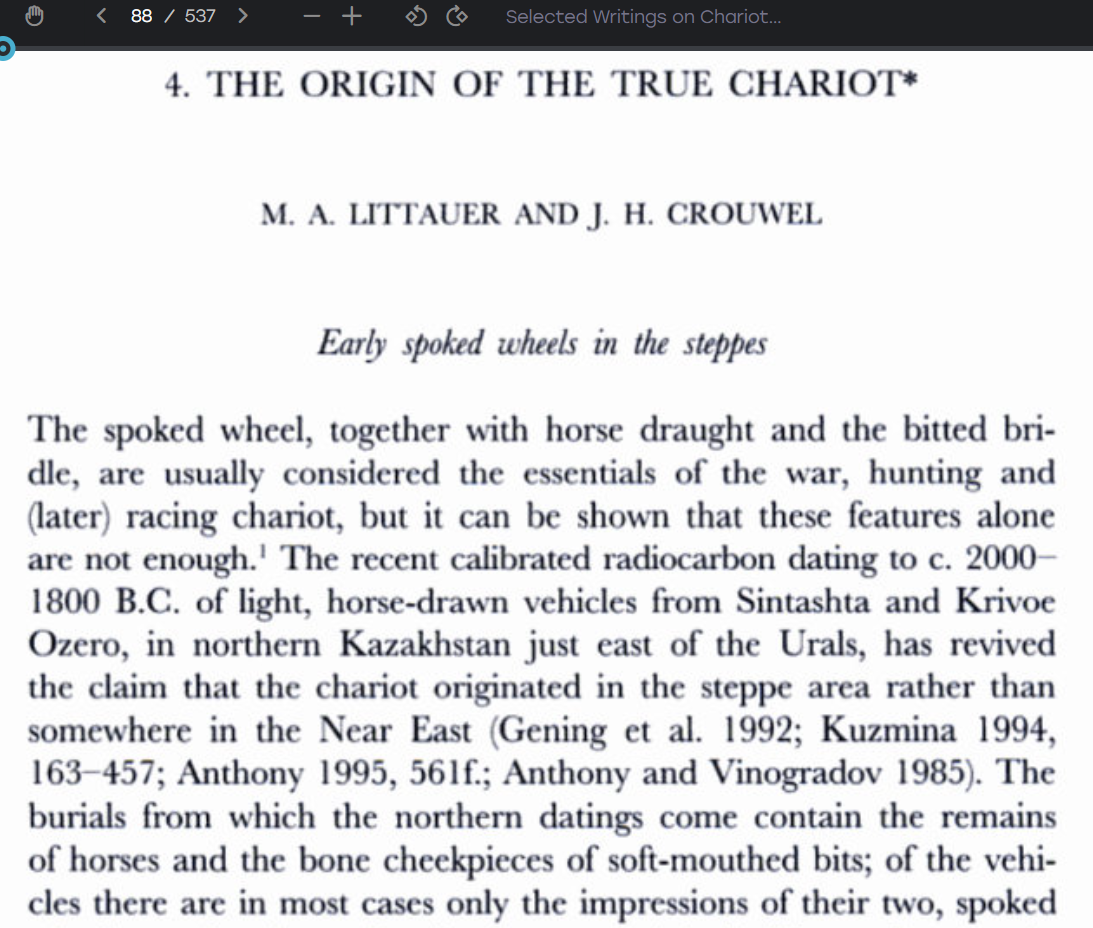
The Dereivka horse remains, once hailed as early evidence of horseback riding in the Eneolithic steppe, have been conclusively redated. Radiocarbon testing in 1997 at Oxford and Kiev showed that the so-called Dereivka “cult stallion” actually dated to 700–200 BCE, far later than the Eneolithic horizon, and therefore “should be withdrawn from discussions of Eneolithic horse-keeping” (David Anthony, Eneolithic Horse Exploitation in the Eurasian Steppes). Earlier scholars such as Littauer and Crouwel had endorsed Dereivka as proof of Sredni Stog horse domestication, but subsequent reassessment has overturned this. Indeed, the 2019 volume Equids and Wheeled Vehicles notes (footnote 11) that later research in 2006 confirmed the Dereivka horses were not ridden, underscoring the fragility of early claims for steppe horse domestication.
21. Linguistics
Words for horse across IE languages
- Indo-Aryan: Sanskrit áśvaḥ; Maharashtri Prakrit āsa
- Indo-Iranian: Avestan aspa, Old Persian asa, Ossetian yafs
- Dardic: Shina aspo, Kalasha hãš
- Tocharian: Tocharian A yuk, Tocharian B yakwe
- Anatolian: Luwian ásùwa, Hittite *ekku
- Germanic: Old English eoh, Gothic aíƕa
- Italic: Latin equus
Note: The Slavic branch DIDN’T preserve any similar word for other IE terms such as aśva (horse), epos… This is an important fact because the Slavic branch occupies the territory generally accepted as the homeland of IE. But how can anyone explain this contradiction???
Kurganists argue that IE people (from steppe) spread domestic horse across other regions, especially Asia including India. But is it logical to assume they lost the original word even in their homeland but managed to spread it elsewhere? To me, it doesn’t sound logical.
Hypothetical PIE Words for Horse
- éḱwos* or *h₁éḱus from root ōku* or *h₁eḱ (“swift”)
Cognates:
- Sanskrit āśú (fast, quick)
- Ancient Greek ōkús (fast)
- Latin ōcior (faster)
- Avestan āsu (quick)
- Maharashtri Prakrit āsu (quick)
- Borrowed into Telugu āśuvu (fast, quick)
Alternative Meanings
- Armenian: ēš (donkey), ēšayceamn (deer/antelope), ēšaycyam (moose/elk), išan (donkeys/asses)
- Classical Persian: āhū (antelope, gazelle, chamois)
Source — Language in Time and Space (pg. 122–123) by Werner Winter for Persian term + note Pashto word Osáy (gazelle). Many Iranian terms also refer to deer/antelope species.
Hellenic & Western IE
- Greek: híppos, Mycenaean i-qo
- Celtic: Irish ech, Gaulish epos
- Baltic: Lithuanian ašvà, Old Prussian aswinan (mare’s milk)
Alexander Semenenko argues in his videos that aśva of the Rigveda meant not only horse but also other similar species.
Videos: —
- https://www.youtube.com/watch?v=TUprTN6Gg8o
- https://www.youtube.com/watch?v=BxWQpdSbLE8
- https://www.youtube.com/watch?v=uEhX5YTULzk
Question — Is it correct to say Indo-Aryans “introduced” horse to other non-IE Indians? To confirm, we must check word for horse in non-IE languages.
Austroasiatic — Word for horse = Sādom → not related to any Indo-Aryan form. Source: Mundari-English Dictionary by Manindra Bhusan Bhaduri (pg. 161)
Dravidian Languages
- Tamil: kutirai
- Malayalam: kutira
- Kota: kudyr
- Toda: kïθïr
- Kannada: kudire, kudure, kudare
- Kodagu: kudire
- Tulu: kudurė
- Telugu: kudira, kudaramu, gurraṁ
Root: Proto-Dravidian kuti*** (“to jump”) → preserved in Tamil.
Other horse words:-
- Old Tamil: ivuḷi
- Brahui: hulli
David W. McAlpin suggests: —
- Proto form of kuthrai and cognates = “domestic horse”
- Proto form of ivuli and hulli = possibly “wild varieties”
Additional Old Tamil words: —
- parī and mā (both existed in Sangam age)
As seen, there’s a strong possibility that the Vedic horse was related to the native Siwalik variety (Equus sivalensis), rather than being a fully foreign introduction.
The Indo-European (IE) lexicon for “horse” reflects both internal diversity and possible external connections. The proposed PIE root márkos (“horse”) appears in Celtic (Old Irish marc, Welsh march), Germanic (English mare, Old Frisian mar, Old Norse marr), and is sometimes linked with Indo-Aryan (Sanskrit mārya, “young man; stallion”). Yet striking parallels occur beyond IE. The Nahali language (a near-isolate of central India) has māv; Dravidian languages preserve mā (Old Tamil) and māvu (Telugu); Tibeto-Burman reconstructs m-raŋ; Proto-Mon-Khmer gives mraŋ; Old Chinese has mraʔ; Mongolian mori; and Thai máa. Such correspondences suggest broader areal interactions rather than a steppe-exclusive innovation.
A second Indo-Aryan term, Sanskrit ghoṭa (“horse”; cf. Hindi ghoṛā, Marathi ghoḍā), has been treated by several scholars as a possible loan. Some linguists argue that ghoṭaka was borrowed from Kol-Munda languages, while others, like Southworth, suggest a Dravidian origin (cf. Gondi kōḍa). Related words also appear in Austronesian: Malay kuda, Toba Batak hoda, Subanon guda, Tausug kuraʔ.
Southworth suggest dravidian origin Also note Gondi word kōḍa
- Latin currere “to run” ← from PIE root kers. → From this same root, the English word horse is derived.
Related terms in South Asia: —
- Telugu gurraṁ
- Hindi ghoṛā
- Assamese ghü̃ra
- Sinhalese gura / ghura (variant forms noted in comparative studies)
Possible connections beyond Indo-European: → “If there is to be a point of contact between PIE and Proto-Austronesian, it is hard to imagine it in another location than India.” — Koenraad Elst
Far from proving the Aryan Invasion Theory (AIT), the linguistic evidence around horse-related words actually strengthens the Out of India Theory (OIT), since Indo-Aryan words for horse appear deeply integrated with Dravidian, Austroasiatic, and even Austronesian parallels.
These patterns complicate the standard AMT claim that Indo-Aryans “introduced” the horse into India. If the very vocabulary of the horse in Indo-Aryan reflects deep interaction with indigenous languages and populations, then it is more logical to conclude that Indo-Aryans were long present in India, participating in a linguistic and cultural exchange that shaped both IE and non-IE vocabularies, rather than adopting the horse only after a late migration.
22. Genetics of horse breeds


https://bmcecolevol.biomedcentral.com/articles/10.1186/s12862-019-1532-y/figures/2

https://bmcecolevol.biomedcentral.com/articles/10.1186/s12862-019-1532-y/figures/2
Genetic diversity and structure of Iranian horses’ population based on mitochondrial marker By N. Hedayat Evrigh, M. Omri, A. Boustan, R. Seyedsharifi, V. Vahedi
The entire horse argument within the Aryan Migration framework is extremely shallow, clung to by its proponents despite mounting contradictions. Several foundational premises of the Kurgan hypothesis have already collapsed. For instance, the supposed “incoming pastoralists” could not have introduced pastoralism into one of the world’s oldest centers of cattle domestication — India. Genetic evidence further dismantles this claim: Bos indicus introgression into Bos taurus is dated to about 4700 YBP (Senczuk et al.), demonstrating an expansion out of the subcontinent rather than into it. Likewise, cluster analyses of Indian horses reveal an initial split near the Zanskar Valley, corroborating Vedic testimony that the upper Indus region abounded with horses. There is no evidence whatsoever for an external origin of Indian breeds. In fact, KM Devi and SK Ghosh’s studies show that the Thoroughbred (a proxy for Arabian stock) clusters within the Indian genetic tree alongside the Marwari, which shows some affinity to both Mongolian and Arabian horses — a relationship found across all Indian breeds, even in unlikely cases like the Manipuri pony. The only coherent explanation is that the Arabian horse itself derived from the subcontinent, spreading westward in tandem with Bos indicus cattle. This scenario not only aligns with the archaeological and genetic record but also explains the transmission of war horses, war elephants, and cattle to West Asia, directly connecting the Indian subcontinent to the rise of the Hittite and Mitanni powers.
https://www.researchgate.net/publication/8042288_Genetic_characterization_of_Indian_Spiti_horses
https://link.springer.com/article/10.1007/s11033-010-0461-z
The oft-repeated claim that the steppe was the sole “introducer” of the domestic horse is far from settled. Emerging research increasingly points towards multiple centers of domestication across Eurasia, challenging the simplistic Steppe-only model. For instance, genetic and archaeological studies have suggested that regions such as the Iberian Peninsula may also have played a role in early horse domestication. One such study explicitly notes the possibility of independent domestication events outside the steppe, thereby undermining the narrative of a single-point origin.
https://www.pnas.org/doi/10.1073/pnas.1111637109 Snippets below
https://onlinelibrary.wiley.com/doi/abs/10.1111/age.12635
Problem with Przewalski horse domestication

https://pmc.ncbi.nlm.nih.gov/articles/PMC8018961/
Horse expert Marsha Levine says finding the first domestication event is intractable Refer to The Oxford Companion to Archaeology from pg 17
Of possible ancestors of the domestic breeds, the following may be mentioned: Equus sivalensis, E. stenonis, E. gracilis (Owen’s Asinus fossilis), E. namadicus, E. fossilis, and E. robustus” (The Possible Ancestors of the Horses Living Under Domestication, J.C. Ewart, 1909). Ewart further notes that Equus sivalensis, from the Siwalik deposits of Northern India, is the oldest true horse known to science (ibid). He emphasizes, “There is hence no longer any reason for assuming that this ancient Indian species had no share in the making of domestic breeds” (ibid). Supporting this view, Lydekker argued that E. sivalensis, or some closely allied race, may have been the ancestral stock from which Barbs, Arabs, and Thoroughbreds are derived (ibid). Source: JSTOR — *The Possible Ancestors of the Horses Living Under Domestication*
The Age of Mammals in Europe, Asia and North America in 1921 book by Henry Fairfield Osbourn Pg 409
Annals of the New York Academy of Sciences by New York Academy of Sciences Pg 310
Quests of the Dragon and Bird Clan: The Golden Age (Vol. III) By Paul Kekai Manansala Pg 45
The origin and influence of the thoroughbred horse pg 143
“Equus sivalensis is the oldest true horse known, it has more highly specialised teeth than the Oreston and Newstead ponies” Refer to Animal Remains, in the Appendix II of A Roman Frontier Post and its People
Above Snippets taken from — Quests of the Dragon and Bird Clan By Paul Kekai Manansala Pg 396
https://archive.org/details/cat11088167_1910
https://archive.org/details/cat11088167_1910
https://archive.org/details/cat11088167_1910
https://archive.org/details/cat11088167_1910

It is well established that Arabian horses possess only 17 pairs of ribs, distinguishing them from most other horse breeds which typically have 18. Interestingly, research also records that the Sulu horse, a rare Southeast Asian breed, sometimes exhibits the same anatomical feature of 17 rib pairs. This uncommon trait underscores the diversity within equine evolution and the importance of regional adaptations in shaping distinct horse lineages. source — https://www.researchgate.net/publication/233718624_IBestia_incognita_The_horse_and_its_history_in_the_Philippines_1880-1930
Quests of the Dragon and Bird Clan: The Golden Age (Vol. III) By Paul Kekai Manansala Pg 46,47 See about 17 pairs if ribs in sulu horse and other quotations
23. Conclusion
That invasionist scholars have consistently skirted crucial issues of both evidence and methodology does little to inspire confidence. The entire question of the Vedic and Harappan horse has been treated far too simplistically. The facts are clear: several species of Equus, including the true horse (Equus caballus), existed in the Indus-Sarasvati civilization, though probably in small numbers. Their presence was not the result of any Aryan invasion or migration — a hypothesis already rejected by archaeological, anthropological, genetic, literary, and cultural evidence — but rather the outcome of long-term interactions and exchanges with neighboring regions. This gradual process continued after the mature Harappan phase into early historical times, with no epoch showing a dramatic first-time introduction of the animal.
The Rig-Veda itself has been misread. Far from suggesting a horse-rich society, it reflects the rarity of the animal, which was significant symbolically rather than numerically. Nowhere does it describe invading Aryans storming into India on “thundering” horse-drawn chariots to subjugate native populations — an outdated colonial fantasy that must be abandoned once and for all. In fact, excavations across north-west India, within the Harappan cultural sphere, establish that wheels and chariots were known as early as 3500 BCE. Bones of the true horse have been securely dated from 4500 BCE at Bagor (Rajasthan), 2000 BCE at Mahagara (Uttar Pradesh), and 1500 BCE at Hallur (Karnataka) — covering over 400,000 square kilometers, well before the supposed Aryan arrival.
The 2018 Sanauli chariot excavation further strengthens this evidence. As Vijay Kumar notes, the idea that horses in India came only from Central Asia is mistaken: the nearest source for north India was Tibet, with its indigenous Rimpoche horses, merely 150 km away — a trivial distance compared to the alleged 4000 km trek across the hazardous Khyber Pass that “So called Aryan invaders” are supposed to have undertaken. Trans-Himalayan trade is also firmly attested by finds such as Chalcolithic copper hoard figurines in Nepal.
In light of this, the oft-repeated claim that horses and chariots entered India around 1500 BCE is erroneous and must be discarded. Horses and chariots were not foreign intrusions but were known in India at least 5000 years ago — long before the myth of an Aryan invasion was ever conceived. Correcting this distortion will require rewriting thousands of books and revising countless websites that continue to propagate this outdated narrative.
24. Acknowledgment —
This article has greatly benefited from the pioneering works of several scholars who have challenged outdated colonial narratives and offered fresh, evidence-based perspectives on the history of horses, the Rig-Veda, and the Harappan civilization. I wish to acknowledge the contributions of Shrikant Talageri, whose research on the Rig-Veda and the question of Aryan origins has been foundational; Michel Danino, particularly his detailed paper The Horse and the Aryan Debate, which carefully examines archaeological, textual, and cultural evidence; and Dr. Shiv Shastri, whose rigorous analyses on the history of horses in India and the flaws of the Aryan Migration Theory have been extremely valuable.
In addition, this work has drawn upon numerous books, My Own posts Compilation based on research papers, excavation reports, and other sources cited throughout the article. The combined efforts of archaeologists, historians, linguists, and independent scholars have made it possible to reassess old assumptions and move toward a more accurate understanding of India’s past.
This article is dedicated to anyone genuinely interested in knowing the historical facts beyond colonial-era constructs. It is my hope that this compilation of evidence will serve as a resource for researchers, students, and enthusiasts seeking clarity on one of the most debated aspects of Indian history.
25. References —
- Danino, Michel. The Horse and the Aryan Debate. (Research Paper)
- Talageri, Shrikant. The Rigveda: A Historical Analysis. Aditya Prakashan, 2000.
- Shastri, Shiv. Articles and research papers on horse remains, chariots, and the Aryan Invasion Theory.
- Bryant, Edwin. The Quest for the Origins of Vedic Culture: The Indo-Aryan Migration Debate. Oxford University Press, 2001.
- Kenoyer, Jonathan Mark. Ancient Cities of the Indus Valley Civilization. Oxford University Press, 1998.
- Jarrige, Jean-François. Excavation reports and studies on Harappan trade networks.
- Biswas, T. K. Writings on Mauryan art and symbolism of the horse.
- Rath, Jayanti. Studies on punch-marked coins and animal symbolism.
- Kumar, Vijay. Report on the 2018 Sanauli chariot excavation.
- Gupta, S. P. Works on Harappan art and iconography.
- Sethna, K. D. The Problem of Aryan Origins: From an Indian Point of View.
- Sri Aurobindo. The Secret of the Veda. (1914–1920 writings)
- Kak, Subhash. Articles and works on Vedic symbolism and ritual.
- Leach, Edmund. Anthropological perspectives on the Rig-Veda.
(Alongside these, numerous excavation reports, linguistic studies, and scholarly analyses cited throughout the article have been indispensable in constructing this work.)
메타데이터
- post_id
- dfcafd5b215d
- slug
- the-equine-silence-and-the-rigveda-horses-the-indus-sarasvati-civilization-and-the-aryan-debate-dfcafd5b215d
- url
- https://medium.com/@thehistoropill/the-equine-silence-and-the-rigveda-horses-the-indus-sarasvati-civilization-and-the-aryan-debate-dfcafd5b215d
- canonical_url
- https://medium.com/@thehistoropill/the-equine-silence-and-the-rigveda-horses-the-indus-sarasvati-civilization-and-the-aryan-debate-dfcafd5b215d
- author_url
- https://medium.com/@thehistoropill
- status
- ok
- fetched_at
- 2026-09-03 10:41:59