The Sociology of Dorm Life: How Shared Spaces Shape Identity and Social Behavior
Forget the view that dormitories are just concrete buildings. They are intense social laboratories. For most students, moving in means…
The Sociology of Dorm Life: How Shared Spaces Shape Identity and Social Behavior
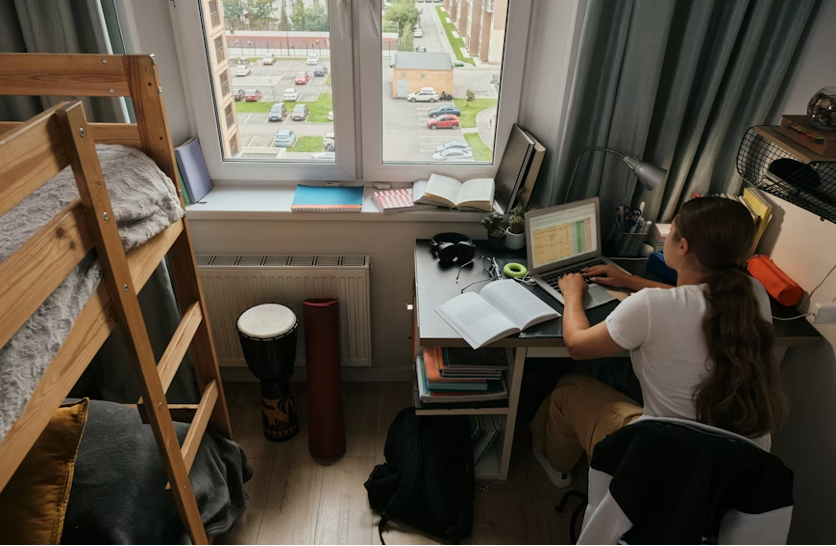
Student Studying in a Dorm Room (taken from unsplash.com)
Forget the view that dormitories are just concrete buildings. They are intense social laboratories. For most students, moving in means their first deep dive into communal living. This forces everyone to constantly negotiate personal boundaries, shared resources, and collective rules.
The daily interactions, like new friendships and messy conflicts, offer a perfect, small window into key sociological ideas like socialization and group dynamics. Living this close together instantly amplifies every minor tension and celebrates every significant shared moment, making the dorm a powerful, fast-moving environment for personal social growth.
Shared Walls, Shared Worlds: Socialization and Architecture
Dorm life immediately thrusts students into the rapid-fire process of socialization. What is that? Socialization is the process by which we acquire knowledge of a group’s unspoken norms and ideals. In the dorm, you become aware of rules for bathroom use, sharing expenses, and music volume.
The requirement to constantly compromise on heating, noise level, and cleaning schedules creates an intense, essential training ground for civic cooperation.
In fact, the very design of the dorm building controls how people behave:
- The Traditional Hallway: These long corridors naturally promote many brief, casual interactions. When students constantly bump into one another, they form many weak social ties. This creates a broad, but usually superficial, sense of community on the floor.
- The Shared Suite: Groups of four to six students live around a central space here, which naturally encourages intense, high-stakes interaction. This design speeds up close bonding, but it also increases the chance of serious conflict, demanding quick agreement on shared group rules.
- The Common Spaces: Lounges, kitchens, and study rooms are vital for building broader social connections. They pull students from different floors or groups together, helping to stop the community from breaking into small, isolated cliques.
These building layouts define a specific social area where being physically close drives interaction, quickly shaping identities based on shared living schedules and tight quarters.
The Role We Play: Symbolic Interactionism and Identity
Sociological theory, particularly symbolic interactionism, suggests your identity isn’t static; you constantly remake and redefine yourself based on how others react to you. The dorm provides the perfect “stage” for this:
- Public vs. Private: Think of Erving Goffman’s theory: the hallway is your “front stage.” Here, students manage their public image, acting out roles like the focused student or the charismatic socialite. Your private room, conversely, is the “backstage,” where you can relax and truly be yourself.
- Creating Group Culture: Dorm residents quickly establish shared symbols and unique meanings. An inside joke, a specific floor tradition, or a mandatory late-night pizza ritual all become symbols that define their unique culture and solidify the feeling of “us” versus everyone else.
Moving away to college is a massive opportunity for identity overhaul. The dorm provides the ideal social mirror: students try out new interests and personas based on the immediate feedback they get from their new roommates and neighbors.
Digital Tribes in Physical Spaces
Today, constant internet access adds a huge new layer of complexity to dorm sociology. The modern student must constantly juggle their established online identity with the demands of their physical community.
While gaming teams or social media circles build strong digital bonds, these online loyalties often compete directly with the people living a few feet away. Students might be physically next door to each other yet communicating entirely through a group chat. This tension creates a strange social dynamic:
- Digital Habits Crossover: Online communication habits can sometimes create problems in real life. Styles picked up online, like heavy sarcasm or quick, blunt messaging, often bleed into face-to-face talks, which easily causes major misunderstandings.
- Distance over Proximity: Students don’t always choose the social life right outside their door. Instead of joining the nearby, perhaps less exciting social scene, they frequently opt to socialize digitally with long-distance friends and groups.
This constant digital pull complicates group dynamics, requiring dorm communities to work harder just to keep up real-world connections when private digital escape is so easily accessible.
Conclusion: Dorm Life as a Social Microcosm
Ultimately, dorm life is a powerful, miniature version of how society operates. Think about it: the problems students face, like splitting up limited resources, establishing personal boundaries, handling arguments, and fitting into group expectations. These problems are the same core challenges that pop up in families, major cities, and big companies.
Forcing students to share tight spaces and vital resources with strangers demands that they develop essential interpersonal skills necessary for their careers and home lives later on.
Dorm living offers great practice in social adaptation and settling arguments. A student who handles shared spaces well is clearly ready to succeed in the complex social world awaiting them after graduation.
메타데이터
- post_id
- dfcd84f7b77d
- slug
- the-sociology-of-dorm-life-how-shared-spaces-shape-identity-and-social-behavior-dfcd84f7b77d
- url
- https://medium.com/@nerdify/the-sociology-of-dorm-life-how-shared-spaces-shape-identity-and-social-behavior-dfcd84f7b77d
- canonical_url
- https://medium.com/@nerdify/the-sociology-of-dorm-life-how-shared-spaces-shape-identity-and-social-behavior-dfcd84f7b77d
- author_url
- https://medium.com/@nerdify
- status
- ok
- fetched_at
- 2026-06-15 20:49:13