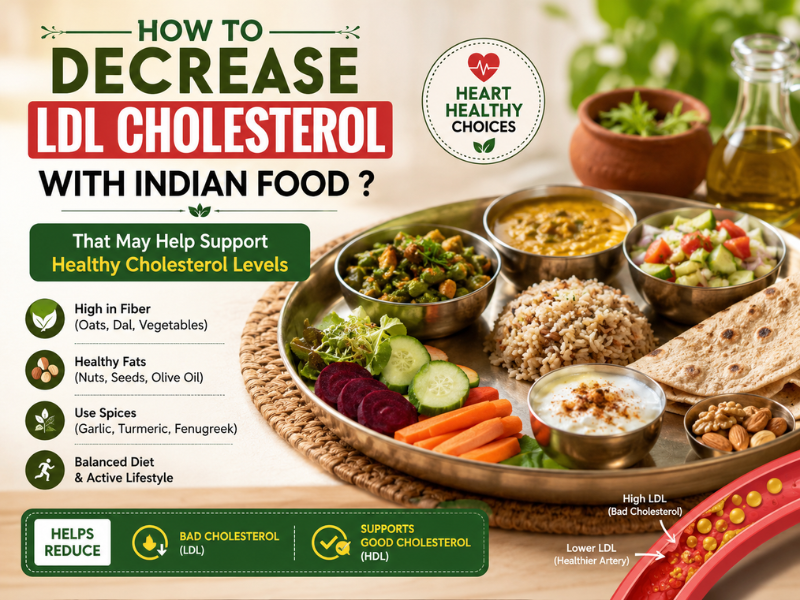
How to Decrease LDL Cholesterol with Indian Food ?
Before you read, explore this guide to learn more about Indian food and its rich culinary traditions.
How to Decrease LDL Cholesterol with Indian Food ? — That May Help Support Healthy Cholesterol Levels
Before you read, explore this guide to learn more about Indian food and its rich culinary traditions.
My uncle got the “your cholesterol is high” talk from his doctor a few years back, and his first reaction was almost offended — like, he’d been eating dal and sabzi his whole life, how bad could it really be? Turns out the problem wasn’t the dal. It was the two teaspoons of ghee going into it, the fried snacks every evening with chai, and the fact that “a little rice” had quietly become two full bowls.
That’s usually how it goes. Indian food doesn’t need to be abandoned for a heart-healthy diet — most of what makes it good for you is already baked into the cuisine. Lentils, whole grains, vegetables cooked with real spice instead of just salt and oil. The problem is almost never the base ingredients. It’s the extras, the frying, and the portions that crept up over the years without anyone noticing.
What LDL Actually Does, Briefly
LDL is the cholesterol that tends to build up inside artery walls over time, which is why doctors watch it closely. Genetics and activity levels matter too, so food isn’t the whole story — but it’s the part you actually have daily control over, which counts for something.
The general idea is simple even if the execution takes a bit of habit-building: less saturated and trans fat, more soluble fiber and unsaturated fat. Indian cooking can lean either way depending on how it’s made, which is honestly the whole point of this article.
The Foods Already Working in Your Favor
Dal, more often than you probably eat it now
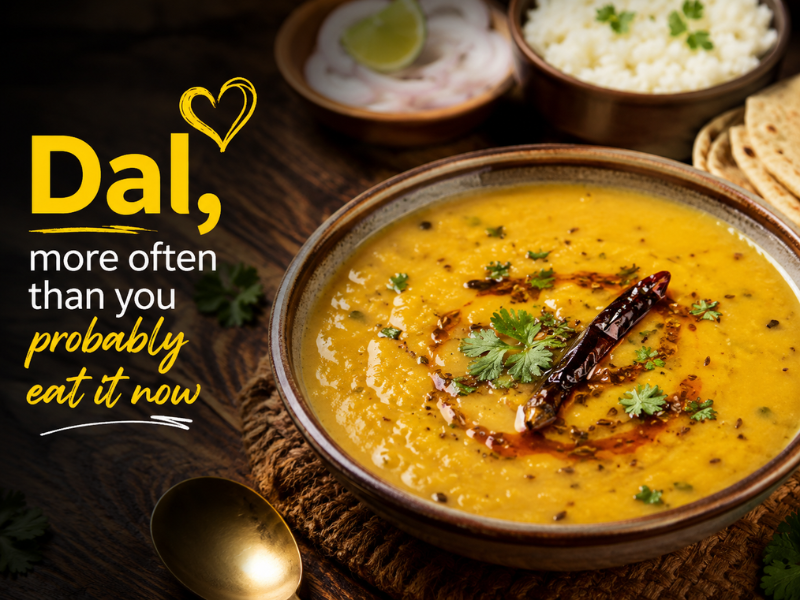
Moong, masoor, chana, rajma — doesn’t matter much which one, they’re all high in soluble fiber, and that fiber grabs onto cholesterol in your gut before it gets absorbed. If dal is a side dish in your house right now, try flipping that. Make it the main event a few nights a week instead.
Roti over rice, whole wheat over maida
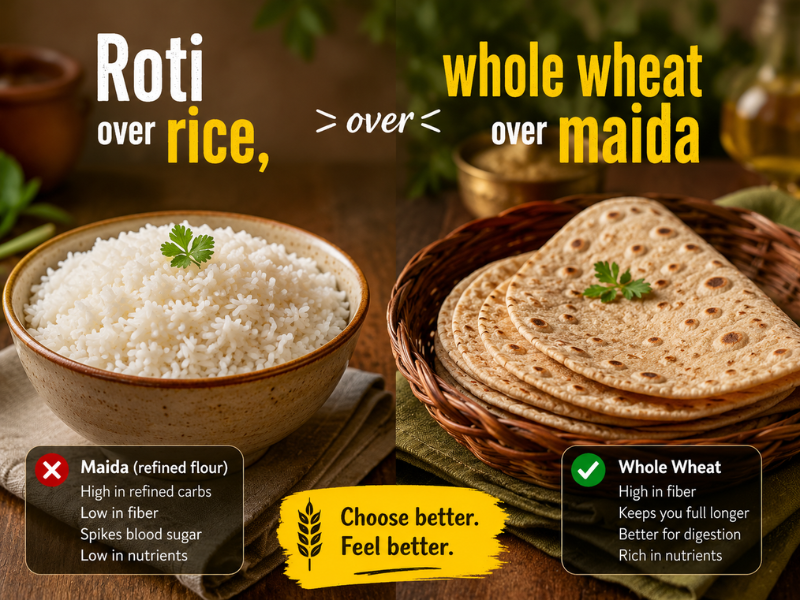
Not a dramatic swap. Just choosing whole wheat roti, brown rice, or millets like bajra and jowar more often than white rice and refined flour. Refined grains strip out the fiber that actually does the work, so this one change quietly adds up over months.
Garlic — use more of it than feels normal
It’s already central to Indian cooking, so this isn’t asking you to change your palate. Just don’t skimp. A generous tadka does more for you than a token clove or two.
A small handful of nuts, not a bowlful
Almonds and walnuts bring in unsaturated fat that can help push LDL down a bit, especially when they replace something fried. Key word being “small” — they’re calorie-dense enough that going overboard cancels the benefit out.
Vegetables cooked, not drowned, in oil
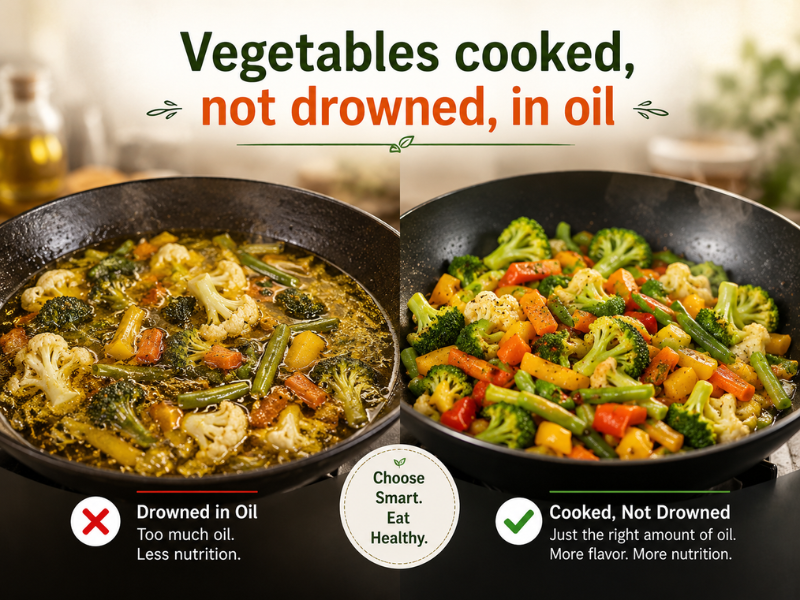
Bhindi, baingan, cabbage, methi, palak — the fiber is there regardless, but a light hand with oil keeps the dish from working against you.
Where Most People Actually Go Wrong
Honestly, it’s rarely the vegetables or the dal that cause trouble. It’s usually one of these:
- Ghee added generously out of habit rather than for flavor
- Deep frying that happens two or three times a week instead of occasionally
- Full-fat paneer and milk used daily rather than saved for when it really matters
- Store-bought namkeen and biscuits made with vanaspati, which is about as far from heart-healthy as fried food gets
- Portions that grew slowly over years, so nobody clocked the change
None of this means cutting these things out entirely. It means noticing how often they show up, because “occasional” and “daily” produce very different results on a blood test six months apart.
What a Realistic Day Might Look Like
Nothing extreme here — this is closer to what my uncle eventually settled into after a few months of small adjustments.
Morning starts with vegetable poha or a moong dal chilla, cooked with just enough oil to keep it from sticking. Mid-morning, a handful of almonds instead of biscuits with tea. Lunch is roti, a vegetable sabzi, and dal — the usual combination, just with dal treated as more than an afterthought. Evenings, roasted chana instead of the fried stuff. Dinner leans toward brown rice or jowar roti with a light curry and some salad on the side.
It’s not a diet plan you’d need to follow with a chart on the fridge. It’s closer to shifting the ratios of what you already cook.
Frequently Asked Questions
1.Can Indian food actually help lower LDL cholesterol?
Yes — lentils, whole grains, garlic, and fibrous vegetables are already central to the cuisine, and they support healthier cholesterol levels when the cooking leans away from deep frying and heavy ghee.
2.Is ghee the enemy here?
Not really, in small amounts. The issue is usually quantity and frequency, not ghee itself. A spoon now and then is very different from a daily habit built around it.
3.Which dal works best for this?
Moong and masoor tend to get recommended most since they’re lighter, but honestly most lentils help when cooked without excess oil.
4.Do I have to give up Indian sweets completely?
No, but treat them as occasional rather than weekly. Most traditional sweets are dense in ghee, sugar, and khoya, so frequency matters more than total avoidance.
5.Does turmeric really do anything for cholesterol?
It’s more supportive than magic — turmeric’s anti-inflammatory properties are useful as part of an overall diet, not as a standalone fix.
6.Can I still eat white rice sometimes?
Sure. The goal is leaning toward brown rice, whole wheat, or millets more often, not eliminating white rice from existence.
7.How long before diet changes actually show up on a blood test?
Usually a few months of consistent habits before you’d expect to see a real shift, though it varies person to person.
8.Should I still see a doctor if I’m changing my diet?
Yes, especially if you’re already on medication for cholesterol. Diet supports the bigger picture — it doesn’t replace medical guidance.
Conclusion
Nothing here requires giving up Indian food to protect your heart — if anything, the cuisine already has most of the right pieces built in. It’s really about paying attention to ratios: more dal, more whole grains, a heavier hand with garlic, a lighter one with oil and ghee. Small, boring, repeatable changes tend to move the numbers more than any dramatic overhaul does. Check in with a doctor along the way, and give it time.
메타데이터
- post_id
- dfd494c5148d
- slug
- how-to-decrease-ldl-cholesterol-with-indian-food-dfd494c5148d
- url
- https://medium.com/@brajbowl_2004/how-to-decrease-ldl-cholesterol-with-indian-food-dfd494c5148d
- canonical_url
- https://medium.com/@brajbowl_2004/how-to-decrease-ldl-cholesterol-with-indian-food-dfd494c5148d
- author_url
- https://medium.com/@brajbowl_2004
- status
- ok
- fetched_at
- 2026-08-16 17:22:32