22 Random Lessons From the Last 22 Months in Product
Some of the following lessons came from high-fives, others from facepalms. Most were somewhere in between. No grand conclusions here, just…
22 Random Lessons From the Last 22 Months in Product
Some of the following lessons came from high-fives, others from facepalms. Most were somewhere in between. No grand conclusions here, just 22 honest takeaways from 22 months of building, learning, failing, and laughing with a team I’m lucky to work with.
1. Although sometimes frustrating, not being a domain expert helps simplify complexity.
I used to worry about not being a domain expert — now I’ve learned to value it. Asking “Why?” more often helps me dumb things down early, strip away complexity, and translate needs into scalable, agnostic flows.
2. Don’t underestimate celebrating micro-wins.
You never know who on your team is doubting themselves that day. One small celebration can shift a person’s day — or week. Compound enough of positive mindsets and you’ll feel it in your team’s health.
3. Never get too busy for micro-interactions.
I’ll never stop believing in the ROI of micro-interactions, even though they’re often the first things to go when time gets tight. A small shoutout, a thoughtful check-in, a genuine thank you, or a kind ask for help — it pays off.
4. Negative micro-moments leave bigger scars than you think.
Closely tied to point 3. Too many “Don’t have time to answer this properly, they’ll manage” moments will cut the team’s trust eventually.
5. It’s okay to be friends with your colleagues.
I used to be afraid of it. But after nearly six years of work, I’m starting to realize how much of our lives we spend at work. Letting relationships evolve into real friendships has made the day-to-day more joyful — and turns out, it can work without crossing any lines.
6. Fast teammates need fast feedback.
Simple but good reminder: Stay responsive if you want to keep momentum alive.
7. The ripple effect of underperforming members is real
Old lesson, relearned several times this year. Don’t underestimate the exponential impact of underperforming members. Don’t wait to protect your team from that impact.
8. A high-performing team feels almost surreal.
You know when you are surrounded by high-performers. Things just work. Problems are energizing, and you don’t need to over-process everything. It’s rare, and it’s magical.
9. Empowered teams aren’t a myth. They’re just rare.
This is the first time I’ve truly been part of one. Ownership is real, trust is mutual, and it’s wildly satisfying.
10. Product engineers are a real thing.
I honestly can’t imagine doing product without product-minded engineers anymore. When devs truly think product, it changes everything — the collaboration, the quality, the energy.
11. QA becomes fun when creative freedom is welcome.
I often reflect on what moments can uplift devs. This one is to uplift me. When engineers feel safe enough to add polish or throw in a thoughtful “nice-to-have,” QA becomes a space for delight — not just bugs.
12. The “no rules” rule only works when people care.
If the team is mature and aligned, minimal process doesn’t mean chaos but speed and trust.
13. Always — Clear is kind.
Again, put in the effort to be clear in your communication. Vagueness is exhausting. Don’t hide behind soft language. And yes — proofread your messages.
14. Psychological safety looks like laughing over a critical bug — and then fixing it immediately.
A good way to check the level of your team’s psychological safety: how do they react when critical bugs occur? Do they stay calm? Maybe even giggle quickly about the miss, but keep focused enough to fix it. Sounds ideal to me.
15. Leadership should leave a little ambiguity in the vision.
Too much clarity can kill ambition. Too little clarity can make teams spiral. The right amount of ambiguity keeps teams curious, aligned, and motivated.
16. Shielding your engineers is important — but so is exposure.
PMs often try to protect devs from the real chaos. But hiding too much leads to disconnection. Share some of the raw context, even if it’s messy. I’ve found it helpful to delegate some of that exposure to specific roles (like dev leads) who can handle it.
17. When the week feels chaotic, do the small things well.
Make your bed. Do the dishes. Write your Friday wrap-up. Prep your Monday’s first To Dos. These small rituals ground you when everything else feels messy.
18. Sometimes your job is to commit to leadership — even if you disagree.
You’re there to challenge, align, and sometimes just commit. Knowing when to do which is a subtle but important skill. (Also inspired by: How to build a team that can “take a punch” — Hilary Gridley)
19. Procrastinating on a small, annoying task? Your team might be your solution.
If something feels heavy, someone else might love that kind of task. Ask around. Use your team. You’re not alone.
20. Realizing your company isn’t that product-led is humbling — but freeing.
Realising product doesn’t always shift the numbers can make you question the purpose of your daily efforts. However, you can also use it to reduce pressure on yourself and focus on what can be done. (Also inspired by: From ChatGPT to Instagram to Uber: The quiet architect behind the world’s most popular products)
21. You’ll find this in all of my reflections: Don’t cut 1:1s.
No explanation needed.
22. Reflect, or forget.
No explanation needed.
No rulebook, just reflections. Here’s to the next chapter and the lessons it’ll bring.

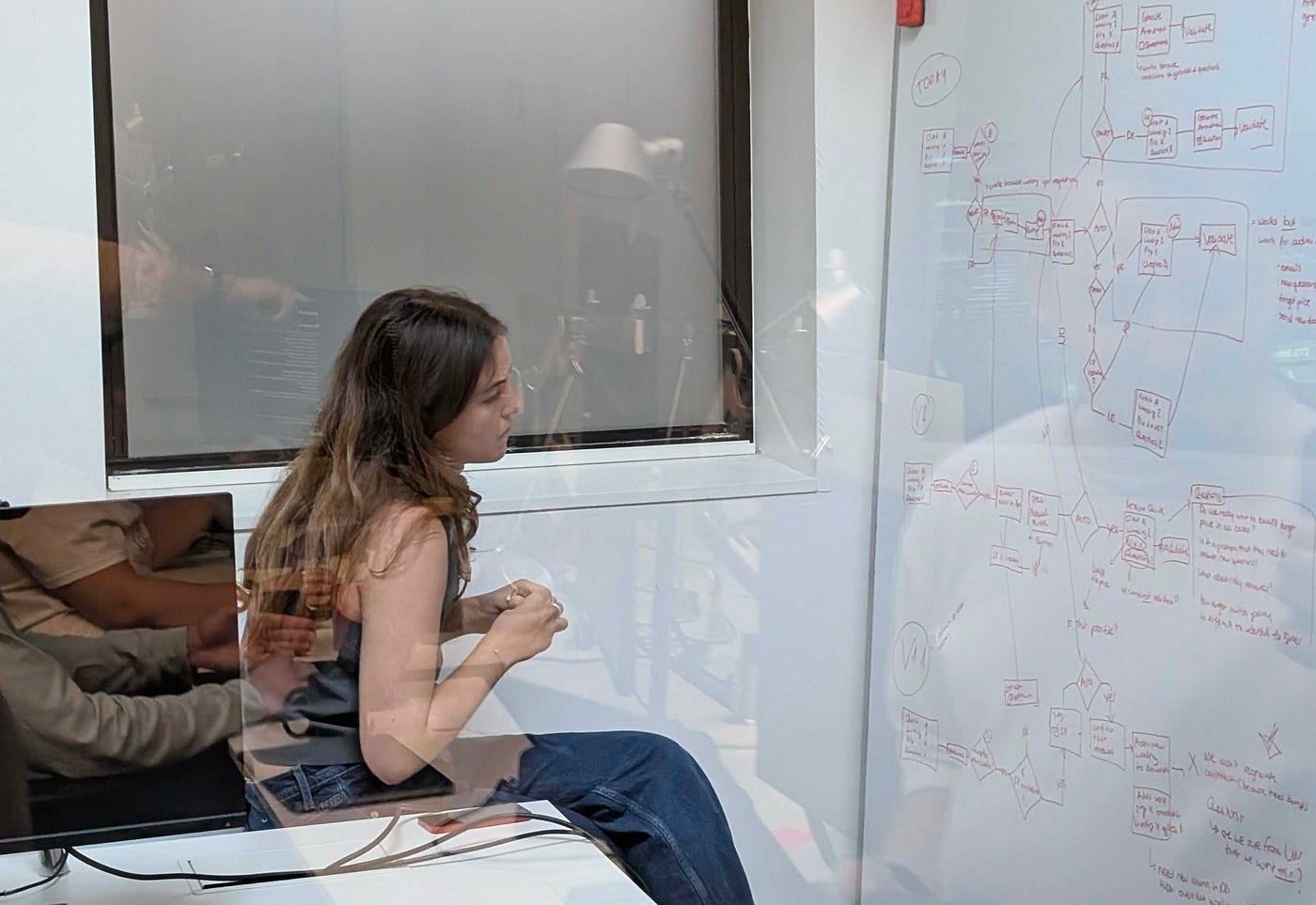
Some of the amazing people I get to work with at the moment
메타데이터
- post_id
- dfdbe8aae40d
- slug
- 22-random-lessons-from-the-last-22-months-in-product-dfdbe8aae40d
- url
- https://medium.com/@sarah.faber/22-random-lessons-from-the-last-22-months-in-product-dfdbe8aae40d
- canonical_url
- https://medium.com/@sarah.faber/22-random-lessons-from-the-last-22-months-in-product-dfdbe8aae40d
- author_url
- https://medium.com/@sarah.faber
- status
- ok
- fetched_at
- 2026-07-22 08:21:35