Understanding EPR and the Battle Against End-of-Life Vehicles(ELVs)
Extended Producer Responsibility (EPR) Retiring an End-of-Life Vehicle (ELV) is far more than mere paperwork — it is a vital pledge by…
Understanding EPR and the Battle Against End-of-Life Vehicles(ELVs)
Extended Producer Responsibility (EPR) Retiring an End-of-Life Vehicle (ELV) is far more than mere paperwork — it is a vital pledge by automakers to ensure cars are recycled with care. To power this green mission, the system seamlessly tracks three main pillars: Extended Producer Responsibility (EPR) credentials, precise data reporting, and official vehicle logging.
When applied to End-of-Life Vehicles (ELVs) — vehicles that are deregistered, declared unfit, or have exceeded legal age limits — EPR mandates that automotive companies ensure these vehicles are systematically collected, dismantled, and recycled in an environmentally sound manner.
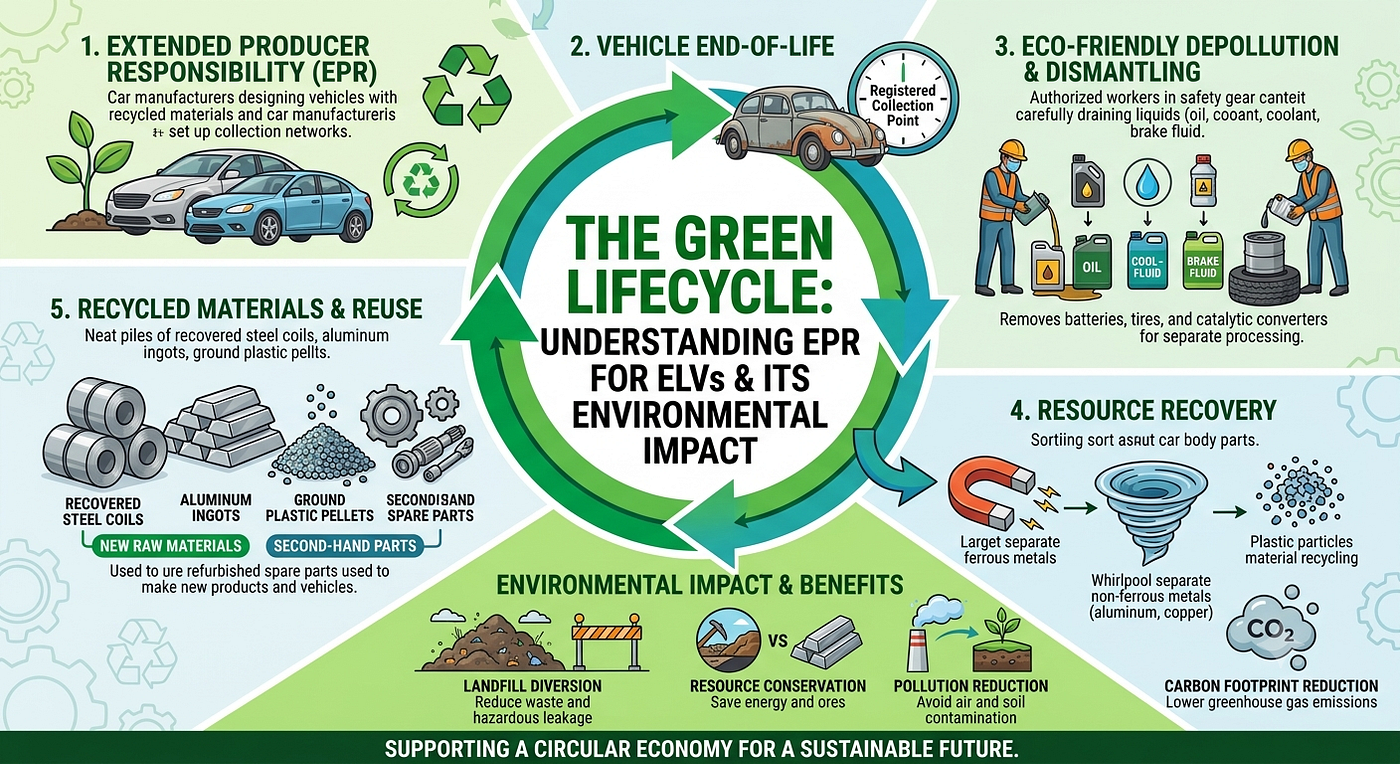
1.What is EPR for ELVs?
- Extended Producer Responsibility (EPR) means that car makers, importers, and builders are legally and financially responsible for their vehicles from day one until they hit the junkyard.
- To prove they are doing their part, automakers must get digital EPR certificates from official scrapping facilities. These facilities hand out certificates based on a perfect 1:1 weight match — one certificate for every single kilogram of steel and raw material cleanly saved from a scrapped car.
2. Why does EPR for ELV matter?
- **EPR for ELV **matters because it fixes a massive, multi-decade structural failure in the automotive lifecycle.
- Certified scrapping systems step in to safely extract these hazardous toxins, instantly locking down pollution and keeping public health safe. Official vehicle logging ensures that every retired car is guided directly into a proper, high-standard recycling facility.
- Beyond metal, old cars are packed with valuable, reusable materials like premium rubber, glass, and specialized plastics. Giving these materials a second life drastically cuts the demand for fresh raw resources, slashing industrial energy use along the way.
3. How can EPR for ELV protect the environment?
- Extended Producer Responsibility (EPR) for End-of-Life Vehicles (ELVs) protects the environment by transforming the auto industry from a linear “take-make-waste” pipeline into a highly regulated circular economy.
- EPR rules set rigid, weight-based recycling quotas that automakers must meet. To satisfy these quotas, massive quantities of high-grade automotive steel and aluminum are cleanly sorted, melted down, and redirected right back into heavy manufacturing.
- EPR legally short-circuits this system. Because vehicle owners are offered financial incentives (such as registration waivers or new car tax discounts) only upon receiving an official Certificate of Deposit from an authorized center.
4. Why does ELV registration matter?
EPR for ELV (End-of-Life Vehicle) registration is the precise digital link that connects a real, physical piece of automotive junk to the government’s regulatory systems.
Once a vehicle is officially registered as an ELV, its dismantling process must be digitally logged. The facility is legally obligated to pass it through a certified depollution line. If a vehicle slips through without formal registration, it avoids this protocol, resulting in toxic refrigerants being vented into the sky and gallons of motor oil leaking straight into local groundwater. Registration forces the system to prove the car was cleaned safely.
5. For whom ELV registration matters and why?
The Environment Protection (End-of-Life Vehicles) Rules mandate EPR for ELV registration for specific groups, creating distinct legal and financial implications for each stakeholder in the automotive ecosystem.
ELV registration matters because:
- Registering it as an ELV triggers an automatic link with transport authorities to permanently cancel your Registration Certificate (RC).
- Licensed scrapping networks safely strip out these hazardous materials before they can do damage, direct shielding public health and local water supplies.
- Cars are packed with reusable resources like structural steel, rubber, glass, and technical plastics that industrial sectors desperately need.
To Wrap Up
Ultimately, logging an End-of-Life Vehicle (ELV) matters because it seamlessly unites eco-protection, strict legal standards, and smart recycling into one powerful system. Thanks to the streamlined EPR portal, the entire registration process is effortless. By ensuring every retired car is handled with absolute care, this framework fuels a sustainable, green revolution — paving the way for a cleaner, safer automotive future.
메타데이터
- post_id
- dfdd9a0d9e52
- slug
- understanding-epr-and-the-battle-against-end-of-life-vehicles-elvs-dfdd9a0d9e52
- url
- https://medium.com/@sneha.arcka/understanding-epr-and-the-battle-against-end-of-life-vehicles-elvs-dfdd9a0d9e52
- canonical_url
- https://medium.com/@sneha.arcka/understanding-epr-and-the-battle-against-end-of-life-vehicles-elvs-dfdd9a0d9e52
- author_url
- https://medium.com/@sneha.arcka
- status
- ok
- fetched_at
- 2026-08-15 23:53:33



