Why Container Ships Keep Getting Bigger — And When It Will Stop
For decades, container ships have followed one rule: bigger is better. Every few years a new vessel arrives that breaks the previous…
Why Container Ships Keep Getting Bigger — And When It Will Stop
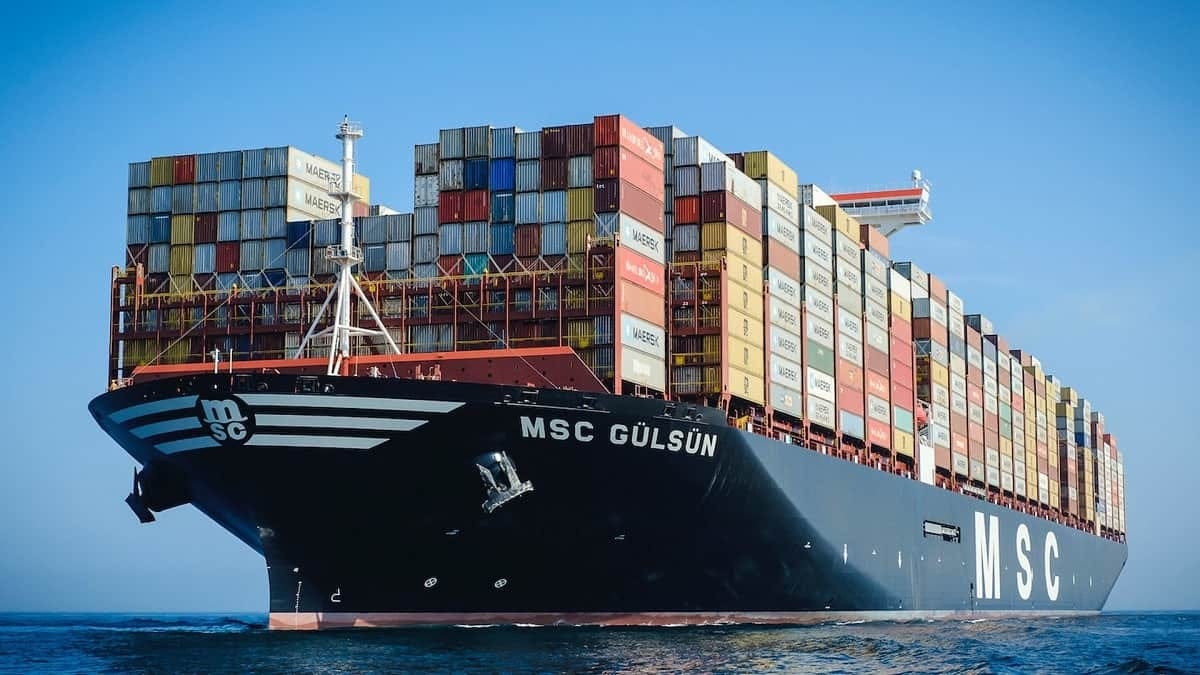
For decades, container ships have followed one rule: bigger is better. Every few years a new vessel arrives that breaks the previous record — longer, wider, taller, and able to haul thousands more containers across the planet in a single trip. The race to scale up has reshaped global trade, ports, shipping lanes, and even the economics of entire countries.
But this growth can’t continue forever. Physics, infrastructure, risk, and economics are finally pushing these giants toward a limit. Here’s why container ships got so big — and what will eventually stop the trend.
Why Container Ships Keep Getting Bigger
1. Economies of Scale
This is the core reason.
A larger ship can carry more containers without using proportionally more fuel or crew.
Example:
• A 20,000-TEU ship doesn’t need double the crew of a 10,000-TEU ship. • Fuel usage per container drops dramatically as size increases.
So every additional meter of hull length reduces “cost per box,” which makes shipping cheaper for global trade.
Bigger ship = lower cost per container = higher profit margin.
This is the simple math driving the entire industry.
2. Global Trade Explosion
Over the last few decades, the world shifted toward just-in-time manufacturing. China, Vietnam, India, Mexico — large exporting countries — depend on container shipping for everything:
• electronics • automobiles • textiles • chemicals • food containers
As demand for global shipping surged, carriers needed vessels that could move enormous volumes efficiently. Bigger ships were the quickest way to keep costs down while meeting demand.
3. Port Modernization

Source: porttechnology.org
Ports didn’t just accept bigger ships — they actively encouraged them.
• deeper harbors • wider turning basins • taller cranes • automated container yards
Major hubs like Rotterdam, Singapore, Shanghai, and Dubai invested billions to accommodate mega-ships. Ports that didn’t invest were left behind.
This created a self-reinforcing cycle:
Bigger ships → ports upgrade → even bigger ships become viable.
4. Environmental Efficiency
Large ships are surprisingly greener per container.
Because they burn less fuel per tonne-mile, mega-ships help shipping companies meet tightening emissions rules.
This makes them more competitive in a world moving toward ESG compliance.
5. Alliances Between Shipping Companies

Source: supplychainbrain.com
The three major alliances (2M, THE Alliance, Ocean Alliance) allow shipping lines to share capacity and coordinate routes.
This makes it economically viable to fill mega-ships consistently, which was impossible 25 years ago.
Without these alliances, 24,000-TEU ships would simply sail half-empty — a financial disaster.
But the Growth Is Slowing — Here’s Why It Will Stop
Despite the benefits, mega-ships are starting to hit hard limits.
1. Physical Limits of Ports
Only a handful of ports can handle ships above 20,000 TEU.
• harbor depth • crane height • berth length • turning basin radius • bridge clearance
These are not easy to modify.
You can’t “make the ocean deeper” everywhere or rebuild a city’s bridges for one ship class.
Many ports — even major ones — are already at their structural limit.
2. The Panama & Suez Canal Constraints

Source: lot.dhl.com
The world’s canal systems define ship geometry.
The Suez Canal already stretches its safety envelope for the largest ships.
These vessels are hard to maneuver, vulnerable to wind, and risky in narrow channels — as the Ever Given incident proved dramatically.
Going bigger increases the chance of catastrophic blockages.
3. Rising Risk: One Failure = Global Shock
Bigger ships concentrate risk.
• One mechanical failure • One grounding • One fire • One blockage • One port shutdown
And global supply chains feel the impact instantly.
The industry is realizing that ultra-large vessels create single points of failure that are too risky for a globalized economy.
4. Diminishing Economies of Scale
The savings from size increase are shrinking.
For example:
Going from 2,000 → 10,000 TEU saved a lot.
Going from 20,000 → 24,000 TEU saves very little.
The curve is flattening.
At some point, the extra cost of building and operating a mega-ship outweighs the savings.
5. Insurance and Safety Limits
Insurers are increasingly uncomfortable with ships so large:
• huge value of cargo • massive risk if lost • extreme salvage difficulty • limited firefighting capability • hard to tow or rescue
A single mega-ship can carry over $1.5 billion in cargo.
Losing one could cripple an insurer.
Premiums will eventually rise enough to discourage going larger.
6. Logistics Bottlenecks on Land
Ports might unload a giant ship quickly, but cities can’t absorb the cargo.
Roads, warehouses, truck fleets, and railyards become overwhelmed when 24,000 containers arrive at once.
Global supply chains can’t scale indefinitely to match ship size.
7. Vulnerability to Climate and Conflict

Source: stockcake.com
Mega-ships are exposed to:
• high winds • extreme waves • piracy • geopolitical chokepoints
Smaller, more flexible fleets offer strategic resilience — especially after the Suez crisis and the Red Sea disruptions.
This shifts preference away from “the biggest ship possible.”
So When Will The Growth Stop?
Industry analysts believe the upper limit is around 24,000–26,000 TEU.
We are already very close to that ceiling. After that:
• the cost savings flatten • the risks grow • the infrastructure limits become unacceptable • insurers push back • ports refuse deeper expansions
The next decade won’t bring larger ships — it will bring smarter fleets:
• digital twins • AI route planning • alternative fuels • automation inside ports • modular shipping networks • more regional production reducing long-haul volumes
Instead of scaling up, shipping will scale efficiently.
Conclusion
Container ships became giants because size made global trade cheaper, faster, and more energy-efficient. But the industry is brushing against hard limits — physical, economic, logistical, and geopolitical. The era of rapid size expansion is ending, not because engineers can’t build bigger ships, but because the world around them can’t adapt fast enough.
The future won’t be about the biggest ships.
It will be about the smartest, safest, and most resilient ones.
메타데이터
- post_id
- dfe677083b01
- slug
- why-container-ships-keep-getting-bigger-and-when-it-will-stop-dfe677083b01
- url
- https://medium.com/@rudramevada15/why-container-ships-keep-getting-bigger-and-when-it-will-stop-dfe677083b01
- canonical_url
- https://medium.com/@rudramevada15/why-container-ships-keep-getting-bigger-and-when-it-will-stop-dfe677083b01
- author_url
- https://medium.com/@rudramevada15
- status
- ok
- fetched_at
- 2026-06-22 17:31:34

