Skyler Bloom on Strategic Planning for Long-Term Business Success
How disciplined analysis, long-term vision, and adaptable leadership help organizations build sustainable success
Skyler Bloom on Strategic Planning for Long-Term Business Success
How disciplined analysis, long-term vision, and adaptable leadership help organizations build sustainable success
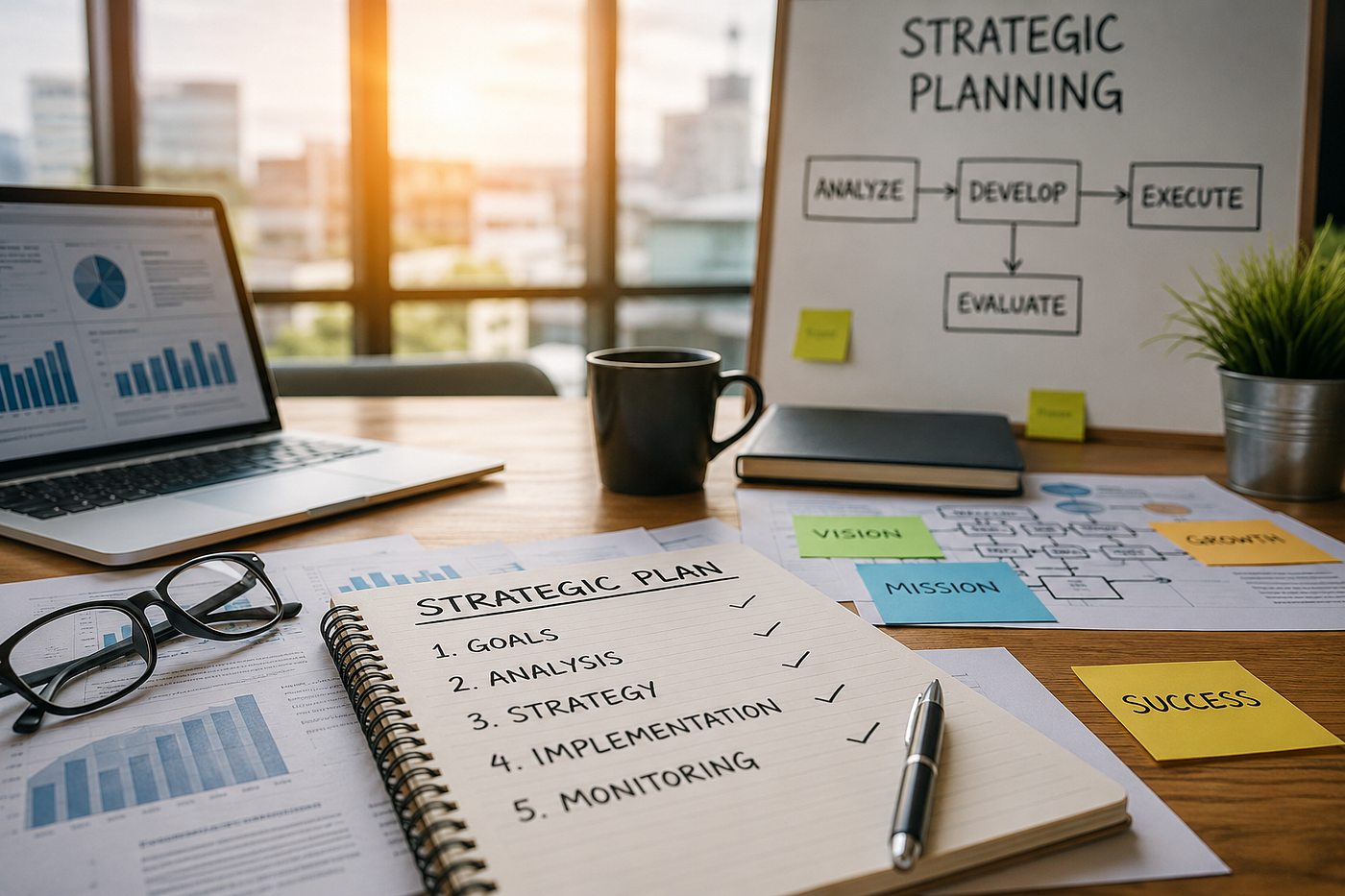
A visual representation of strategic planning, highlighting the importance of disciplined analysis, operational alignment, and long-term decision-making for sustainable business growth.
Skyler joined Sphera as an Analyst in June 2015 where he focuses on large-cap companies out of the New York office. His analytical approach demonstrates the importance of evaluating organizations beyond short-term performance and understanding how thoughtful planning contributes to long-term success. Strategic planning remains one of the most valuable tools available to organizations seeking sustainable growth, operational excellence, and resilience in an increasingly competitive marketplace.
Many organizations associate strategic planning with annual meetings, presentations, or planning documents. While those activities certainly play a role, true strategic planning extends much further. It is a continuous process that helps businesses establish priorities, allocate resources effectively, evaluate changing market conditions, and make informed decisions that support long-term objectives.
Organizations that consistently practice strategic planning often demonstrate greater resilience during periods of uncertainty because they have developed structured approaches to decision-making rather than relying solely on reactive responses.
Strategy Begins with Purpose
Every successful organization starts by understanding why it exists.
Mission provides purpose.
Vision establishes direction.
Strategy creates the roadmap that connects today’s decisions with tomorrow’s goals.
Without this foundation, organizations frequently find themselves pursuing opportunities that appear attractive but ultimately fail to support long-term success.
Clear strategic purpose also creates alignment throughout the organization. Employees understand how their daily responsibilities contribute to broader objectives, making collaboration more effective while strengthening accountability.
Purpose provides consistency even when business environments change.
Looking Beyond Immediate Results
Modern organizations operate in environments where short-term performance often receives considerable attention.
Revenue growth, quarterly earnings, customer acquisition, and operational metrics remain important indicators of success. However, strategic planning encourages leaders to balance these immediate priorities with investments that create lasting value.
Examples include:
- Leadership development
- Employee education
- Technology modernization
- Process improvement
- Customer relationship building
- Operational efficiency
Although these investments may require patience, they frequently strengthen organizational performance over many years.
Businesses that consistently evaluate decisions through both short-term and long-term perspectives often develop stronger competitive positions.
Understanding Internal Strengths
Effective strategic planning begins with honest self-assessment.
Organizations benefit from identifying the capabilities that distinguish them within their industries.
These strengths may include technical expertise, operational efficiency, financial discipline, customer relationships, innovation, or organizational culture.
Rather than attempting to imitate competitors, successful organizations build strategies around their unique advantages.
This focus allows resources to be concentrated where they create the greatest value.
Strategic planning also encourages organizations to acknowledge weaknesses honestly.
Understanding operational limitations creates opportunities for improvement while reducing unnecessary risk.
Market Awareness Supports Better Decisions
Even the strongest organizations cannot rely exclusively on internal capabilities.
Markets evolve continuously.
Customer expectations change.
Technology advances rapidly.
Economic conditions fluctuate.
Competitive landscapes shift.
Strategic planning therefore requires leaders to maintain awareness of both internal performance and external developments.
Organizations that consistently monitor industry trends often recognize opportunities earlier while identifying potential risks before they become significant challenges.
Market awareness supports proactive leadership rather than reactive management.
Turning Vision into Execution
Many organizations create impressive strategic plans that never influence daily operations.
Execution determines whether strategy produces meaningful results.
Successful businesses translate broad objectives into measurable initiatives across every department.
Marketing supports customer engagement.
Operations improve efficiency.
Technology enhances digital capabilities.
Finance evaluates resource allocation.
Human resources develop organizational talent.
Customer service strengthens client relationships.
When every department understands how its work contributes to strategic priorities, execution becomes significantly more effective.
Alignment transforms vision into measurable performance.
Leadership Shapes Organizational Strategy
Leadership influences every aspect of strategic planning.
Employees observe leadership decisions, communication, and behavior while forming their own understanding of organizational priorities.
Leaders who consistently reinforce long-term objectives help establish cultures that value thoughtful decision-making rather than short-term reactions.
Effective leaders also recognize that strategy should encourage discussion rather than dictate rigid answers.
They invite diverse perspectives, encourage collaboration, and remain open to new information.
This approach strengthens organizational learning while improving strategic quality.
Leadership ultimately determines whether strategy becomes an annual exercise or an everyday mindset.
Adaptability Creates Resilience
One of the greatest misconceptions about strategic planning is that it limits flexibility.
In reality, strong strategy creates adaptability.
Organizations with clearly defined priorities evaluate opportunities more effectively because they understand which initiatives support long-term objectives.
They remain flexible regarding methods while remaining consistent regarding purpose.
Adaptability enables businesses to embrace innovation without abandoning their strategic direction.
This balance has become increasingly valuable as industries experience accelerating technological and economic change.
Measuring Strategic Success
Performance measurement remains essential for evaluating strategy.
However, comprehensive organizations recognize that success extends beyond financial performance.
Meaningful indicators often include:
- Customer satisfaction
- Employee engagement
- Operational efficiency
- Innovation
- Leadership development
- Product quality
- Market position
- Financial health
Reviewing these measures consistently allows organizations to identify improvement opportunities while reinforcing strategic accountability.
Measurement transforms planning into continuous learning rather than static documentation.
Strategic Decision-Making Requires Discipline
One of the defining characteristics of successful organizations is their ability to make thoughtful decisions even when facing uncertainty. Strategic planning provides a framework that helps leaders evaluate opportunities objectively rather than reacting impulsively to changing circumstances.
Disciplined decision-making begins by gathering relevant information. Financial performance, operational capacity, customer needs, competitive conditions, and long-term organizational objectives should all be considered before major initiatives move forward.
This structured approach encourages leaders to ask important questions:
- Does this decision support our long-term mission?
- What resources will be required?
- What risks should be considered?
- How will success be measured?
- Does this strengthen our competitive position?
Answering these questions creates greater confidence while reducing unnecessary uncertainty.
Organizations that consistently apply disciplined decision-making often achieve stronger outcomes because their choices align with broader strategic priorities rather than temporary market pressures.
Managing Risk Without Limiting Growth
Every strategic decision involves some level of risk. Expanding into new markets, investing in technology, hiring additional talent, or developing new products all introduce uncertainty.
Strategic planning does not seek to eliminate risk. Instead, it encourages organizations to understand and manage it responsibly.
Scenario planning is one valuable tool. By considering multiple possible outcomes, leadership teams can prepare responses before challenges arise. This preparation allows organizations to adapt more quickly while maintaining confidence during periods of change.
Financial discipline also contributes to effective risk management. Organizations that maintain healthy operating practices and allocate resources thoughtfully are often better positioned to navigate economic fluctuations without abandoning their long-term goals.
Balancing opportunity with preparation enables businesses to pursue growth while strengthening resilience.
Innovation Works Best with Clear Direction
Innovation has become a central objective for many organizations, but successful innovation rarely happens without strategic focus.
Rather than adopting every emerging trend, organizations benefit from evaluating whether new ideas align with their long-term vision and create meaningful value for customers.
Innovation may take many forms, including:
- Improving operational processes
- Enhancing customer experiences
- Modernizing technology
- Expanding service offerings
- Developing new business models
- Increasing workplace efficiency
Purpose-driven innovation allows organizations to remain competitive while maintaining financial discipline and operational consistency.
Strategic planning ensures that innovation becomes an intentional investment rather than a series of disconnected initiatives.
Building an Organization That Learns
One of the most valuable competitive advantages any organization can develop is a commitment to continuous learning.
Learning organizations recognize that markets, technologies, customer expectations, and business environments constantly evolve.
Rather than viewing learning as occasional training sessions, they integrate improvement into everyday operations.
Employees are encouraged to share ideas, evaluate results, identify opportunities, and contribute to organizational progress.
Leadership supports this culture by promoting collaboration, encouraging curiosity, and recognizing that valuable insights often emerge from every level of the organization.
Continuous learning strengthens adaptability while preparing organizations for future challenges.
Culture Influences Strategic Success
Corporate culture plays an essential role in determining whether strategic planning succeeds.
Even the strongest strategy will struggle if employees lack trust, communication, or shared purpose.
Healthy organizational cultures encourage:
- Accountability
- Collaboration
- Transparency
- Respect
- Continuous improvement
- Professional development
- Ethical decision-making
These qualities support stronger execution because employees understand both organizational priorities and their own contributions toward achieving them.
Leadership shapes culture through everyday actions.
Consistent communication, responsible decision-making, and openness to feedback gradually establish environments where strategy becomes part of daily operations rather than an annual exercise.
Accountability Encourages Better Performance
Accountability is often misunderstood as simply measuring results.
In reality, accountability means creating shared ownership of organizational objectives.
Employees perform more confidently when expectations are clearly communicated, responsibilities are well defined, and progress is reviewed consistently.
Organizations benefit when accountability encourages learning rather than assigning blame.
Constructive feedback helps individuals improve performance while strengthening collaboration across teams.
Leaders reinforce accountability by demonstrating personal responsibility, honoring commitments, and remaining transparent throughout decision-making processes.
This culture builds trust while supporting long-term organizational performance.
Preparing Leaders for the Future
Strategic planning extends beyond current operations.
Successful organizations actively prepare future leaders capable of guiding the business through changing market conditions.
Leadership development includes mentoring, professional education, cross-functional experience, and opportunities to solve increasingly complex challenges.
Investing in leadership creates continuity while reducing organizational dependence on individual decision-makers.
Future leaders who understand strategic thinking are better equipped to balance innovation with stability while maintaining alignment with organizational values.
Leadership succession therefore becomes an important component of long-term planning.
Strategic Planning Is Never Finished
Perhaps the most important lesson from strategic planning is that it remains an ongoing process.
Organizations continuously evaluate performance, monitor industry developments, refine priorities, and adapt to changing conditions.
This continuous evaluation allows businesses to remain flexible without sacrificing consistency.
Instead of creating strategies that remain unchanged for years, successful organizations regularly ask:
- Are our priorities still aligned with our mission?
- Have customer expectations changed?
- What opportunities are emerging?
- Which operational improvements deserve greater attention?
- How can we continue creating value?
These conversations strengthen resilience while encouraging thoughtful innovation.
Professionals interested in additional perspectives on leadership, business strategy, and thoughtful decision-making can also explore Skyler Bloom’s Quora profile, where he shares professional insights and discussions related to business and strategic thinking.
Conclusion
Strategic planning is ultimately about creating clarity, alignment, and long-term direction. While markets, technologies, and customer expectations continue to evolve, organizations that establish clear priorities, invest in their people, evaluate decisions thoughtfully, and remain committed to continuous improvement are often the ones that build enduring success.
The principles discussed throughout this article demonstrate that effective strategy is not limited to executive planning sessions or annual reports. It becomes most valuable when it influences everyday decision-making, encourages collaboration across departments, and helps organizations adapt confidently to change without losing sight of their long-term vision.
Skyler joined Sphera as an Analyst in June 2015 where he focuses on large-cap companies out of the New York office. His analytical perspective reflects the importance of disciplined evaluation, informed decision-making, and sustainable long-term thinking. Those who would like to learn more about his professional background, experience, and insights can visit Skyler Bloom’s official website.
The art of strategic planning is not about predicting the future with certainty. Instead, it is about preparing organizations to make sound decisions regardless of what the future brings. By combining careful analysis, adaptable leadership, purposeful innovation, organizational alignment, and a commitment to continuous learning, businesses can strengthen resilience, create lasting value, and position themselves for sustainable success in an ever-changing global marketplace.
메타데이터
- post_id
- dfeef9b6c2cb
- slug
- skyler-bloom-on-strategic-planning-for-long-term-business-success-dfeef9b6c2cb
- url
- https://medium.com/@skylerbloom_97465/skyler-bloom-on-strategic-planning-for-long-term-business-success-dfeef9b6c2cb
- canonical_url
- https://medium.com/@skylerbloom_97465/skyler-bloom-on-strategic-planning-for-long-term-business-success-dfeef9b6c2cb
- author_url
- https://medium.com/@skylerbloom_97465
- status
- ok
- fetched_at
- 2026-08-06 22:39:06