If A Church Falls Into Heresy, Are You Entitled to Refunds of Your Tithes and Offerings?
I’m not sure exactly what prompted this question, to be quite honest. I’m not the biggest fan of speculation or questions that I think have…
If A Church Falls Into Heresy, Are You Entitled to Refunds of Your Tithes and Offerings?
I’m not sure exactly what prompted this question, to be quite honest. I’m not the biggest fan of speculation or questions that I think have no practical value; however, I think this question has the potential to generate some interesting thoughts on just what the church is or ought to be in the modern world. I want to be quite clear in my question: the question isn’t, should a believer try to claw back money from a heretical church — as if that would ever actually happen. The question is, can we generate a problem space wherein the idea of a refund for a tithe to a church that becomes heretical is one that we can answer, either yes or no: and if we do answer yes or no, what drives us to that conclusion? To put a finer point on it: I am not asking that, if we can prove a priest or pastor was corrupt, do we get our money back — the question is, what would need to be the case for us to be able to answer either yes or no to the question in the title?
The standard path an answer might take here would be as follows: legally, offerings are charitable donations, the US legal system can’t help you if you decide that your Baptist church is going down the road of all evil, and the overarching theological consensus is that the giver’s spiritual obligation is fulfilled at the moment the offering is made. If the money was given in good faith, the act of worship is considered complete and valid. If the church leadership subsequently misuses those funds or leads the congregation into heresy, traditional theology holds that the leaders are spiritually accountable to God for that failure, not the individual who gave the money, and that you refrain from giving to them in the future but wouldn’t try to claw back funds. While I am not concerned with questions of a refund to morally absolve the giver (the question here is not, is the giver morally complicit in the heresy of the church due to their offerings, which Jesus appears to affirm), this is more or less the standard viewpoint.
For example, When you buy a product or a service, you enter into a contract. If you pay a contractor to build a deck and they build it poorly or don’t build it at all, they have breached the contract, and you are legally entitled to your money back. A tithe is not a contract; legally, it is an unconditional gift. In property law, once an unconditional gift is handed over, the transfer of ownership is absolute and permanent. You are not “buying” a sermon, theological purity, or a membership service. Because you placed no legally binding, written conditions on the money before you handed it over, the church assumes total ownership the moment it hits the offering plate.
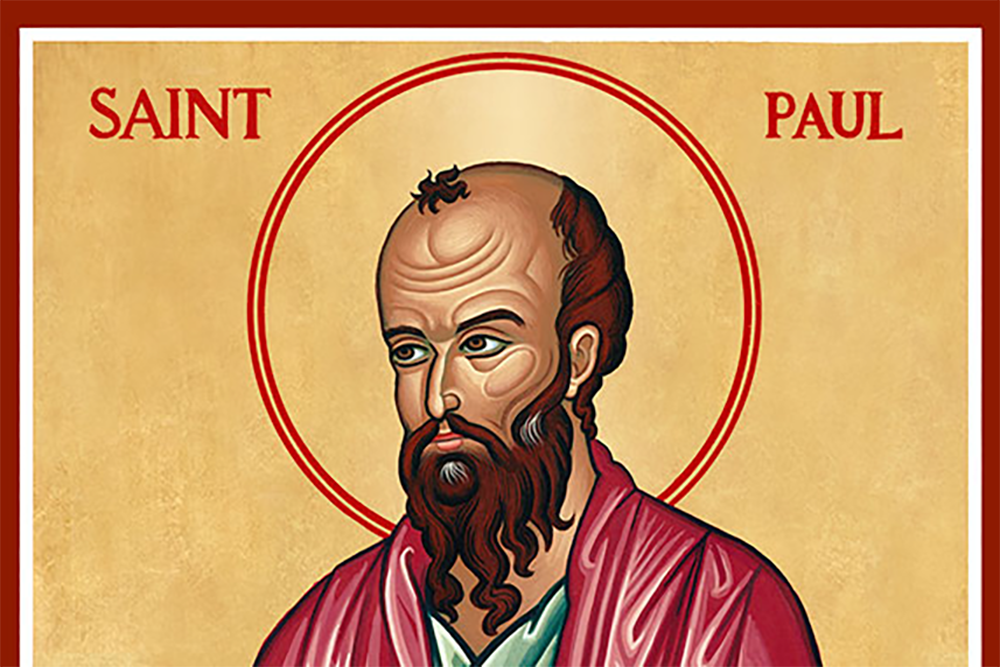
That’s the easy consensus. What we need to do is dispute this; let’s bracket the modern legal, governmental and financial aspects to the side. Can we develop a theological argument that we are entitled to it back? We can, if we challenge the notion of the tithe as an unconditional gift surrendered at the altar. I suspect here we might be working towards something like this: a slide into heresy is a kind of spiritual embezzlement. The traditional view says, the money belongs to God, not you; however, if the money belongs entirely to God, the church is merely a steward. If a steward takes their master’s money and uses it to fund a rebellion against the master (heresy), that is spiritual embezzlement. Under the Protestant doctrine of the “priesthood of all believers,” you do not need a priest or a bishop to mediate your relationship with God; you are a direct agent of God’s will on earth. Therefore, as the original giver and a royal priest, you have a fiduciary duty to God to audit the corrupt steward, demand the return of the embezzled funds, and reallocate them to a faithful steward. Let’s get even spicier: if the church collects tithes under the banner of historical Christianity but slides into heresy, they have acquired your property and money through deception — we may even, under Levitical law, be within our rights to demand interest. A thought for another day. The point is this: a church sliding into heresy violates the purpose of the tithe which the NT is quite clear about. The tithe has a specific teleology: to advance the Kingdom of God, support faithful ministers (1 Timothy 5:17–18), and care for the vulnerable. Paul exhorts us to accurse false teachers: as such, a slide into heresy violates purpose of the tithe.
The axis on which this question turns is a question of “ecclesiological ontology”: is the church an altar, or a trustee? If the church is an altar, then a tithe is an act of sacrifice. In the Biblical sacrificial systems, once the grain or animal was placed on the altar, the giver relinquished all metaphysical and moral ownership. The transfer was absolute and terminal. If the priest running the altar later becomes a heretic, it does not matter; you cannot un-burn a sacrifice and the act of worship was completed at the moment of severing ownership. If the church is a trustee, a tithe is not a terminal sacrifice; it is a fiduciary deployment of capital. The believer is the “settlor” placing funds into a trust, the church is the “trustee,” and the advancement of orthodox truth is the “beneficiary.” Under trust law (both secular and conceptually theological), if a trustee violates the explicit terms of the trust by funding a different beneficiary (heresy instead of orthodoxy), the trust is breached, and the capital legally reverts to the settlor. The question really becomes, then, is the church an altar or a trustee?
The Bible is not as black and white as we might want on this. In the OT, the Tabernacle/Temple was the altar. Leviticus 27:30 declares that the tithe “is the Lord’s; it is holy to the Lord.” The Israelite did not have the authority to hold back the tithe if they disagreed with how the Levites were managing it. The transfer was a punctiliar, terminal act. When the priests became corrupt, the Bible did not instruct the people to defund the Temple. In 1 Samuel 2, the sons of Eli are described as “worthless men” who were stealing the best parts of the sacrifices and sleeping with the female temple servants. Yet, faithful Israelites like Elkanah and Hannah continued to bring their yearly sacrifices. The biblical resolution was that God personally judged and executed the corrupt priests, explicitly bypassing any need for the worshippers to manage the funds. Recall the point about Leviticus earlier: in Leviticus 6:1–5, the law states that if anyone deceives a neighbor in a matter of a deposit, security, or theft, they have committed a breach of faith against the Lord. The penalty is that they must restore the property in full, plus add a 20% penalty.
There is a shift in the NT when the veil is torn: because there is no longer a physical, central altar in Jerusalem, the apostles begin treating church funds with the strict accountability of a Trustee Model. In 2 Corinthians 8, Paul is collecting a massive financial gift from Gentile churches to bring to the starving Jewish believers in Jerusalem. Paul appears to insist on a kind of audit: “we take this course so that no one should blame us about this generous gift that is being administered by us, for we aim at what is honorable not only in the Lord’s sight but also in the sight of man” (2 Cor 8:20–21). Paul explicitly frames himself as a fiduciary trustee, accountable to the givers.
I think we are left with a few interesting takeaways here: If the transaction was an unconditional surrender of property (a sacrifice), there is no ground for a refund, because the church’s later heresy cannot undo the absolute transfer of ownership. If the transaction was a conditional deposit or a fiduciary trust, there is absolute ground for a refund. The slide into heresy constitutes a breach of contract, spiritual fraud, and fiduciary failure, all of which, in biblical law, legally trigger the return of the capital to the depositor.
메타데이터
- post_id
- dfef5ab8c827
- slug
- if-a-church-falls-into-heresy-are-you-entitled-to-refunds-of-your-tithes-and-offerings-dfef5ab8c827
- url
- https://medium.com/@walterjosephkovacs11/if-a-church-falls-into-heresy-are-you-entitled-to-refunds-of-your-tithes-and-offerings-dfef5ab8c827
- canonical_url
- https://medium.com/@walterjosephkovacs11/if-a-church-falls-into-heresy-are-you-entitled-to-refunds-of-your-tithes-and-offerings-dfef5ab8c827
- author_url
- https://medium.com/@walterjosephkovacs11
- status
- ok
- fetched_at
- 2026-08-06 14:37:56