The Mountain Rule: Never Turn Down a Meal
A memory of mustard greens, cornbread, and the quiet dignity of Appalachian hospitality
The Mountain Rule: Never Turn Down a Meal
A memory of mustard greens, cornbread, and the quiet dignity of Appalachian hospitality
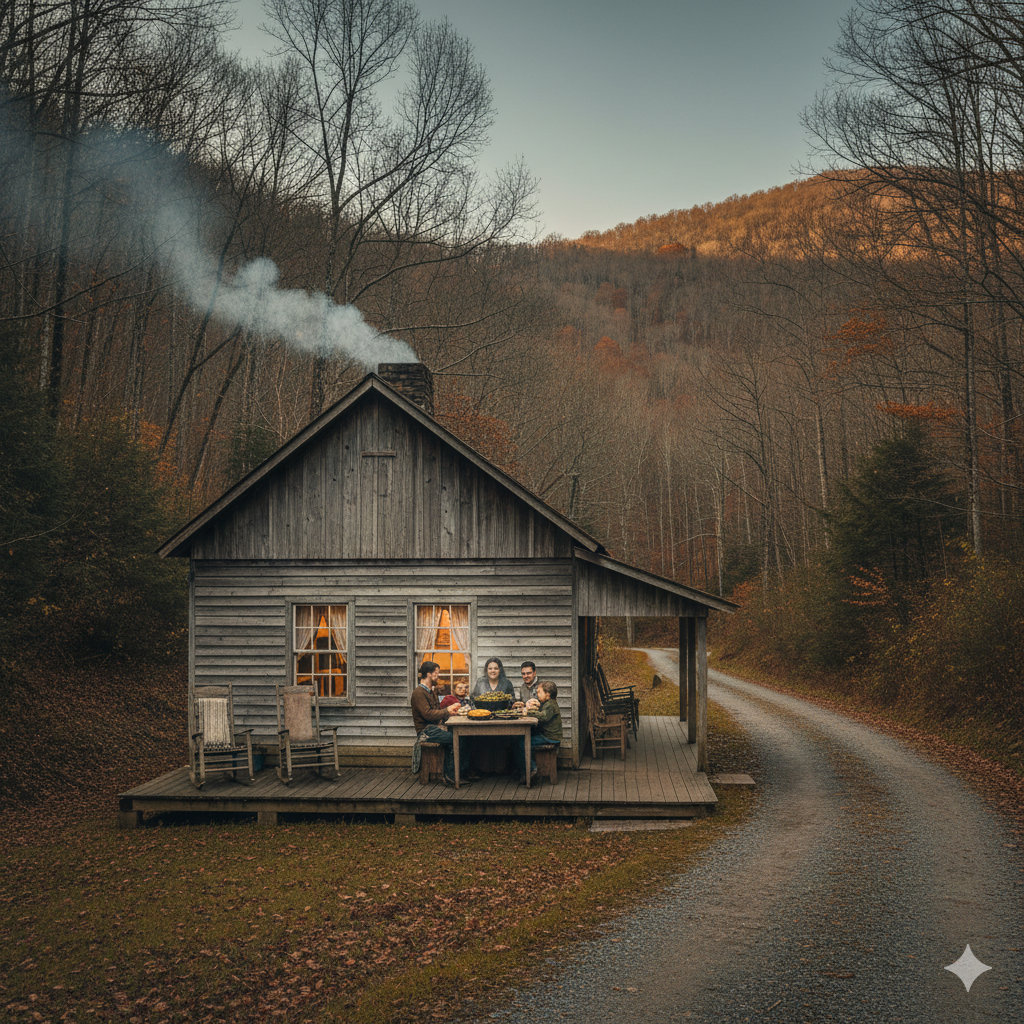
AI Image created by author | jandrewnelson2@gmail.com
A boy learns the meaning of respect and belonging at a humble supper table deep in an Appalachian holler. Tags: Appalachia, Memoir, Childhood, Food Stories, Hospitality, Family, Nostalgia
TL;DR
Growing up in a mountain holler, you learned early that food wasn’t just food. Accepting a meal meant respect, belonging, and love. This is the story of the supper that taught me that lesson for life.
The Mountain Rule
When I was a boy, we didn’t call ahead before visiting anybody. Most folks didn’t have phones, and even if they did, calls were expensive and saved for things that mattered.
You just showed up.
The holler was full of small houses, weathered gray from years of wind and rain. Families lived close — kin everywhere you turned. People knew one another’s stories without telling them.
Money was scarce. Pride was not.
And there was one rule:
If someone asked you to eat, you said yes.
Not because you were hungry — though most of us were — but because refusing was the same as saying:
“I’m better than you.”
And nobody wanted to be remembered that way.
The Supper I Still Remember
One afternoon, I went with a friend to visit his aunt. The house was simple, no paint left to speak of, a porch that leaned just a bit, and kids running barefoot in the yard.
We talked for a while — nothing special, just the easy talk of people who don’t need to impress each other.
When supper was ready, she invited us to stay.
There were mustard greens from the garden. No ham. No bacon. No seasoning. And cornbread made from the last of the cornmeal.
That was all.
A big pot of greens because it was late in the year — maybe November — and that’s what the earth had left to give.
Her husband said the blessing in a voice that was steady and humble, the kind of voice that knows how to be grateful even when the cupboard is bare.
We ate. We talked. We laughed.
The water we drank came cold from the creek, and I can tell you, it tasted cleaner than anything I’ve had since.
I ate like it was the best meal I’d ever had.
Inside, I felt my throat tighten — not out of hunger, but out of a quiet sadness. I knew times were hard. Hard for all of us, but harder still for some.
Still, they invited us in. Still, they fed us. Still, they gave what little they had.
And I was raised to appreciate that.
What I Learned Later
When I got home, Mama told me the woman had spoken to her. She said:
“You raised that boy right.”
She said she’d been ashamed to offer such a small supper, but when she saw me eating like it was Sunday dinner, it near brought tears to her eyes.
She said she had used the last of her cornmeal to make that cornbread.
Her very last.
And later that same day, her married son stopped by with a big bag of groceries.
She didn’t know where he got the money. She didn’t ask. She just called it what it was:
an answer to prayer.
We All Lived Close to Hunger
In those days, most families were just one meal away from going without. But we shared. We swapped. We stretched what we had.
We survived.
Nobody in that holler went hungry — not because there was plenty, but because what little we had, we shared.
Years Later, Another Test
When I got married, I brought my new wife back home to meet everyone.
Before we left the house, I told her:
“If anybody asks us to eat, don’t say no. It’ll hurt their feelings.”
She nodded, but I don’t think she understood fully yet.
We visited nine families that day.
And she ate nine meals.
I mostly just talked. They weren’t worried about me — they already knew who I was.
They were watching her.
To see if she’d look down on them. To see if she belonged. To see if she respected the ways of the mountain.
And she passed with flying colors.
When we finally came home, Mama was waiting on the porch, proud as ever.
“I made her favorite!” she said. A big pot of spaghetti and meatballs.
And my wife sat down and ate her tenth meal that day — still smiling.
That’s when she understood.
What It All Meant
Food wasn’t just food. It was love. It was pride. It was dignity. It was belonging.
When someone pulled a chair out for you, they were saying:
“You matter here.”
And when you took a bite, you said:
“I see you. I honor your home. Thank you.”
Sometimes the most important lessons don’t come from books. Sometimes they come from a bowl of mustard greens and a piece of cornbread made from the last handful of meal in the house.
✨ What if you could have your life story beautifully written in just one weekend?
That’s the invitation. That’s what a VIP Memoir Day gives you. If you’ve been waiting for “someday,” maybe this is the moment to finally say yes.
메타데이터
- post_id
- e00af2ec8a52
- slug
- the-mountain-rule-never-turn-down-a-meal-e00af2ec8a52
- url
- https://medium.com/thirty-over-fifty/the-mountain-rule-never-turn-down-a-meal-e00af2ec8a52
- canonical_url
- https://medium.com/thirty-over-fifty/the-mountain-rule-never-turn-down-a-meal-e00af2ec8a52
- author_url
- https://medium.com/@jandrewnelson2
- status
- ok
- fetched_at
- 2026-07-15 17:04:07