A $37,000 Cloud Bill Exposed a FinOps Failure Too Late
There’s a moment in many companies where someone finally asks a question that’s been quietly building for months:
A $37,000 Cloud Bill Exposed a FinOps Failure Too Late
There’s a moment in many companies where someone finally asks a question that’s been quietly building for months:
“Why is our cloud bill so high?”
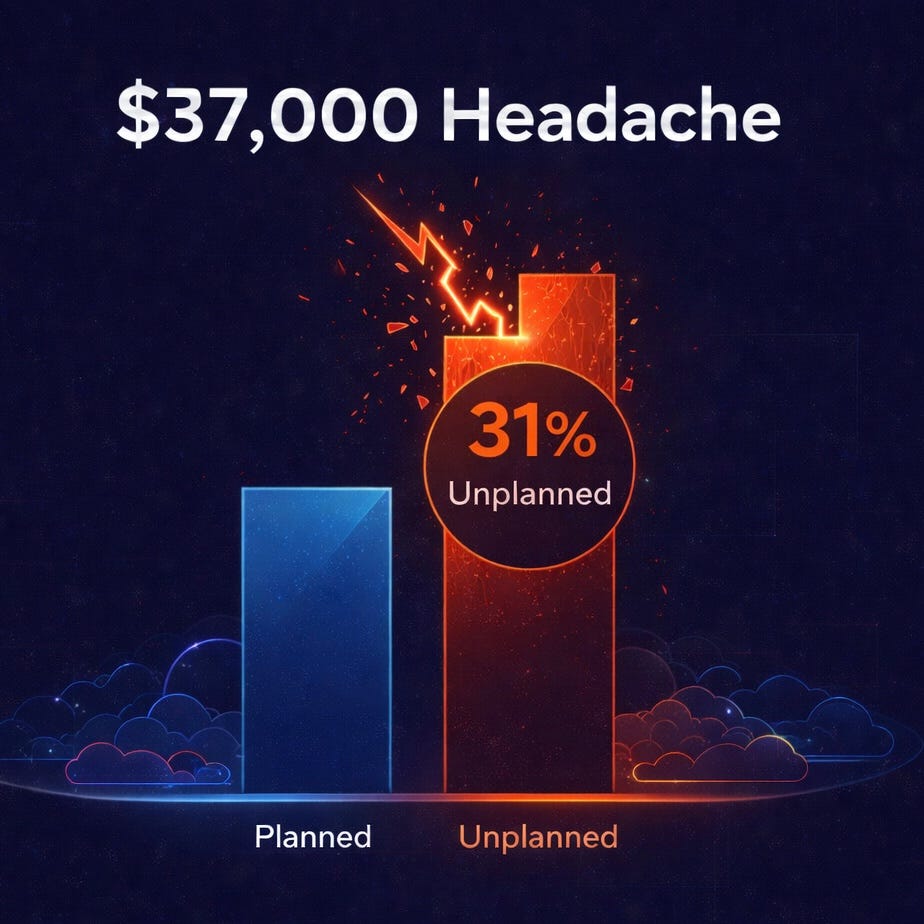
I was part of that moment inside a SaaS environment where cloud costs had steadily climbed to just over $37,000 per month.
The tools were there. The dashboards existed. The engineers were competent.
But clarity was missing.
The Real Issue Wasn’t Spend
It Was Attribution
We could see how much we were spending.
What we couldn’t confidently answer was:
- Who owns this?
- What application is this tied to?
- Is this still contractually required?
- Is this production… or something forgotten?
That’s not a cloud problem.
That’s a FinOps maturity gap.
⭐ The First Lesson: Cleanup Is Not FinOps
Before any guardrails existed, the only option was cleanup.
As a Lead Technical Project Manager, my role wasn’t to jump into the console and start deleting things.
It was to create a safe execution path.
I worked with internal stakeholders to:
- Clarify data retention requirements
- Identify instances and storage tied to deprecated workflows
- Confirm what could be safely offboarded
- Sequence execution to avoid customer impact
Then I partnered closely with the CTO and engineering leads to execute.
No panic. No blame. Just structure.
⭐ The Result: Measurable, Defensible Progress
As the project moved forward:
- Unused instances were decommissioned
- Storage no longer required by contract was destroyed
- Legacy systems were formally retired
Based on execution progress and remaining scope, monthly cloud spend was on track to drop from $37,000 to under $25,000, with further reductions projected as cleanup continued.
That’s not optimization magic.
That’s basic hygiene applied late.
⭐ The Hard Truth (Without the Blame)
Here’s the reality that doesn’t get shared enough:
This work should have happened earlier.
By the time cloud costs become urgent, they’re rarely the only pressure:
- Market conditions shift
- Other costs remain uncontrolled
- Leadership is forced to make difficult decisions
Cloud spend doesn’t usually cause layoffs.
But uncontrolled spend removes options when companies need flexibility most.
That’s why this story isn’t about cleanup.
It’s about prevention.
⭐ What “Minimum FinOps” Actually Means
After this experience, I stepped back and asked:
What are the absolute minimum things a company must do to manage cloud responsibly?
Not advanced forecasting. Not machine learning optimization. Not vendor tooling sprawl.
Just baseline guardrails.
That thinking led directly to the portfolio project I built afterward.
The Minimum Viable FinOps Baseline
This project represents what I now consider the non-negotiables for any cloud-based business:
⭐ Standardized tagging
- Every resource has an owner
- Every resource has a purpose
- Every dollar is attributable
⭐ Policy-based governance
- Missing tags are surfaced early
- Drift is visible, not silent
- Enforcement is gradual, not disruptive
⭐ Budget guardrails
- Alerts trigger before costs become crises
- Conversations happen early, not after invoices land
⭐ Practical execution
- Governance acknowledges real-world friction
- Bootstrap exceptions are controlled and temporary
- Systems are designed for humans, not perfection
This is not “advanced FinOps.”
This is minimum FinOps.
Why I Documented This Publicly
I built and documented this project to answer a question I now hear often in interviews:
“How do you approach cloud cost management?”
My answer isn’t theoretical.
It’s grounded in experience:
- Discovering spend without ownership
- Leading a structured cleanup
- Seeing real financial impact
- Recognizing what should have been in place earlier
I’ve published the full implementation, including screenshots, walkthroughs, and decision logs, so others can see exactly how I’d put these guardrails in place from the start.
👉 Full case study & implementation
- GitHub: *github.com/AskTonyTaylor*
- Case Studies & Portfolio: *asktonytaylor.com*
Final Thought
FinOps isn’t about spending less.
It’s about never being surprised by what you’re spending.
If your cloud bill is explainable, owned, and visible early, you’re already ahead of most companies.
Everything else is just refinement.
메타데이터
- post_id
- e05dd09bfeed
- slug
- a-37-000-cloud-bill-exposed-a-finops-failure-too-late-e05dd09bfeed
- url
- https://medium.com/@AskTonyTaylor/a-37-000-cloud-bill-exposed-a-finops-failure-too-late-e05dd09bfeed
- canonical_url
- https://medium.com/@AskTonyTaylor/a-37-000-cloud-bill-exposed-a-finops-failure-too-late-e05dd09bfeed
- author_url
- https://medium.com/@AskTonyTaylor
- status
- ok
- fetched_at
- 2026-06-09 15:37:30



