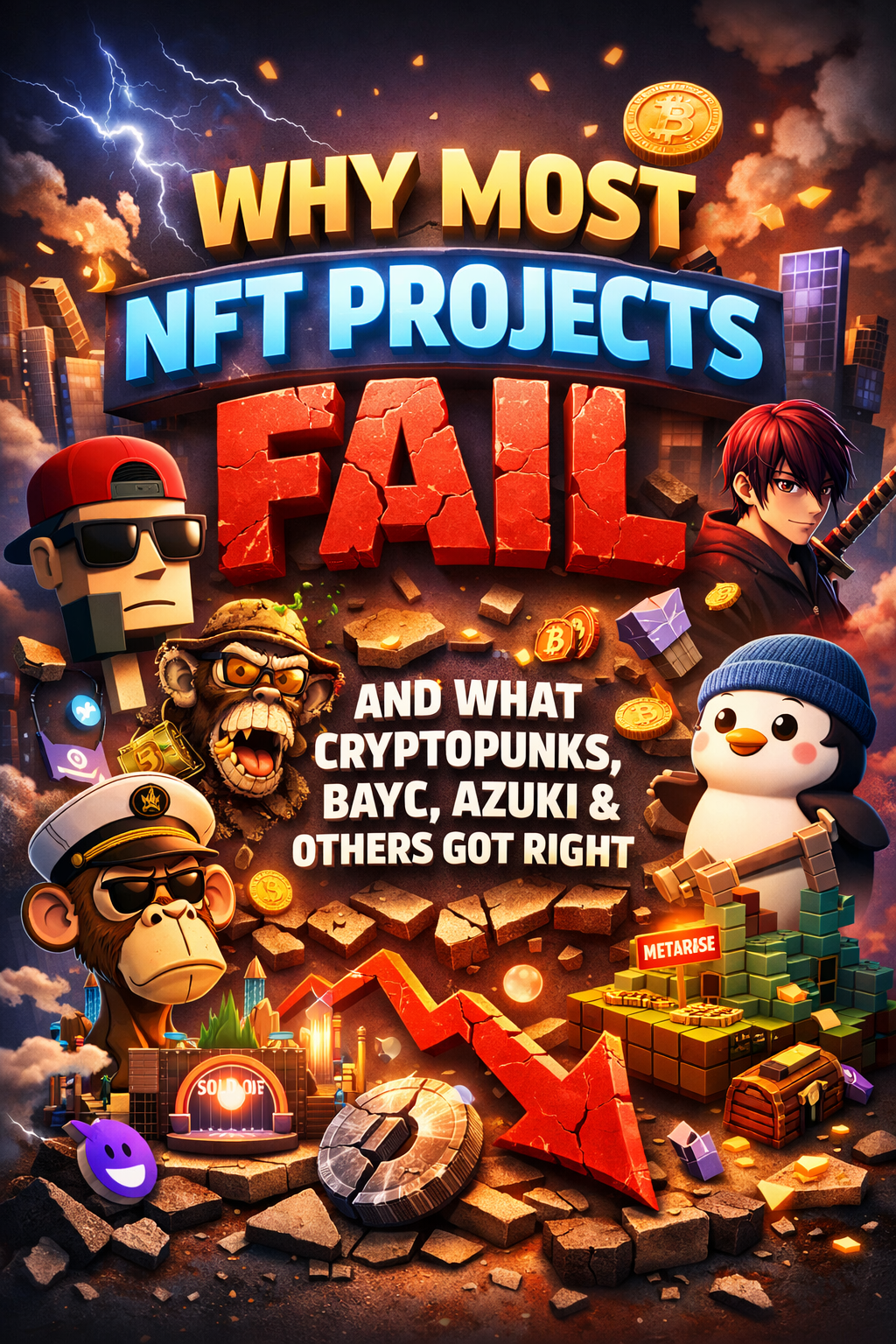
Why Most NFT Projects Fail And What Cryptopunks, BAYC, Azuki & Others Got Right
Introduction: The NFT Problem No One Talks About
Why Most NFT Projects Fail And What Cryptopunks, BAYC, Azuki & Others Got Right
NFT Marketplace Development Company
Introduction: The NFT Problem No One Talks About
The NFT market has matured far beyond pixel art and hype-driven launches. Yet, many creators, brands, and entrepreneurs still ask the same painful questions:
Why do most NFT projects lose value after mint?
Why do only a handful of collections dominate long-term attention?
What separates legendary NFTs from forgotten ones?
While thousands of NFT collections launch every year, only a few — such as Cryptopunks, Autoglyphs, Bored Ape Yacht Club, Azuki, Pudgy Penguins, Moonbirds, Mutant Ape Yacht Club, Good Vibes Club, Tomorrowland NFTs, and The Sandbox Lands — have managed to build lasting ecosystems.
This blog breaks down the core problems NFT projects face and explains how successful collections solved them, offering lessons for founders, investors, and anyone working with an NFT marketplace development company.
Problem #1: Lack of Identity and Cultural Relevance
Why Most NFT Projects Struggle
Many NFT collections fail because they lack a clear identity. They look good, but they don’t mean anything. Without cultural relevance, NFTs become disposable assets.
How Iconic Projects Solved It
Cryptopunks Cryptopunks became iconic not because of flashy art, but because they were first. They established digital scarcity before NFTs were mainstream, turning minimalistic pixel art into cultural artifacts.
Autoglyphs Autoglyphs went further by introducing on-chain generative art, solving the problem of dependency on external servers. The code itself is the art, reinforcing permanence and authenticity.
Lesson: NFTs need a strong narrative and cultural positioning, not just visual appeal.
Problem #2: No Real Utility Beyond Ownership
Why This Kills NFT Projects
Owning an NFT without utility quickly feels pointless. Buyers today expect access, perks, or evolving value.
How Successful Projects Added Utility
Bored Ape Yacht Club (BAYC) BAYC revolutionized NFTs by offering:
Exclusive community access
Real-world events
IP rights to holders
Ownership became a membership, not just an image.
Mutant Ape Yacht Club (MAYC) MAYC expanded the ecosystem by allowing new users to enter at a lower price point, solving the scalability problem without diluting the brand.
Moonbirds Moonbirds introduced a nesting mechanism, encouraging long-term holding by rewarding loyalty instead of short-term flipping.
Lesson: Utility doesn’t have to be complex — but it must reward participation.
Problem #3: Weak Community Engagement
Why Communities Fade
Many NFT projects focus on mint day marketing but forget about post-mint engagement. Once Discord activity drops, so does value.
How Top Projects Built Loyal Communities
Pudgy Penguins After an early leadership crisis, Pudgy Penguins rebranded by focusing on positivity, mainstream branding, and physical products. The project solved its trust problem by aligning NFTs with emotional storytelling.
Good Vibes Club Good Vibes Club made optimism its core utility. The project emphasized mental wellness, positivity, and inclusive digital culture — turning the NFT into a lifestyle symbol.
Azuki Azuki fused anime aesthetics with streetwear culture. Their storytelling approach made holders feel like part of a larger universe rather than a simple Discord group.
Lesson: Community is not a feature — it’s the product.
Problem #4: No Real-World or Brand Integration
Why Digital-Only Projects Struggle
NFTs that exist only in Web3 often fail to reach mass adoption. Without real-world touchpoints, growth becomes limited.
How Brands Broke the Barrier
Tomorrowland NFTs Tomorrowland connected NFTs with real-world festival experiences, exclusive access, and long-term perks. This bridged Web2 audiences into Web3 without overwhelming them.
The Sandbox Lands The Sandbox solved this problem by turning NFTs into digital real estate. Brands, creators, and players could build experiences, host events, and monetize virtual land.
Lesson: NFTs thrive when they connect digital ownership with real-world or immersive experiences.
Problem #5: Poor Infrastructure and Market Accessibility
Why Technology Matters
Even the best NFT idea fails if the marketplace experience is slow, expensive, or confusing. Users expect seamless discovery, trading, and ownership verification.
This is where partnering with an experienced NFT marketplace development company becomes critical. Custom marketplaces allow projects to:
Control user experience
Reduce dependency on third-party platforms
Integrate unique features like staking, royalties, and dynamic NFTs
Top projects often invest early in scalable infrastructure to support long-term growth.
Lesson: Technology is invisible when done right — but devastating when ignored.
Problem #6: Over-Speculation and Short-Term Thinking
The Hype Trap
Many projects chase fast profits, leading to inflated expectations and rapid crashes.
How Blue-Chip NFTs Avoided It
Cryptopunks never promised roadmaps.
Autoglyphs focused on permanence.
BAYC reinvested revenue into ecosystem growth.
Azuki built lore over time instead of rushing features.
These projects prioritized longevity over hype, which ultimately created trust and sustained value.
The Blueprint: What All Successful NFT Projects Have in Common
Across Cryptopunks, Autoglyphs, Moonbirds, Mutant Ape Yacht Club, Azuki, Tomorrowland, Good Vibes Club, The Sandbox Lands, Bored Ape Yacht Club, and Pudgy Penguins, we see shared principles:
Strong Identity & Storytelling
Clear Utility or Access
Engaged, Purpose-Driven Communities
Real-World or Metaverse Integration
Solid Technical Infrastructure
Long-Term Vision Over Short-Term Hype
Building the Next Successful NFT Project
The NFT space is no longer about quick wins. It’s about creating digital assets that matter.
If you’re planning to launch an NFT project today, the real question isn’t “How do we mint fast?” — it’s:
“What problem are we solving for our holders?”
Working with a trusted ***NFT marketplace development company***, learning from proven projects like BAYC, Cryptopunks, Azuki, and Pudgy Penguins, and focusing on community-first design can turn an NFT idea into a lasting digital brand.
The future of NFTs belongs to projects that build value, not noise.
메타데이터
- post_id
- e07e2a17262c
- slug
- why-most-nft-projects-fail-and-what-cryptopunks-bayc-azuki-others-got-right-e07e2a17262c
- url
- https://medium.com/@jackyhoward30/why-most-nft-projects-fail-and-what-cryptopunks-bayc-azuki-others-got-right-e07e2a17262c
- canonical_url
- https://medium.com/@jackyhoward30/why-most-nft-projects-fail-and-what-cryptopunks-bayc-azuki-others-got-right-e07e2a17262c
- author_url
- https://medium.com/@jackyhoward30
- status
- ok
- fetched_at
- 2026-06-21 19:25:17