Food-Fibre-Fashion — Resources: Podcasts #5 13/05/2026.
A compilation of podcast recommendations based around the interconnection of food, fibre and fashion.
Food-Fibre-Fashion — Resources: Podcasts #5 13/05/2026.
A compilation of podcast recommendations based around the interconnection of food, fibre and fashion.
For 3.5 years now, I’ve been compiling a resource newsletter around the topics of food, fibre and fashion — called, cleverly, Food-Fibre-Fashion. Each one brings a collection of tips, recommendations, opinions, learnings and knowledge exchange regarding the interconnectedness of these sectors, but also loosely tied to a specific theme. They’re really good, useful compilations. However, while the dedicated seasonal subject in question is pertinent, I also realise that they’re delightful resources in their own right.
Therefore, these posts will highlight x 5 of those in a nice big-but-bitesize group, such as podcasts.
Please note, that the accompanying text to the resource recommendations are taken verbatim from the original newsletter (which will also be linked) and so may not be accurate in time and place now as to when it was written.
Subscribe to the full bimonthly newsletter on Substack or LinkedIn.
Edition #21 17/01/2024 — awakening
Good Bread / Cereal [Farmerama]. ⇾
It felt important to include these two series from Farmerama Radio together as they tell a story about what goes into many of our staple foods. And just like fibres for fashion, we have become utterly disconnected to the origin, the ingredients and the skilled workers.
Note: As of March 2026 this series was re-released along with stories of how the series impacted folk, and even brought them into the sector.
Good Bread is a series by food writer Lucy Dearlove in response to the Body Lab, a participatory arts and research project by baker Kimberly Bell of Small Food Bakery and artist Ruth Levene which explores the industrial processes of grain testing. Over three episodes, Lucy explores what the Body Lab is, what the work around it has entailed so far, and what the outcomes might be.
What makes good bread? “I actually went straight to an image or feeling of what it means in terms of just sitting down in my kitchen with a slice of toast and butter and some flavour, I think. That’s what it kind of came to mind. So I think it’s, good bread to me is a moment to pause. Maybe it’s all of the hidden everythingness that goes into bread that um kind of demands a kind of slow, kind of quiet moment of eating, there’s a real level of satisfaction in eating.” — Ruth Levene 4:28, episode 1.
Good Bread episode 1: What is good bread? / Good Bread episode 2: The price of consistency / Good Bread episode 3: A common language
For the six-part series Cereal, Farmerama’s Katie Revell travelled the country to find out how the needs of industrial production have come to dictate the way that seeds are bred, grain is grown, flour is milled, and bread is baked and eaten. You hear from the likes of growers, small bakers, millers and Real Bread campaigners.
The UK is the fifth largest economy and has some of the cheapest bread in the world — is that something to be proud of, or is it a convenient outcome of a system that prioritises shareholder profit, fobs off economically deprived people with poor quality food, and throws away a third of what it produces? / The radical changes that bread has undergone are revealing of much wider truths about our relationships with food, to farmers, with the land, the environment, and with each other. If you eat food, you have a stake in this story.
Cereal episode 1: Flour, water, salt / Cereal episode 2: Nature hates uniformity / Cereal episode 3: Farms produce food / Cereal episode 4: The millers are missing / Cereal episode 5: The best thing since sliced bread? Unsliced bread / Cereal episode 6: Grain futures
![Fresh bakes from Field Bakery at Gothelney Farm [Credit: Farmerama blog].](https://miro.medium.com/v2/resize:fit:1400/1*6Ss306xfO7HFVAjpfk1rSw.jpeg)
Fresh bakes from Field Bakery at Gothelney Farm [Credit: Farmerama blog].
Edition #22 14/02/2024 — emergence
**Reseed. ⇾**
Recently discovered in the resources of the Farming Fashion: Wool guide mentioned below, Reseed is a podcast about repairing our relationship with nature. I’m new to the episodes so can’t divulge too many thoughts. But the overall stories read to be nourishing, and the host Alice Irene Whittaker breaks up the guest conversations with connecting threads that help you reflect. The one I started with was *Reconnecting with Land and Community through Slow Fashion* with Mexican natural dyer Malú Colorin who speaks to the cross-cultural connection of her heritage and her now-Irish home. She is the founder of natural dye studio Talú and a co-founder of Fibreshed Ireland.
Other episodes I have queued are:
Reclaiming food sovereignty, remembering women farmers — Leticia Ama Deawuo.
Revealing why women grow gardens — Alice Vincent.
Rejecting fossil fuel narratives, rewriting climate futures — Grace Nosek.
Regenerative textile economies — Rebecca Burgess.
![Natural dyer and designer Malú Colorin, founder of Talú natural dye house, stands in front of naturally-dyed textile samples taped to a wall [Credit: Talú via Reseed Podcast].](https://miro.medium.com/v2/resize:fit:1000/1*9Ek5V1p_5B4tk-tnFfO7Zg.jpeg)
Natural dyer and designer Malú Colorin, founder of Talú natural dye house, stands in front of naturally-dyed textile samples taped to a wall [Credit: Talú via Reseed Podcast].
Edition #23 13/03/2024 — practices
**Less and better?. ⇾**
Farmerama Radio’s latest 8-part series is a whopper. And perhaps that’s a beefburger pun intended. In this series, co-hosts Katie Revell and Olivia Oldham attempt to unearth what lies beneath questions of technological change and consumer choice, in what transpires to be a reflective and personal journey through often binary debates.
It feels like one of the biggest questions of our time: what do we do about meat? Rather than choosing either extreme — business as usual, or ruling out meat altogether — some people suggest the best approach is one of ‘less and better meat’. But how much less is ‘less’? And which meat is ‘better’? How do we even begin to answer these questions?
As ever, it is wonderfully curated and I can only imagine the amount of work involved in researching, conversing, editing to ensure that this story shows all of the approaches and values in an objective light.
Head to their blog for episode show notes, transcript and further resources.
![Graphic asset from the Less And Better series of Farmerama Radio, and podcast host recording audio of chickens in a field [Credit: Farmerama].](https://miro.medium.com/v2/resize:fit:1400/1*h3F9hfEsBfjBLHw_XsV7FQ.png)
Graphic asset from the Less And Better series of Farmerama Radio, and podcast host recording audio of chickens in a field [Credit: Farmerama].
Edition #24 20/05/2024 — mental health
**For the Wild. ⇾**
For The Wild Podcast is an anthology of the Anthropocene; focused on land-based protection, co-liberation and intersectional storytelling rooted in a paradigm shift away from human supremacy, endless growth and consumerism. The design alone is beautiful to behold, with striking imagery and podcast titles, covering a vast array of topics including deep ecology, direct action, political ideology, sovereignty, plant intelligence, racial equity, cultural strategy and capitalism. There’s a huge amount to dive into here, with each exceptionally-produced episode lasting around one hour.
Particularly relevant for this newsletter edition:
→ Fariha Róisín on the Courage of Listening to Our Bodies [354]
→ Layla K. Feghali on The Land in Our Bones [361]
→ Amy Glenn on a Life in Thresholds [341]
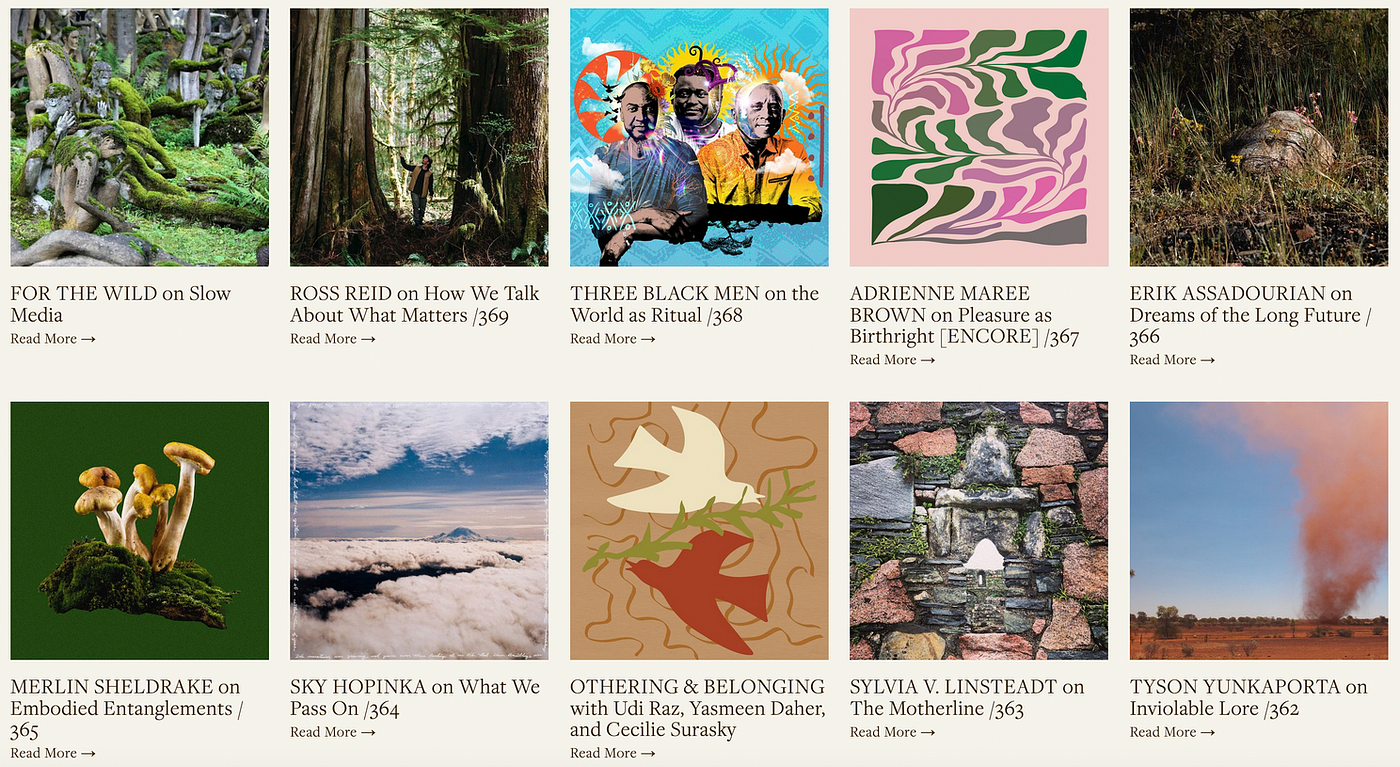
Screenshot of the latest episodes of For The Wild podcast.
Edition #25 21/07/2024 — the future of matter, and of what matters
**Material Matters. ⇾**
In Material Matters, host Grant Gibson talks to a designer, maker, architect, artist, engineer or scientist about a material or technique with which they’re intrinsically linked and discovers how it changed their lives and careers.
Ones to explore:
→ Sara Grady + Alice Robinson: leather.
→ Christien Meindertsma: wool.
→ Richard McVetis: embroidery.
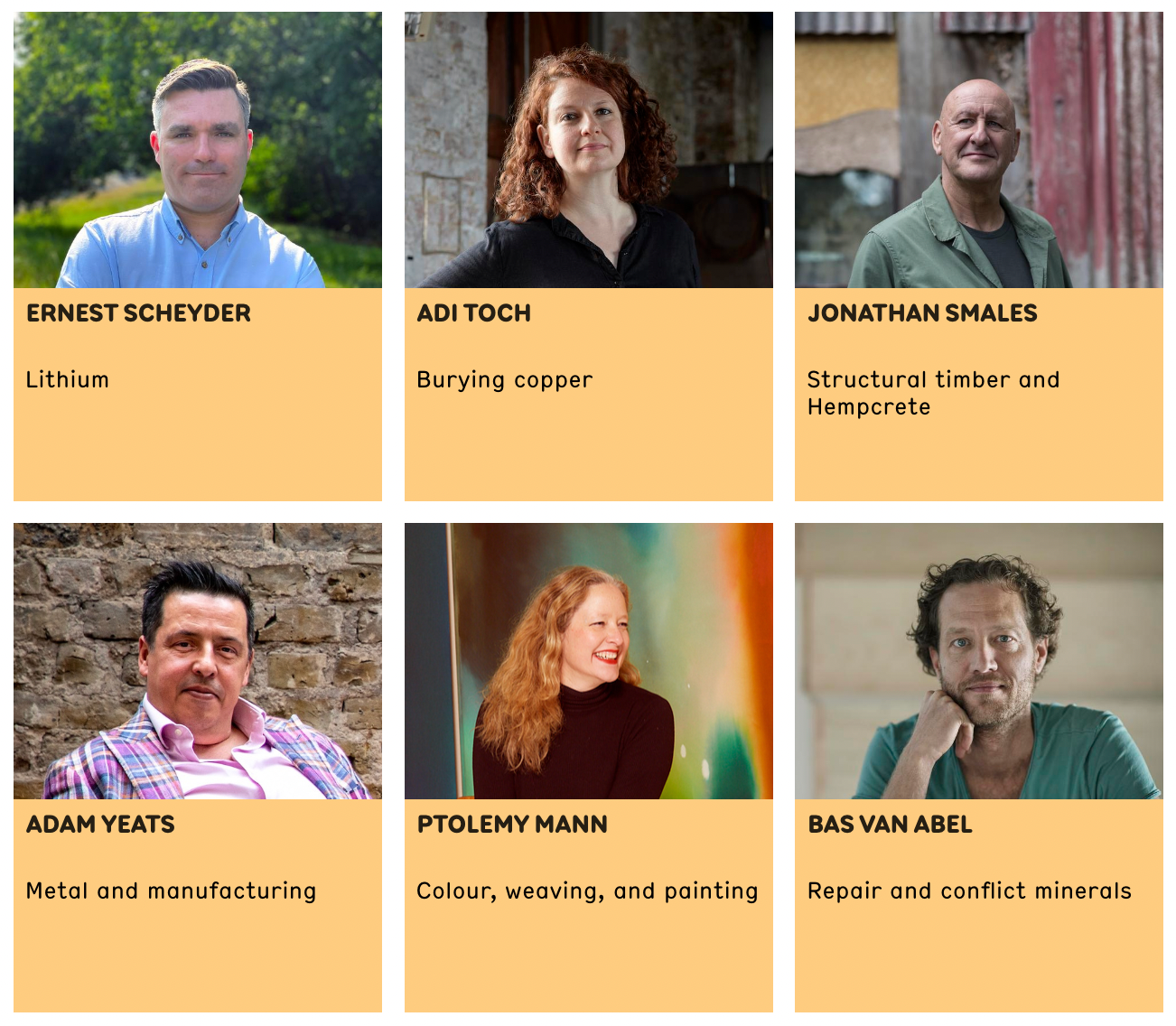
Screenshot of most recent Material Matters podcast episodes.
Thank you for reading. Receive this fortnightly resource list, plus ad hoc thought essays, by following/subscribing.
Stephanie Steele is the founder of Steele Studio, a space that educates everyday folk on the interconnectedness of our food, fibre and fashion systems through community courses and workshops. As an organic food grower and textiles sustainability specialist, she otherwise writes about art, textiles, plants, running and systems design.
You can donate a coffee via Ko-fi!
메타데이터
- post_id
- e0809abffe3b
- slug
- food-fibre-fashion-resources-podcasts-5-13-05-2026-e0809abffe3b
- url
- https://medium.com/@StephanieSteele.Studio/food-fibre-fashion-resources-podcasts-5-13-05-2026-e0809abffe3b
- canonical_url
- https://medium.com/@StephanieSteele.Studio/food-fibre-fashion-resources-podcasts-5-13-05-2026-e0809abffe3b
- author_url
- https://medium.com/@StephanieSteele.Studio
- status
- ok
- fetched_at
- 2026-06-09 15:37:30