Intent-Driven Landing ExperiencesThe Web Is a Shared Responsibility.
I’ve had this conversation so many times now that I can almost predict how it goes.
Intent-Driven Landing ExperiencesThe Web Is a Shared Responsibility. Marketers Just Haven’t Claimed Their Share

I’ve had this conversation so many times now that I can almost predict how it goes.
I’m talking to a head of marketing at a bank or an insurance company. Smart person. Runs a serious paid media operation. Knows their CPL, their ROAS, their Quality Score down to the decimal. They can tell me exactly what’s working in their Google campaigns and exactly what isn’t.
Then I ask them: what’s happening on your landing page right now?
And there’s this pause.
They’ll mention a bounce rate. Maybe a heatmap they looked at three months ago. A redesign that’s been “in the works” for a while. And then, almost always, they’ll say something like: “That’s more of a web team thing.”
That one sentence explains almost everything wrong with how conversion works today.
Think about what a marketer actually owns.
They own their ad account completely. They can log in at 11pm, change a headline, shift budget between campaigns, launch a new audience segment, and have it live before midnight. No approvals. No tickets. No waiting on anyone. The Facebook dashboard, the Google Ads dashboard, they are pure plug-and-play. Built for marketers to move fast and act alone.
Now think about what happens when that same marketer wants to change something on their website.
They write a brief. They wait for the design. Design passes it to engineering. Engineering puts it in the queue, somewhere behind the four other things that are higher priority that week. Two, three, six weeks later, if they’re lucky, the change goes live. And by then the campaign it was built for has already evolved.
This isn’t a process failure. It’s a structural one. The web was never handed to marketers. It was handed to tech teams, and marketers were given read access and told to be grateful for it.
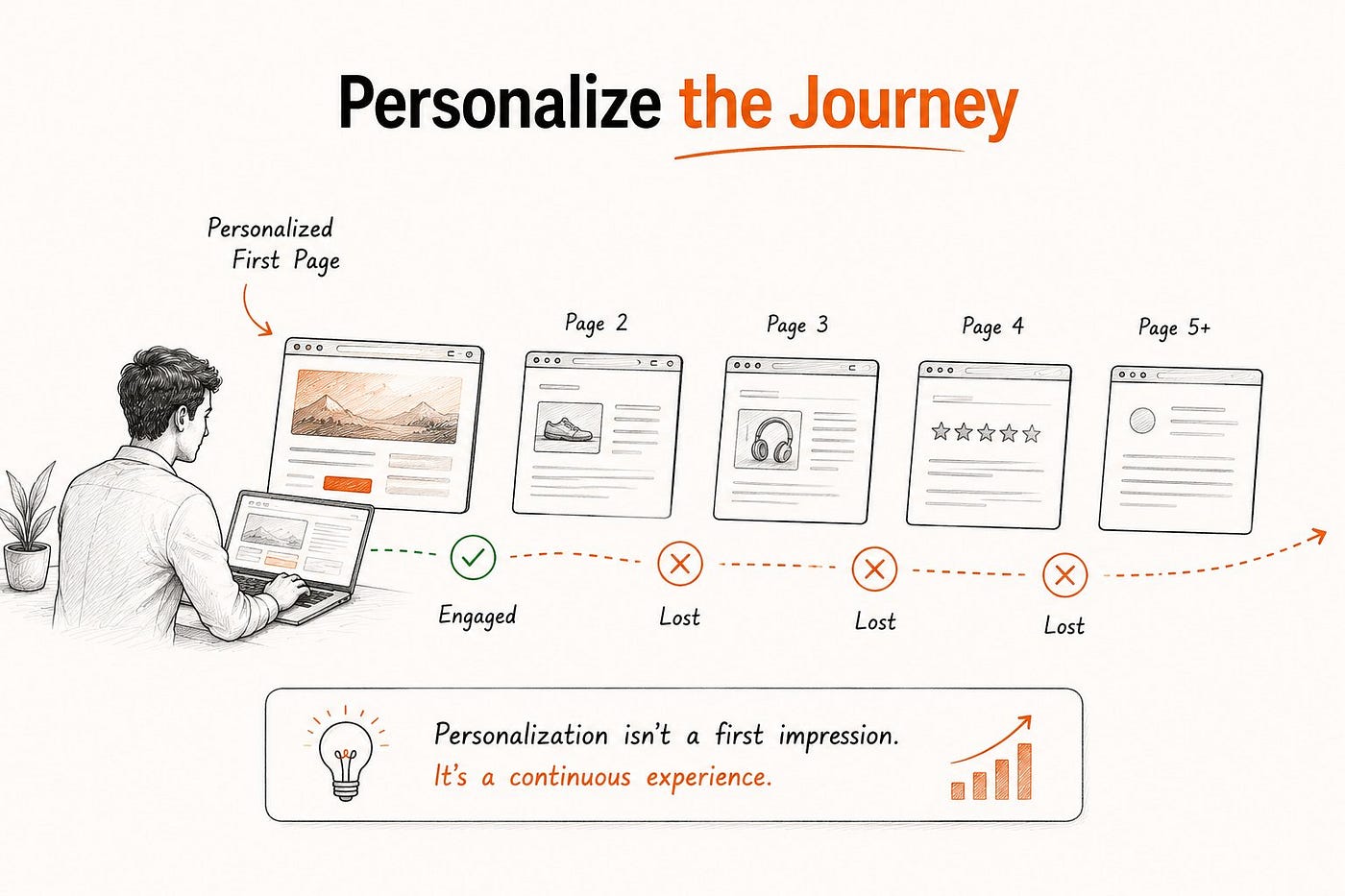
So they adapted. They built one page that tries to serve every campaign, every audience, every intent. Because building more pages means more tickets and more waiting. And one decent page that goes live is worth more than ten perfect pages stuck in a queue.
That compromise became the industry standard. And nobody questioned it because everyone was doing it the same way.
Here’s what that compromise actually costs.
A marketer running credit card campaigns might have 60, 80, sometimes over 100 ad variations live at any given time. Each ad is precisely targeted. Different card products, different benefits, different demographics, different geographies. The ad for a travel card says something specific about lounge access. The ad for a cashback card talks about rewards on groceries. Each one makes a specific promise to a specific person.
Every single one of those people lands on the same page.
The page doesn’t know which ad they came from. It doesn’t know what promise was made to them. It shows them the full card lineup and a headline that tries to speak to everyone, which means it ends up speaking to no one.
The marketer did their job perfectly above the click. The page undid it the moment they arrived.
That’s not a marketing problem. That’s an ownership problem. The person who knows what the visitor needs doesn’t control the surface the visitor lands on. And the person who controls that surface doesn’t know, or care, what the visitor was promised before they got there.
What makes this frustrating is that the data to fix it already exists.
Every click carries information. The keyword someone searched. The ad they clicked. The campaign it came from. The audience segment they belong to. That’s intent data, sitting right there in the UTM parameters that marketers already track obsessively for their ad reporting.
It never makes it to the page.
The ad platform reads it and optimizes against it constantly. The landing page ignores it completely. The same signal that Google and Meta use to decide which ad to show to which person gets thrown away the moment that person actually arrives somewhere.
I find this genuinely strange when I think about it. Marketers have spent years building infrastructure to understand who their audience is and what they want. And then at the exact moment that audience shows up, the website starts from zero.
The reason this hasn’t been fixed is not technical. It’s organizational.
Fixing it properly requires the marketing team and the web team to work together at a speed that neither is built for. Marketing moves in days.
Web moves in sprints. When those two timelines don’t match, and they almost never do, the marketer adjusts to the slower pace. They build fewer, more generic pages. They stop asking for changes that take too long. They make peace with the gap.
And then they wonder why conversion rates are flat even when campaigns are performing.
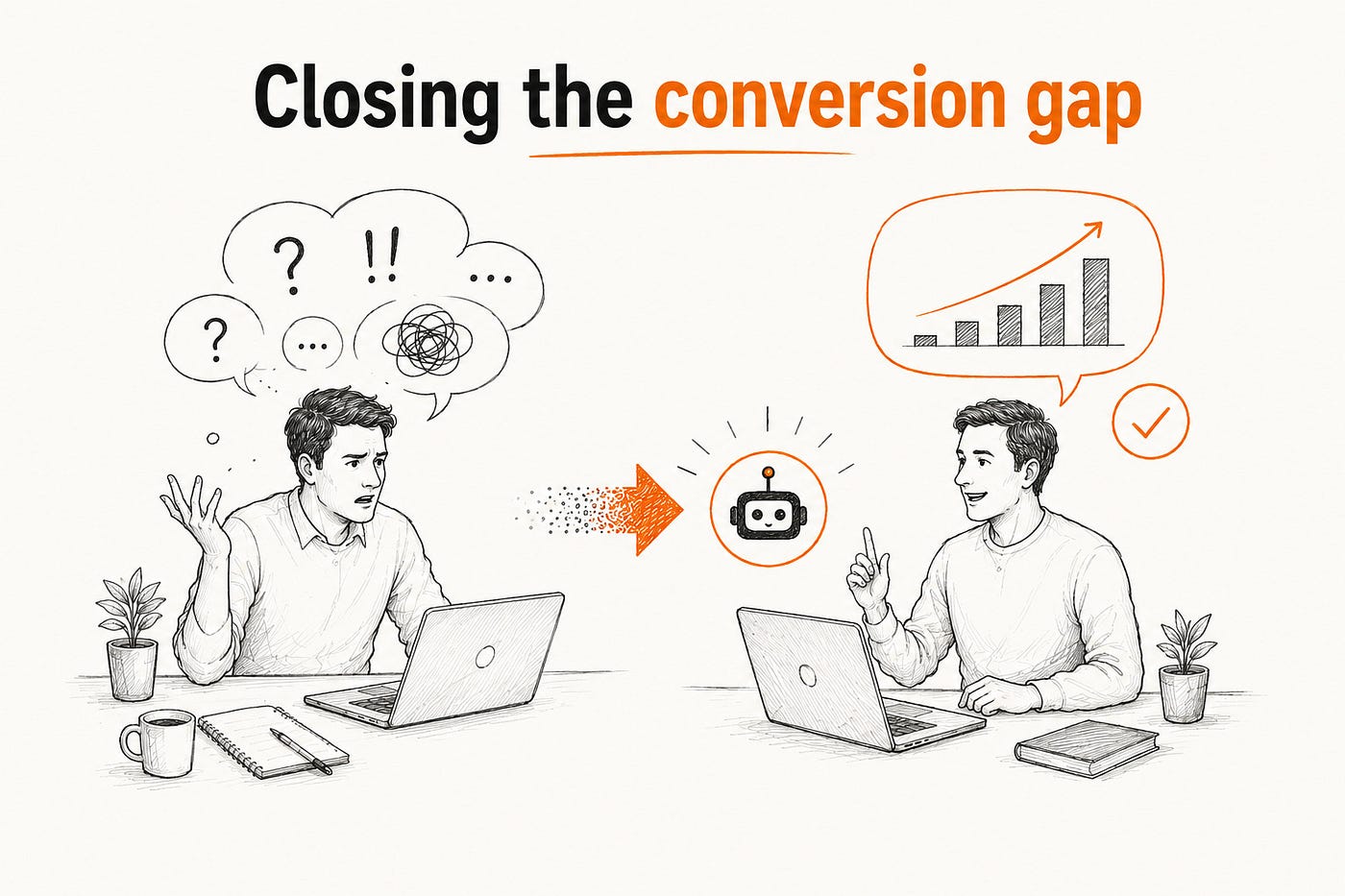
The companies I’ve seen actually close this gap share one thing in common. They stopped waiting for the web team to catch up and found a way to give marketers control over the post-click experience directly. Not through a redesign. Not through a new CMS.
Through a layer that sits on top of what already exists and lets the page respond to the signals that are already in every click. That’s exactly what ad personalization looks like in practice. Check out this page.
When you do that, the page finally knows who just arrived. The headline matches what the ad said. The proof points speak to the right person. The CTA doesn’t ask them to start over.
It sounds simple because it is simple. The only reason it hasn’t happened sooner is that nobody with the authority to fix it also felt the pain of it. The marketer felt the pain but didn’t own the page. The web team owned the page but didn’t feel the pain.
That gap, right there, is where conversion has been leaking for twenty years. If you want to understand just how wide that gap is across the industry, we mapped it out in The Conversion Gap.
The thing is, this isn’t going to fix itself. Acquisition costs are only going up. CPL is harder to defend every quarter. And at some point the honest answer has to be said out loud: a significant chunk of that inflation isn’t coming from the campaigns. It’s coming from what happens after the click.
The marketer felt the pain but didn’t own the page. The web team owned the page but didn’t feel the pain. That’s why it’s been broken for this long.
But the teams that close this gap first aren’t waiting for a reorg or a website refresh. They’re just making sure the page keeps the promise the ad made. Every time. For every visitor.
That’s not a big strategic shift. It’s a simple one. And it’s the one that actually moves the number.
메타데이터
- post_id
- e0829e3c657a
- slug
- intent-driven-landing-experiencesthe-web-is-a-shared-responsibility-e0829e3c657a
- url
- https://medium.com/@ankurgoyal07/intent-driven-landing-experiencesthe-web-is-a-shared-responsibility-e0829e3c657a
- canonical_url
- https://medium.com/@ankurgoyal07/intent-driven-landing-experiencesthe-web-is-a-shared-responsibility-e0829e3c657a
- author_url
- https://medium.com/@ankurgoyal07
- status
- ok
- fetched_at
- 2026-06-09 15:37:30