Selling on Five Channels Is Easy. Fulfilling Them From One Warehouse Is Not.
Most brands discover omnichannel complexity the same way — gradually, then all at once.
Selling on Five Channels Is Easy. Fulfilling Them From One Warehouse Is Not.
Most brands discover omnichannel complexity the same way — gradually, then all at once.
You add Amazon to your Shopify store. Then a wholesale account. Then TikTok Shop. Each new channel feels like a win on the revenue side and a quiet compounding problem on the operations side. Until one day you’re managing three different packaging standards, two EDI trading partners, an FBA receiving rejection, and a returns pile that nobody’s processed in two weeks.
Omnichannel 3PL fulfillment is the infrastructure that’s supposed to make this manageable. But “omnichannel capable” is one of the most overused claims in logistics — and the gap between what providers say and what they can actually deliver is wider than most brands realize until they’re already mid-onboarding.
Why Multichannel Fulfillment Is Harder Than It Looks
The core challenge isn’t volume. It’s that every channel has its own rules, and those rules conflict with each other in ways that aren’t obvious until you’re trying to run them from the same warehouse.
Amazon FBA has specific prep requirements — FNSKU labeling, poly bagging, carton dimensions, pallet configurations. Miss any of them and your shipment gets refused or prepped at your expense. Retail wholesale accounts have routing guides, EDI compliance requirements, and chargeback structures that penalize non-compliance financially. DTC orders need to ship fast, look good on arrival, and be easy to return.
These aren’t variations on the same workflow. They’re meaningfully different operational processes that require different labor, different packaging materials, and different system configurations. A 3PL that handles one channel well doesn’t automatically handle all of them well.
Inventory Visibility Is the Foundation — and the First Place Things Break
Running omnichannel fulfillment from a single inventory pool requires a real-time, accurate view of stock regardless of where orders come from. Without that, you’re overselling on one channel while stock sits allocated to another, or manually reconciling counts across systems at the end of every day.
The warehouse management system behind a genuine omnichannel 3PL needs to sync with each sales channel, reflect every transaction in real time, and allocate inventory by channel when needed. Most 3PLs will tell you their WMS does this. The better question is: what does your inventory accuracy rate look like across channels, and how do you handle discrepancies when they happen?
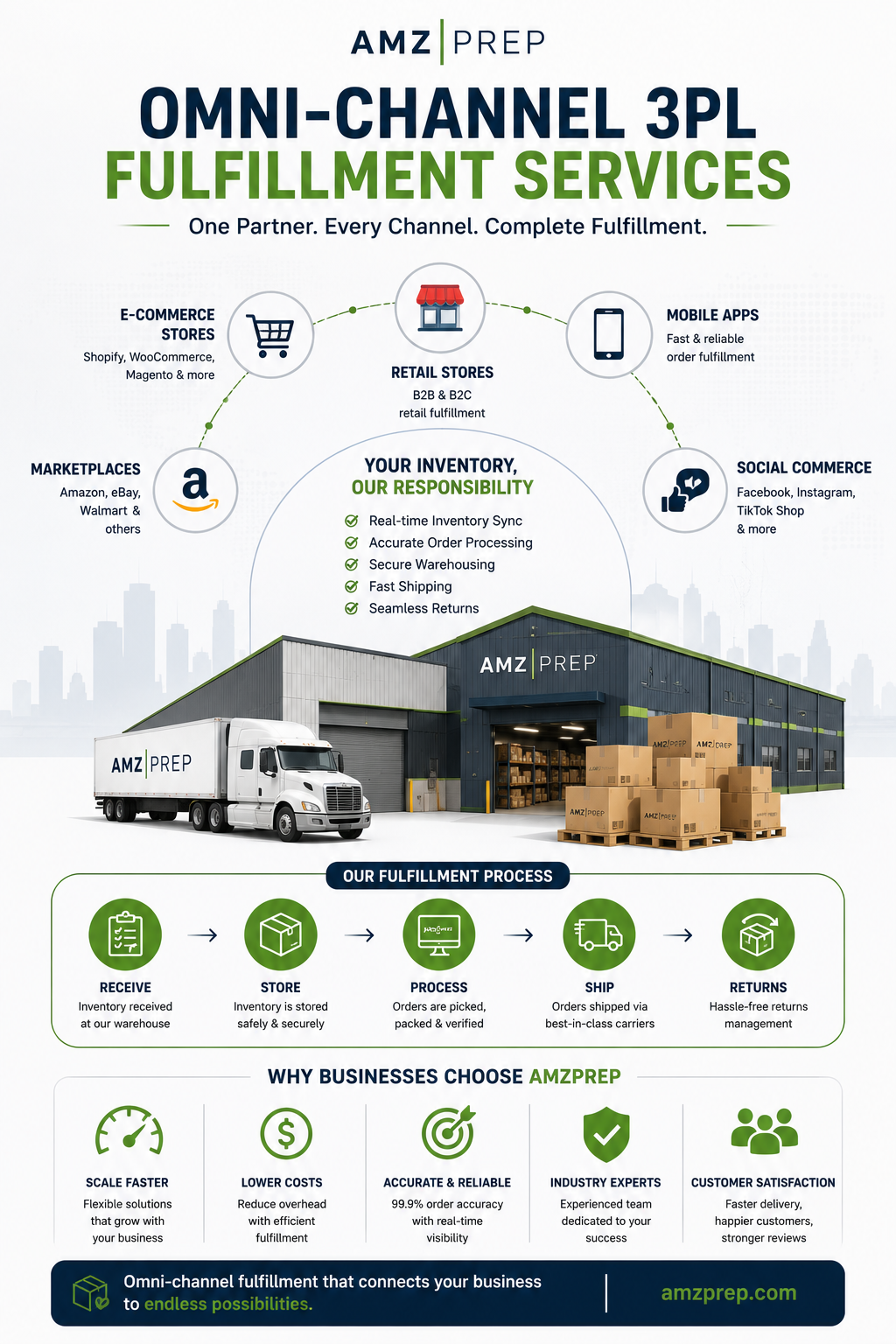
For brands working through what to actually ask during provider evaluation, the omnichannel 3PL fulfillment services guide from AMZPrep breaks down the operational capabilities that separate genuine omnichannel providers from those offering DTC-plus-Amazon with a stretch.
The Details That Catch Brands Off Guard
EDI is its own world. Electronic Data Interchange — the standardized format retailers use for purchase orders, shipping confirmations, and invoices — is a non-negotiable requirement for wholesale. Not every 3PL has it. Those that do vary significantly in how many retail trading partners they’re connected to and how well they handle compliance exceptions. If wholesale is part of your channel mix now or in the next 12 months, this needs to be confirmed before you sign anything.
Returns don’t work the same way across channels. An Amazon return follows Amazon’s rules. A Shopify return follows yours. A wholesale return — when it happens — is a different situation entirely, often involving inspection, credit memo documentation, and disposition decisions that don’t apply to DTC. A 3PL managing omnichannel returns needs clear, channel-specific workflows. Most don’t have them as defined as they claim.
Inventory allocation policy needs to be agreed on upfront. When stock is running low and orders come in from multiple channels at the same time, which channel gets fulfilled first? Without a written allocation policy, your 3PL is making that call based on their own logic — which may not align with your margin priorities or wholesale contractual obligations. This is a conversation to have before it becomes a problem, not after.
Onboarding takes longer than the sales timeline suggests. Every channel integration, carrier connection, and compliance workflow adds setup time. Brands told “we can have you live in two weeks” typically find themselves six to eight weeks into a proper omnichannel onboarding before they’re actually processing all channels reliably. Build the real timeline into your planning.
The Question Worth Asking Before You Sign
The number of 3PLs genuinely equipped for omnichannel fulfillment — not just DTC and Amazon, but retail wholesale EDI, channel-specific packaging, and multi-channel returns — is smaller than the marketing landscape suggests.
The filter is simple: ask operational questions and listen for operational answers. How many retail trading partners are you EDI-connected to? What’s your FBA receiving rejection rate? How do you handle a return that needs to go back to a retail vendor versus being restocked for DTC?
Providers that have built real omnichannel capability answer these specifically. Those that haven’t tend to answer them generally — and that tells you what you need to know.
메타데이터
- post_id
- e0a1f2dfe32b
- slug
- selling-on-five-channels-is-easy-fulfilling-them-from-one-warehouse-is-not-e0a1f2dfe32b
- url
- https://medium.com/@shashi_39223/selling-on-five-channels-is-easy-fulfilling-them-from-one-warehouse-is-not-e0a1f2dfe32b
- canonical_url
- https://medium.com/@shashi_39223/selling-on-five-channels-is-easy-fulfilling-them-from-one-warehouse-is-not-e0a1f2dfe32b
- author_url
- https://medium.com/@shashi_39223
- status
- ok
- fetched_at
- 2026-06-10 08:17:25