The Most Essential Part of Writing Happens Before the First Draft
Following the creative process from my very first writing session
The Most Essential Part of Writing Happens Before the First Draft
Following the creative process from my very first writing session

A stack of books on the table. Photo taken by Diana Dolea.
For weeks, I had a manuscript gathering dust. But today, the echo of a murmur takes shape, and a new writing project begins to breathe.
“It is time to awaken the muse and fortify the creative spirit,” I tell myself, “as the journey to write begins again.”
Like someone closing windows for fear that dreams might escape, I retreat into these first words, dictated straight from the heart. But before throwing myself onto the page, I need to bring structure to my days so I can protect my future writing sessions.
First, I prepare my room to serve as a little sanctuary. Second, I turn to my masters; I consider it vital to keep that spiritual guidance close. Lastly, I design a schedule. Sometimes I draw inspiration from the routines of the authors I admire most, though I always end up choosing what intuition and personal affinity dictate.
If I had to name my guides, they would always be Anaïs Nin and William Shakespeare. From Nin, I inherited the constancy of the diary; since I was a little girl, not a single year has passed without me pouring my inner world onto the paper, blurring the line between what is lived and what is imagined. From Shakespeare, I take my love for playwriting, but with my own distinct nuance: I do not aspire to theatrical production, but rather to creating dramatic pieces that stand entirely on their own.
Though I write on this platform in English, my longer pieces are written in Spanish, which is the language I feel most comfortable with.
My mission is to share my daily writing routine, my creative process, and the ups and downs of bringing this new play to life.
This is my very first step.
Morning writing sessions — from 8:30 AM to 12:00 PM
Anaïs Nin’s ritual can be glimpsed through her diaries; in them, she affirmed that she dedicated her mornings to her fictional texts, safeguarding the tranquility of the night for her journal of life¹. This morning impulse belongs to Sylvia Plath as well, who aimed to write four to six hours a day, carving out her first block from 8:30 AM to 12:00 PM before a second session from 4:00 PM to 6:00 PM.
Truth be told, I prefer the mornings, when my creativity peaks just after waking. Because I have always found joy in the openness of morning lines, writing at any other time feels simply impossible.
I intend to follow this schedule three days a week, balancing the demands of other projects. Even on those days when life calls me away, I can still tend to my words: rereading my lines, making notes, or enriching them with new threads of thought.
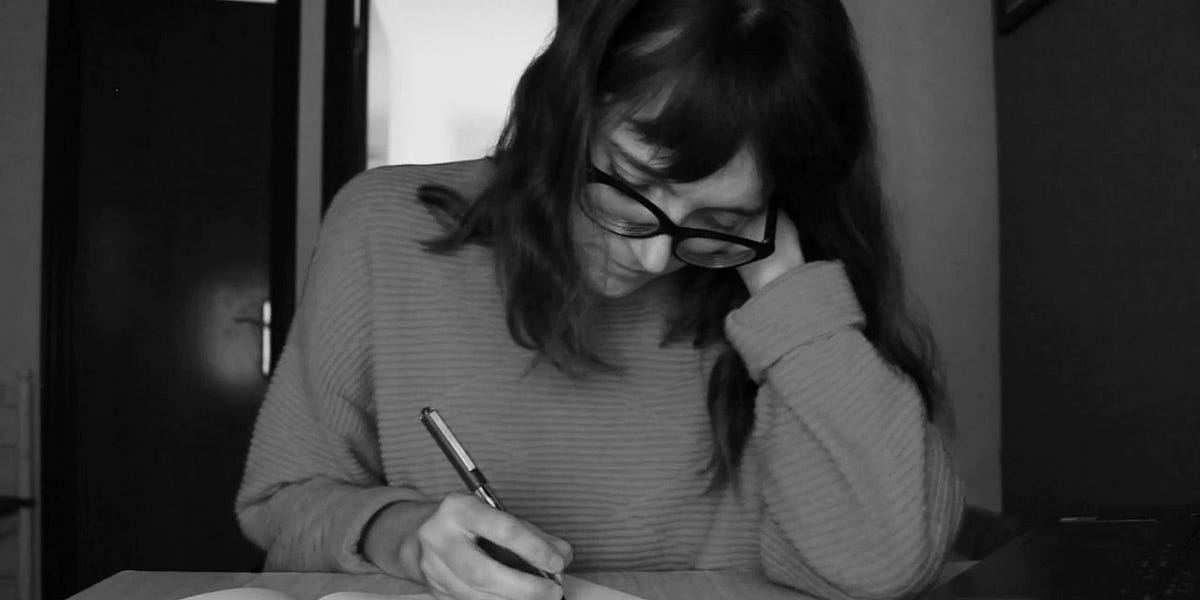
The author capturing her thoughts on paper. Photo taken by Diana Dolea
That first draft demands everything from me creatively because I do less planning than most writers. My scenes exist as somewhat vague ideas in my mind, so during the writing process, I need to go back and reread earlier pages, picture scenes, delve into diverse mythologies, read other dramatic works, keep a writing journal…
My intention is to push the manuscript to 15,000 (unless, of course, the story calls for more).
Break
A well-earned break! As a bridge between the two writing sessions, these hours will be spent gathering inspiration from the world beyond: I’ll carry a book, my journal, and my whole vault of imagination.
‘I write only because there is a voice within me that will not be still.’ Sylvia Plath
Afternoon writing sessions — from 4:00 PM to 6:00 PM
After the sweet interlude of the rest, my spirit will lead me back to the waiting pages. This second session, shorter than the first, will be dedicated to shaping the structure for the day to come.
Though Sylvia Plath’s own writing devotion remains somewhat veiled to me, I hold faith that with each line I envision, a new affection will bloom, guiding me ever closer to her named reality.
Shakespeare’s Process: Notes on Dramatic Creation
Although Shakespeare’s daily routine remains in the shadows, it is evident that his genius was born from exhaustive preliminary work. He did not invent from nothing; he sought out stories with dramatic potential, rescuing historical chronicles to breathe theatrical life into them.
With his materials chosen, he spun plots tailored specifically for his actors and the physical architecture of the theaters of his time. It was not merely writing; it was observing, imitating, and moving his audience, entirely undeterred by limitations.²
I lean upon his figure now, as I stand at the very birth of the draft for my second play. I seek an organic structure — a constant flow where the division of acts, whether three or five, arises naturally from the fantasy itself. I aspire to a style of writing that breathes freely, exploring the margins of the genre beyond its conventional molds; I trust that, step by step, imagination and craft will bring form and maturity to my own voice.

A stack of books and a handwritten journal on the table. Photo taken by Diana Dolea
Today, I surrender myself wholeheartedly to this daydream that materializes line by line. I will continue to share this path, for I wish to leave traces of my brushstrokes: there are some images that only reveal themselves through the stains of ink.
When poetry calls…
What thoughts bloom within me.
I picture birds seeking safe harbors, leaves timidly rustling on branches, bees sharing tea-cups on petals — their whispers mingling with the hum of so many other small beings. Nature. Birds. Bees. Spring.
An unspoken voice within my depths demands to be written.
Now I turn to those kindred spirits who read these lines, have you tried Sylvia Plath’s writing routine, or that of any other writer?
Do you perhaps hold a different rhythm I should explore?
Would you like to share the secrets of your own creative practice?
My heart thanks you all for leading me back to the truth of myself.
Thank you!
¹ Popova, M. (s.f.). *The daily routines of great writers*. The Marginalian.
² Wells, S., & Doran, G. (n.d.). *How did Shakespeare write a play?* [Lecture transcript]. Shakespeare Birthplace Trust.
메타데이터
- post_id
- e0bc251b4ab5
- slug
- the-most-essential-part-of-writing-happens-before-the-first-draft-e0bc251b4ab5
- url
- https://medium.com/the-daily-draft/the-most-essential-part-of-writing-happens-before-the-first-draft-e0bc251b4ab5
- canonical_url
- https://medium.com/the-daily-draft/the-most-essential-part-of-writing-happens-before-the-first-draft-e0bc251b4ab5
- author_url
- https://medium.com/@dianadolea
- status
- ok
- fetched_at
- 2026-07-13 23:23:57