Triangular Numbers
How a Simple One-Third Relationship Reveals the Average Value of Triangular Constructions
Triangular Numbers
How a Simple One-Third Relationship Reveals the Average Value of Triangular Constructions
This article will introduce you to “Modified Triangular Sums”. More importantly I will refer to what I have named, the “One-Third Principle”.
While exploring modified triangular sums, I noticed an interesting geometric relationship quite by accident, while attempting to find a modified Triangular number. This relationship which I have named the One-Third Principle for lack of a better term, provides a shortcut to finding a tetrahedral number or any total sum from the same triangular format.
Just a few thoughts to take into account. I use a right angle triangle rather than the well known equilateral triangle for summation of terms. Second, there already exists mathematical expressions that can be used to find these total sums. But I feel these expressions ‘hide’ the relationship of the number values to the triangular geometry.
First, we will review Triangular numbers:
The Standard Triangular-number Construction
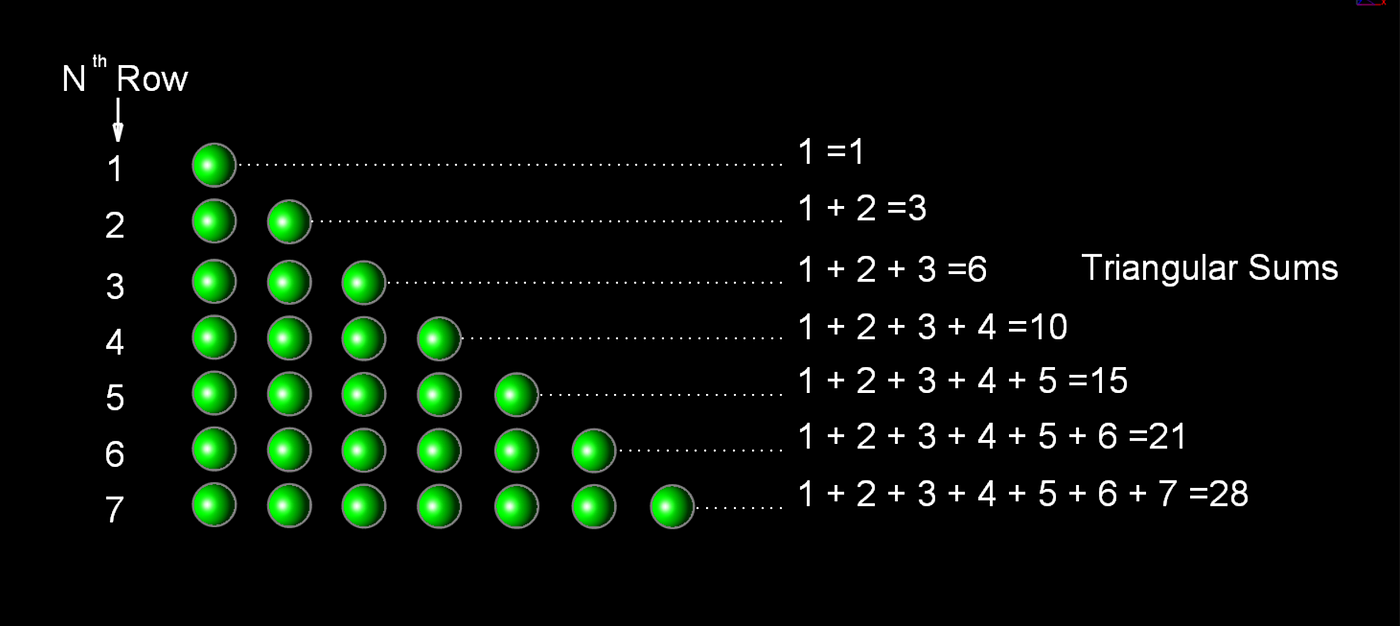
Diagram 1: Triangular Numbers
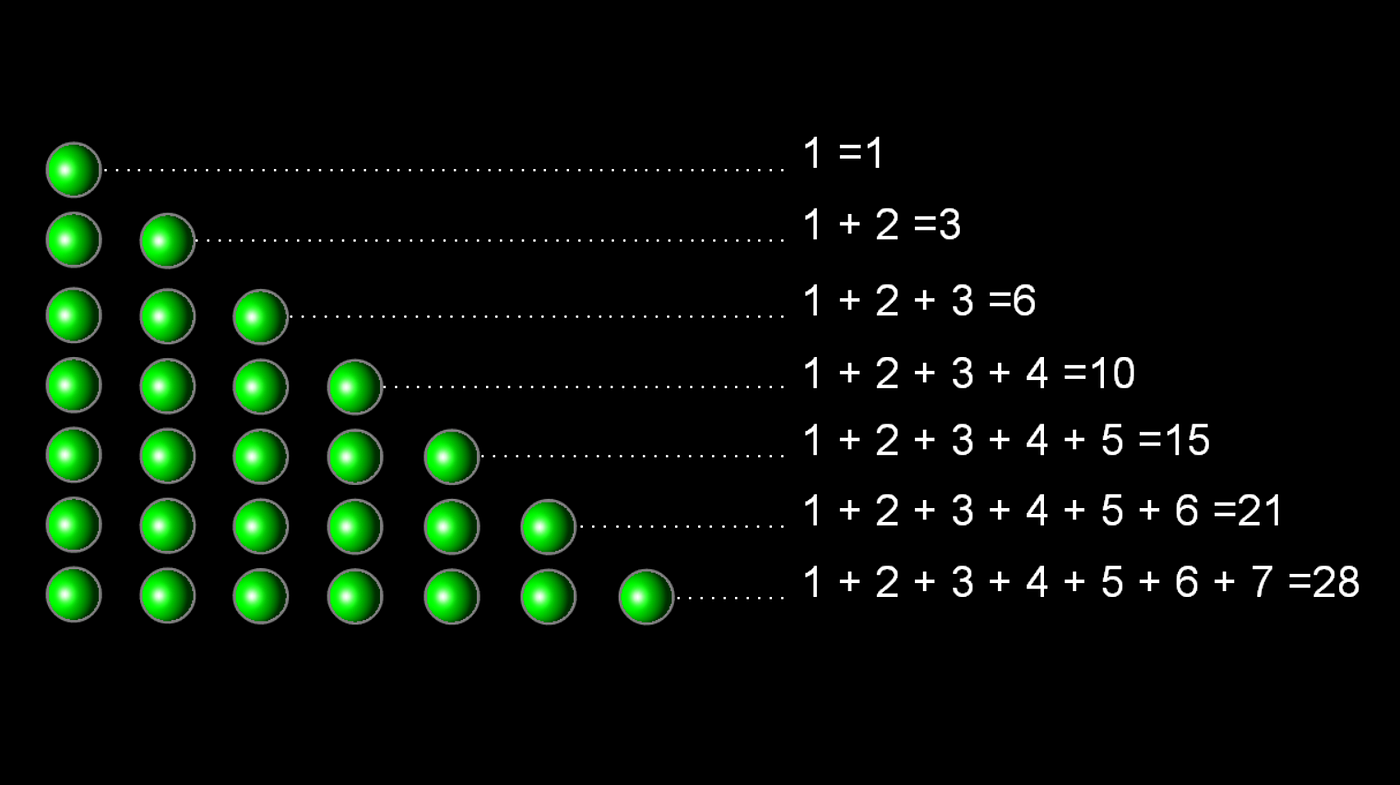
The diagram above, shows a standard triangular number construction. Each sum is the sum of all spheres up to the present row including the spheres in all previous rows. When we compare a sum with the previous sums, we know a function for solving this would produce numbers that increase non-linearly. Our formula is in fact:

Modified Triangular Sums
The following do not include triangular numbers but the example shown in diagram 2, takes on a triangular form:
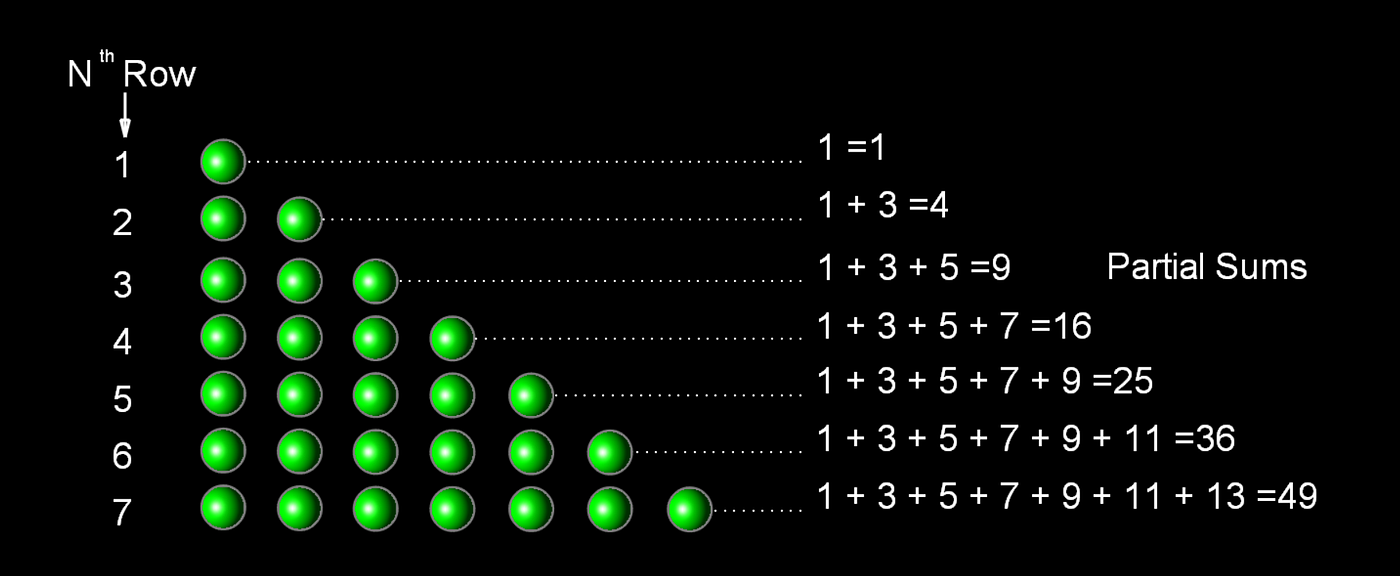
Diagram 2
The formula to find any of the partial sums in the diagram above is simple: N² = partial sum.
But let’s start with the largest integer first and then add decreasing values:
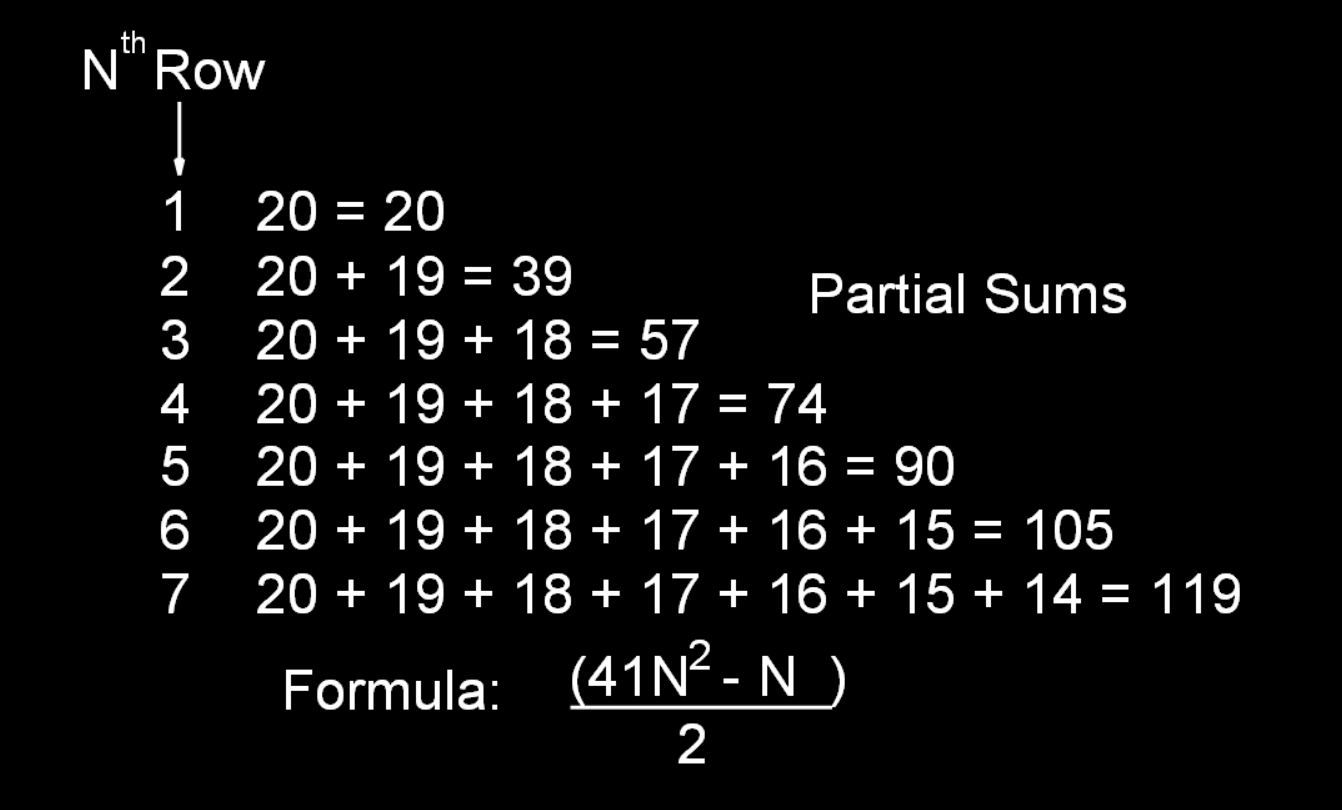
Diagram 3
As you can see there are an endless array of constructions that exist. As a note, I will use the label ‘Partial Sums’ for sums that are strictly not triangular numbers.
The Real Power Of The Modified Triangular Sums:
Once the total sum is known, large collections of values can be analyzed through a single expression rather than by direct addition.
We will again, borrow from the triangular formula structure where the total sum of triangular numbers equals what is known as the tetrahedral number, except we will label ‘Total Sum’ for numbers that are not classified as tetrahedral numbers:
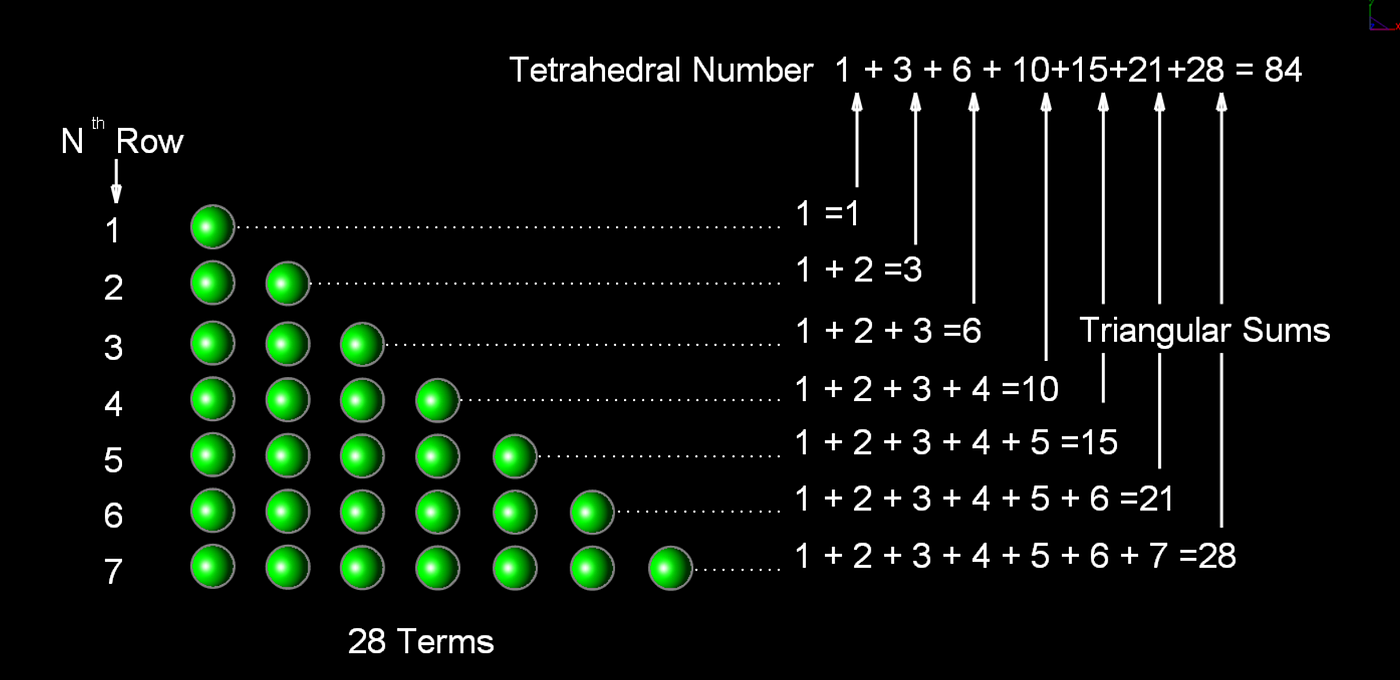
Diagram 4: Tetrahedral Numbers
When we are able to find the total sum, we can leverage this mathematical principle to perform calculations in a unique way. Which I will introduce in an upcoming article.
We have simple methods to find the total sum of all partial sums.
But what I have found by accident is quite intriguing …
Triangular One-Third Principle
The One-Third Principle does not directly give the total sum.
It identifies the average value of the terms.
Multiplying this average value by the number of terms then produces the total sum.
Diagram 5 ↴
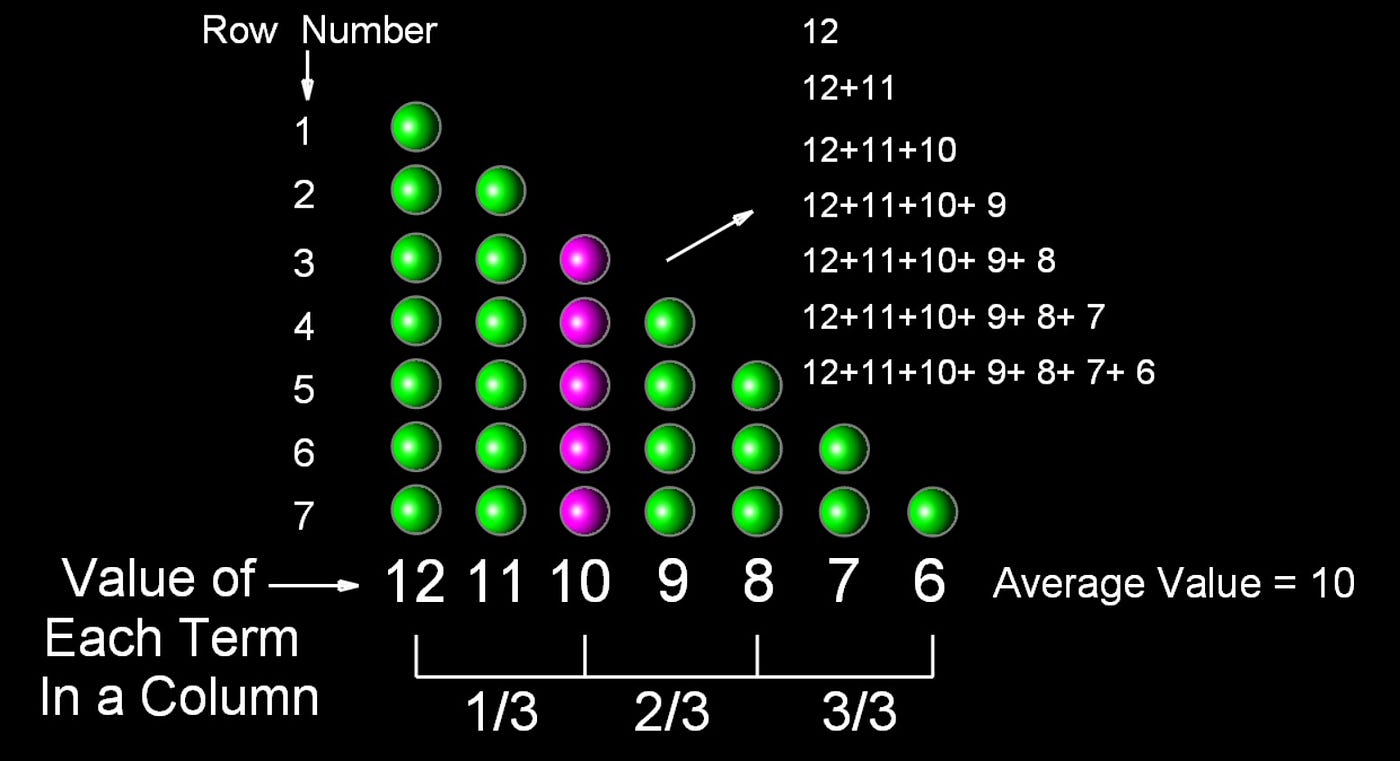
One-Third Principle: In this diagram, the value 10 is the average value of terms. The column is one-third of the distance from the orthogonal angle: Mark Doknjas
When we look at diagram 5 above, one of the most counterintuitive thoughts, is that we do not require the increment or decrement value. However that value must remain constant. Strangely, the one-third relationship remains invariant regardless of an increasing or decreasing value.
Remarkably, the same one-third location appears in elementary geometry. The centroid of a right triangle lies one-third of the distance from the right-angle vertex along each median. The average value identified in the triangular arrangement appears at exactly this same geometric location.
The Equation
The variables for the formula that are required are listed below:
- The first term will be labelled x₁
- The last term will be labelled x₂
- The number of terms will be labelled N
- The result, which is the average value of all terms is x¯
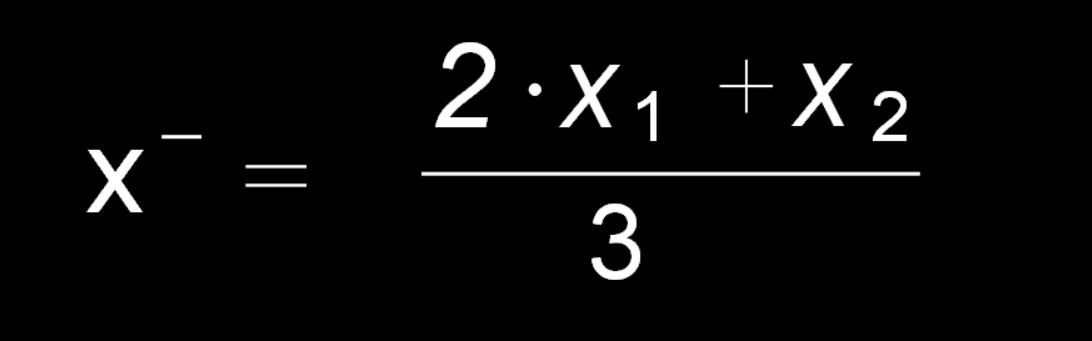
Diagram 6: Mark Doknjas
Now viewing diagram 5 and 6, we can now insert the variables into the formula:
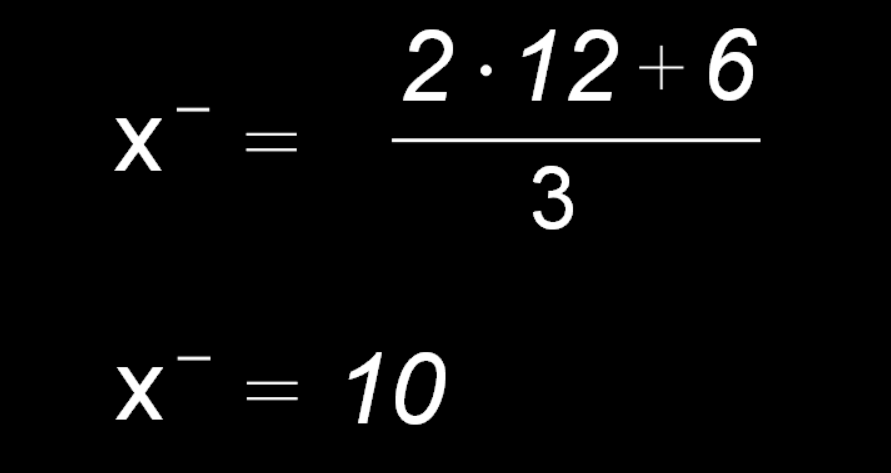
Diagram 7: Mark Doknjas
Now since the total sum is equal to:
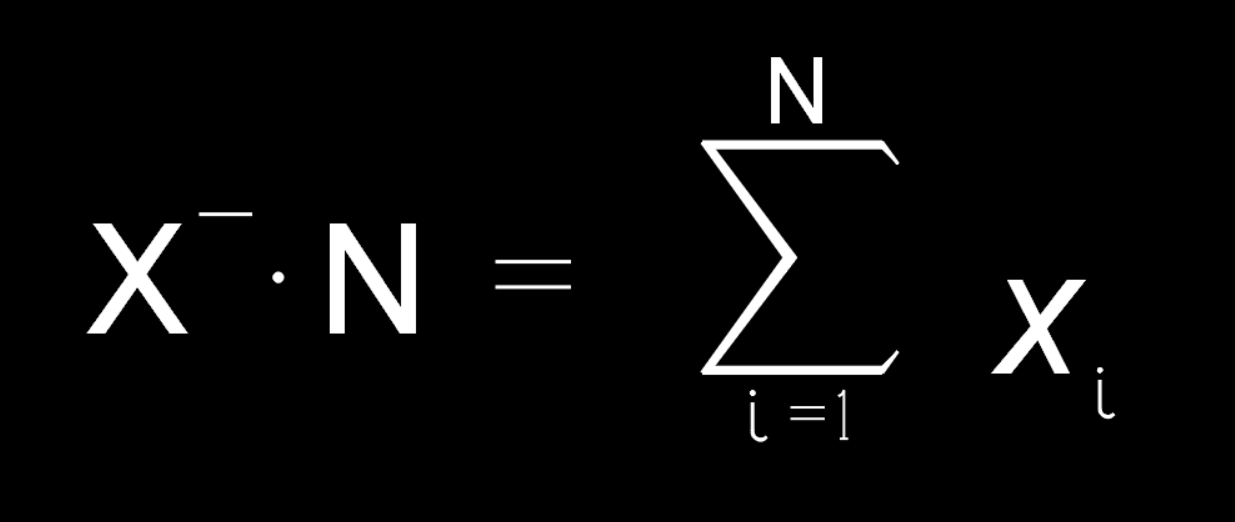
Total Sum
We plug in the values:
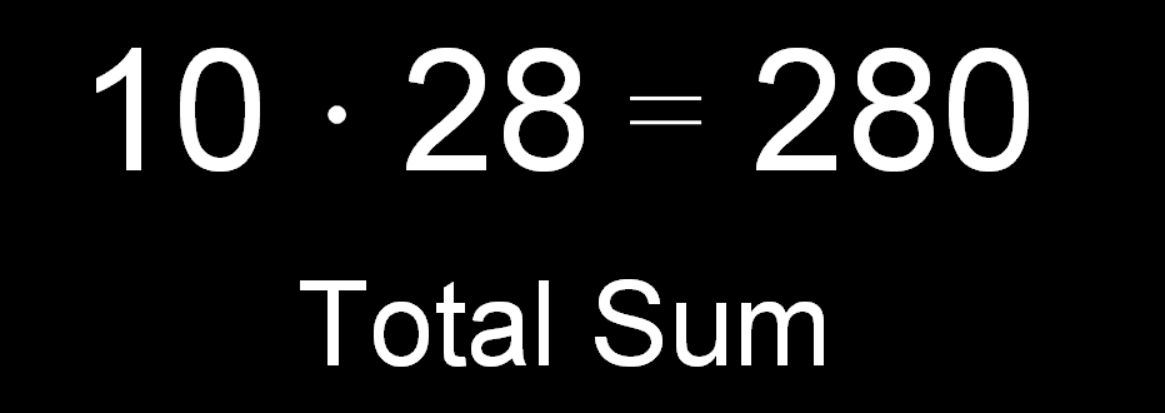
This is the total total sum for the triangular form in diagram 5
Conditions of the One-Third Principle:
- We must use a number of terms that are equal to some triangular number.
- Successive terms must increase or decrease at a constant value.
Summary
The arithmetic-series formula already allows these sums to be computed directly. The purpose of the One-Third Principle is not to replace these formulas but to provide a geometric interpretation of why the average value appears where it does within a triangular construction.
Algebraic geometry is a fascinating branch of mathematics. In my opinion we only know the tip of the iceberg. What other geometric — number relationships have yet to be discovered?
메타데이터
- post_id
- e0f07e22db00
- slug
- triangular-numbers-e0f07e22db00
- url
- https://medium.com/@doknjasm/triangular-numbers-e0f07e22db00
- canonical_url
- https://medium.com/@doknjasm/triangular-numbers-e0f07e22db00
- author_url
- https://medium.com/@doknjasm
- status
- ok
- fetched_at
- 2026-06-20 20:29:01