The Resonant World |Episode 3 Why Do People Stand in Line?
The Quiet Architecture of Shared Space
The Resonant World |Episode 3 Why Do People Stand in Line?
The Quiet Architecture of Shared Space

During a recent visit to Japan, I found myself observing something surprisingly ordinary.
People were standing in line.
At train stations.
At elevators.
At convenience stores.
At places where no signs were present and no one was enforcing any rules.
Yet people waited.
Quietly.
Patiently.
Almost instinctively.
To many visitors, this may appear to be simple politeness.
A cultural habit.
A social rule.
But I have begun to wonder if something deeper is taking place.
Standing in line is not merely about waiting.
It is about trust.
Every person who joins a queue is participating in an invisible agreement.
A silent promise that says:
“I trust that my turn will come.”
Without that trust, lines collapse.
People push forward.
Competition replaces cooperation.
The system becomes louder.
More aggressive.
More exhausting.
Perhaps that is why queues reveal something important about civilization itself.
A line is not a physical structure.
It is a psychological one.
It exists only because enough people believe in it.
The moment that belief disappears, the architecture disappears with it.
What fascinates me is that these invisible agreements are everywhere.
We lower our voices in certain places.
We leave space for others to pass.
We wait for someone to finish speaking.
We acknowledge that we are not alone.
Civilization is often described through laws, governments, economies, and technology.
Yet many of the systems that make daily life possible are built upon things that cannot easily be measured.
Trust.
Restraint.
Consideration.
Shared understanding.
These are not visible infrastructures.
Yet they may be among the most important infrastructures a society possesses.
In modern discussions, we often celebrate efficiency.
Speed.
Optimization.
Productivity.
But efficiency alone cannot create harmony.
A city may become faster while simultaneously becoming more stressful.
A network may become larger while becoming less human.
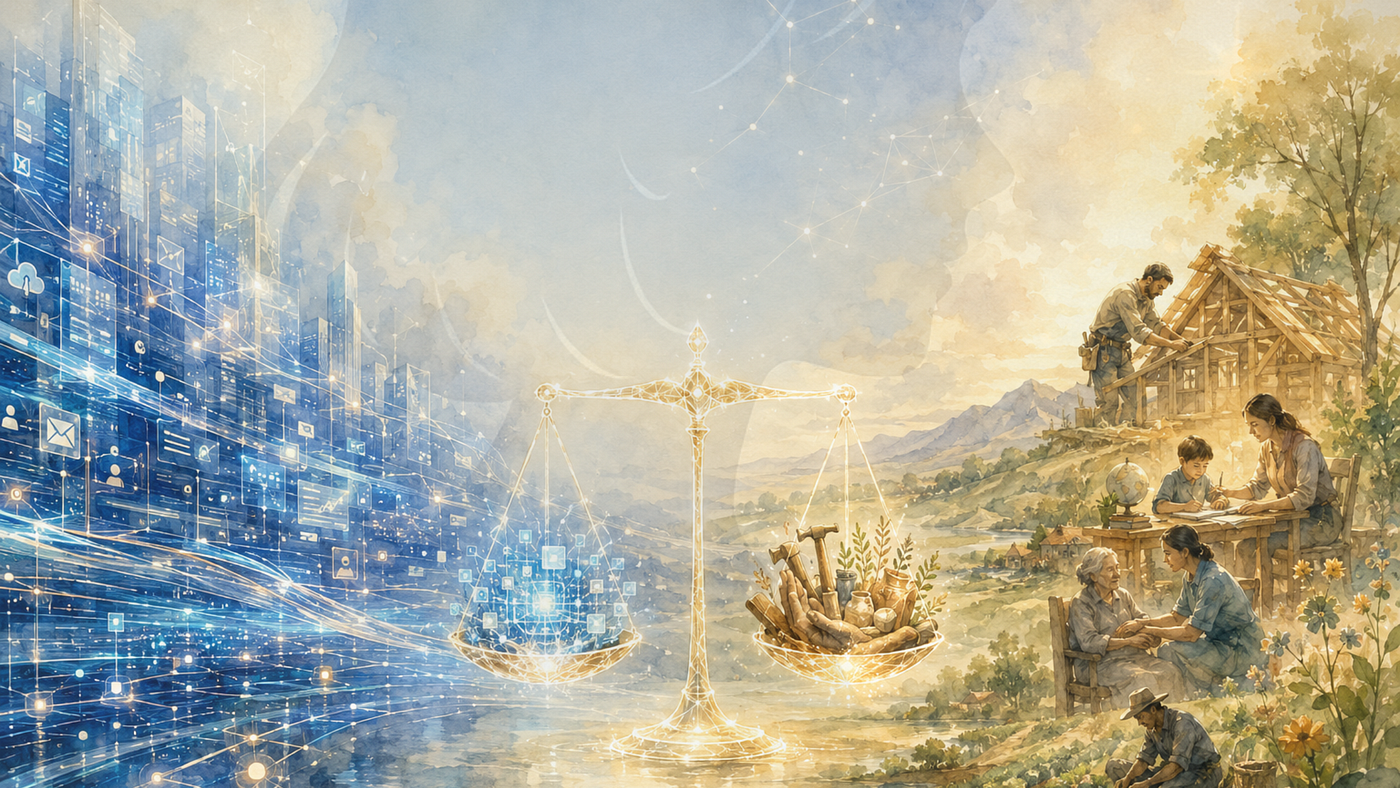
The challenge of the future may not be building more powerful systems.
It may be learning how to preserve invisible ones.
The quiet architecture that allows millions of strangers to coexist peacefully.
Perhaps this is what I have come to appreciate most.
Not perfection.
Not obedience.
Not conformity.
But the countless small acts of consideration that make shared spaces feel safe.
They are easy to overlook because they rarely announce themselves.
They do not demand attention.
They do not seek applause.
Like the foundations beneath a building, they remain mostly unseen.
Yet without them, everything above begins to shake.
Maybe civilization is not sustained by its loudest achievements.
Maybe it survives because of its quiet agreements.
And perhaps every line we stand in is a reminder that trust, not force, is what truly holds a society together.
메타데이터
- post_id
- e1075cbd18ab
- slug
- the-resonant-world-episode-3-why-do-people-stand-in-line-e1075cbd18ab
- url
- https://medium.com/aqua-publication/the-resonant-world-episode-3-why-do-people-stand-in-line-e1075cbd18ab
- canonical_url
- https://medium.com/aqua-publication/the-resonant-world-episode-3-why-do-people-stand-in-line-e1075cbd18ab
- author_url
- https://medium.com/@mama.to.aqua.shop
- status
- ok
- fetched_at
- 2026-08-15 21:21:02