Exploring the Depths of Computer Vision: Insights from CS231n
Imagine teaching a computer to see the way humans do — that’s the challenge that computer vision tackles!
Exploring the Depths of Computer Vision
This blog explores the evolution of computer vision, key concepts and insights into modern applications and future trends.
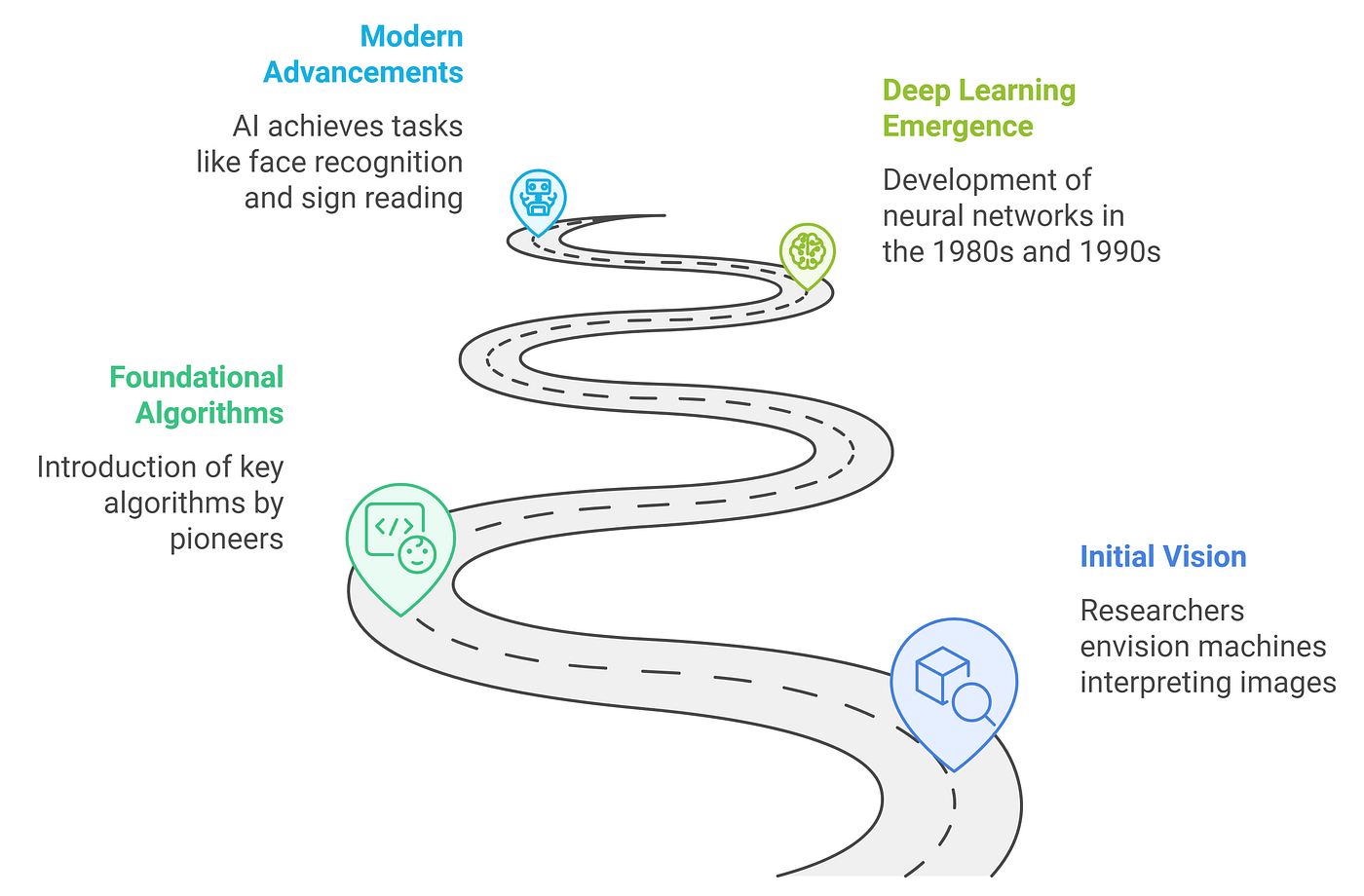
Source: Mirko Peters — Evolution of Computer Vision
The Historical Narrative of Computer Vision
1. Development Timeline: From Inception to Modern Breakthroughs
Computer vision has a fascinating history that spans several decades, beginning in the mid-20th century. It all started in the 1960s when researchers first envisioned machines that could understand and interpret images. Back then, technology was rudimentary. But, thanks to persistent innovators, computer vision has grown beyond wild dreams.
In the 1970s, the foundational algorithms began to appear. Pioneers like David Marr made huge strides, introducing theories about how the human visual system processes information. As technology progressed through the 1980s and 1990s, deep learning and neural networks began to take shape, pushing the boundaries of what machines could accomplish.
Now, we stand in an era of rapid advancement. Machine learning techniques, especially deep learning, have made what was once impossible, a reality. Think about it: artificial intelligence can now recognize faces and read street signs better than humans!
2. Key Figures Who Shaped Early Computer Vision
- David Marr: Often considered the father of computer vision.
- Takeo Kanade: Contributed to real-time motion tracking.
- Marvin Minsky: Pioneered some of the earliest work in AI and machine perception.
- Paul Viola and Michael Jones: Developed the groundbreaking Viola-Jones object detection framework.
These individuals didn’t just contribute; they laid the groundwork for future developments. Their theories and experiments helped produce tools that we still use today.
3. Milestones in Technology

Source: Mirko Peters — Evolution of Computer Vision Technology
Many technological milestones marked significant turning points in computer vision:
- Image Recognition Systems: In the early 2000s, systems began recognizing specific objects, like faces and cars.
- Deep Learning: The breakthrough of convolutional neural networks (CNNs) made image classification and segmentation tasks significantly more effective.
- Real-time Processing: With faster chips and improved algorithms, processes that took hours can now occur in mere seconds.
These advancements helped in commercial applications, such as self-driving cars and security systems.
4. The Impact of Historical Events
Historical events have significantly influenced the evolution of computer vision. The Cold War saw a race for technological development, leading to substantial funding in AI research. Later, the internet boom connected researchers worldwide, fostering collaboration. You might ask: How did all this affect innovation?
Well, when knowledge circulates freely, breakthroughs happen. The availability of vast datasets, especially after the 2000s, has transformed computer vision research, making training algorithms easier and more effective.
5. Early Algorithms and Their Limitations
Let’s take a step back to examine the early algorithms. Early computer vision relied heavily on simplistic methods. While groundbreaking for their time, they had limitations:
- 2D Edge Detection: Basic techniques failed in complex environments.
- Object Tracking: Early systems struggled with motion blur.
- Facial Recognition: Limited by the algorithms’ simplicity and computational power.
These shortcomings often rendered early systems ineffective in real-world applications. But, they acted as building blocks for future advancements.
6. The Influence of Academics and Industrial Advancements
The interplay between academia and industry has fueled progress in computer vision. Universities have been the breeding grounds for many innovations. Studies have produced theories that businesses translate into practical applications. On the other hand, industries provide funding and real-world problems for researchers to solve.
This symbiotic relationship has led to groundbreaking solutions in areas such as healthcare, automotive, and security. In today’s world, computer vision is everywhere, enhancing our daily lives.
Think about the last time you used your phone to filter a photo. The technology behind that is rooted in decades of research and collaboration!
Deep Learning Foundations in Computer Vision
Understanding the world of computer vision can be intimidating. It’s a blend of art and science. At the heart of it all is deep learning, specifically neural networks. So, what are neural networks, and why are they crucial for computer vision?
[embed]Source: GenAi Cafe on Spotify
Basic Concepts of Neural Networks
Neural networks are inspired by how the human brain works. Imagine connecting many tiny neurons that can learn and make decisions based on input data. At their core, they consist of layers: input, hidden, and output layers. The significance of these networks lies in their ability to process vast amounts of data efficiently.
Neural networks excel where traditional algorithms falter. — Mirko Peters
- Input Layer: Takes the initial data, like images.
- Hidden Layers: Processes the data through various transformations.
- Output Layer: Provides the final prediction or classification.
Through training, these networks learn patterns. Have you ever wondered what makes image classification so essential?
Importance of Image Classification in Vision Tasks
Image classification is the process of identifying objects or scenes within an image. This task has numerous applications, such as:
- Self-driving cars recognizing pedestrians.
- Social media apps automatically tagging friends in photos.
- Medical imaging helping doctors spot diseases early.
When a neural network classifies images, it helps automate and speed up these processes. Imagine a world where computers see and understand images like humans do!
Regularization and Optimization Techniques Explained
Source: Mirko Peters — How to prevent overfitting in neural networks
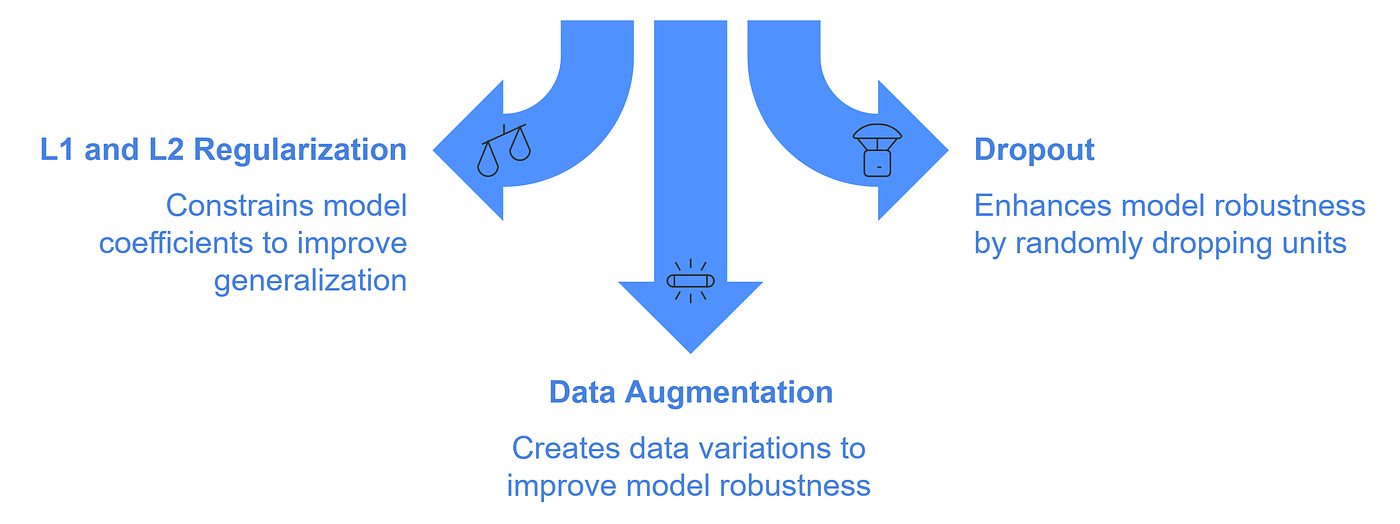
Training a neural network isn’t just about feeding it data. You need to ensure that it learns effectively. This is where regularization comes in. Regularization helps prevent overfitting, which occurs when a model performs well on training data but poorly on new data. Here are some techniques:
- L1 and L2 Regularization: Helps to constrain the coefficients in a model.
- Dropout: Randomly drops units during training to improve the model’s generalization.
- Data Augmentation: Involves creating variations of the training data to improve robustness.
Optimization, on the other hand, focuses on minimizing the loss function during the training process. You want to tweak your model parameters so that it predicts as accurately as possible.
Role of Loss Functions in Model Training
Speaking of loss functions, what are they? Simply put, a loss function quantifies how well your model performs. A lower value indicates a better performance. Some common loss functions are:
- Mean Squared Error (MSE): Great for regression tasks.
- Cross-Entropy Loss: Commonly used for classification tasks.
Without a proper loss function, training would be aimless. You need a clear indicator of how well your model is learning.
How Backpropagation Works
Achieving Neural Network Accuracy
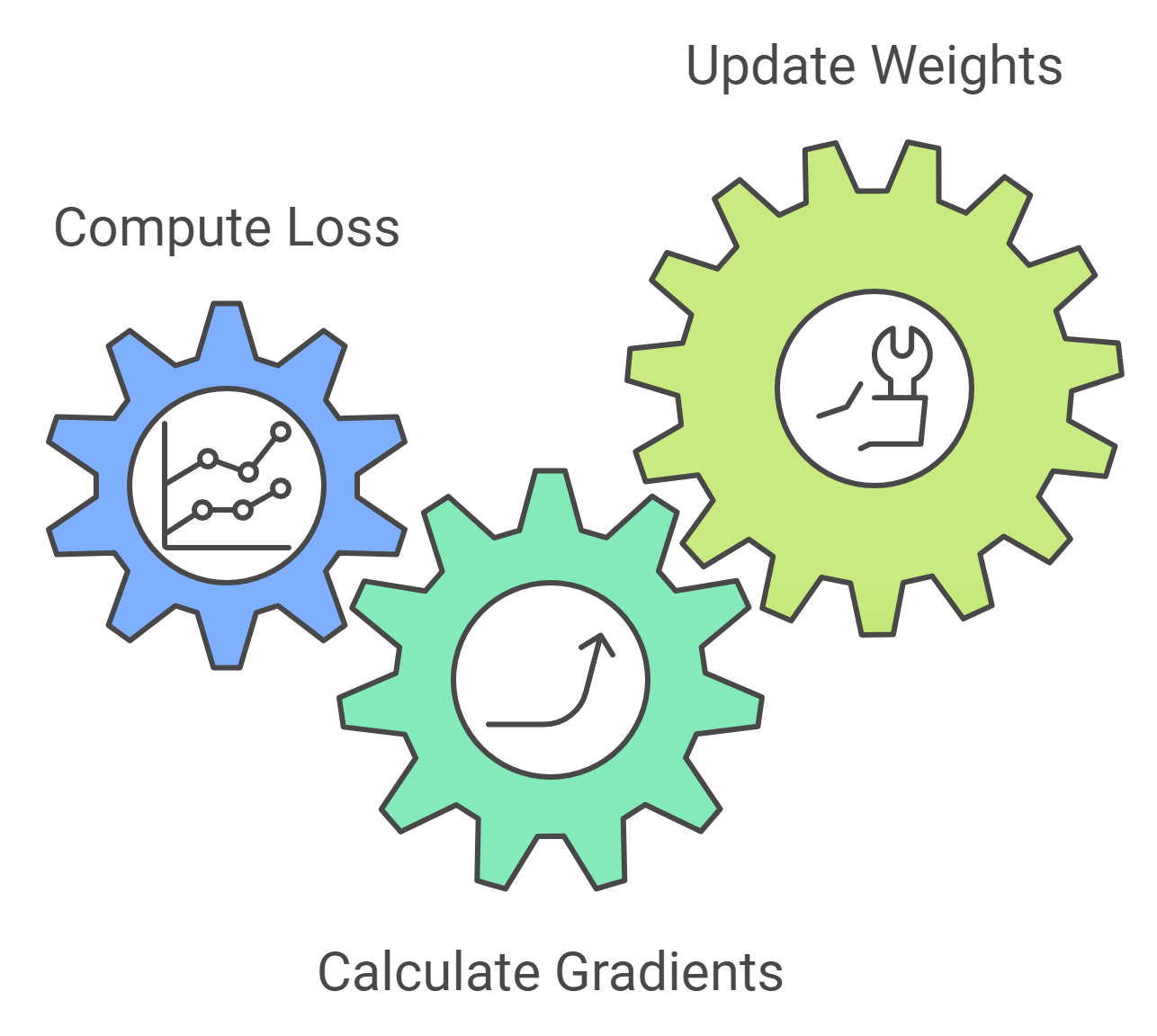
Backpropagation may sound complicated, but it’s quite simple in theory. It’s a technique to update neural network weights based on the loss calculated. Here’s how it works:
- Compute the loss from the output.
- Calculate the gradient of the loss concerning each weight.
- Update the weights in the opposite direction of the gradient.
Think of it like a feedback loop. It refines the network’s parameters, leading to improved accuracy!
Use of Convolutional Layers for Image Processing
The backbone of many computer vision tasks is the convolutional layer. These layers focus on small regions of input images. They help extract patterns such as edges, textures, and shapes. The key benefits include:
- Parameter Sharing: This reduces the number of parameters and helps the model generalize.
- Local Connectivity: Only connects to nearby pixels, mimicking how humans perceive images.
In conclusion, these components work together to enhance the capabilities of neural networks in understanding images, improving the way machines and humans interact. You are now equipped to dive deeper into the fascinating world of computer vision!
Beyond Basic Classification: Advanced Tasks in Vision
When we think about vision tasks, what often comes to mind is classification. Sure, that’s important. But there’s so much more. Let’s dive into the fascinating world of segmentation, detection, and video analysis.
Understanding Segmentation, Detection, and Video Analysis
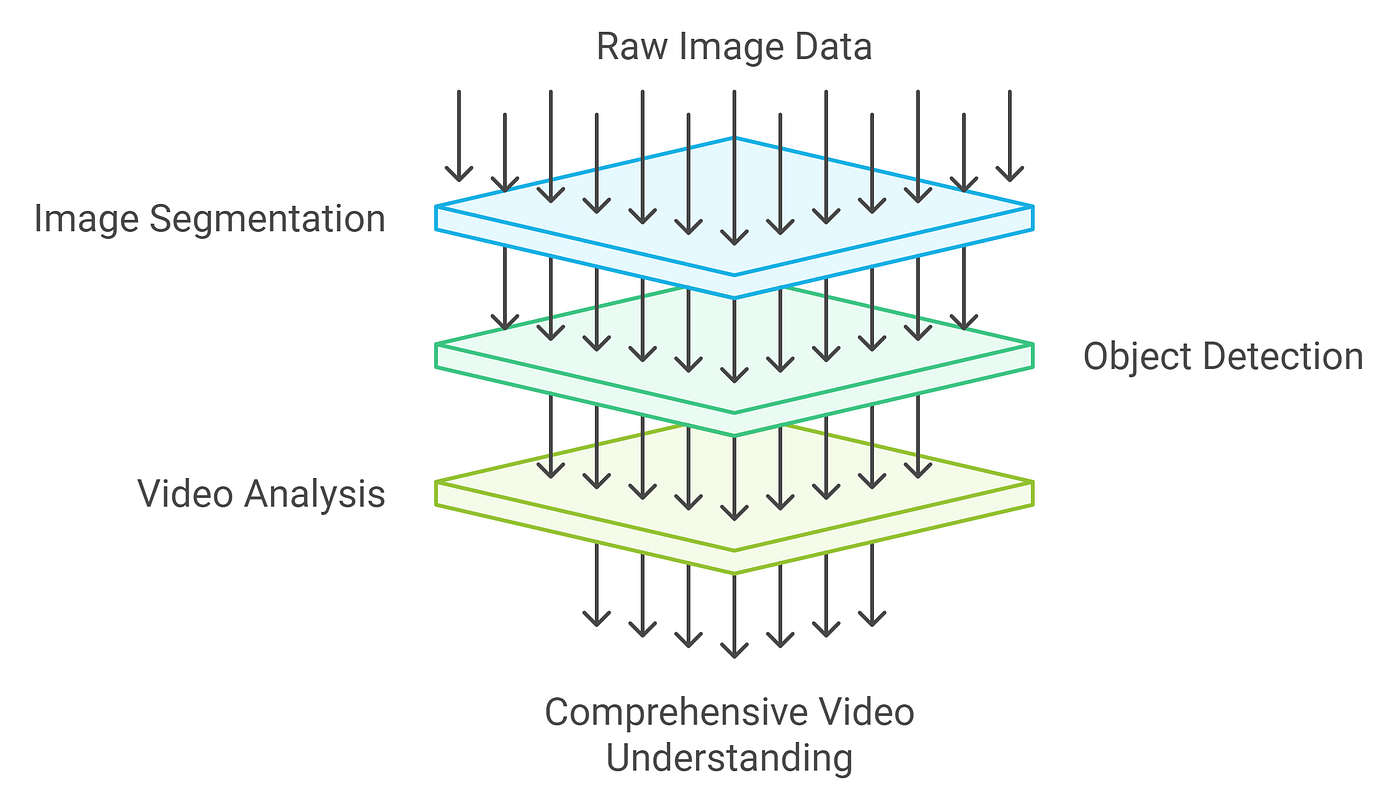
Source: Mirko Peters — From Image Segmentation to Video Analysis
At the core of advanced vision tasks are three key players: segmentation, detection, and video analysis.
- Segmentation: This process involves partitioning an image into segments. Why? To simplify the representation of an image, making it easier to analyze. Think of it like separating different colored sections of a painting.
- Detection: Detection goes a step further. It not only recognizes the presence of an object but also determines its location within the image. Imagine spotting a dog in a picture and drawing a box around it.
- Video Analysis: This is where things get dynamic. Video analysis involves interpreting sequences of images (frames) to understand motion over time. It’s like watching a movie and figuring out the storyline based on what you see.
The Role of Semantic Segmentation vs Instance Segmentation
Now, let’s unpack two important terms: semantic segmentation and instance segmentation.
Semantic segmentation groups pixels into categories. For instance, all the pixels that represent a car will be labeled as “car.” But what if there are multiple cars? This is where instance segmentation comes in. It not only identifies the pixels of a car but distinguishes between multiple cars in the same image.
To visualize: imagine a classroom. Semantic segmentation would categorize all students as “students.” But instance segmentation would call out “Student 1,” “Student 2,” and so forth. It’s crucial when accuracy is important.
Real-World Applications of Advanced Tasks
Where are these techniques used in the real world? The applications span various industries:
- Autonomous Vehicles: They rely heavily on detection and segmentation to understand their surroundings. Can you imagine a car that can’t recognize pedestrians?
- Medical Imaging: Here, segmentation can help in identifying tumors or other abnormalities in scans. The detail required could literally mean life or death.
- Surveillance: Advanced video analysis helps in identifying suspicious activities in real-time.
Challenges in Multimodal Video Understanding
While advanced tasks in vision are exciting, they’re not without challenges. Multimodal video understanding involves interpreting various data forms (like audio and video). This can get tricky.
For example, how do you synchronize sound with video accurately? Misalignment can lead to misunderstandings. And how do you deal with massive amounts of data? Speed is essential, but where’s the balance?
Important Algorithms for Object Detection
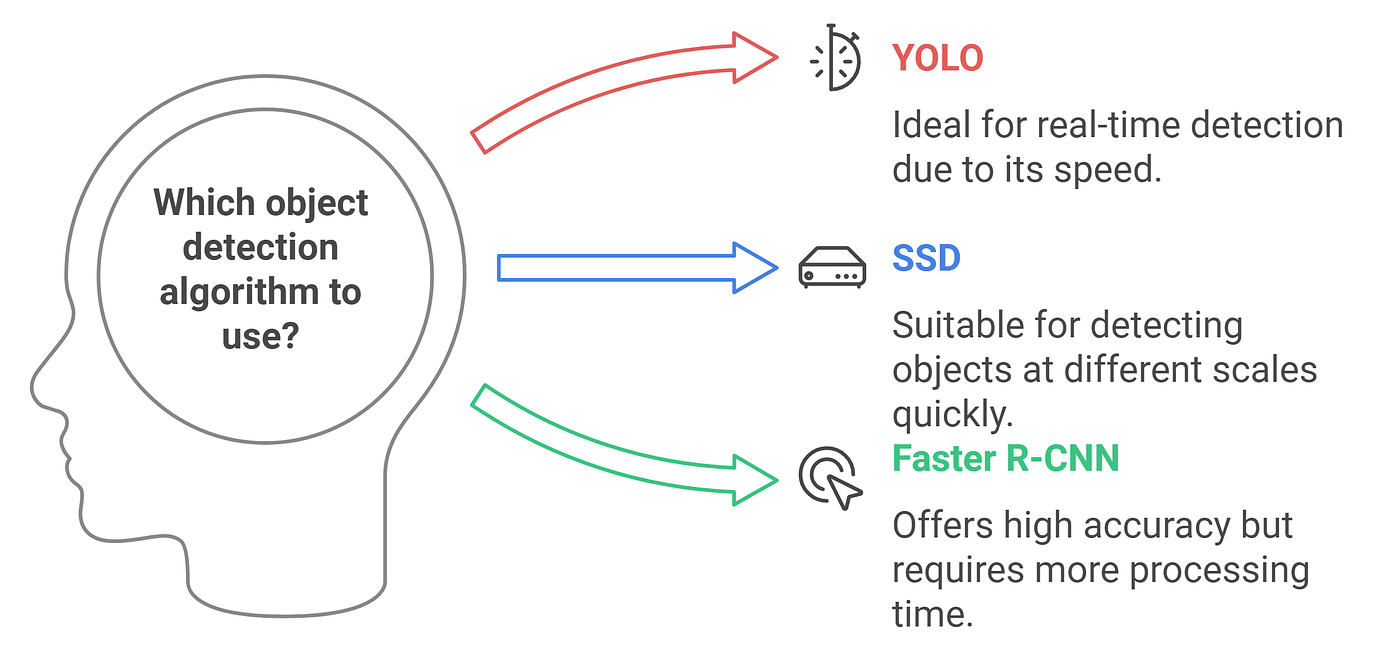
Source: Mirko Peters — Which object detection algorithm to use
Many algorithms power these advanced tasks. Here are a few that stand out:
- YOLO (You Only Look Once): This algorithm processes images extremely quickly, making it ideal for real-time detection.
- SSD (Single Shot MultiBox Detector): SSD is another fast algorithm, suitable for detecting objects at different scales.
- Faster R-CNN: This is excellent for high accuracy in detecting various objects but requires more processing time.
These algorithms are constantly evolving, contributing to more intelligent and efficient systems.
Insights into Emerging Techniques for 3D Vision
3D vision is the next frontier in visual understanding. It allows for a deeper understanding of object orientation and distance. But what does this mean for you?
Emerging techniques focus on various methods, such as:
- Depth Sensing: Utilizing specialized cameras to capture depth information.
- 3D Reconstruction: Creating a three-dimensional model from multiple images.
This technology is being eyed for applications in gaming, virtual reality, and even robotics.
Cross-Pollination of AI: Linking Vision with Language
The Rise of Vision-Language Models Like CLIP
Ever heard of CLIP? It stands for Contrastive Language-Image Pre-training. Essentially, it’s a groundbreaking model developed by OpenAI that can learn visual concepts from natural language. Imagine being able to take a picture and describe it, or better yet, generate images from simple text prompts. This technology is here, and it’s transforming how we interact with AI.
The rise of such models highlights a significant leap in AI. They connect the dots between what we see and what we say. This is crucial because language and vision are our primary ways of understanding the world. How cool is it to think that a machine can now do that too?
Impact of Generative Modeling on Creativity
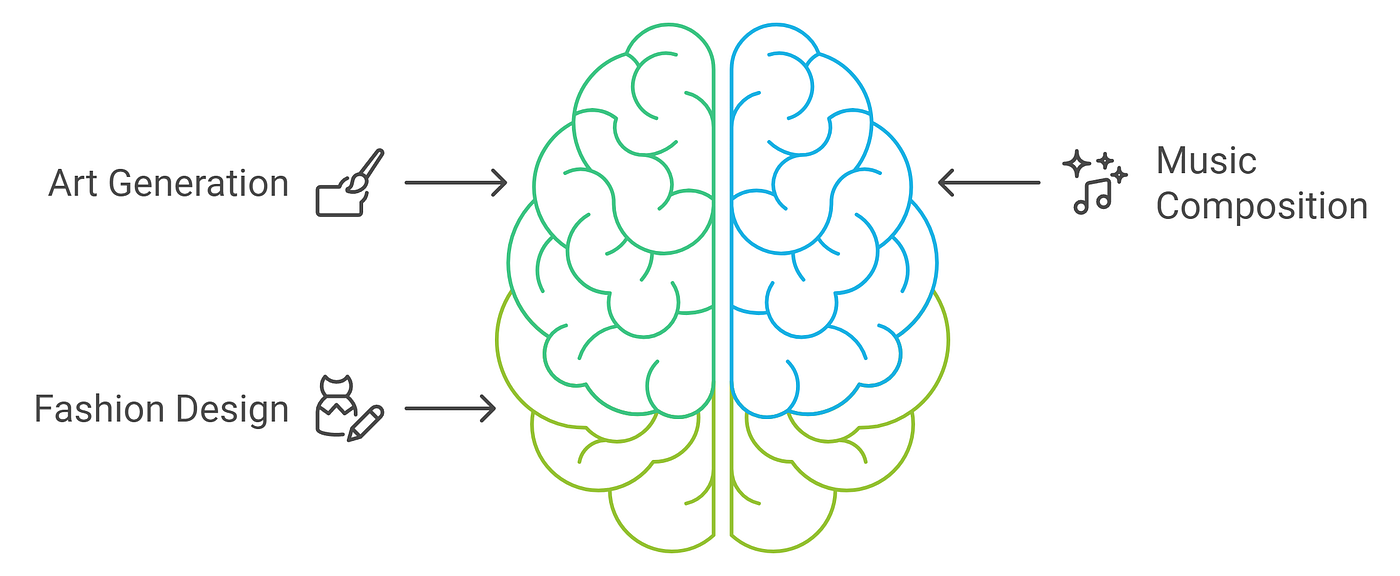
The Creative Power of Generative Models
Generative models are changing the creative landscape. With tools like DALL-E and ChatGPT, you can mix different forms of media in innovative ways. But what does that mean for you? It means you can easily brainstorm ideas, visualize concepts, and even create art.
- Generate art from textual descriptions.
- Compose music that aligns with visual themes.
- Design fashion by merging different styles through AI.
It’s like having a creative partner that never gets tired. However, there are questions to consider. Will this automation enhance our creativity, or will it stifle it because machines can “think” faster than we can?
Challenges Faced in Integrating Visual and Textual Data
Integrating visual and textual data isn’t a walk in the park. Think of it like trying to fit puzzle pieces together that don’t quite match. Some challenges include:
- Ambiguity in language: Words can have multiple meanings. For example, the word “bark” could refer to a dog’s sound or the outer covering of a tree.
- Contextual understanding: How can an AI know the mood behind an image? Is it happy, sad, or ironic?
- Data overload: There’s just so much data to process. How does the model know what’s relevant?
These hurdles make it vital for researchers to improve these models continuously. It’s an ongoing puzzle that can change how we interact with our digital environments.
Examples of Applications in Practical Scenarios
So, what does this look like in the real world? Here are a few compelling applications:
- Social media filters: They can now generate real-time visuals based on user input.
- Educational tools: Imagine reading a book where the illustrations appear as you go along!
- Accessibility: These models can help individuals with vision impairment by providing descriptive text for images.
These examples show that the intersection of vision and language is not just theoretical. It’s already making impacts in our daily lives.
The Role of Ethics in AI Language Models
As exciting as these advancements are, they raise ethical questions. Should AI be allowed to create? What about copyright? You might be pondering, “Is an AI’s creation really art?” These questions delve deep into the ethics of AI.
It’s essential to create guidelines that ensure fairness and responsibility. Remember, with great power comes great responsibility!
Future Trends on the Horizon
Looking ahead, the potential is staggering. Future trends may include:
- Integration of even more sensory modalities.
- Improved understanding of context and sentiment.
- Greater collaboration between AI and human creators.
As technology evolves, our relationship with AI will also change. Are you ready for the rollercoaster ride of innovation that lies ahead?
Challenges and Ethical Considerations in Computer Vision
In the rapidly evolving field of computer vision, we stand at a crossroads. Technology brings wondrous capabilities, but it also raises significant challenges and ethical questions. Have you ever considered the implications of photos and videos processed by machines? Let’s dive into the core facets of this topic.
1. Addressing Biases Inherent in Data Collection
Bias in data is a significant issue that affects computer vision systems. But what do we mean by bias? Simply put, it refers to instances where the data collected is not representative of the real world. For example, if a facial recognition system is primarily trained on images of light-skinned individuals, how well do you think it will perform on darker-skinned faces?
- This leads to false identifications and discrimination.
- It can reinforce societal stereotypes, causing harm in policing, hiring, and more.
To prevent this, it’s crucial to collect diverse data. If we want systems that can recognize faces seamlessly across different ethnicities, we have to ensure they are trained with a broad spectrum of data. Are we doing enough to address these disparities?
2. The Consequences of Deploying Flawed Models
Deploying flawed models can result in dire consequences. Think about it: imagine a video surveillance system wrongly identifying an individual as a suspect. Not only does this misuse valuable time, but it can also lead to unjust legal ramifications for innocent people. Accuracy in computer vision is paramount.
- Flawed models can lead to personal information being mishandled.
- Inaccurate results can harm companies’ reputations and lead to financial losses.
It underscores the need for robust testing and validation before model deployment. How clear is our understanding of the model’s limitations?
3. Importance of Transparency and Ethics in AI
If you think about it, transparency breeds trust. For AI systems, being transparent means providing clear information about how algorithms make decisions. Why is this important? Well, when users understand the underlying processes, they are more likely to trust the technology.
Moreover, ethical considerations should not just be an afterthought. They should be woven into the fabric of AI development. Just because we can do something, doesn’t mean we should. A responsible approach to computer vision ensures ethical use of technology.

With great power comes great responsibility.
4. Ongoing Research Addressing These Challenges
Researchers worldwide are digging into these concerns. New techniques are continually evolving to handle bias, enhance model accuracy, and ensure ethical AI practices. For instance:
- Bias detection algorithms are being developed to identify disparities in training data.
- New frameworks for ethical AI are emerging, guiding developers on best practices.
Are we keeping pace with these advancements? These efforts can help lay the groundwork for future innovations.
5. User Privacy Concerns and Camera Surveillance
Camera surveillance has become a hot-button issue. With more cameras installed in public spaces, how does this affect your privacy? The perception of being constantly watched can indeed alter behavior. It’s like living in a fishbowl.
- Privacy concerns arise when surveillance data is misused.
- There’s a risk of unauthorized access to sensitive data.
Understanding these risks is vital. Users need to know how their data is collected, stored, and utilized.
6. Future Policy Recommendations for Ethical AI
If we desire a future where ethical AI thrives, robust policies must be established. Consider the following recommendations:
- Implement regulations to ensure ethical data collection and usage.
- Mandate transparency in AI algorithms and models.
- Foster partnerships between tech companies and civil rights organizations.
The road ahead is paved with challenges. But through awareness and action, we can foster an ethical landscape for computer vision. What steps can you take to ensure the technologies you use are fair and just? Sometimes, it starts with a conversation.
The Future of Computer Vision: Research Trends and Predictions
Emerging Technologies and Their Potential Impact
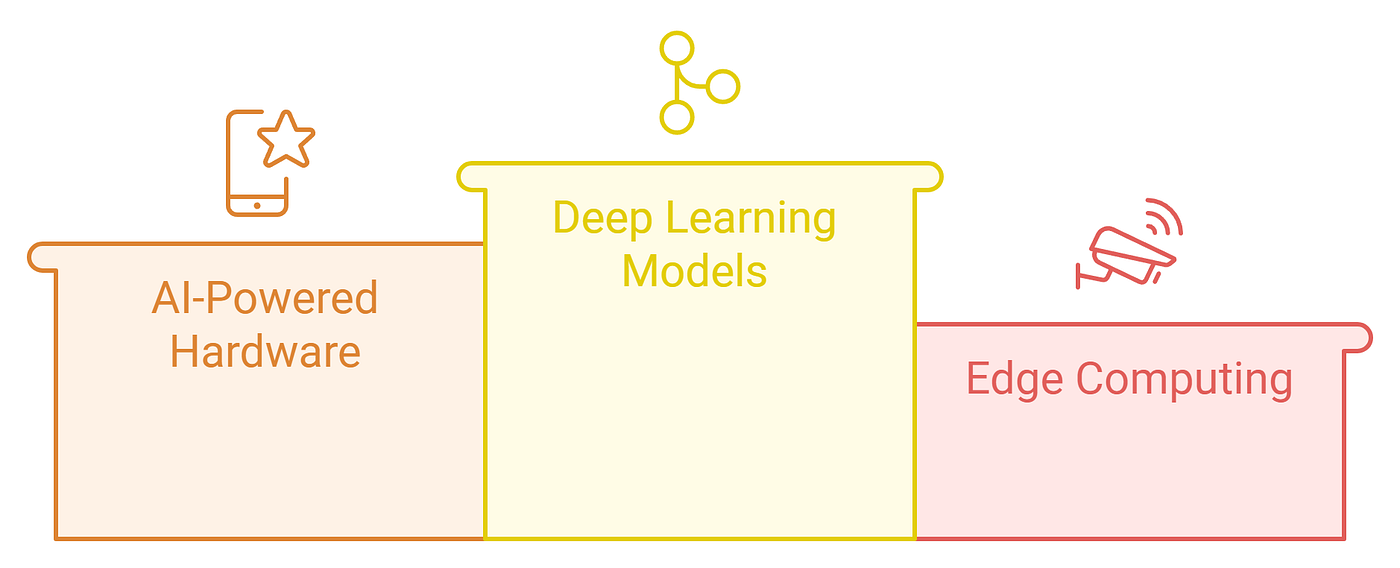
Source: Mirko Peters — Emerging Technologies in Computer Vision
As we look to the future of computer vision, several emerging technologies are set to drastically change the landscape. But what exactly are these technologies?
- Deep Learning Models: These are the backbone of modern computer vision. They analyze large sets of data to learn patterns, improving their accuracy and efficiency.
- AI-Powered Hardware: Devices, from smartphones to drones, are becoming more capable. Advanced chips enable faster image processing.
- Edge Computing: This allows for data processing closer to the source. Imagine using a camera that can make decisions in real time without needing to send data to the cloud.
Each of these technologies has the potential to revolutionize industries, from healthcare to transportation. How will you adapt to these changes?
The Role of Self-Supervised Learning
Have you ever wondered how machines learn without direct supervision? Self-supervised learning is a game-changer in this realm. It enables systems to learn from unstructured data without the need for labeled datasets.
For example, consider a model trained on millions of images without any specific labels. It learns to identify patterns and features by comparing images to one another. This approach not only reduces the time and effort spent on data labeling but also improves the model’s adaptability. It can learn from new situations on the go.
This method is crucial in tasks such as image recognition and natural language processing. It’s interesting, right?
Trends in 3D Vision and Embodied Intelligence
As we journey deeper into computer vision, 3D vision is emerging as a vital area. What makes 3D vision exciting? It allows machines to perceive depth, creating a more comprehensive understanding of their surroundings.
Embodied intelligence refers to machines that can interact with the world as humans do. Robots equipped with this capability can navigate and manipulate their environments in a more human-like manner. Think of a robot that can pick up objects or move through spaces just like you!
- Applications in robotics, such as autonomous vehicles.
- Enhanced virtual and augmented reality experiences.
- Robust modeling techniques that leverage spatial understanding.
Predictions for the Next Decade
Looking ahead, what should you expect in the world of computer vision? Let’s break it down:
- Integration with AI: Expect deeper integration between AI and computer vision, leading to smarter applications.
- Real-time processing: Increasing capabilities for real-time processing will revolutionize industries like surveillance and driving.
- More accessible tools: As technology advances, tools and platforms for computer vision will become more user-friendly, encouraging wider adoption.
Interdisciplinary Collaborations Shaping Future Research
The future of computer vision is not just about technology. It involves interdisciplinary collaborations among various fields like:
- Computer Science
- Psychology
- Art and Design
- Ethics and Social Science
Collaboration across these fields will lead to more innovative solutions, addressing complex challenges more effectively. For example, understanding human perception can help improve computer vision algorithms.
Potential Breakthroughs on the Horizon
Finally, let’s consider potential breakthroughs that could redefine computer vision:
- Improved data efficiency through novel algorithms.
- Enhanced cross-modal understanding, combining visual data with audio and textual information.
- Fully autonomous systems capable of learning from their environments.
The future is bright, and as we embrace these advancements, you’ll want to stay informed and adaptable.
Conclusion: Charting Your Path in Computer Vision
The world of computer vision is not just a technological trend; it’s a transformative force shaping the future. If you’re curious about how machines can interpret visual data just like humans do, now is the time to engage with this thrilling field. It holds endless possibilities for innovation and creativity.
But, where do you start? First, immerse yourself in the basics. Books, online courses, and workshops provide a solid foundation. Whether you’re a student, a professional pivoting careers, or simply intrigued, there’s something for everyone. Look for resources like Coursera or edX, which offer courses from renowned institutions. Engage with communities on platforms like Reddit or Stack Overflow. You’ll find countless insights and the encouragement you may need.
Potential Career Paths
What opportunities await you in computer vision? The career paths are diverse. You could become a:
- Computer Vision Engineer: Develop algorithms that allow computers to process and analyze images.
- Data Scientist: Use visual data to make strategic business decisions.
- Robotics Specialist: Enhance machines with the ability to see and interpret their surroundings.
- Research Scientist: Innovate and push the boundaries of what’s possible in visual perception.
The academic field is rich too. You could pursue degrees in computer science, artificial intelligence, or machine learning. These paths equip you with the necessary skills to thrive.
The Importance of Continuous Learning
In such a rapidly evolving field, continuous learning is essential. Technologies advance at lightning speed. What you learn today might change tomorrow. Keeping up might feel overwhelming. But think of it as an exciting challenge, rather than a chore. Follow trends through reputable tech blogs, subscribe to relevant journals, or attend conferences. Staying informed allows you to adapt and grow.
Diversity in AI
Moreover, fostering a diverse community is crucial. The more perspectives included, the more robust and innovative solutions we can create. Engage with different voices and viewpoints. This enriches not just your understanding but will also spark new ideas. If you have insights to share, don’t hesitate. Engaging in discussions or writing articles can contribute to a richer dialogue.
Community Engagement
Lastly, look for ways to give back. Sharing your knowledge can often be the best way to solidify your own understanding. Start a blog, post on forums, or participate in local meetups. As you share your experiences, you’ll help others on their journey while enhancing your own network.
To sum it up, computer vision is an exciting realm filled with promise and potential. Embrace your curiosity, seek resources, and engage with the thriving community around you. The journey in this field can be incredibly rewarding, offering not just a career path but a way to contribute to groundbreaking advancements in technology. Remember, as the legendary computer scientist Alan Turing said,
We can only see a short distance ahead, but we can see plenty there that needs to be done.
So, take that first step, and who knows what you might discover?
A Message from AI Mind
Thanks for being a part of our community! Before you go:
- 👏 Clap for the story and follow the author 👉
- 📰 View more content in the AI Mind Publication
- 🧠 Improve your AI prompts effortlessly and FREE
- 🧰 Discover Intuitive AI Tools
메타데이터
- post_id
- e11f4b1f9e02
- slug
- exploring-the-depths-of-computer-vision-insights-from-cs231n-e11f4b1f9e02
- url
- https://pub.aimind.so/exploring-the-depths-of-computer-vision-insights-from-cs231n-e11f4b1f9e02
- canonical_url
- https://pub.aimind.so/exploring-the-depths-of-computer-vision-insights-from-cs231n-e11f4b1f9e02
- author_url
- https://medium.com/@mirko-peters
- status
- ok
- fetched_at
- 2026-07-22 04:54:32